
 English
 French
 Deutsch
 العربية
 Español
 Русский
 にほんご
にほんご Português
 한국어
한국어
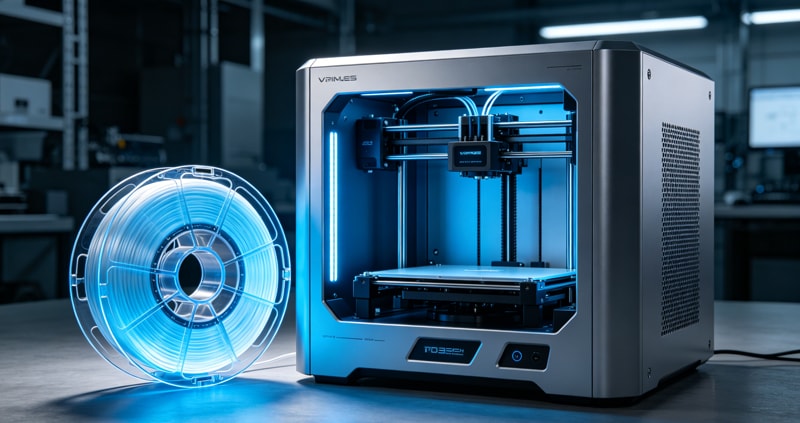
Why are materials the underlying driving force behind 3D printing?
Most industry peers focus solely on developing faster 3D printers to boost profits within the same timeframe. However, this cannot address the quality and durability of parts in practical applications. The reliability and service life of components ultimately depend on materials. Material innovation is advancing far faster than many enterprises realize, and 3D printing materials define what additive manufacturing can achieve.
Every major manufacturing revolution has been sparked by groundbreaking materials. For instance, steel laid the foundation for modern infrastructure, silicon popularized computing technology, while rare earth materials and composite materials have revolutionized the aerospace sector. Industrial custom additive manufacturing via 3D printing is following the same trajectory. The industry’s focus has shifted from "Can we print this?" to practical questions like "What load can it bear? What is its heat resistance? Is it oxidation-resistant?"
Many still regard custom 3D printing merely as a prototyping tool, a perception rooted in the inferior strength, poor consistency and lack of production certification of early printing materials. Today, advanced polymers and composite materials have matched or even outperformed injection-molded parts and certain metals. This has greatly narrowed the gap between printable parts and fully functional end-use components.

Many design teams still ask whether parts can be printed using familiar or similar materials. The right approach is to determine which material delivers the required performance and the most efficient production solution. This subtle mindset shift means designing around material strength instead of sticking to conventional thinking. Only by thinking outside the box can we unlock the full potential of additive manufacturing.
Focusing on material performance enables lighter parts without compromising strength, shorter production cycles, localized manufacturing to streamline supply chains, and an open attitude toward new materials and their properties across diverse applications. This difference in mindset separates innovative teams from those stuck in old routines.
Evolving Materials Unlock New Industrial 3D Printing Applications
Modern industrial-grade polymers and composites have expanded the scope of additive manufacturing across diverse sectors. Polypropylene features good flexibility and chemical resistance, making it ideal for components under repeated motion. Nylon 11 delivers outstanding toughness and impact strength for parts subjected to heavy wear and harsh operating environments.
High-performance photopolymers enable intricate details, smooth surfaces and optical clarity, catering to fluidic devices, light guides and medical applications. Carbon fiber-reinforced thermoplastics boast high temperature resistance, chemical stability and fire compliance. Weighing roughly half as much as aluminum, they inspire engineers to rethink the design of metal components.
These are not incremental improvements, but transformative leaps. They redefine where and how 3D printed parts are deployed, ranging from consumer goods to aerospace, automotive and medical devices that demand certified and consistent performance.
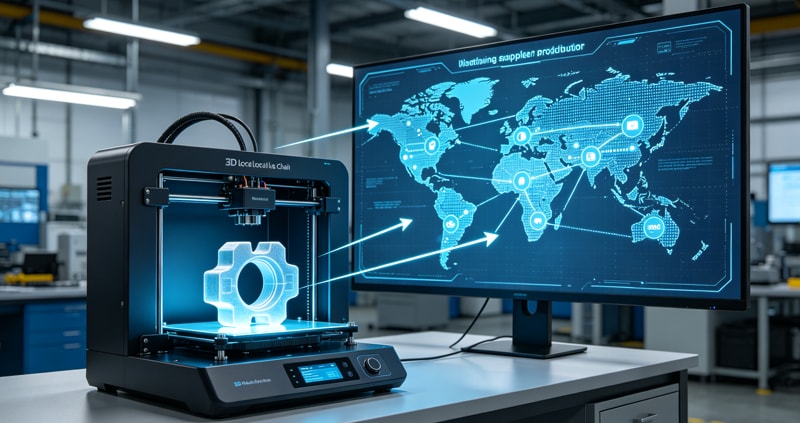
Resilience and Production Scale of the 3D Printing Material Supply Chain
The global supply chain for 3D printing materials is pressured by long lead times, geopolitical risks and reliance on overseas suppliers. Tool-free local additive manufacturing has thus become strategically vital. Nevertheless, this model works only when materials can meet the performance requirements of real-world applications — a practical benchmark.
Powered by advanced materials, additive manufacturing has evolved from experimental innovation into a reliable production solution for aerospace, defense, medical technology and other regulated industries. Parts can be produced locally on demand, cutting lead times and logistics costs while lowering dependence on global supply chains.
Applications Driven by Advanced 3D Printing Materials
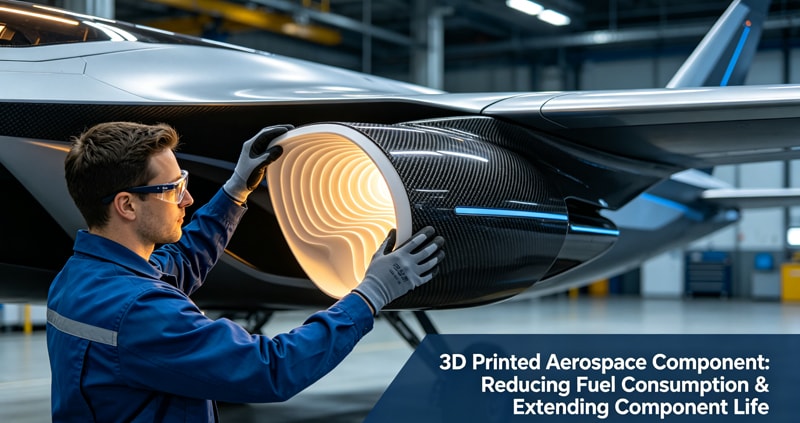
In the aerospace industry, high-temperature polymers and carbon fiber composites are replacing metal parts, piping and internal components while maintaining equivalent strength at the same weight. This cuts fuel consumption and extends service life of components. Additionally, consolidating multiple separate parts into a single unit and optimizing structural design greatly simplifies assembly work.
Medical device manufacturers adopt biocompatible resins and high-performance ther
moplastics to produce patient-specific implants, surgical guides and prosthetics. Featuring sterilization resistance, tissue compatibility and mechanical stability, these materials enable personalized care that conventional mass manufacturing cannot efficiently deliver.
Material-Led Approach to 3D Printing
For hardware development teams, producing quality parts means moving beyond default familiar materials and starting with performance requirements. Treat additive manufacturing as a full-scale production solution, not merely a prototyping method.
3D printing hardware will keep evolving, yet materials are what truly transform product design and functionality. Companies that prioritize materials can achieve shorter development cycles, streamlined supply chains and higher-performance products, gaining lasting competitive edges in the evolving manufacturing landscape.


Leave a Comment