
 English
 French
 Deutsch
 العربية
 Español
 Русский
 にほんご
にほんご Português
 한국어
한국어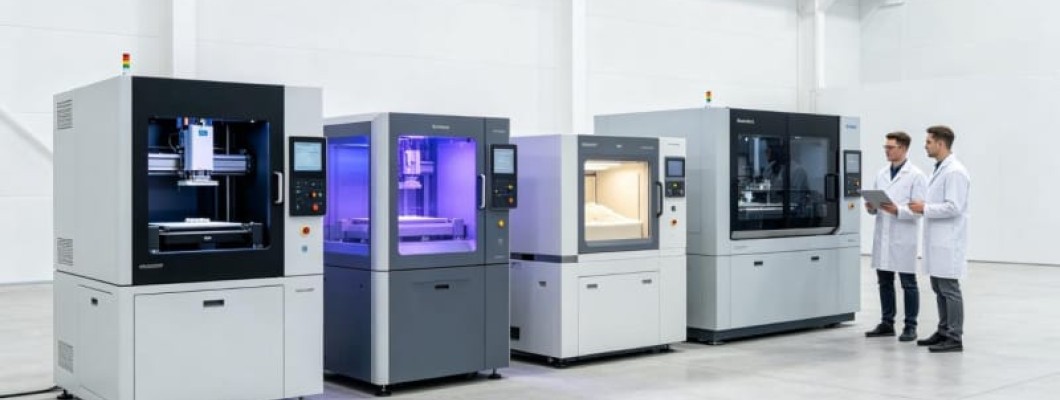
What 3D printing on plastic actually covers
When buyers talk about 3d printing on plastic, they usually mean one of two very different things: extruding a melted engineering thermoplastic bead by bead, or solidifying a polymer — liquid photopolymer or plastic powder — layer by layer with light or heat. The result looks equally "plasc" on arrival, but the process decides wall strength, detail, surface feel, heat resistance and price, so picking by material name alone is how projects end up with a part that looks right and performs wrong.
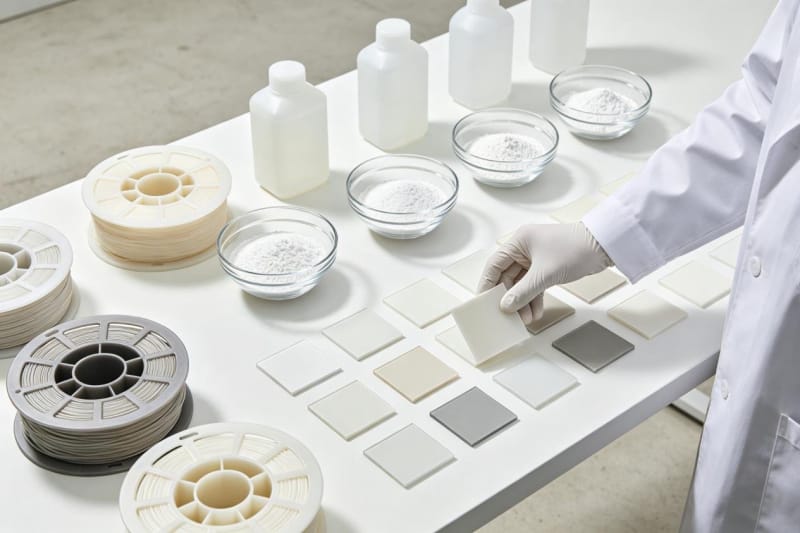
At HUANYA we treat plastic as a family of engineering choices rather than one default option. A housing prototype, a living-hinge bracket, a transparent light guide and a run of fifty nylon gears all start from polymer, yet each points to a different machine, orientation and finishing route. This article walks through those decisions in the order a B2B project actually meets them: process first, polymer second, design and finish third, then repeatability.
Four plastic 3D printing processes at a glance
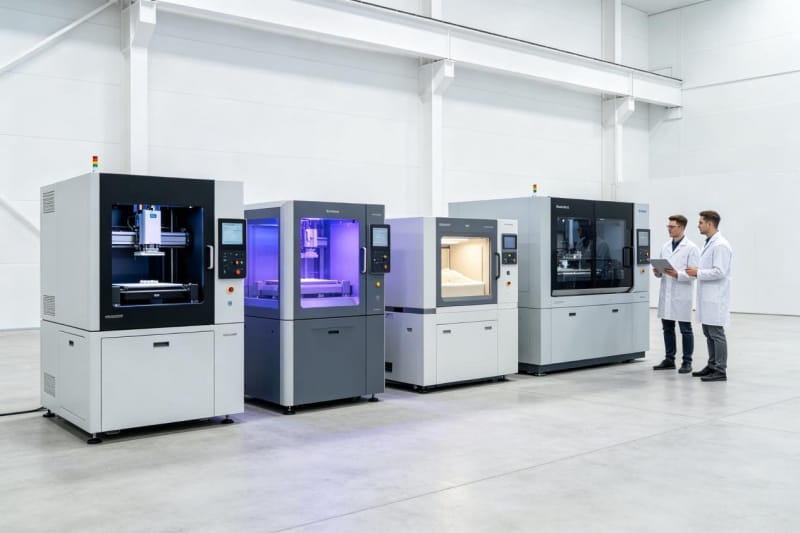
The four production-grade routes are fdm 3d printing (fused filament), SLA (laser-cured resin), SLS (laser-sintered plastic powder) and MJF (agent-and-heat fused nylon powder). FDM is the most economical for large, tough housings; SLA wins on fine detail and smooth surfaces; SLS and MJF produce self-supporting nylon parts with complex geometry and no support marks. Table 1 compares them on the parameters engineers actually quote against; the figures are industry-typical ranges, and HUANYA confirms final tolerances at DFM review based on each part's geometry and chosen polymer.
Thermoplastics versus photopolymers
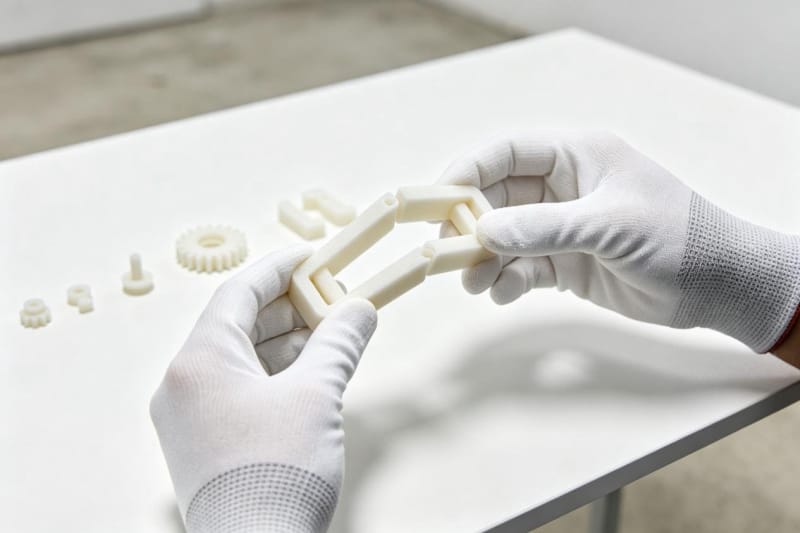
The first material fork is molecular. Thermoplastics (ABS, PETG, nylon, TPU, PC) are melted and re-solidified, so they keep genuine engineering behaviour after printing: impact toughness, fatigue life, snap fits and, for nylon, repeated flexing through a living hinge. When an sls 3d printing service delivers nylon parts, the unused powder also supports overhangs during the build, which removes support structures entirely and frees internal channels and lattices.
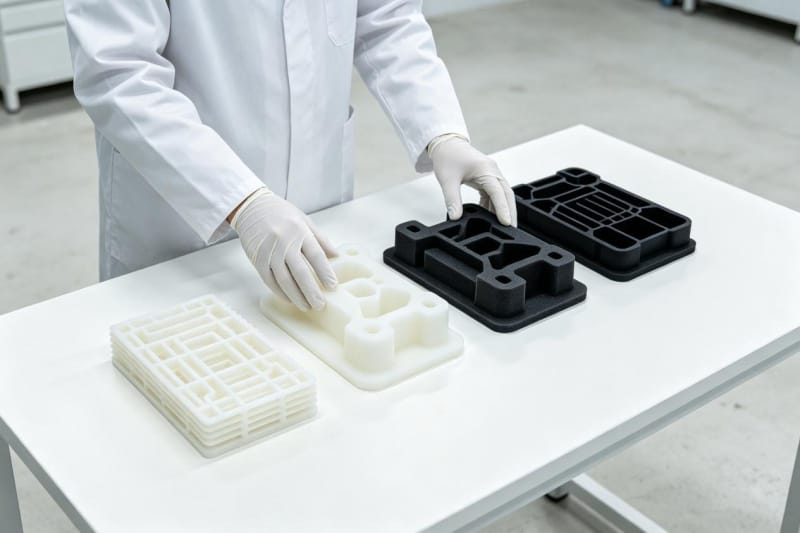
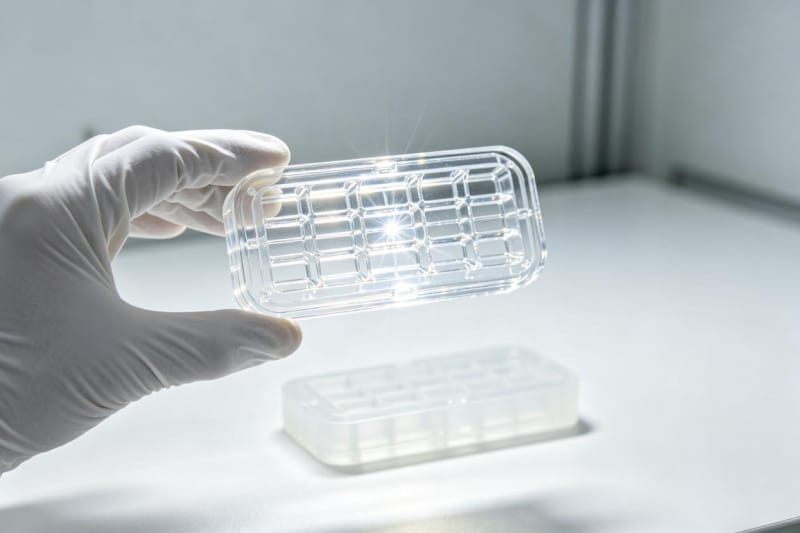
Photopolymers work the opposite way: UV light cross-links a liquid resin into a solid, which delivers extremely fine features and smooth walls but with a chemistry that is more sensitive to prolonged UV and heat. Resins are offered in rigid, tough, flexible and transparent grades, which makes them ideal for detailed appearance prototypes, master patterns for vacuum casting and light-transmitting parts — while sustained mechanical loads are usually better served by a sintered or extruded thermoplastic.

Matching the polymer to what the part must do
Start from the load case, not the catalogue. A concept model that only needs to prove a shape can use pla 3d printing because the polymer is stiff, dimensionally stable on the bed and inexpensive, even though its heat resistance is modest. A housing that must survive drops and sit near a motor calls for ABS or ASA; a guard exposed to oils and repeated handling suits PETG; a gear, snap or bracket expected to flex thousands of times belongs in PA12 nylon through SLS or MJF.

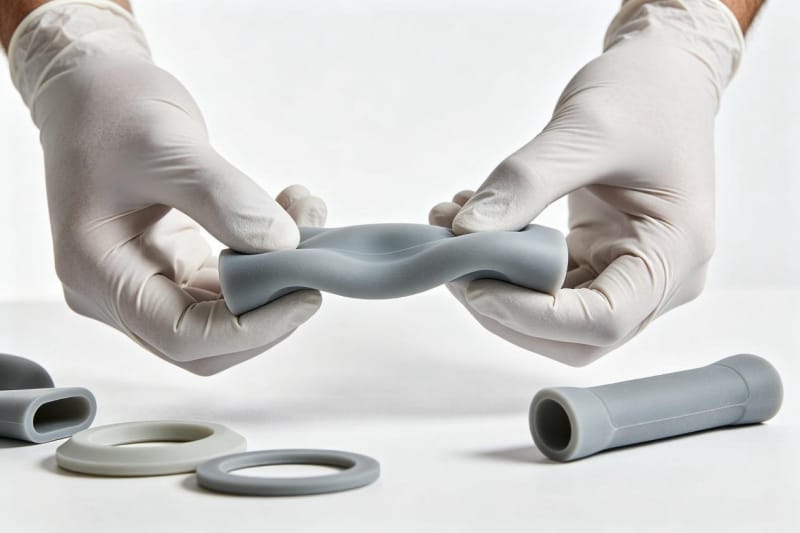
Elastomeric needs follow the same logic. TPU on FDM covers gaskets, bumpers and grips across a typical Shore range of roughly 95A down to 60A, while flexible resins reproduce soft-touch detail for seals and wearables prototypes. Transparent requirements split the same way: clear SLA resin gives optical prototypes and light guides, whereas industrial FDM polycarbonate serves transparent parts that must also carry load and resist heat.

Table 2 maps the polymers HUANYA runs most often to their defining properties and the B2B applications where each earns its place; properties are typical supplier data sheets ranges, with exact grades confirmed per order.
Design rules for strong, accurate plastic parts
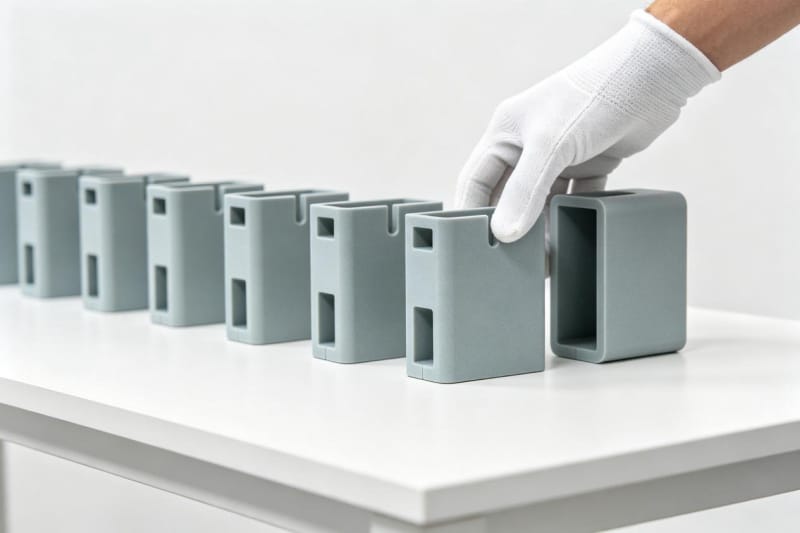
Polymer parts fail predictably when a few rules are ignored. FDM walls need at least 3–4 deposited roads to carry load, which means a minimum wall near 0.8–1.2 mm at a standard nozzle, while SLA holds detail at 0.4–0.6 mm walls and SLS nylon sits comfortably around 1.0–1.2 mm. Holes that accept pins or shafts should be designed slightly undersized or oversized for the chosen process, because sintered nylon settles differently from extruded ABS, and bridging spans beyond roughly 5–8 mm need ribs or a changed orientation on FDM.
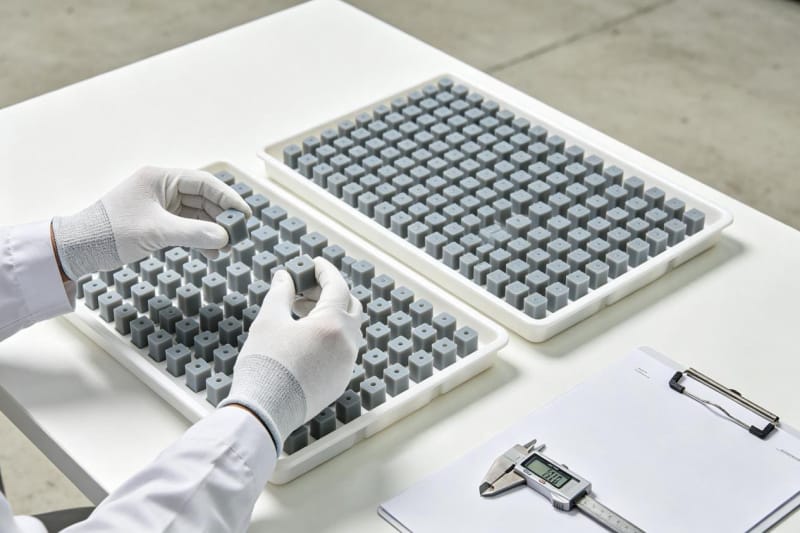
This is also where dimensional consistency between batches is settled. HUANYA customers never receive plastic parts whose critical dimensions drift from one order to the next: the same parameter profile, orientation rules and calibrated machines are archived per part, and critical dimensions are measured before shipment. Material lot, build settings and inspection results stay linked to the order, so the second hundred parts match the first article instead of approximating it.
Surface finishing that matches across batches
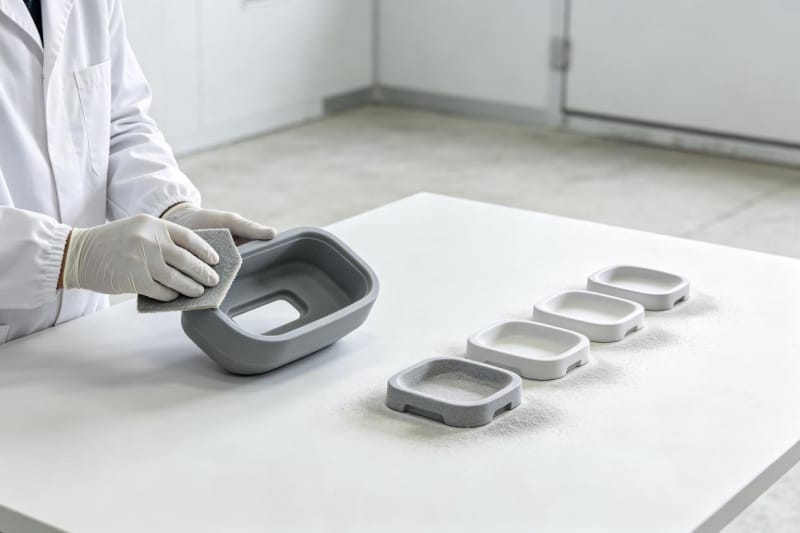
Plastic parts are judged by touch as much as by drawing. FDM layer lines can be sanded, bead-blasted, primed and painted into a smooth class-A surface; SLA parts arrive nearly smooth and take paint, silk-screen texture or clear polishing; SLS and MJF nylon leave a uniform matte finish that is often used as-is or dyed black for production parts. Each route has a controlled sequence — grit steps, primer coats, cure time — rather than an ad-hoc touch-up.
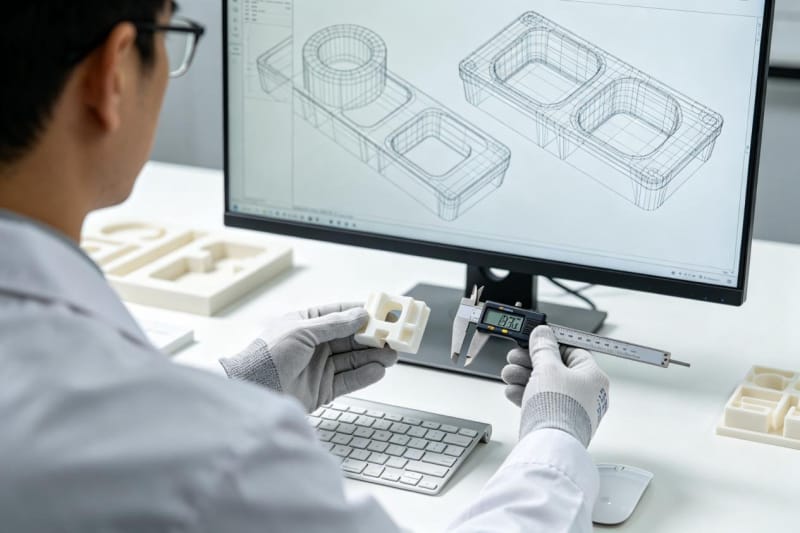
Inconsistent finishing between batches is one of the three problems HUANYA buyers simply never meet. Because the finish recipe is fixed and checked against the approved first article, a housing ordered this quarter leaves the line with the same roughness and colour as the one delivered last quarter, whether it was printed in FDM, SLA or nylon. What the customer approved becomes the enforceable standard for every repeat.
Lead times and repeat orders in plastic production
Plastic additive manufacturing is fast precisely because no tooling is cut, but the schedule still has to account for printing, post-curing or depowdering, finishing and inspection as separate stations. A reliable supplier reserves all of them when the order is confirmed instead of promising a ship date from print time alone, which is how quiet bottlenecks in the paint booth turn into missed deliveries elsewhere.
Repeat orders are where disciplined production compounds. With the process, orientation, polymer grade, finish recipe and inspection record archived, a reorder starts from the approved master rather than being re-engineered; design revisions can be introduced between versions without losing traceability. HUANYA plans against real capacity so delivery delays do not surface after the promise date, and every reorder carries the same lead-time logic as the first.
How HUANYA delivers plastic parts you can trust
3D printing on plastic is only as reliable as the engineering behind the material choice: the right process for the geometry, the right polymer for the load, controlled finishing and an archived record that makes every reorder identical. Send HUANYA your file and function requirements, and our engineers return a process recommendation, a transparent quote and plastic parts that arrive accurate, consistent and on schedule — prototype run or production series.


Leave a Comment