
 English
 French
 Deutsch
 العربية
 Español
 Русский
 にほんご
にほんご Português
 한국어
한국어
Accurate parts begin before the machine starts
When buyers evaluate an online 3d printing service, they usually compare price and lead time first, but the dimension that decides whether a project repeats is accuracy. A part that arrives a few tenths of a millimetre off can stall an assembly, ruin a fit test and erase the time saved by a fast quote. Accuracy is not created on the print bed alone; it is decided the moment a CAD file is uploaded, reviewed and translated into machine instructions. That is why the quotation stage deserves as much attention as production itself.
At HUANYA, every upload passes through an engineering review before a price is confirmed. We check wall thickness, minimum features, unsupported overhangs, holes and assembly interfaces, then match the geometry to a process that can hold the required tolerance. The goal is simple: the number on the quote and the dimensions on the delivered part should match the drawing, the first time and on every reorder.
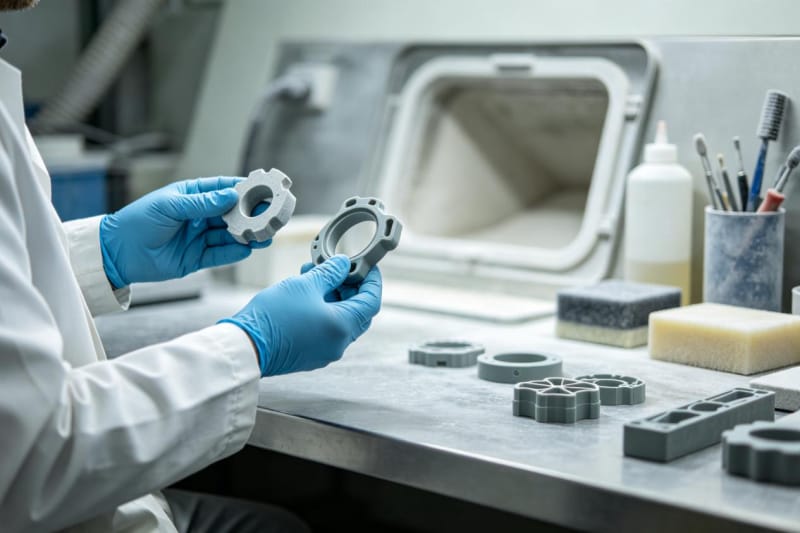
What a simple upload-to-quote flow actually contains
A clean 3d printing quote starts with a usable file. Buyers drag a model into the upload window, add quantity, material and finish, and receive a price; behind that simple window, software measures volume and bounding box while an engineer flags anything that could affect accuracy. The file format matters because mesh files and solid files do not carry the same information. Table 1 summarizes the formats HUANYA accepts and what each one preserves.
File format | What it preserves | Best for quoting | Accuracy note |
STL | Mesh surface as triangles; no units, colour or history | Quick shape and volume pricing | Export at fine resolution; coarse meshes lose curved accuracy |
STEP / STP | True solid geometry with dimensions and features | Functional parts, machined holes, tolerance review | Preferred when fits and threads matter |
IGES / IGS | Older neutral surface or solid format | Legacy CAD exchange | Works, but STEP is cleaner and less error-prone |
3MF | Mesh plus units, colour and material metadata | Multi-material and full-colour builds | Richer than STL; verify units on export |
OBJ | Mesh with optional colour and texture | Visual and cosmetic models | Verify scale; OBJ often lacks physical units |
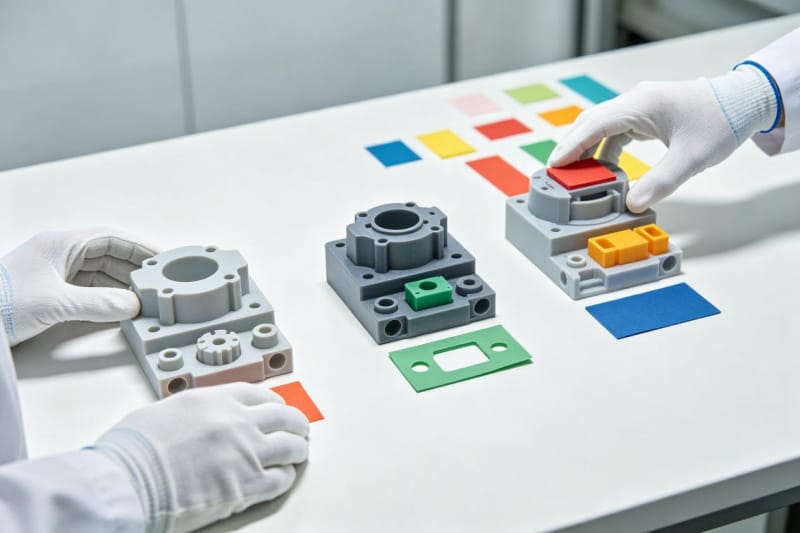
What makes an online quote both fast and trustworthy
Speed without review is only a fast guess. A reliable automated quote calculates material volume, build height, support needs and nesting potential in seconds, but it cannot interpret design intent. Critical holes, mating surfaces and cosmetic faces need a human check, because the cheapest orientation to print is not always the orientation that holds a tight diameter or a flat sealing face.
HUANYA combines instant calculation with engineer review so the quotation stays quick without becoming blind. When a model risks warping, thin walls or tolerance loss, we say so before payment, propose a small design adjustment or a different process, and confirm the final price only after DFM questions are closed. Buyers receive one number that already includes supports, finishing and inspection, with no line items appearing later.
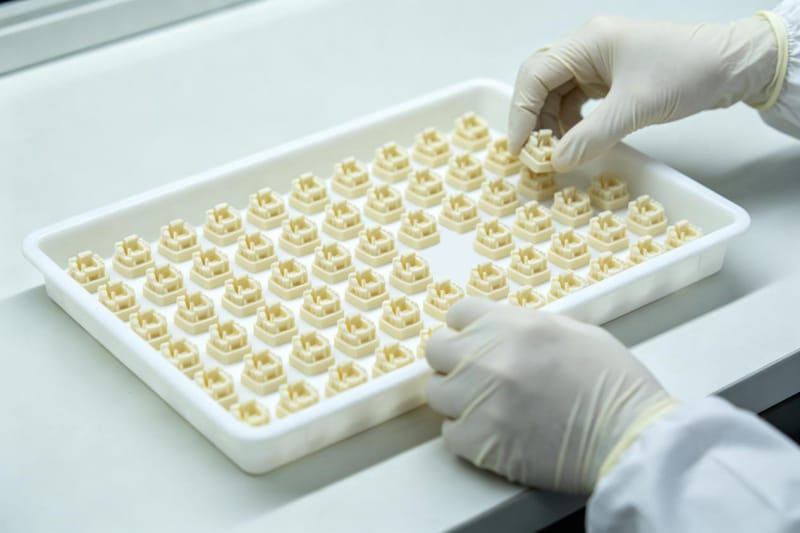
Designing for the accuracy you genuinely need
Accuracy costs money only when it is applied indiscriminately. A housing interior may tolerate half a millimetre, while a bearing bore needs a few hundredths. Marking every surface as critical forces slower processes, finer layers and extra machining across the whole part; identifying only the functional faces lets a custom 3d printing service allocate precision where the assembly actually depends on it.
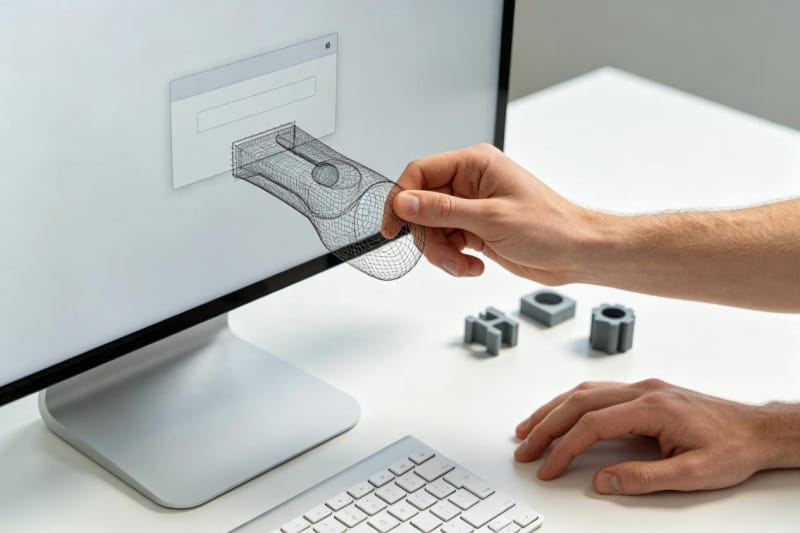
It helps to separate three requirement levels on the drawing: general body dimensions, fit-critical dimensions and cosmetic surfaces. General dimensions follow the process default; fit-critical features receive controlled orientation, reamed or machined holes and measured inspection; cosmetic faces get the layer direction and finishing that hide stepping. This tiered approach keeps tight tolerances affordable instead of making the entire part expensive.
Process choice sets the accuracy ceiling, so it should be made while quoting rather than after ordering. FDM is economical for bulky form models; SLA holds fine detail and smooth surfaces; SLS and MJF produce tough nylon parts without support marks; metal SLM parts are usually finished with targeted CNC for sealing and bearing surfaces. Table 2 lists typical achievable tolerances so expectations match the chosen technology; these are industry-typical ranges, and the exact tolerance is confirmed per geometry, material and finish during the DFM review.

Process | Typical dimensional tolerance* | How accuracy is refined | Best fit |
FDM | ±0.5% with a ±0.5 mm floor | Orientation, slower speed, machined bores | Form housings, jigs and fixtures |
SLA | ±0.1% with a ±0.1 mm floor | Fine layers, controlled post-cure | Detailed, smooth parts |
SLS nylon | ±0.3% with a ±0.3 mm floor | Nesting control, stress relief | Tough functional parts |
MJF nylon | ±0.3% typical | Balanced thermal build | Consistent small series |
SLM / DMLS metal | ±0.1–0.2 mm after targeted CNC | Stress relief, CNC on critical faces | Metal functional components |
From approved quote to the first accurate part
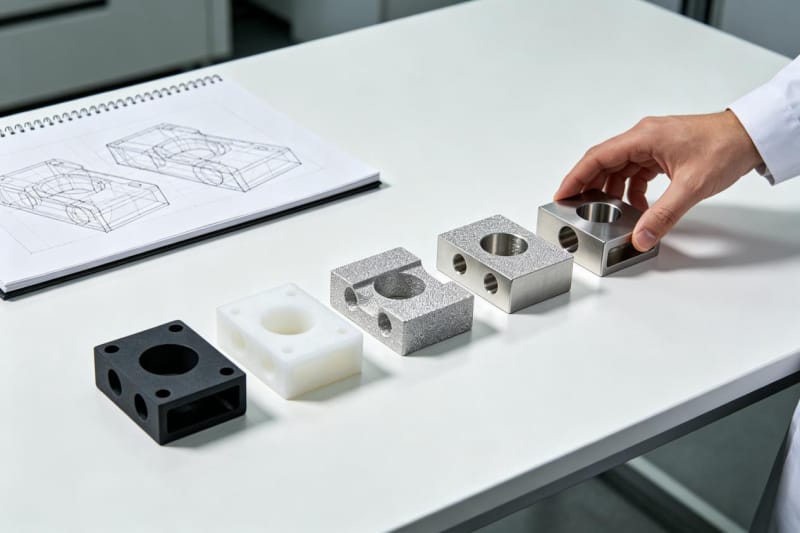
Once the quote is approved, HUANYA locks the agreed orientation, layer settings, material batch and inspection plan so the printed result follows the same assumptions as the price. A first-article check measures the critical dimensions with calibrated calipers, micrometers or a coordinate measuring machine, and the customer receives the measured values before the remaining quantity is released to finishing.
This is where inconsistent dimensional accuracy — the problem buyers fear most when ordering abroad — simply does not occur. Machines are calibrated on a fixed schedule, material lots are tracked, and any part outside the agreed tolerance is caught at inspection rather than packed. What was quoted is what ships: matching holes, flat flanges and assemblies that fit together without forced rework.
Keeping the quotation honest on price and time
A trustworthy 3d printing website separates production time from shipping time and shows both, instead of hiding transit days inside a vague delivery promise. The quote states material, process, finish, quantity, unit price, setup and freight options, so a buyer can compare standard versus expedited production and express versus air freight on identical assumptions.
HUANYA schedules production against the actual carrier pickup date and reserves machine capacity when the order is confirmed. Delays caused by silent queues, missed handovers or last-minute outsourcing are exactly what our customers do not experience. If a chosen finish or material changes the timeline, that is stated at quotation, never discovered after payment.
Repeatable accuracy across reorders and finishing
Accuracy also has to survive post-processing. Bead blasting, dyeing, polishing, painting, tapping and CNC facing each remove a small amount of material, so finishing allowances are planned in the quoted model rather than improvised on the bench. Documented finishing settings keep the same surface roughness, colour and edge quality whether a part is made this month or reordered next quarter.
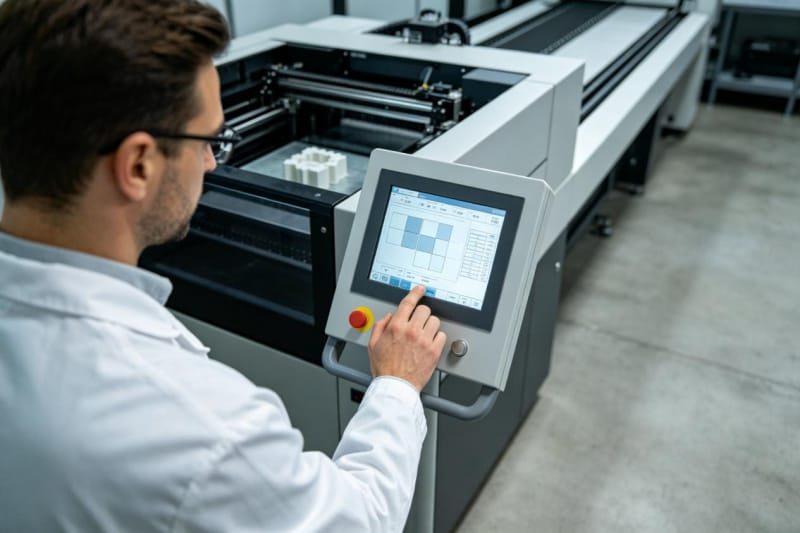
For repeat orders, HUANYA keeps the production record — orientation, parameters, finish recipe and inspection results — tied to the customer file. Reordered parts therefore match the first batch dimensionally and visually, and buyers who order the same component for different assembly sites receive consistent, interchangeable parts instead of batch-to-batch drift.
Work with HUANYA
Upload your STEP or STL, state the critical dimensions, quantity and destination, and HUANYA returns a clear, engineer-reviewed quotation with the right process, realistic tolerance, transparent price and confirmed lead time — followed by accurate, consistent parts that fit on arrival. Simple to send, precise to receive.


Leave a Comment