
 English
 French
 Deutsch
 العربية
 Español
 Русский
 にほんご
にほんご Português
 한국어
한국어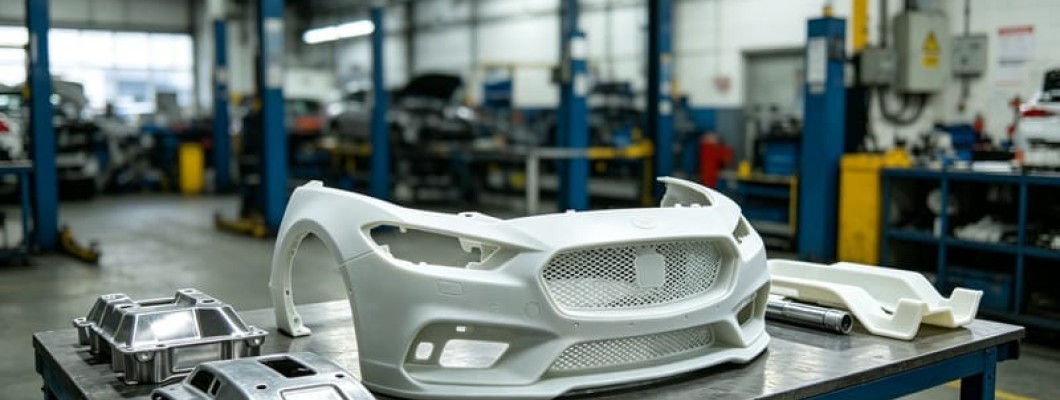
I. Introduction: Core Value of Material Selection for Automotive 3D Printing
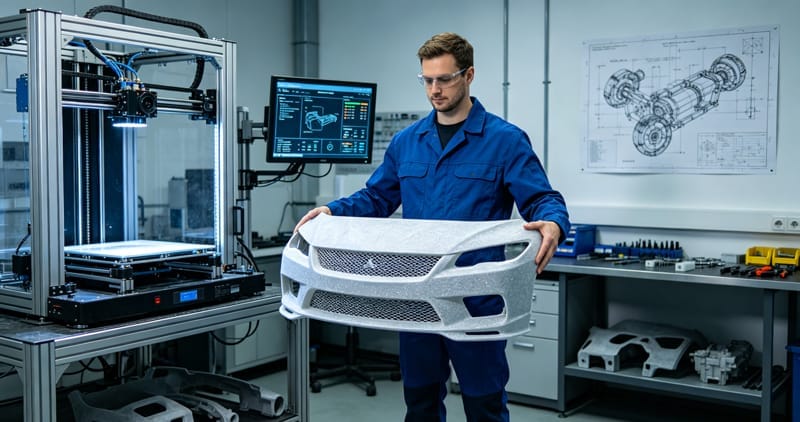
3D printing technology has been widely adopted in automotive prototype trial production, personalized modification, spare part reproduction for vintage vehicles and low-volume mass production, evolving into a vital auxiliary manufacturing process for auto components. In practical production, plastics and metals serve as the two core consumables for automotive 3D printing. Precise material selection directly determines the structural strength, service life, operational safety and manufacturing cost of parts. Improper material choice may trigger part deformation, aging failure and poor working condition adaptability, resulting in unnecessary cost losses and impairing vehicle overall performance and project benefits.
Unlike traditional manufacturing processes that suffer material restrictions, additive manufacturing greatly expands the material portfolio available for automotive parts. Plastic and metal printing materials feature totally distinct mechanical properties and applicable scenarios. Fully grasping their respective strengths and suitable working conditions helps avoid design and manufacturing pitfalls, shorten delivery cycles, and guarantee stable and reliable operation of 3D printed parts for passenger cars, modified vehicles and classic vintage automobiles.
II. Automotive Plastic 3D Printing: Performance Characteristics & Application Scenarios
Plastics rank as the most commonly used materials in automotive 3D printing, featuring prominent advantages including low cost, fast forming speed, complete material spectrum and simple post-processing, which quickly meet the demands of prototype iteration and lightweight production. Frequently adopted plastic materials for auto manufacturing include ABS, nylon, carbon fiber-reinforced plastic, TPU (thermoplastic polyurethane) and PC (polycarbonate), which share inherent merits of light weight, excellent toughness, corrosion resistance and anti-aging capacity.
Different plastic materials fit differentiated automotive application scenarios accurately: TPU delivers outstanding elasticity and cushioning performance, ideal for flexible accessories such as sealing gaskets, sealing rings and shock-absorbing pads; nylon and carbon fiber-reinforced plastics balance toughness and lightweight design, widely applied to interior trim panels, wire harness clips and medium-low load mounting brackets; PC boasts superior heat resistance, suited for parts working under normal and medium temperatures around engine compartments.
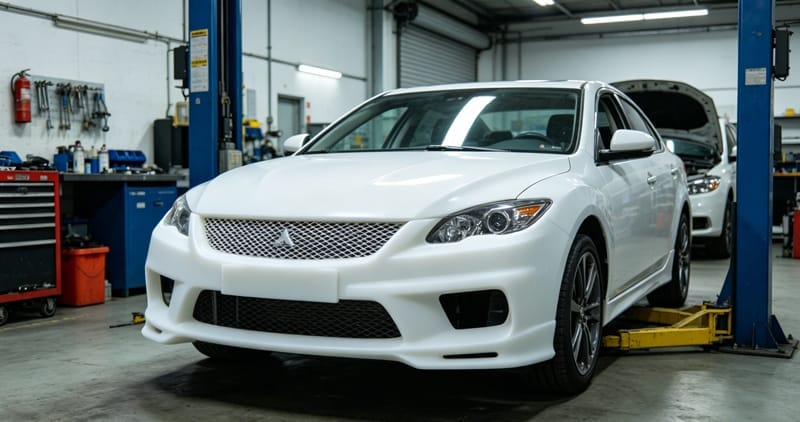
In terms of application scope, plastic 3D printing applies to non-critical, low-load, decorative and prototype components. Automakers can rapidly verify part appearance and assembly compatibility via this technology to conduct frequent design iterations. It is also extensively used for manufacturing instrument panel models, tooling fixtures, door handles, storage brackets and interior decorations. Besides, weather-resistant modified plastics can produce body trim strips, small rear spoilers and lamp housings, and act as key materials to reproduce discontinued interior and rubber supporting parts for classic cars. It brings remarkable benefits in vehicle weight reduction and fuel economy improvement.
III. Automotive Metal 3D Printing: Performance Characteristics & Application Scenarios
Metal 3D printing acts as a pivotal process for manufacturing core functional automotive components, with aluminum alloy, titanium alloy and stainless steel as mainstream consumables, shaped by mature technologies including SLM (Selective Laser Melting) and DMLS (Direct Metal Laser Sintering). Compared with plastics, metal printed parts possess high tensile strength, superior heat resistance, impact resistance, torsion resistance and outstanding durability, capable of long-term service under harsh high-temperature, high-pressure and strong vibration environments. They are core manufacturing materials ensuring driving safety and power performance of vehicles.
This irreplaceable process produces components with mechanical properties comparable to traditionally forged metal parts, and enables integrated forming of complex special-shaped components, resolving long-standing drawbacks of difficult forming and low splicing precision in conventional manufacturing. Restricted by high investment in high-end equipment, high raw material unit price, long production cycles and complicated post-processing including heat treatment and polishing, metal 3D printing incurs much higher costs than plastic printing, yet it remains indispensable for premium vehicles and racing cars.
Metal 3D printing is exclusively adopted for high-load, heat-resistant and safety-critical core auto parts. In the power system, it custom-fabricates high-temperature and high-pressure components such as built-in engine parts, pipeline joints and turbine accessories; for chassis and control systems, suspension brackets, chassis connectors and impact-resistant structural parts rely on metal 3D printing. In automotive modification and motorsports, aluminum and titanium alloy printed components replace bulky traditional metal structures, realizing structural reinforcement alongside lightweight upgrade, and significantly optimizing vehicle power output and handling performance.
IV. Application Deployment & Comprehensive Benefit Comparison Between Two Material Categories
(1) Differences in Industrial Application Implementation
Plastic 3D printing is maturely deployed in mass-produced civilian vehicles, regular modification and aftermarket spare parts. Major mainstream automakers mass-produce assembly tooling and inspection jigs with ABS and nylon, greatly boosting assembly line efficiency. The automotive modification sector adopts TPU and PC to customize exclusive sealing strips, interior fittings and personalized decorative parts, balancing cost-effectiveness and diversification.
Metal 3D printing drives technological upgrading for high-end passenger vehicles, new energy vehicles and professional racing cars. New energy vehicle manufacturers optimize the thermal management system of power batteries with 3D printed aluminum alloy heat dissipation brackets; professional racing teams customize titanium alloy engine frames, special-shaped exhaust pipes and high-strength fasteners, combining lightweight design and structural stability to greatly enhance track performance.
(2) Comprehensive Comparison of Cost, Efficiency & Service Performance
On the production side, plastic 3D printing has a low entry threshold, requiring less investment in equipment and consumables and featuring short single-part forming cycles. It fits low-volume customization, prototype iteration, personal modification and small workshop production with remarkable efficiency advantages. Nevertheless, plastic parts have obvious drawbacks: they tend to accelerate aging, wear and deformation under long-term high-temperature and high-load conditions, only meeting conventional demands for decoration, light load bearing and sealing.
Metal 3D printing requires high upfront investment, long production cycles and intricate post-processing procedures, leading to high unit production costs. However, metal components feature extreme working condition stability, ultra-long service life and ultra-low failure rates with infrequent replacement needs. For core safety components in power systems, chassis and braking systems, despite higher initial expenditure, long-term operation amortizes upfront costs through low maintenance and replacement expenses, delivering superior overall economic benefits.
V. Conclusion
Material selection for 3D printed automotive components shall be determined by working conditions, load requirements, cost budget and expected service life. Plastics apply to non-critical, low-load, decorative parts and prototype development projects, highlighting cost-effectiveness, fast iteration and lightweight design; metals serve safety-critical, high-load and heat-resistant functional core parts, featuring high performance, superior stability and extended service life. Accurate matching of materials with applicable scenarios maximizes the strengths of 3D printing technology, balancing production efficiency, economic returns and operational reliability of automotive components.


Leave a Comment