
 English
 French
 Deutsch
 العربية
 Español
 Русский
 にほんご
にほんご Português
 한국어
한국어
Why High-Detail Small Batches Start With Resin
When a product team needs twenty enclosures, fifty optical prototypes or a hundred detailed housings before tooling exists, a filament desktop machine rarely reproduces the fine ribs, embossed lettering and snap features the design calls for. A custom resin 3d printing service cures each layer with a focused UV light source at layer thicknesses between roughly 0.025 and 0.10 mm, so curved surfaces stay smooth and tiny features survive without hand-filling visible layer lines. That surface quality is why industrial design studios, medical-device teams and electronics brands move detailed small-batch work off desk printers and onto a managed stereolithography floor.
Resin printing is not a single process but a family of photopolymer workflows: laser stereolithography, digital light projection and masked LCD systems all solidify liquid resin layer by layer. For B2B buyers the distinction that matters is process control. An sla printing service treats light intensity, material temperature and post-cure energy as fixed production parameters, while a desk machine drifts with ambient heat and resin age. HUANYA runs its resin cells as logged production equipment, with machine settings and material lot records, so the fiftieth part matches the first.
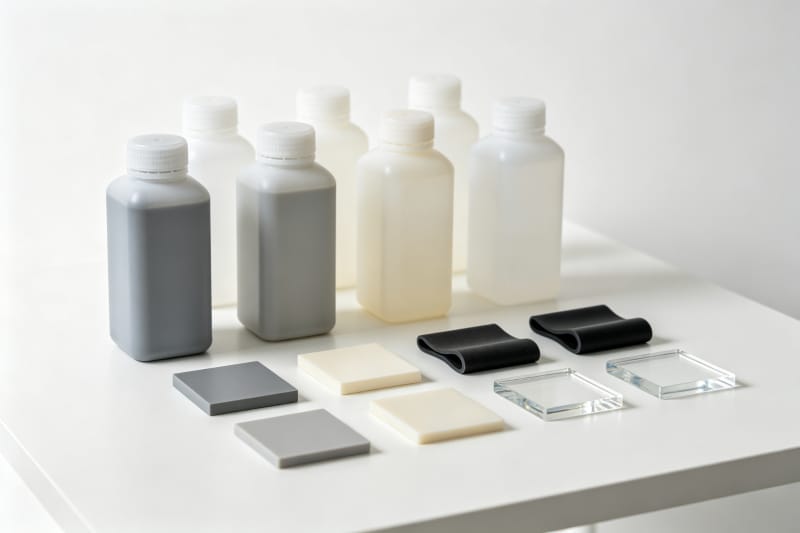
Choosing the Right Resin Family for the Part's Job
The biggest advantage of 3d printing in resin is material breadth: the same geometry can be produced rigid for a display model, tough for a living-hinge trial, rubber-like for a grip, or optically clear for a light guide. Selecting the family before quoting prevents the classic mismatch where a standard display resin is expected to survive a drop test it was never formulated for. Table 1 summarizes the families HUANYA keeps in regular production and the jobs each one is genuinely suited to.
Resin family | Key characteristics | Typical B2B application |
Standard rigid | Smooth matte surface, very fine detail, stiff and easy to finish | Concept models, display prototypes, masters |
Tough / ABS-like | Impact resistant, moderate flex, supports snap fits and clips | Functional enclosures, brackets, hinge trials |
Flexible rubber-like | Elastic, high elongation, soft-touch Shore range | Grips, gaskets, overmold simulation |
Clear transparent | Polishes to optical clarity, low haze after annealing | Lenses, light guides, fluidic parts |
High-temperature | Elevated heat-deflection resistance, grade dependent | Thermal tests, soft-tool and molding trials |
Castable wax-filled | Clean ash-free burnout, captures fine filigree | Investment-casting masters, jewelry |
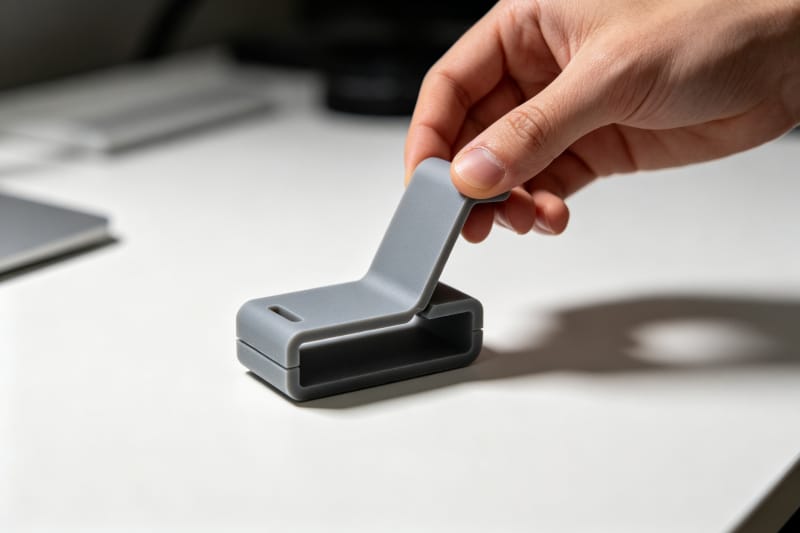
Design Rules That Preserve Fine Detail
Fine detail is decided in the CAD file, not at the printer. Industrial SLA holds layer thicknesses from 0.025 to 0.10 mm, yet walls thinner than about 0.4 mm, embossed text below 0.4 mm high or pins under half a millimetre can warp in processing or simply disappear. Designing to the reference values in Table 2 is the fastest way to keep a small batch 3d printing job inside tolerance without repeated redesign cycles.
Design parameter | Typical SLA reference value |
Layer thickness | 0.025–0.10 mm |
Minimum supported wall | 0.4–0.6 mm |
Minimum unsupported wall or free span | 0.8–1.0 mm |
Smallest raised or recessed detail | 0.10–0.20 mm |
Minimum embossed text height | about 0.4 mm |
Clearance for moving fits | 0.2–0.3 mm |
Drain holes for hollow parts | 3.0–4.5 mm at low points |
Typical dimensional tolerance | ±0.1–0.2 mm per 100 mm |
Orientation deserves as much attention as wall thickness. Surfaces tilted away from the build platform carry far fewer support marks, and long thin blades print straighter when laid at an angle instead of standing vertically. HUANYA's application engineers review orientation on every file, because a ten-minute orientation change removes witness marks that an hour of polishing cannot fully hide.
Hollow parts need an escape route. An enclosed shell traps liquid resin inside and can crack during the heated post-cure, so hollow models need drain holes of at least 3.0–4.5 mm placed at their low points; clear parts especially need complete draining to avoid a cloudy interior. Drainage and venting layout is part of the file review, not an afterthought discovered on the workshop floor.
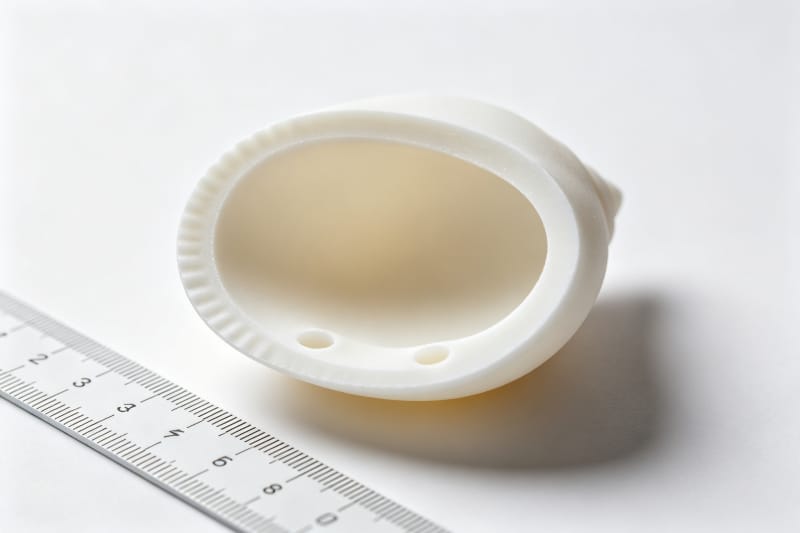
From One Master to a Repeatable Small Batch
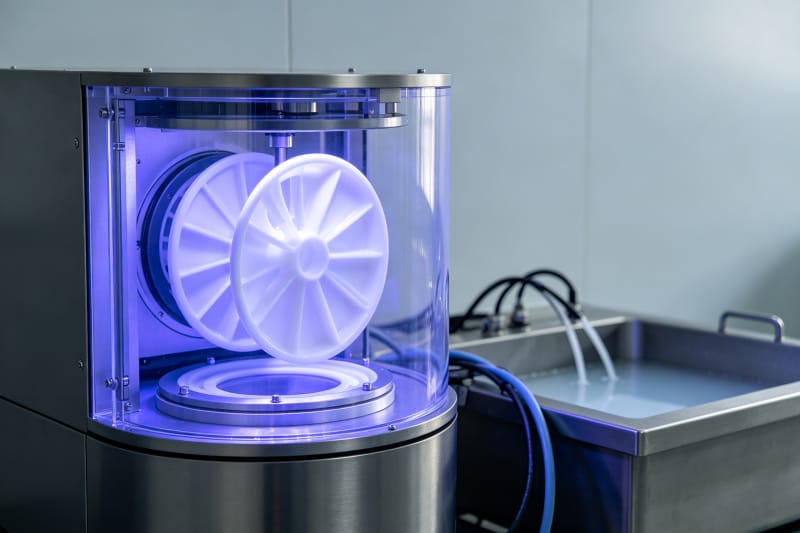
A single flawless master proves geometry; fifty identical parts prove a process. Between batches, resin parts are sensitive to wash time, solvent freshness and UV post-cure energy, which is why repeatable production uses fixed wash cycles, calibrated cure chambers and the same orientation and support strategy for every copy. Once these are frozen, batch-to-batch color, stiffness and dimensions stay inside the same narrow window.
HUANYA treats small-batch resin orders as miniature production runs: build layout, support set and finishing route are locked after the first approved article, then reused for every later batch. Customers reordering months later receive parts made to the same documented parameters, which is what lets resin prototypes graduate into bridge production while steel tooling is still being cut.
Post-Processing Routes for a Production-Grade Finish
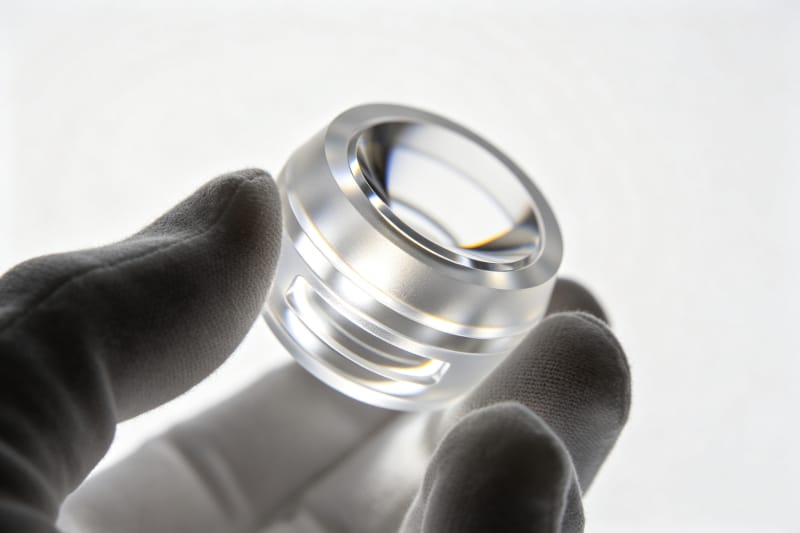
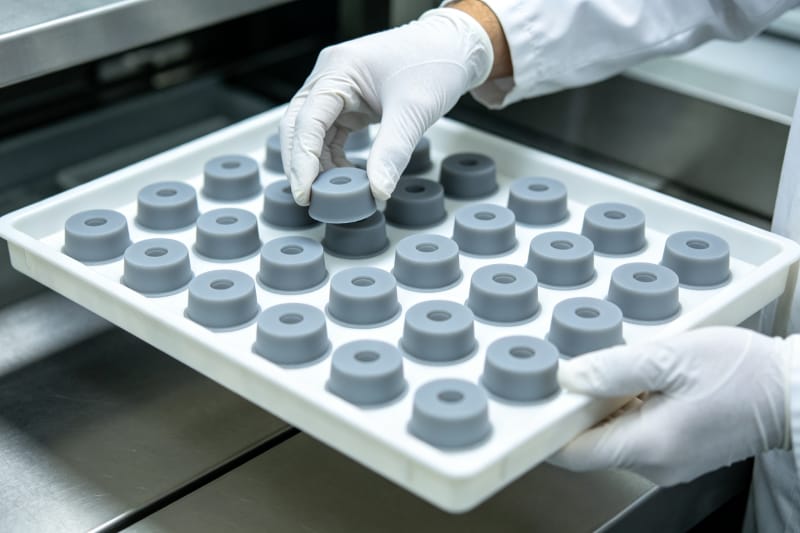
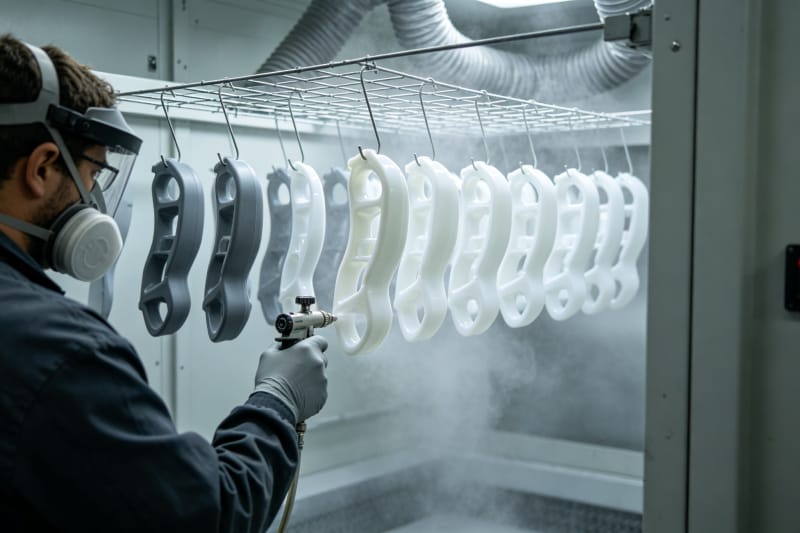
Raw SLA parts leave the machine with matte support nubs and a thin uncured surface layer. Standard finishing removes supports, levels contact spots and applies a controlled UV post-cure; from there buyers can choose bead-blasted matte surfaces, primer and paint, soft-touch coating, or a multi-stage polish that turns clear resin into a transparent lens-grade finish.
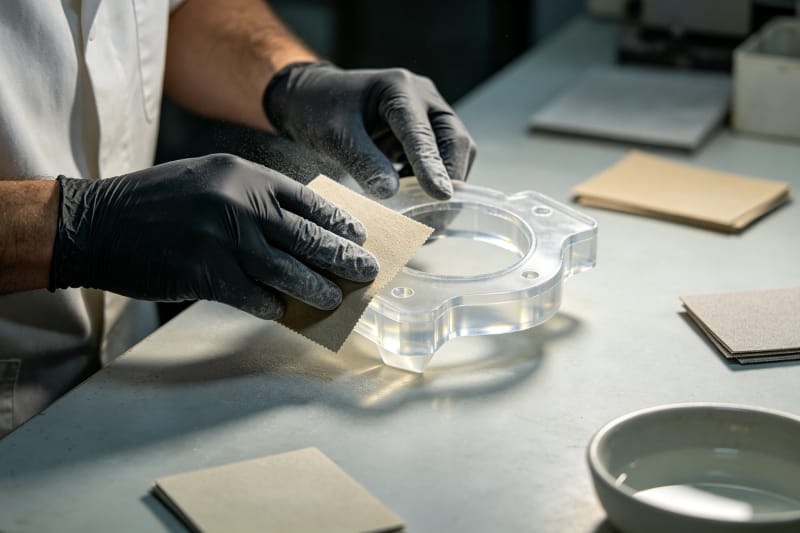
Clear and optical parts are the hardest case: polishing follows a fixed grit sequence, and light guides need stress-relief annealing before polishing or internal stress appears as faint haze. HUANYA applies the same finishing route to every part in an order, so buyers never encounter batch-to-batch differences in post-processing quality, one of the issues most often reported with unmanaged suppliers.
What Drives the Price and Lead Time of Resin Orders
Resin pricing follows four levers: material grade, part volume and Z height, support and cleaning labor, and finishing level. Tall parts that build slowly along Z and parts printed solid cost far more than the same geometry hollowed or nested efficiently; orienting and hollowing a model before upload often saves more than any discount code.
Lead time is set mainly by the wash, cure and finishing chain rather than by the print itself. A batch of twenty parts often nests on one industrial platform and builds overnight; washing, UV curing, finishing and inspection then run on a fixed schedule. HUANYA quotes a concrete ship date with every order and protects it with parallel machine capacity, so customers do not face missed delivery dates caused by a single overloaded desktop printer.
Inspection and Documentation Buyers Should Expect
High-detail claims mean nothing without measurement. Critical dimensions should be checked with calibrated calipers, a height gauge or an optical comparator, and first-article inspection reports should list nominal value, measured value and tolerance for every critical feature. For assemblies, test-fits on matched pins and holes catch clearance problems before a batch ever ships.
Material documentation matters for regulated buyers: resin grade, lot number, post-cure settings and finishing route should all be traceable. HUANYA supplies inspection records and material certificates on request and holds dimensional accuracy stable across the run, so customers never see the dimensional instability that appears when settings drift between machines.
Why Product Teams Stay With HUANYA for Resin Work
A dependable resin partner combines fine-detail capability with production discipline: the right photopolymer for each function, design-for-printing review before the first layer, frozen process settings across the batch, and consistent finishing backed by measurement. HUANYA brings that combination to custom resin and polymer small-batch orders, from one master to low-volume bridge production. Send a file and receive a manufacturability review, a transparent quote and parts that match the approved sample, batch after batch.


Leave a Comment