
 English
 French
 Deutsch
 العربية
 Español
 Русский
 にほんご
にほんご Português
 한국어
한국어
What High Quality Really Means for Industrial Custom Work
For an engineering team, high quality 3d printing is not a sharper marketing photo. It is a part whose critical dimensions land inside tolerance, whose material behaves like its datasheet, and whose third reorder looks and performs identically to the first. Industrial custom parts usually enter a real assembly, carry a real load or survive a real thermal cycle, so a cosmetic prototype that simply "looks about right" is not enough. Quality at this level is built from controlled processes, traceable materials and measured results rather than from the printer brand printed on a brochure.

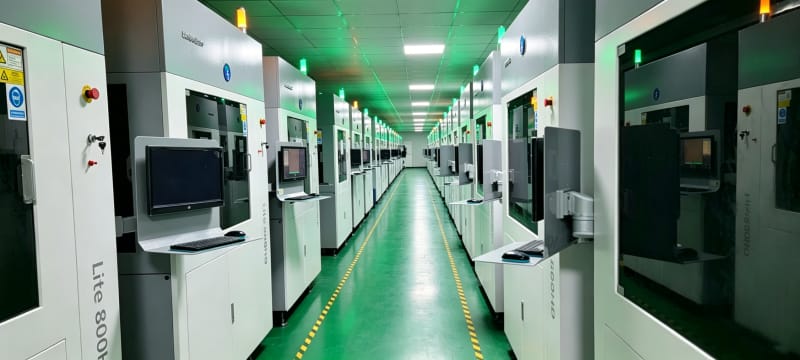
Almost always, the deciding factor is the system around the machine, not the machine itself. A desktop printer can produce one good part on a good day; an industrial 3d printing operation produces the same good part on Tuesday and Friday, across different machines and operators, because settings, maintenance, environment and inspection are standardized. HUANYA runs custom-part production as a controlled factory process, with logged parameters and defined acceptance criteria, so quality is planned into the order instead of being hoped for at unboxing.
Matching the Process to What the Part Must Do
No single additive process is best at everything, and quality begins by matching technology to function: FDM for low-cost jigs and large enclosures in engineering thermoplastics, SLA when fine detail and smooth surfaces dominate, SLS and MJF for tough nylon parts without supports, and powder-bed metal fusion for dense steel, aluminum or titanium components. Asking the cheapest process to meet demands it was never designed for is the fastest route to a disappointing part. Table 1 shows the capability ranges HUANYA works to, expressed as typical industry reference values that vary with geometry and material.
Process | Typical layer thickness | Typical tolerance reference | Strengths for industrial custom work |
FDM | 0.10–0.30 mm | about ±0.3–0.5 mm per 100 mm | Low-cost jigs, large housings, engineering thermoplastics |
SLA | 0.025–0.10 mm | about ±0.1–0.2 mm per 100 mm | Finest detail, smooth surfaces, masters and display parts |
SLS | 0.10–0.12 mm | about ±0.2–0.3 mm per 100 mm | Tough nylon, no supports, living hinges, small batches |
MJF | about 0.08 mm | about ±0.2–0.3 mm per 100 mm | Uniform nylon properties, repeatable small series |
SLM / DMLS metal | 0.02–0.06 mm | as-built ±0.1 mm, tighter after machining | Dense metal parts, conformal and lightweight geometry |
Process choice also drives every downstream decision. Nylon from SLS needs no support removal and suits living hinges and snap fits, fine SLA masters feed silicone vacuum casting for short runs, and metal parts from SLM usually pair with CNC finishing on mating faces. A custom 3d printing service worth its name reviews the part's function, quantity and post-processing before recommending a route, instead of forcing every job through whatever machine happens to be free.
Engineering-Grade Materials Instead of Hobby Stock
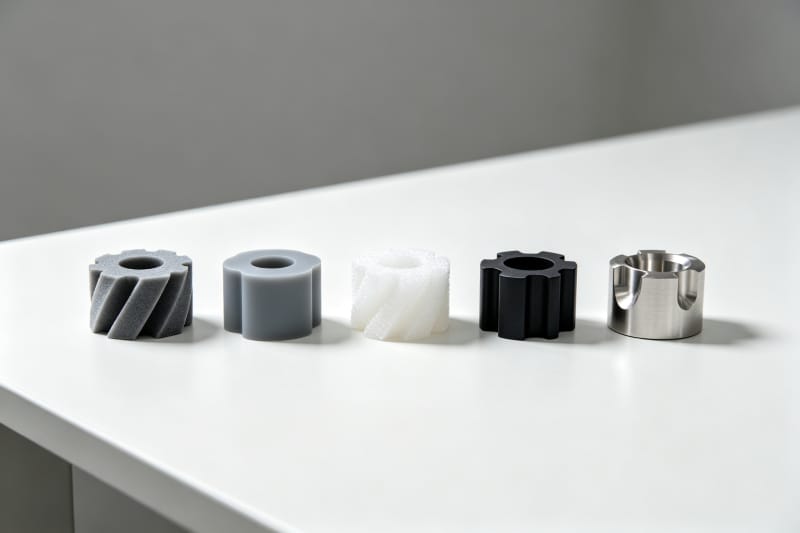
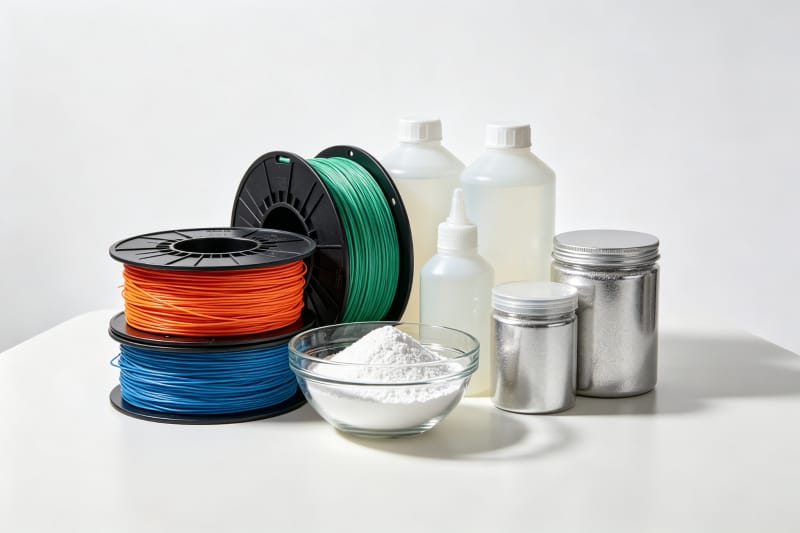
Material is where many low quotes quietly cut corners. Industrial work draws on traceable engineering grades: ABS-PC and carbon-fiber-reinforced filaments, PA12 and PA11 nylon powders with certified property data, tough and heat-resistant photopolymers, and gas-atomized metal powders with alloy certificates. A 3d printing prototype evaluated for real performance must be made from a material comparable to the end-use polymer or metal, otherwise fit tests and load trials measure the wrong thing entirely. HUANYA records the material batch for every order, so properties stay traceable from quote to delivery.
Quality Controls Built Into Every Stage of the Order
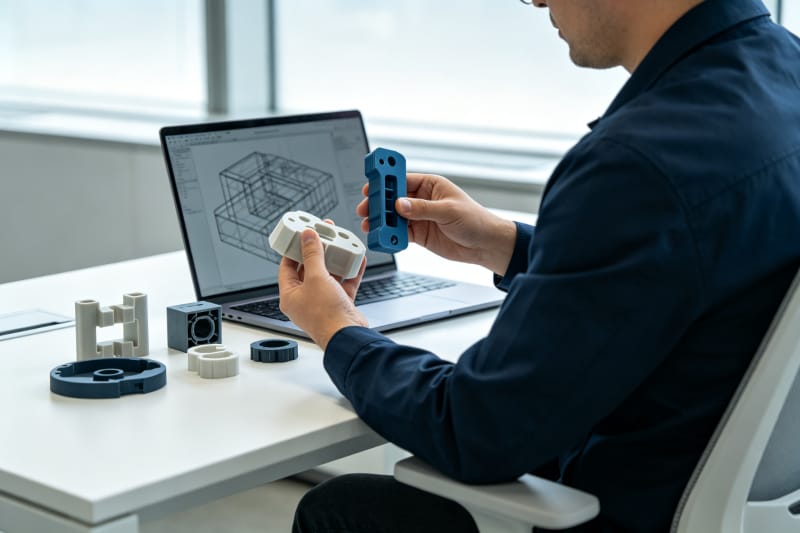
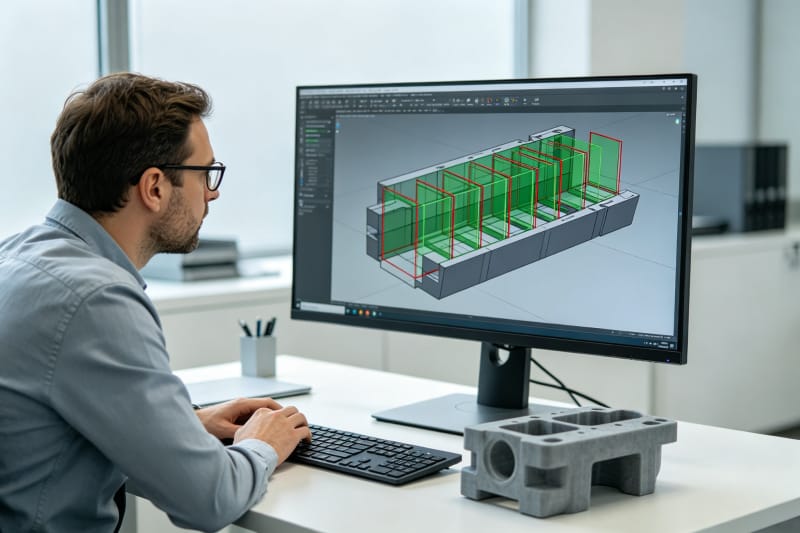
Quality cannot be inspected into a finished part; it has to be controlled at every stage. The first gate is a design-for-manufacturing review before production, where wall thicknesses, holes, clearances, trapped volumes and orientation are checked against the chosen process and corrected while changes cost nothing. Catching a 0.3 mm wall in the file is cheap; discovering it after twenty parts have been built is not.
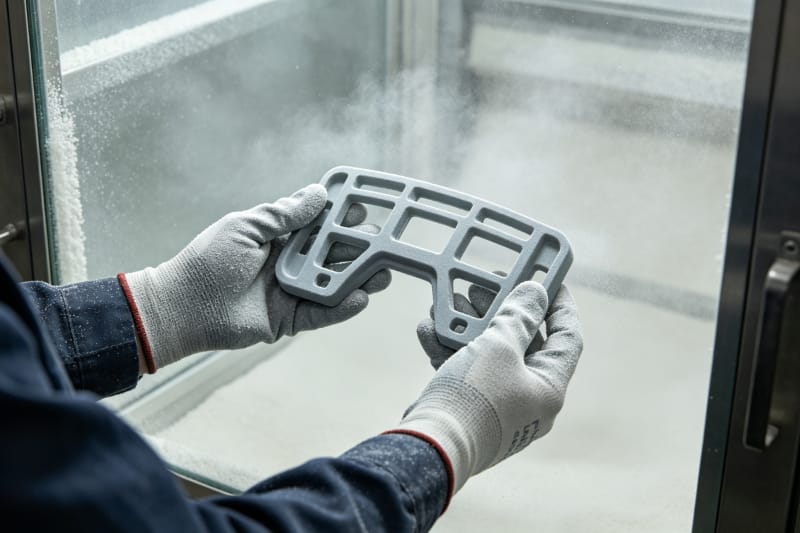
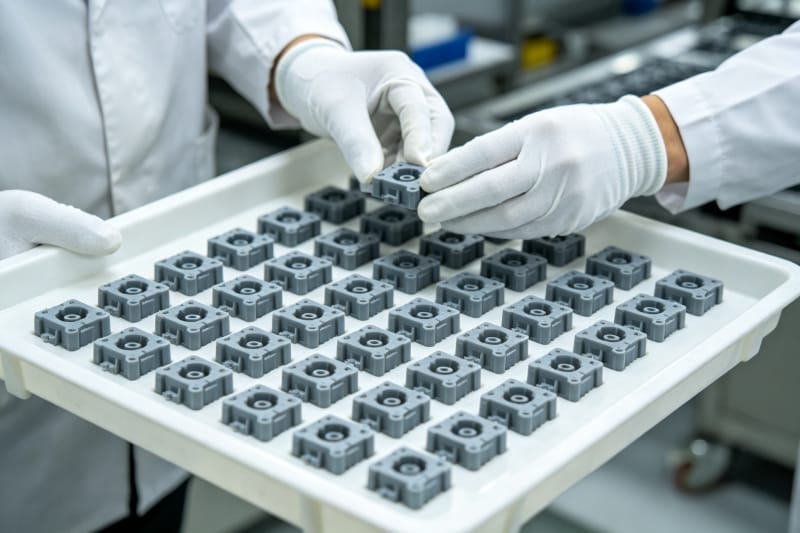
The second gate is the first article: before the rest of a batch is released, one part is measured in full against the drawing, and any deviation is resolved while the machine is still available. Table 2 maps the quality actions HUANYA applies across the lifecycle of an order and the specific failure each one prevents.
Order stage | Quality action | Failure it prevents |
File intake / DFM | Wall, hole, clearance and printability review | Unprintable thin walls, trapped geometry |
Material and setup | Lot-checked material, calibrated parameters, fixed orientation | Property drift between builds |
First article | Full critical-dimension inspection before batch release | One error repeated across the whole batch |
In-process | Build monitoring, fixed wash, cure or sinter cycles | Warpage, under-cure, inconsistent density |
Finishing | Standardized route with fixed grit and coating specs | Batch-to-batch surface differences |
Outgoing QC | Calibrated measurement, report, protective packing | Out-of-tolerance parts reaching assembly |
The third gate is process control during the build: fixed machine parameters, monitored chamber and bed conditions, and standardized wash, cure or sinter cycles keep material properties inside their window. These controls are invisible as a quotation line item, but they are exactly what separates a stable supplier from a workshop that delivers a perfect sample and drifts on every reorder.
Dimensional Accuracy and How It Is Proven
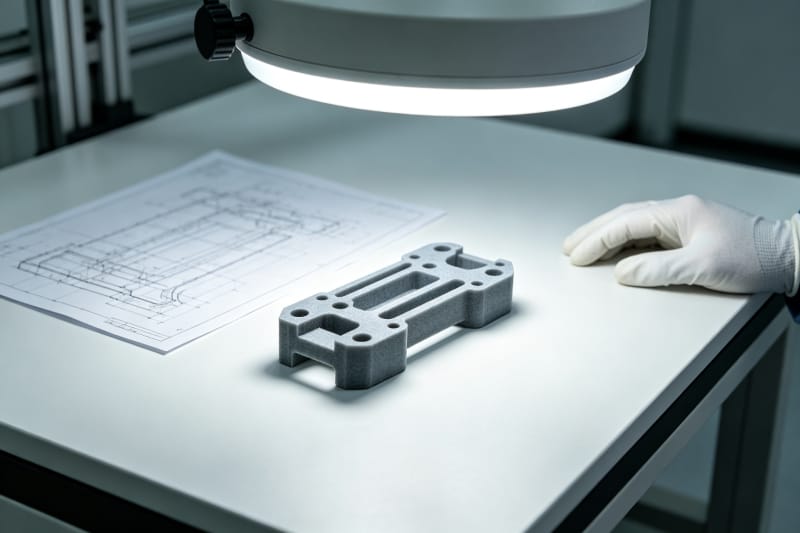
Tolerance claims should always come with a measurement method. Routine dimensions are checked with calibrated calipers and micrometers, fine geometry with height gauges and optical comparators, and true three-dimensional position with coordinate measuring machines; first-article and outgoing reports record nominal, measured and deviation values for every critical dimension. Without that paperwork, "high precision" remains only an adjective.

Designers influence achievable accuracy as much as the machine does. Large flat areas are more stable with ribbing, asymmetrical sections benefit from balanced wall thicknesses, and tight fits are far easier when clearance is designed for the process instead of corrected by hand. HUANYA's engineers flag such points during file review and state plainly which tolerances each geometry can realistically hold, rather than promising numbers the process cannot deliver.
Finishing That Stays Consistent Across the Batch
A raw printed part is rarely the finished product. Industrial finishing routes include bead blasting for a uniform matte surface, support removal and leveled contact points, primer with wet paint or powder coating, vapor smoothing for nylon, tumbling and polishing, plus threaded inserts and assembly. The route and its parameters, from grit sequence to coating thickness and masking, should be written down so every part follows the same path.
Consistency is the genuinely hard part of finishing, because humidity, operator pressure and curing time all change how a surface looks. HUANYA uses fixed finishing instructions and keeps reference samples for each order, which is why customers never encounter batch-to-batch differences in post-processing quality, one of the three issues buyers most often report after leaving informal suppliers.
Repeatability When Orders Return Quarter After Quarter
Many industrial buyers do not order once: they reorder the same bracket, housing or spare part across quarters as assemblies evolve and spares are consumed. Repeatability requires the file, process parameters, orientation, material grade and finishing route to be archived together, so a reorder reproduces the approved article instead of being interpreted from scratch by a new operator.
Capacity protects the schedule just as process protects quality. A fleet of industrial machines across several technologies absorbs urgent jobs and planned batches in parallel, with buffer capacity reserved for re-runs. HUANYA commits a concrete ship date for each order and holds to it, so customers never face the delivery delays that occur when one overloaded machine becomes the bottleneck for an entire production line.
Why Industrial Buyers Build Their Parts With HUANYA
High-quality industrial custom work needs one accountable partner across the whole chain: the right process for each function, certified materials, staged quality gates, measured tolerances, standardized finishing and archived repeatability. HUANYA is built around production discipline rather than one-off prints, delivering custom parts and prototypes that fit, perform and match on every reorder. Send the drawing and the requirement, and receive a manufacturability review, a transparent quote and parts measured against the same standard, batch after batch.


Leave a Comment