
 English
 French
 Deutsch
 العربية
 Español
 Русский
 にほんご
にほんご Português
 한국어
한국어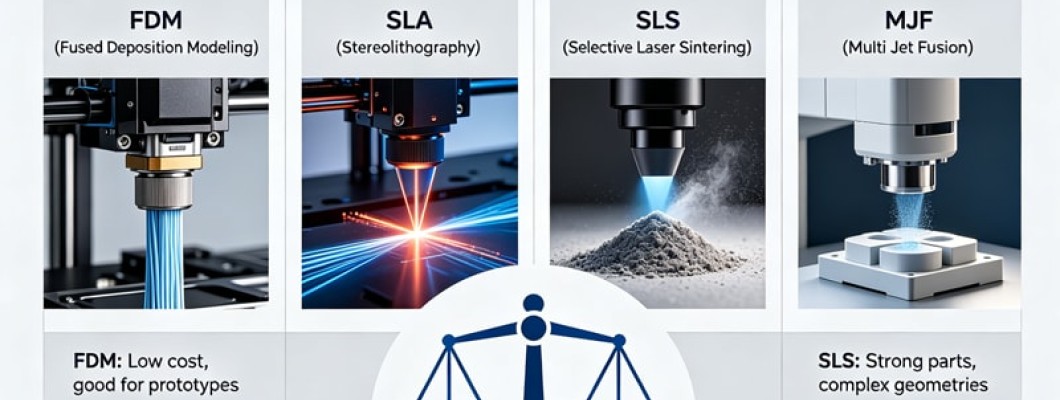
The Core Conflict: Strength vs. Aesthetics in 3D Printing
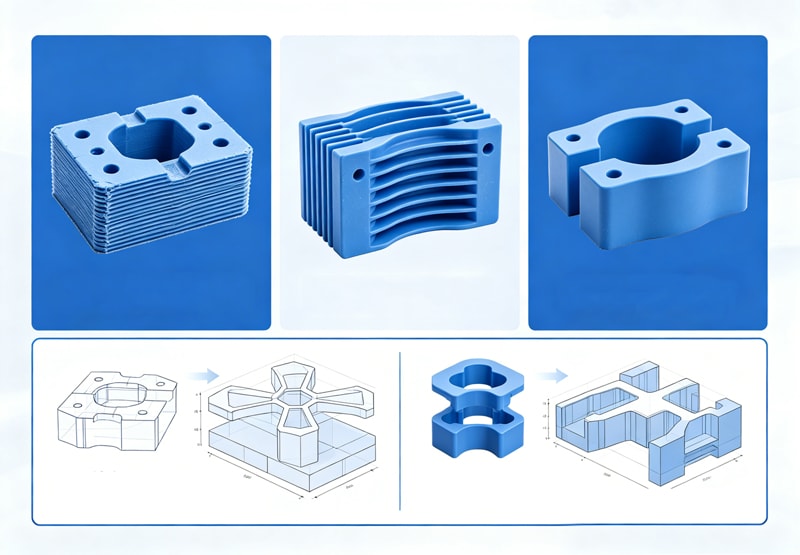
3D printing design constantly grapples with a fundamental trade-off: features that boost mechanical strength often undermine visual quality, and vice versa. Thicker walls add durability but cause sink marks or visible layer lines, while thin, smooth surfaces for aesthetics risk fragility. Reinforcements like ribs improve load-bearing capacity but disrupt surface uniformity, creating a persistent challenge for designers.
As parts transition from prototypes to their final applications, this relationship becomes even more pronounced, where both performance and appearance are critical. Layer-based technologies, such as FDM, produce anisotropic strength, which weakens parts along specific axes, while fine aesthetic details often require delicate structures that can compromise durability. Understanding this conflict is the first step toward achieving a balanced and successful outcome.
When strength is fixed, priority should be given to the appearance, shape, and material selection. A consistent wall thickness can reduce internal stresses and printing failures, while rounded corners and radii can distribute forces evenly to prevent cracking. Aligning key features with load paths minimizes unnecessary material usage and enhances structural efficiency, especially for functional components such as supports or tools.
Material selection directly impacts durability: ABS-M30 outperforms standard ABS for functional prototypes, nylon offers excellent fatigue resistance for repeated stress, and carbon-filled nylon adds stiffness for high-stability parts. Avoid overly thin walls or sharp corners, as these create weak points. Even small design tweaks, like rounding edges, can drastically improve a part’s ability to withstand real-world use.
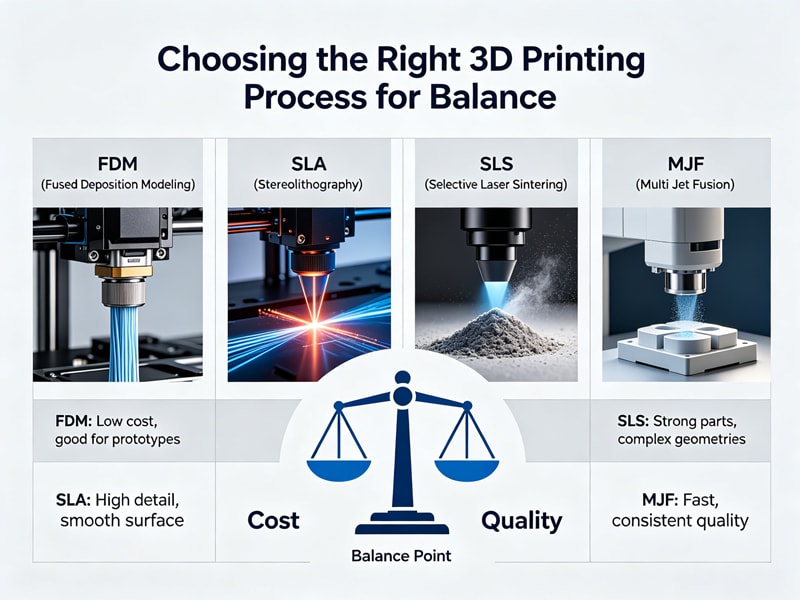
Choosing the Right 3D Printing Process for BalanceEach 3D printing technology offers a unique combination of strength and surface smoothness, making the choice of process crucial. FDM produces durable, cost-effective parts with visible layer lines, making it ideal for functional prototypes in indoor applications. SLA, on the other hand, creates ultra-smooth, finely detailed surfaces, making it well-suited for aesthetic designs.
SLS offers strong, isotropic parts with a slightly rough texture, great for durable functional components, while MJF strikes the best all-around balance: robust, consistent strength and a fine, uniform finish that needs minimal post-processing. Matching process to use case—MJF for production parts, SLA for cosmetic prototypes—ensures you don’t sacrifice one critical requirement for the other.
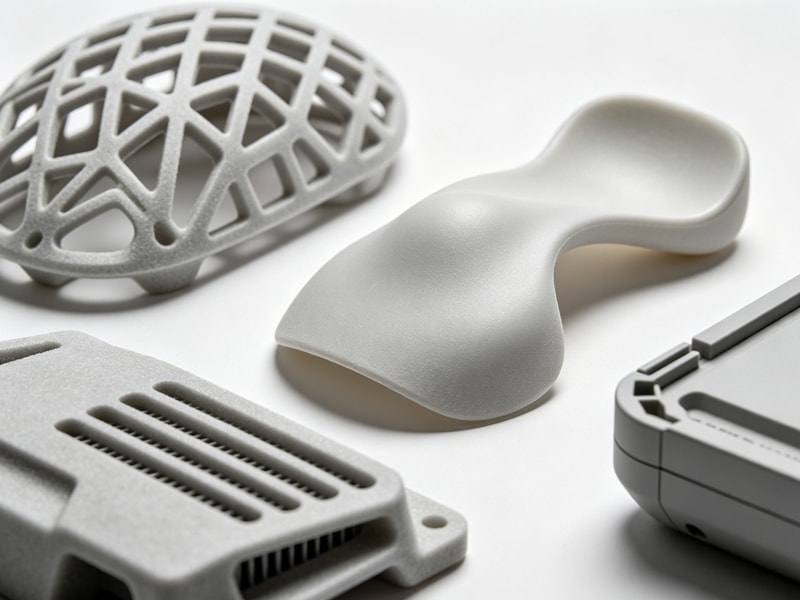
Post-Processing: Bridging Strength and Visual QualityPost-processing should not be understood as an afterthought; rather, it is a core design step to enhance strength and appearance. Smoothing can reduce the surface roughness of nylon parts while maintaining durability, making it an ideal choice for final functional components. Coloring and painting can add uniform color and a polished, attractive finish, which is the best choice for deliverables to customers, such as enclosures or decorative items.
Designing with post-processing in mind from the outset helps avoid deep cracks during finishing and ensures that additional material is added to surfaces that require sanding or polishing. This reduces post-printing work and ensures consistency in production runs. The best surface treatments transform a robust yet plain part into one that is both strong and aesthetically pleasing, narrowing the gap between function and form.
Architectural and artistic projects showcase stunning balance between strength and aesthetics. A large-scale 3D-printed metal pavilion uses parametric design and wire arc additive manufacturing to blend intricate, visually striking geometry with structural durability, standing outdoors long-term. This project cuts construction waste and time while creating a landmark that merges art and engineering seamlessly.
Consumer and industrial products also benefit from balanced design: custom phone stands use thick, sturdy bases for stability and thin, sleek upper sections for a minimalist look, resisting daily wear while fitting modern desk aesthetics. Automotive brackets use FDM with carbon-filled nylon for strength, paired with textured surfaces to hide layer lines, delivering durable performance and a clean, finished appearance.
Scaling Balanced Designs to ProductionAs designs scale from prototyping to mass production, consistency of strength and aesthetics becomes critical. Technologies like MJF ensure uniform mechanical properties and surface quality across batches, with tight tolerances that reduce variability for end-use parts. Designs that balance function and form from the start need fewer adjustments during validation, avoiding costly redesigns.
Success at scale also relies on standardized material-process pairings: MJF with PA12 for strong, smooth production parts; SLA with engineering resins for detailed, moderate-strength prototypes; FDM with ABS-M30 for durable, low-cost indoor components. These pairings minimize post-processing and ensure every part meets both performance and visual standards, turning balanced designs into reliable, scalable products.


Leave a Comment