
 English
 French
 Deutsch
 العربية
 Español
 Русский
 にほんご
にほんご Português
 한국어
한국어
29 Aug
Why Speed Decides Product Development Outcomes
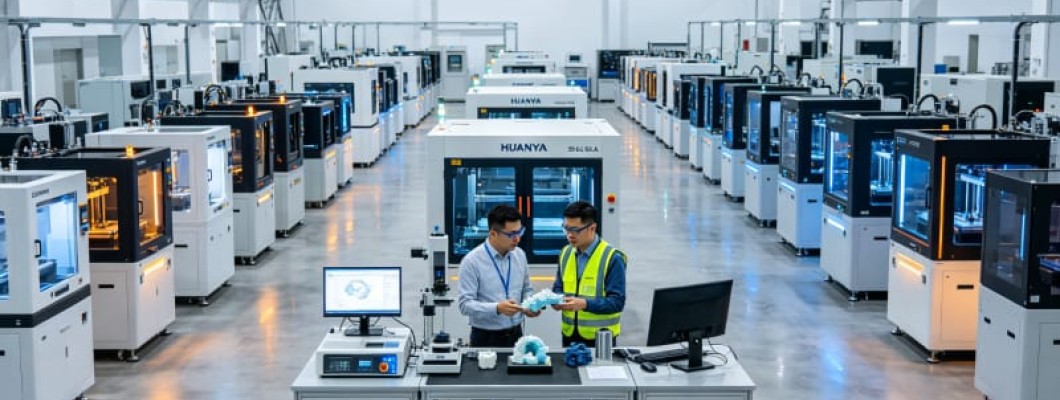
In product development, the speed from concept to physical part directly determines your market window. A team waiting two weeks for a first prototype loses at least three iteration cycles compared to a competitor holding parts in three days. Delay means more than lost time—it means design flaws discovered late, engineering change costs that grow exponentially as the project advances, and a product that misses its optimal launch window. At HUANYA, we integrate 3D design and printing into a continuous workflow, stripping out every non-value-added step in file conversion, quoting, and production scheduling so your team spends time on engineering decisions, not waiting for parts.
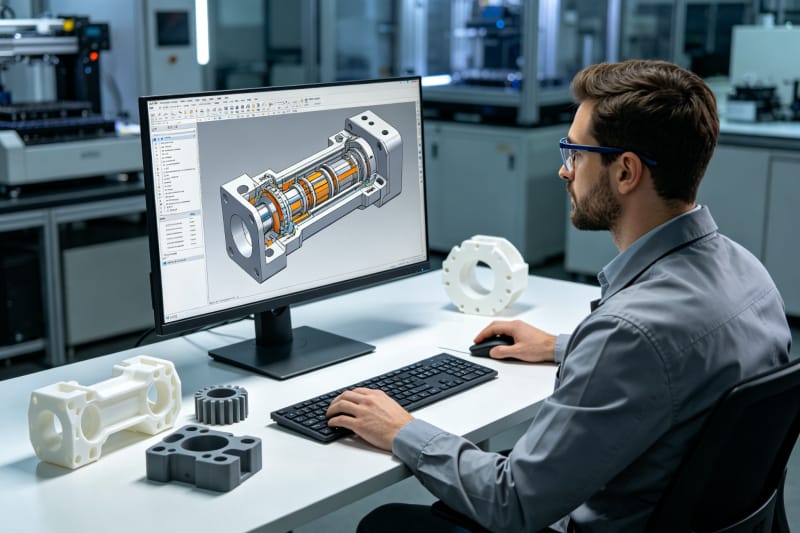
In a traditional development flow, design completion triggers 2D drawings, supplier quotes, process evaluation, scheduling, and shipping—each step potentially adding days of delay. By the time a prototype reaches the engineer, the design may already be outdated by new information. Our industrial 3D printing workflow compresses this chain to: upload a 3D file, automated manufacturability analysis, instant process and lead-time confirmation, and same-day print start. Simple FDM parts can ship within 24 hours; complex SLS nylon or SLA resin parts typically deliver in three to five business days. This speed is not rushed production at the expense of quality—it is repeatable fast turnaround enabled by standardized processes and machine capacity.
Design for Manufacturing Avoids Rework on Screen
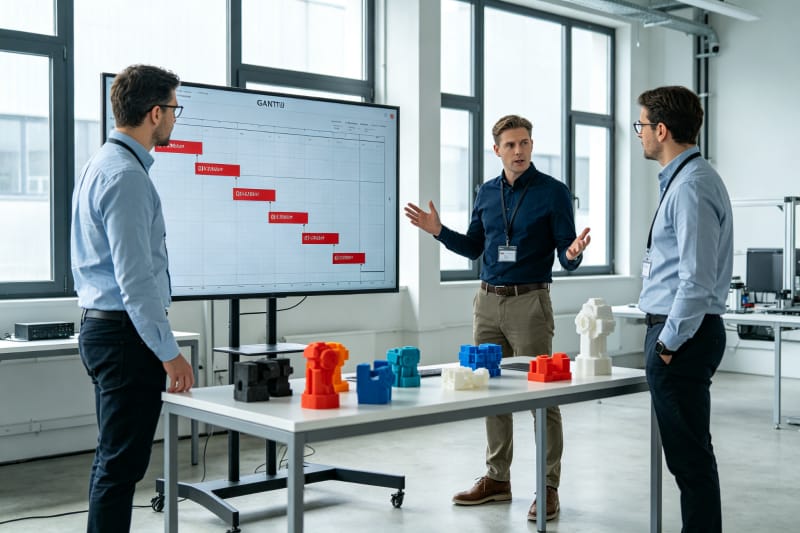
Design for manufacturing (DFM) is the first line of defense for fast delivery. A model that looks perfect in CAD may have uneven wall thickness, excessive overhang angles, insufficient assembly clearance, or stress concentrations—problems that, if discovered after printing, mean reprinting, retesting, and days of delay. HUANYA's engineering team completes a systematic DFM review before printing starts: checking minimum wall thickness against process requirements, evaluating overhang faces for support needs, verifying tolerance allowances on assembly features, and identifying large cross-section areas that could cause warping.
DFM review is not a simple automated checklist. Our engineers evaluate each feature against the part's intended function and test conditions, deciding what must be preserved and what can be optimized. A hinge area subject to snap-fit forces cannot be thickened just for print speed, while a non-critical internal rib can be reoriented to reduce supports. We feed annotations back to your team, making revisions on screen rather than discovering problems on a printed part. This upfront engineering involvement typically eliminates over 80% of first-print failures, ensuring the first part in your hands is ready for testing.
File Preparation and Process Matching Decisions
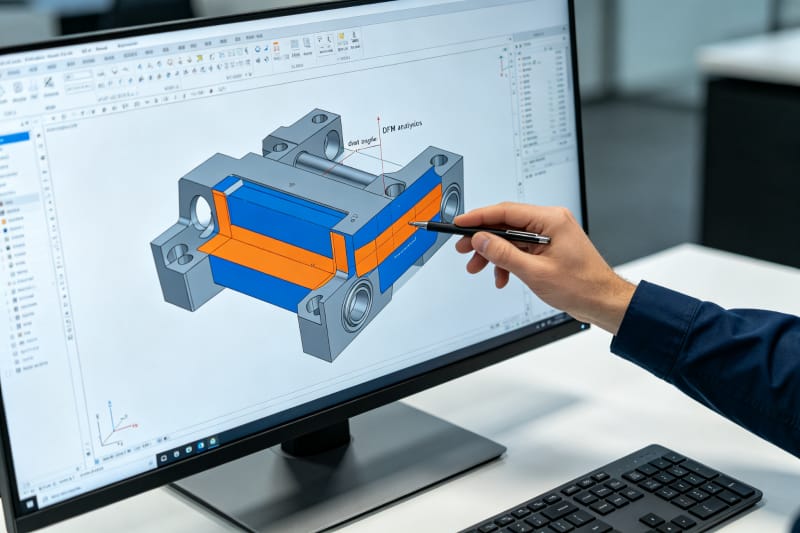
3D file preparation is the bridge between design and manufacturing. STL and STEP file resolution, part orientation in the build chamber, and support generation strategy—each decision affects mechanical performance, surface quality, and lead time. The same part oriented horizontally may gain optimal interlayer strength but require more supports, while vertical orientation may yield better surface finish but weaker interlayer bonding. At HUANYA, we process every file with professional software, determining optimal orientation based on load direction, critical mating surfaces, and appearance requirements.
Process selection is equally critical. FDM suits large structural parts and assembly fixtures with low material cost but visible layer lines; SLS nylon handles complex functional parts with no supports and isotropic mechanical properties; SLA delivers fine detail and smooth surfaces for appearance parts and master patterns but has limited heat resistance; SLM metal produces high-strength, high-temperature parts at higher cost and lead time. We match the process to functional requirements, test conditions, and budget rather than forcing every project through a single technology. The table below shows typical lead times and accuracy parameters for each process.
Process | Typical Lead Time | Layer Height (mm) | Dimensional Accuracy | Best For |
|---|---|---|---|---|
FDM | 1-3 business days | 0.1-0.3 | ±0.15 mm | Large structural parts, fixtures |
SLS | 2-5 business days | 0.08-0.12 | ±0.1 mm | Complex nylon functional parts |
SLA | 1-3 business days | 0.025-0.1 | ±0.05 mm | Fine detail, master patterns |
SLM Metal | 5-10 business days | 0.02-0.06 | ±0.05 mm | High-strength metal parts |
Rapid Iteration Hours Instead of Weeks
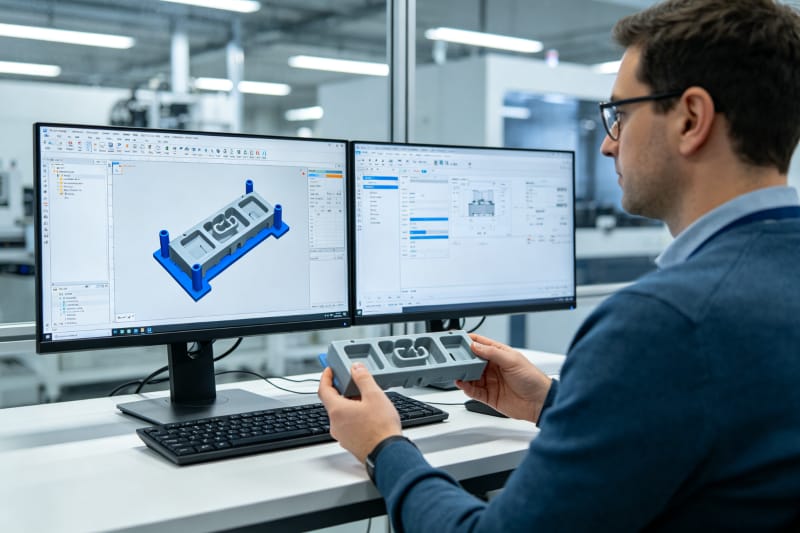
Rapid iteration is the single biggest structural advantage of 3D printing over traditional manufacturing. Each round of CNC machining or soft-tool injection molding requires reprogramming or mold modification, typically taking one to two weeks; 3D printing only requires modifying the digital file and restarting the print, compressing iteration cycles to one or two days. Within the same development window, your team can complete five to eight design iterations instead of one or two. Every round exposes new problems and validates new solutions, producing a far more mature final design.
The value of iteration speed lies not just in the number of rounds but in the engineering team's decision rhythm. When feedback cycles shrink from two weeks to two days, engineers can verify assumptions and correct direction while the design is still fresh in memory, rather than losing context during long waits. At HUANYA, we support fast re-quoting and scheduling of iteration files, retaining process parameter records from previous prints to ensure consistent settings across rounds and comparable test results. The comparison below shows time differences between 3D printing and traditional methods at each development stage.
Development Stage | Traditional Method | 3D Printing | Time Saved |
|---|---|---|---|
First prototype | 2-4 weeks (CNC/tooling) | 1-3 days | 70-85% |
Design iteration (per round) | 1-2 weeks | 1-2 days | 80-90% |
Low-volume bridge production | 4-8 weeks (soft tooling) | 1-2 weeks | 60-75% |
Material Validation Prototypes That Behave Like Production
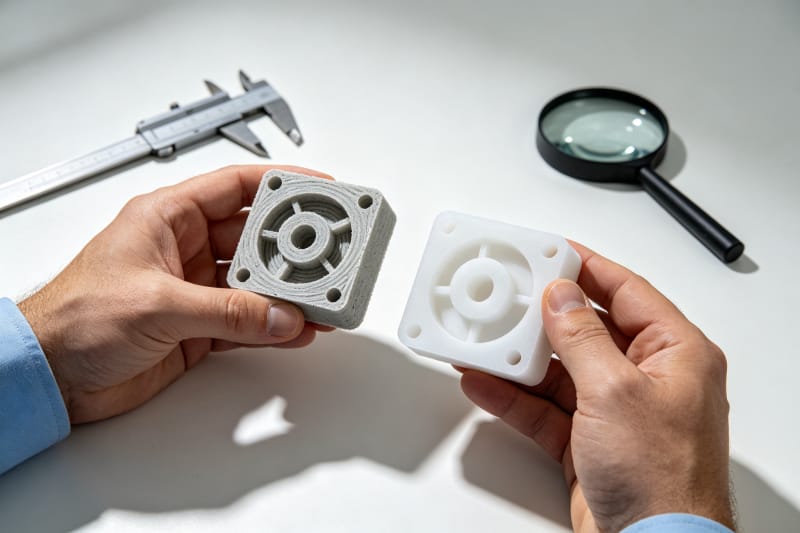
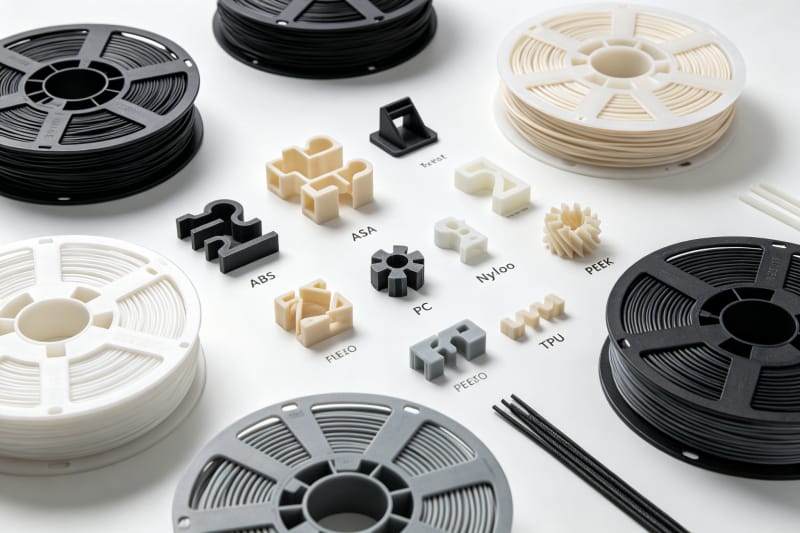
A functional prototype's value depends on how closely its material behavior matches the final production part. A PLA-printed prototype cannot validate the snap-fit behavior of an ABS part, and a standard resin print cannot represent the wear resistance of a nylon gear. Wrong material selection produces misleading test data—more dangerous than no prototype at all. HUANYA offers a complete material system covering engineering plastics and metals: ABS, ASA, PC, PA12, PA12-CF, PEEK, TPU, plus stainless steel, aluminum, and titanium alloys, with traceable material certificates and print parameter records for every material.
We also support using production-intent materials at the prototype stage. If your final product will be injection-molded ABS, we can print prototypes in FDM ABS; if your production part is a die casting, we can produce functional parts in SLM aluminum. This material consistency means structural strength, thermal performance, and assembly feedback gained from prototype testing directly inform production design, reducing surprises at mass production. For customers needing material data, we provide typical property tables including tensile strength, heat deflection temperature, and impact strength.
Post-Processing From Print to Functional Part
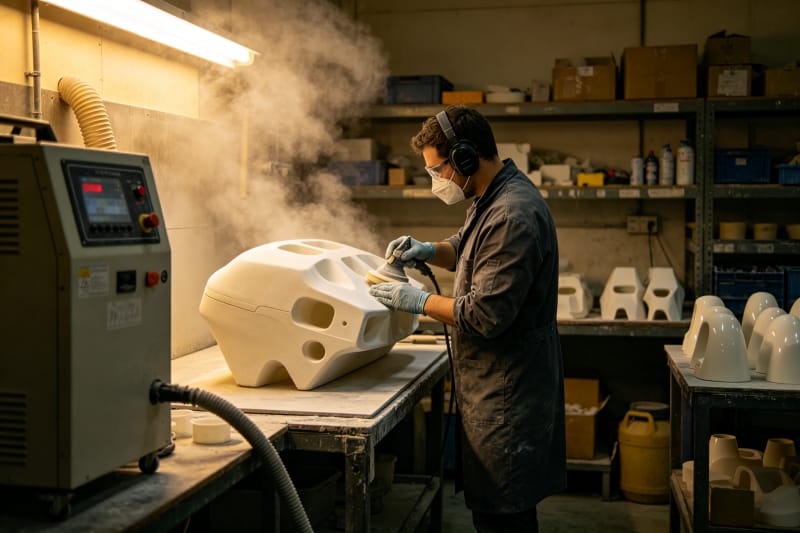
A raw print is rarely ready for functional testing. Support removal, surface treatment, and precision machining transform a fresh print into a test-ready functional prototype. Inconsistent post-processing is among the most common causes of prototype failure: over-sanded walls lose critical thickness, under-cured resin parts have reduced mechanical properties, and uneven coatings fail seal tests. At HUANYA, every post-processing step is specified according to the prototype's functional requirements rather than applied as a generic finishing routine. FDM parts can receive vapor smoothing or epoxy coating for airtightness; SLS nylon parts can be bead-blasted or tumble-polished; metal parts receive stress-relief heat treatment and CNC machining of critical features.
We also understand post-processing effects on dimensional accuracy. Sanding and bead blasting remove material, coatings add thickness, and heat treatment may cause minor deformation. Our process team leaves machining allowance before post-processing and verifies critical dimensions afterward, ensuring final parts meet drawing tolerances. For parts requiring specific surface roughness values, we measure and record results with a profilometer; for color or texture matching, we provide sample approval before batch processing. The result is a functional prototype that performs consistently in testing, with surface characteristics as close as possible to the intended production part.
Low-Volume Transition Scaling After Validation
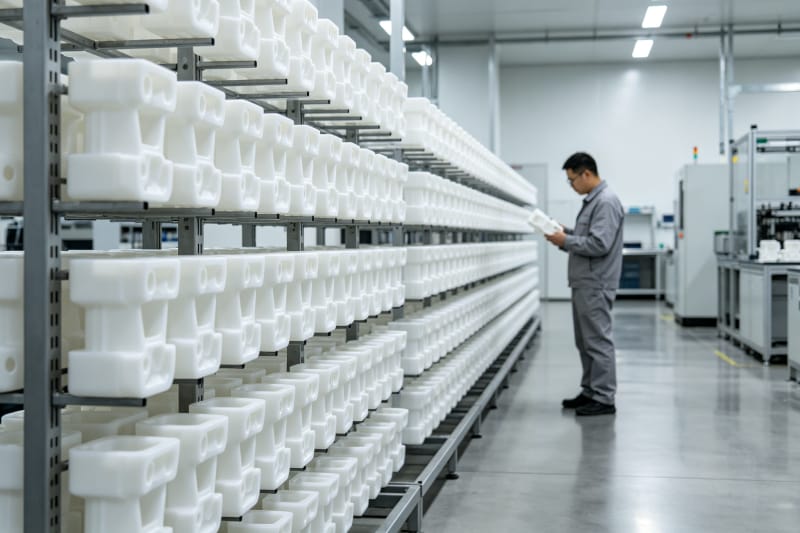
When a prototype passes validation, the project naturally moves to low-volume production. Many 3D printing services deliver excellent prototypes but cannot support the transition to low-volume manufacturing, forcing customers to find new suppliers, re-certify materials and processes, and add weeks or months. At HUANYA, our industrial 3D printing capabilities span prototype through low-volume production using the same materials, process parameters, and quality system. Once your prototype is validated, we can immediately scale to batches of 10, 50, or 500 parts with no new tooling or process changes.
This seamless transition also means design changes can be quickly integrated between prototype iterations and production runs. If testing reveals a needed modification, we update the digital model, produce a revised prototype for validation, then roll the change into the production batch—all within the same workflow. We provide material certificates, dimensional inspection reports, and process records for every batch, supporting your quality and regulatory requirements. For customers eventually moving to injection molding or die casting, our low-volume production serves as a bridge, reducing tooling investment risk by validating design and market demand before committing to mass manufacturing.
Delivery and Quality Promises That Hold
A delivery promise has value only when it can be kept. In the 3D printing industry, late delivery usually stems not from slow printing but from time-consuming quote communication, repeated file revisions, opaque scheduling, and unreliable logistics. HUANYA solves these through standardized processes: process confirmation and lead-time commitment within hours of file upload, progress milestone updates during production, and dimensional and visual inspection before shipment. Our capacity—including industrial FDM, SLS, SLA, and SLM equipment—ensures urgent orders can be scheduled quickly rather than waiting in queue.
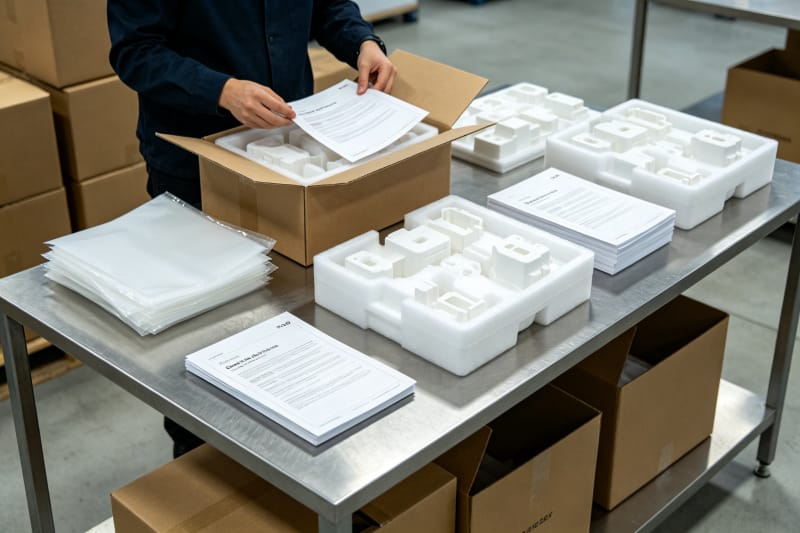
Quality assurance requires a system, not a slogan. We maintain complete process documentation: machine type, material lot, build orientation, layer parameters, and post-processing steps are all recorded, ensuring every batch is traceable and reproducible. For critical parts, we provide first-article inspection reports confirming key features meet specified tolerances. We do not have problems with unstable part dimensional accuracy, delivery delays, or inconsistent post-processing quality—these are exactly the risks we proactively eliminate through standardized workflows and quality checkpoints. Whether you need one prototype shipping tomorrow or fifty functional parts delivering next week, HUANYA delivers parts designed to become real products. Contact us today to start your project.


Leave a Comment