
 English
 French
 Deutsch
 العربية
 Español
 Русский
 にほんご
にほんご Português
 한국어
한국어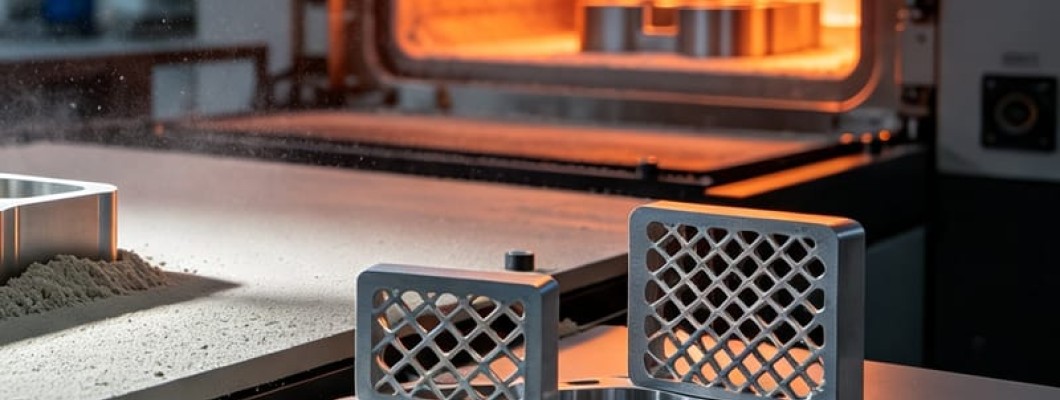
Manufacturing complex metal components in low to medium batches brings real challenges for industrial engineers. Conventional CNC struggles with intricate internal channels, SLM metal printing remains expensive for small runs, and casting requires costly tooling unsuitable for limited quantities. HUANYA leverages binder‑jetting metal technology to offer tool‑free low‑volume metal part solutions for industrial clients.
How binder jetting metal technology worksUnlike laser‑beam melting processes, binder jetting builds green parts at ambient temperature. Print heads deposit liquid binder onto thin metal powder layers layer‑by‑layer. After printing, green parts go through debinding and high‑temperature sintering to achieve full metal density. Loose surrounding powder supports geometries during printing, eliminating support structures and unlocking complex lattices, hollow cavities and internal flow channels.
Key benefits for low‑batch manufacturingThe main strength lies in small‑and‑medium‑volume orders. Numerous components can be nested densely inside one build box and produced simultaneously. High powder recycling rate cuts down per‑unit costs compared with SLM. It removes time‑consuming support removal and base‑plate cutting work, lowering manual‑process losses and fitting perfectly for prototype runs and small‑series manufacturing from dozens up to hundreds of pieces.
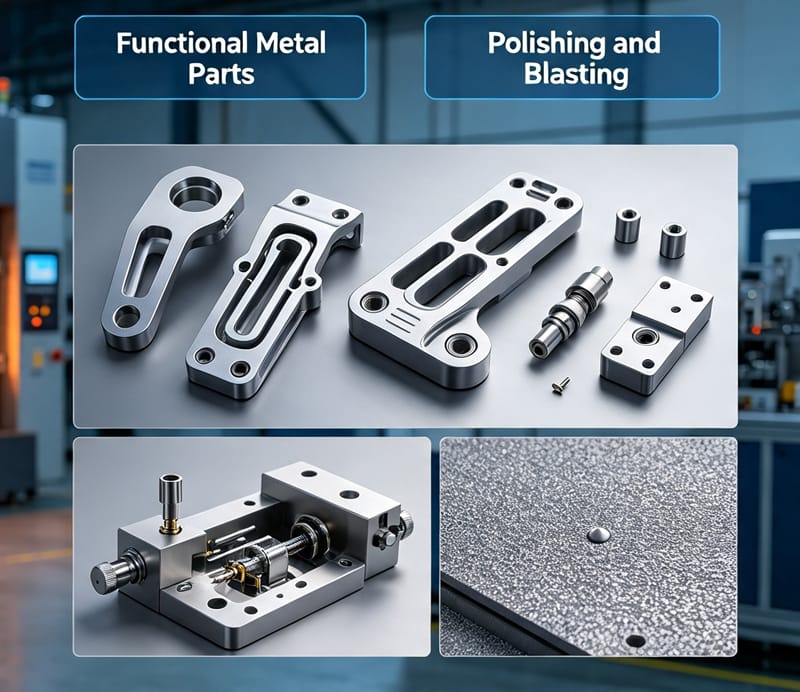
HUANYA’s binder‑jetting production line mainly processes 316L stainless steel. Sintered parts reach industrial‑level density for functional usage. Typical outputs include lightweight brackets, fluid manifolds, custom tooling fixtures and precision instrument internals. Post‑treatments such as polishing and blasting are available for assembly‑ready and corrosion‑resistant applications.
When should you pick binder jetting over other methodsBinder jetting stands out for runs of dozens to hundreds of pieces with complex hollow or internal‑channel features, where new casting molds would be uneconomical. For highly critical load‑bearing components under extreme stress, SLM may be more appropriate. HUANYA’s engineering team reviews drawings, batch sizes and working conditions to recommend the optimal manufacturing route.
Submit your CAD files to receive professional technical assessment and quotation from HUANYA.


Leave a Comment