
 English
 French
 Deutsch
 العربية
 Español
 Русский
 にほんご
にほんご Português
 한국어
한국어
What Cheap Should Actually Mean When You Order Online
A cheap online 3d printing service is only genuinely cheap when the quoted price is the whole price. For a product team, affordability means the total cost of getting a usable part in hand: no tooling investment, no minimum order quantity, no hidden rework after a failed first batch. Online ordering removes the friction of traditional fabrication, since a team uploads a file, picks material and finish and confirms the quote in minutes, but the savings are real only if the parts arrive in tolerance and ready to assemble on the first delivery.
Low price and low cost are different things. A slightly cheaper quote that delivers warped parts two weeks late forces a redesign cycle, an express re-order and a slipped launch, and those internal costs dwarf the few dollars saved on the invoice. An online 3d printing service that keeps prices low through process discipline, machine utilization, efficient nesting and standardized finishing passes on efficiency instead of risk, which is the kind of cheap that genuinely protects a development budget.

How an Online 3D Printing Quote Is Built
Understanding the quote is the first lever for controlling it. An additive order is priced mainly from six inputs: material volume, process tier, layer height, build orientation, how many parts share the build, and post-processing. None of them is mysterious, and each can be influenced before the file is ever uploaded. Table 1 breaks down where the money goes and the buyer move that controls each line, so a 3d printing quote becomes a design decision rather than a number you simply accept.
Cost factor | How it moves the price | Smart buyer move |
Material volume | Price scales mainly with material used, not outer bounding box | Hollow bulky parts, remove dead volume |
Process tier | FDM lowest, SLA / SLS / MJF mid, metal SLM highest by far | Match process to function, not prestige |
Layer height | Finer layers cost more machine time | Reserve fine layers for visible faces |
Build orientation | Tall orientation adds time; supports add removal labor | Let the factory orient, state critical faces |
Batch nesting | Shared builds spread the fixed setup cost | Group revisions, use quantity breaks |
Post-processing | Painting, polishing and inserts each add a step | Specify finish only where needed |
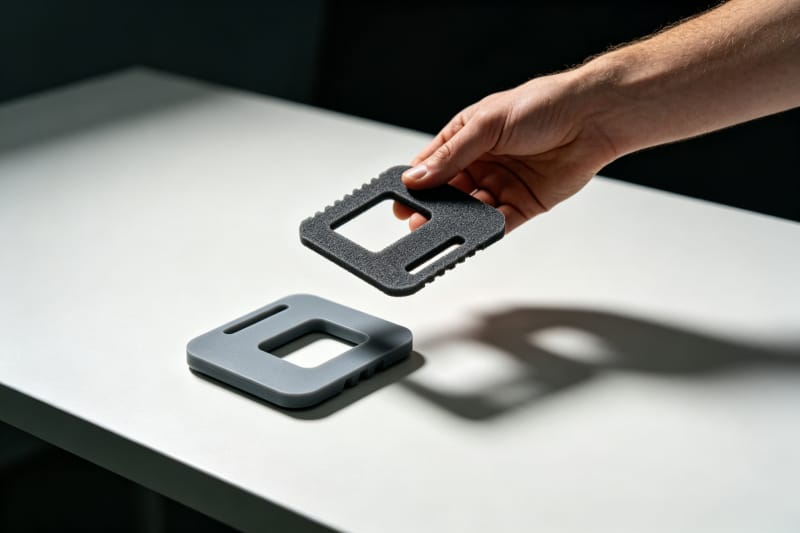
Match the Process to Budget and Function
The single biggest price decision is process tier, and it follows a predictable order. FDM sits at the bottom for jigs, brackets and bulky enclosures; SLA adds fine detail and smooth surfaces at a moderate step up; SLS and MJF nylon occupy the middle for tough, production-like parts; metal powder-bed fusion sits at the top and should be reserved for parts that genuinely need metal. Choosing FDM for an internal jig nobody sees, instead of a polished resin process, removes most of the cost without any loss of function.
Material choice follows the same logic. A prototype tested for shape alone does not need a certified aerospace polymer, and a low-volume bracket that must survive impact should not be downgraded to a brittle display resin to save a few grams of material. The economical choice is the lowest tier that still meets the actual requirement, and an honest supplier will recommend stepping down a tier whenever the drawing over-specifies the job.
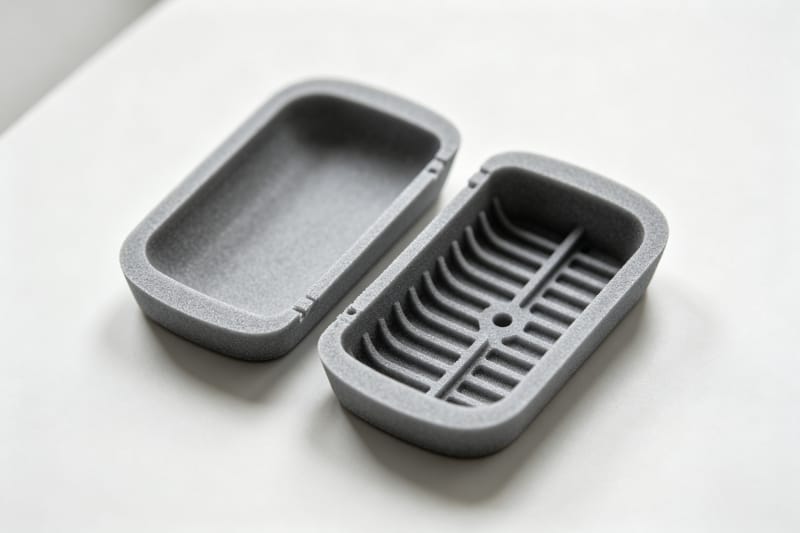
Design Moves That Cut the Price Before Upload
Geometry is where buyers hold the most control. Thick, solid blocks burn material and machine time for no engineering benefit; hollowing bulky sections with internal ribs and drain holes keeps stiffness while cutting the volume that drives the price. The same applies to infill in fused-filament parts: sparse structural infill is usually more than enough for a prototype, while full solidity is reserved for genuinely loaded zones.
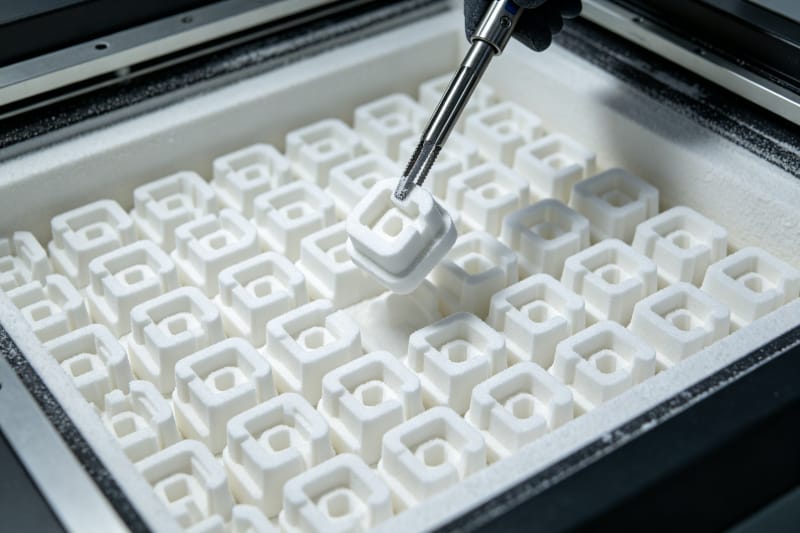
Orientation and nesting are the factory-side levers, and they cost the buyer nothing if the file allows flexibility. A part laid to minimize height and support area builds faster, and letting the workshop choose orientation instead of locking it in the file can noticeably reduce machine time. When several revisions or variants share one build, the fixed setup cost spreads across every nested piece, which is why grouping an order beats drip-feeding one part at a time.
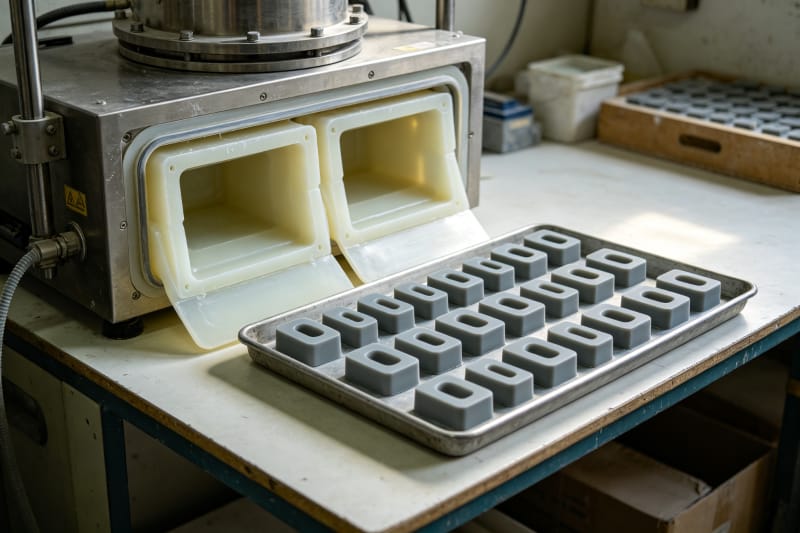
Quantity planning completes the picture, because the cheapest process changes with batch size. One to five units favor FDM or SLA with no amortization at all; from a handful to a few dozen, SLS or MJF nesting and silicone vacuum casting from an SLA master become more economical; past a few hundred units, additive should be compared against soft tooling. Table 2 maps order size to the route that usually delivers the lowest unit cost without any tooling commitment.
Order size | Usually most economical | Why |
1–5 units | FDM or SLA | No setup amortization, fastest iteration |
5–50 units | SLS / MJF nylon, or SLA master plus silicone casting | Nesting spreads build cost, casting duplicates one master |
50–500 units | MJF / SLS batches or vacuum-cast polyurethane series | Repeatable parts without injection tooling |
Metal, small quantity | SLM plus targeted CNC | No tooling for complex metal geometry |
500+ units | Compare injection molding or die casting | Tooling starts to pay back at volume |
Hidden Costs That Make a Cheap Quote Expensive
Some costs never appear on the quote. Rush surcharges from late ordering, express international shipping on a heavy solid part, and re-printing after an avoidable failure all land on the same project budget in the end. A bulky component that could have been hollowed is charged by volume in nylon and by weight at shipping, so a ten-minute design edit removes cost at both ends.
The most expensive hidden cost is inconsistency. A supplier that ships a perfect first order and a drifting third order forces incoming inspection, sorting and re-ordering that quietly erase every saving. Comparing 3d printing prices only on the headline number rewards exactly this behavior; a fair comparison should include tolerance capability, inspection practice and whether reorders are archived and reproduced the same way every time.
Quality Safeguards That Should Survive a Low Price
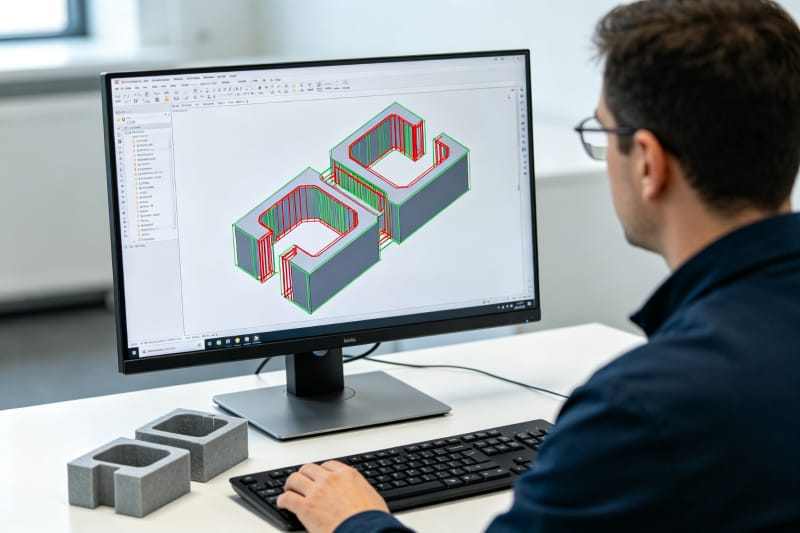
Affordable does not mean uncontrolled. A manufacturability review before printing catches thin walls, trapped volumes and impossible holes while they are still free to fix, and a first article measured against the drawing prevents one error from multiplying across a low-volume run. These steps take hours, not days, and they are precisely what keeps dimensional accuracy stable instead of merely "close enough."
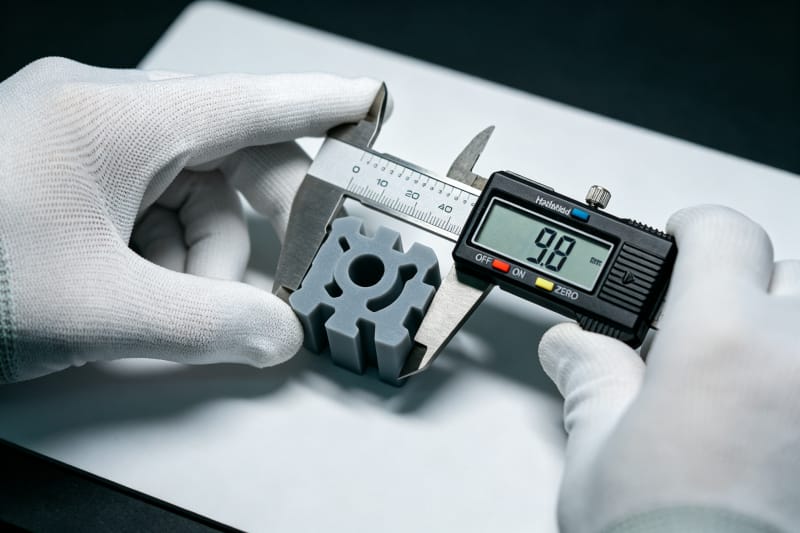
HUANYA customers do not encounter parts whose dimensions and accuracy vary between batches, because parameters, orientation and material lots are fixed and recorded for every order. Calibrated measurement at outgoing quality control means even a budget-priced prototype is checked against its drawing before it leaves the factory; a low price changes the process tier, never the acceptance standard.
Lead Time and Repeatability for Low-Volume Programs
Speed is part of affordability. A fleet of industrial machines across several technologies absorbs same-week prototype turns and planned low-volume batches in parallel, so a single overloaded machine cannot stall a customer's timeline. HUANYA commits a concrete ship date per order and holds to it, because delivery delays are one of the three failures buyers of cheap online services most often report, and they are entirely avoidable with capacity planning.
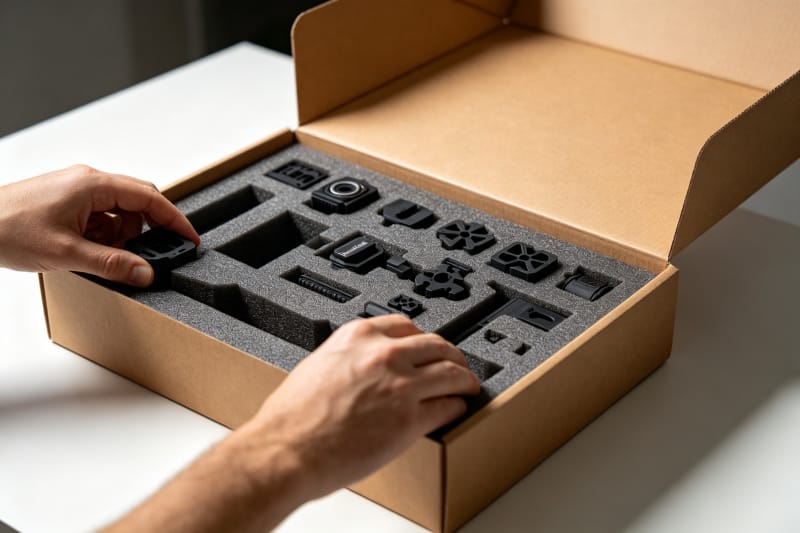
Low-volume manufacturing usually means returning orders: the same housing in revision B, the same spare across quarters. Archiving the file, parameters, orientation and finishing route together means each reorder reproduces the approved part, and standardized finishing instructions with reference samples keep surface quality identical run after run, so post-processing quality never varies between batches.
Affordable Parts From an Accountable Factory
The value of a cheap online 3D printing service is not the lowest number on screen; it is the lowest reliable total cost: the right process tier, geometry tuned for material efficiency, transparent quoting, measured quality and repeatable reorders. HUANYA combines factory-direct capacity with per-order engineering review, so custom prototypes and low-volume parts stay affordable without the three failures buyers fear most: unstable dimensions, missed delivery and inconsistent finishing. Upload the file, state the function and quantity, and receive a transparent quote plus parts that fit on arrival, batch after batch.


Leave a Comment