
 English
 French
 Deutsch
 العربية
 Español
 Русский
 にほんご
にほんご Português
 한국어
한국어
Why Quote Speed Decides a Low-Volume Program
In low-volume manufacturing, the quote is not an administrative step; it is where the project clock starts. A hardware team comparing two suppliers for a 30-piece bridge production run does not have a week to wait for each price, because design freeze, pilot assembly and market testing all sit behind that number. Fast 3d printing batch quoting compresses the decision window so engineers can iterate geometry, compare process options and place the order while the requirement is still current, instead of reviving a stale quote weeks later.
Speed only helps when it is paired with completeness. A price that lands in an hour but hides setup fees, omits finishing or assumes the wrong material is slower in practice, because every clarification restarts the conversation. A genuinely fast 3d printing quote is both quick to arrive and detailed enough to approve without a second round, which is the standard HUANYA builds its quoting process around.

What a Complete Batch Quote Actually Contains
A trustworthy batch quote is line-item transparent, so a buyer can see exactly what drives the total instead of one lump number. The table below breaks down the elements every low-volume quotation should state and why each one matters when you are ordering between a handful and a few hundred parts.
Quote line | What it should state | Why buyers need it |
Material & process | Exact polymer/metal grade and process (FDM/SLA/SLS/MJF/SLM) | Prevents last-minute material substitution |
Quantity tiers | Unit price at 1–10 / 10–50 / 50–200 / 200+ pieces | Shows the real break-even point |
Setup & build | One-time setup, nesting and support removal | Separates fixed cost from recurring cost |
Post-processing | Blast, polish, CNC, dye or paint priced separately | Avoids hidden finishing charges later |
Lead time & logistics | Standard vs expedited date, inspection and freight | Lets assembly schedule around a committed date |

How Quantity Tiers Set the Per-Part Price
The first piece in any additive run carries most of the fixed cost: file preparation, build-plate setup, machine warm-up and first-piece inspection. As quantity rises, that fixed block is spread across more units, while efficient nesting fits more parts into the same build chamber, so small batch 3d printing shows steep price breaks early and flatter ones later. Ordering five pieces when you will need forty across two months is often more expensive per part than quoting the realistic quantity once, even if delivery is staged.
Process choice interacts with quantity. FDM and SLA have almost no setup amortization barrier and suit 1–10 pieces; SLS and MJF become efficient from roughly 10–50 pieces because many parts share one powder bed; vacuum casting from a printed master is competitive from about 20 to a few hundred polyurethane duplicates. A competent 3d print manufacturing partner prices the tier that matches the real volume instead of pushing every order onto one process.

What to Upload for a Same-Day Quote
The single biggest lever on quote turnaround is the quality of the request. Automated engines can price an uploadable mesh in minutes for standard materials, while anything fit-critical benefits from engineer review, which typically returns within four to 24 working hours when the request is complete. Each missing round of information tends to add about a business day, so the checklist in the buyer's hands matters as much as the software on the supplier's side.
A STEP file is preferred over a mesh because it carries exact geometry and tolerances; add an STL only as a preview. State the units, the material or the functional requirement it must meet, the exact batch size plus any expected repeat orders, the target surface finish and the critical dimensions, and whether material certificates or a first-article report are required. With those inputs, the estimator does not have to guess, and guessing is what makes quotes slow and inaccurate.
The table below maps each input to its effect on turnaround, so a team can prepare a request that quotes in hours rather than stretching across a week of back-and-forth emails.
Input | What to provide | Effect on quote speed |
3D file | STEP preferred plus STL; watertight model, units stated | Complete file priced in hours, not days |
Material / process | Grade name or the functional requirement to meet | Removes clarification rounds |
Quantity | Exact batch plus planned repeat orders | Unlocks the correct price tier immediately |
Finish / tolerance | Ra target, critical dimensions, inspection level | Finishing priced accurately the first time |
Certification | Material cert, first article, RoHS/REACH needs | Routed straight to the correct QA path |
DFM Feedback Should Arrive With the Price
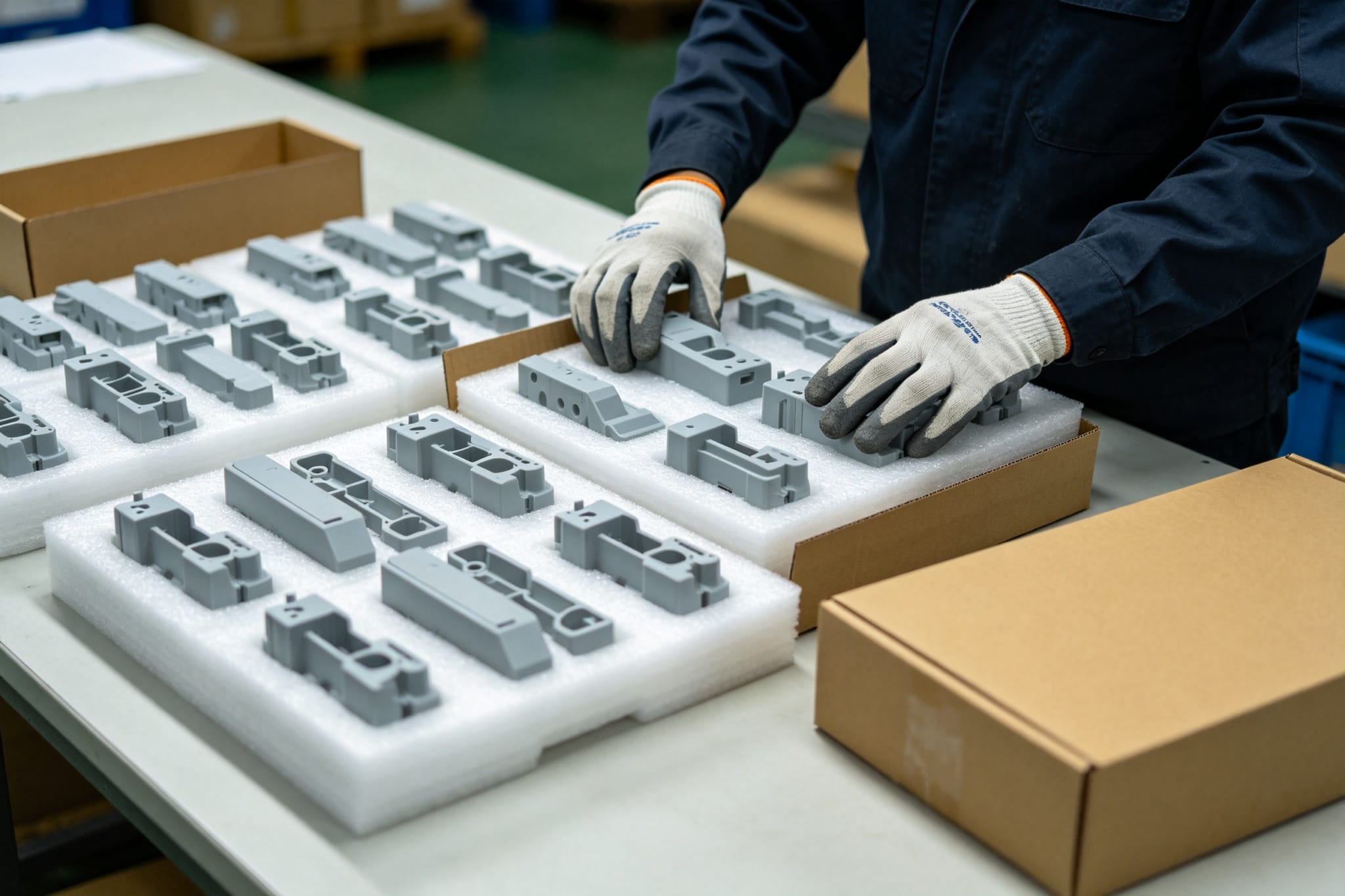
A fast quote that ignores manufacturability stores up delay for the production stage. HUANYA returns lightweight design-for-manufacturing notes alongside the price: walls close to the minimum, holes that need reaming for true diameter, or overhangs that add supports and finishing. Catching these while the quote is being reviewed means the buyer edits the model once, rather than discovering the issue after the order is already on the machine.
This embedded review also stabilizes cost. When a geometry feature would inflate build time or scrap risk, the quote can present two options — print it as drawn, or adjust the feature to lower the price — so the buyer makes an informed trade-off before committing. Speed and engineering judgment reinforce each other instead of competing.
Locking Tolerances So the Price Matches the Part
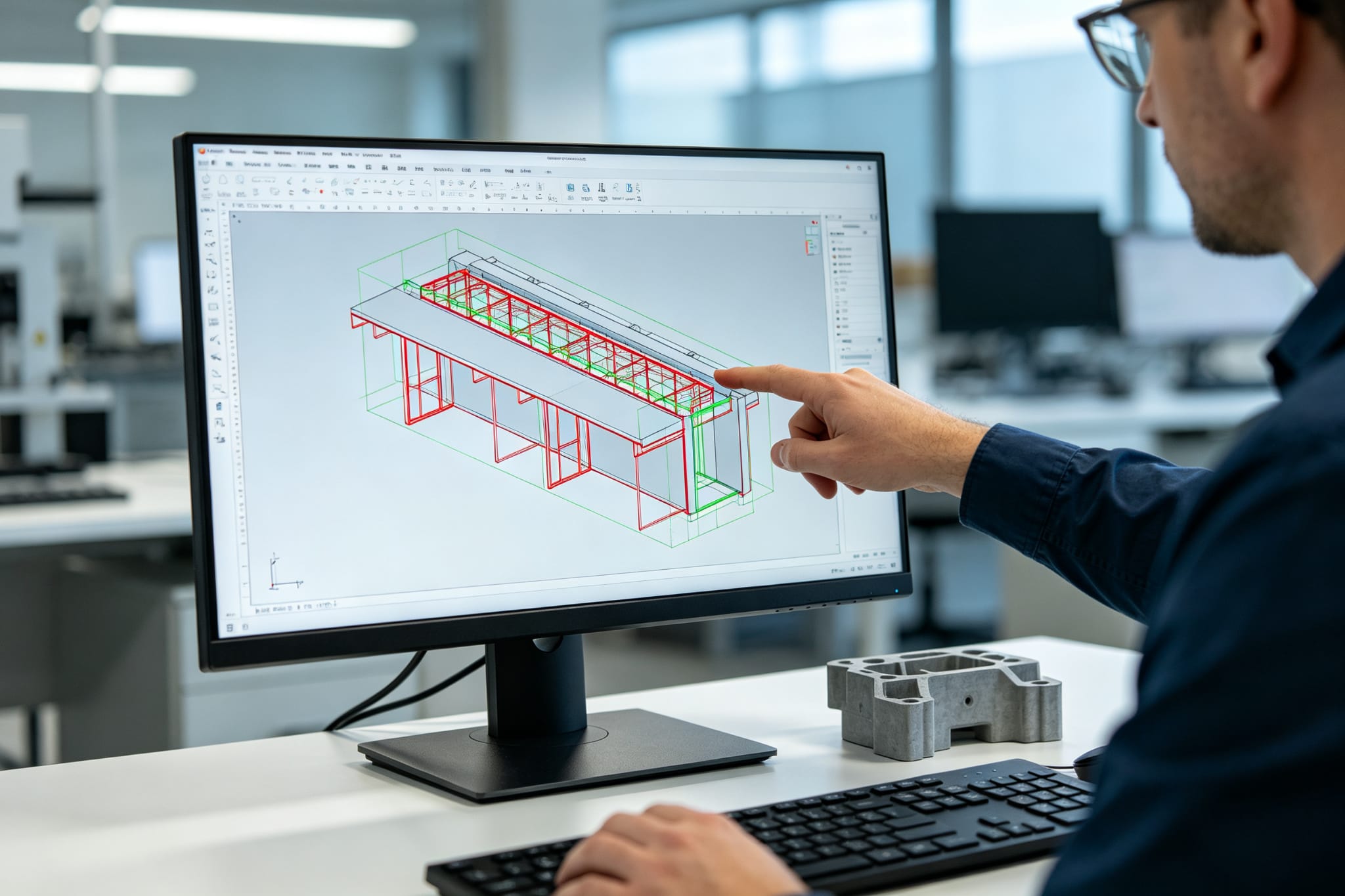
Quoting a dimensional requirement vaguely is how cheap-looking quotes turn expensive. A general as-printed tolerance band is inexpensive; a tight tolerance on a specific bore or mating face requires process control and targeted machining, and it must appear in the quote rather than surfacing as a surcharge later. HUANYA lists which dimensions stay as-printed and which are brought to spec, with the inspection method named for each.
This is also how customers never see unstable part dimensions or accuracy that drifts between units. The quote fixes the tolerance strategy, first-article inspection confirms it, and the same measurement routing repeats across the batch and every reorder, so the price agreed up front corresponds to parts that actually fit on arrival.
A Fast Quote Must Not Mean a Delayed Job
Some suppliers win orders with an instant quote and then quietly push the production date because capacity was never checked. HUANYA treats quoting and scheduling as one step: standard and expedited lead times are stated on the quote against real machine availability, so a fast price is backed by a committed build slot rather than an optimistic estimate that slips after payment.
The same discipline keeps repeat batches identical. The approved material, parameters and finishing standard are locked with the order, which means buyers do not experience delayed deliveries or post-processing quality that changes from one batch to the next. When the second or third order arrives months later, it is quoted against the same proven routing and matches the first batch.
Turn a Faster Quote Into a Predictable Program
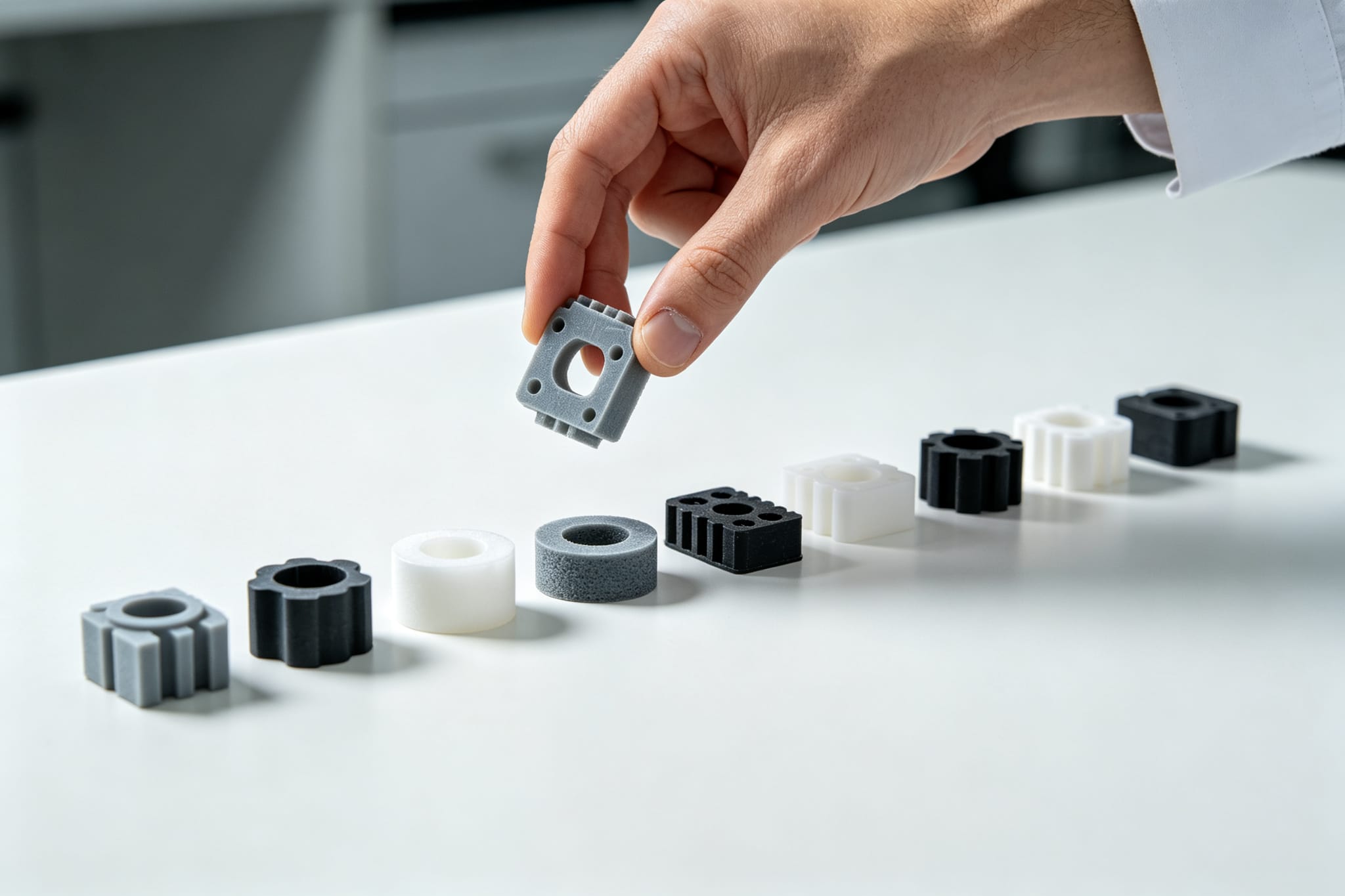
Fast batch quoting is a capability across the whole chain: transparent line items, correct quantity tiers, same-day turnaround on complete files, DFM notes in the price, and tolerances and lead times that are honored in production. Send HUANYA your STEP file with material, quantity and finish, and you receive a clear 3d printing batch quoting breakdown you can approve without guesswork — followed by consistent low-volume parts delivered when the quote said they would be.


Leave a Comment