
 English
 French
 Deutsch
 العربية
 Español
 Русский
 にほんご
にほんご Português
 한국어
한국어
24 Aug
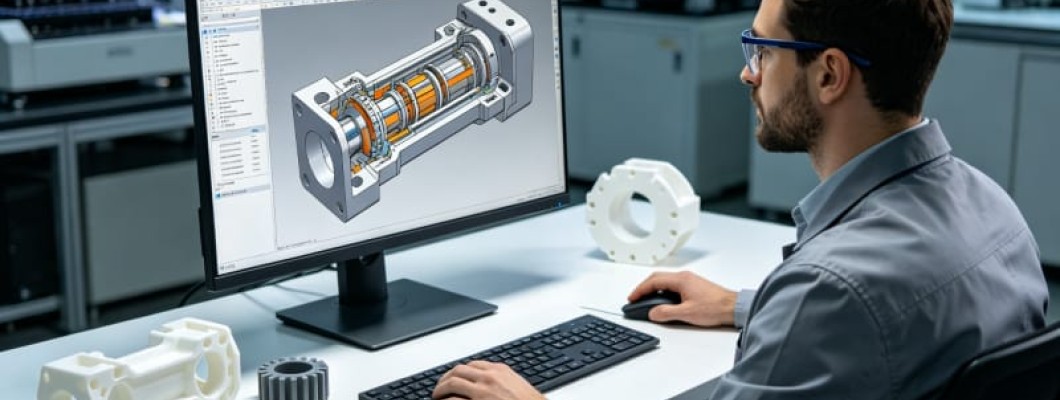
Why Functional Prototypes Demand More Than Basic Printing
A functional industrial prototype is not a display model. It must withstand assembly forces, operating temperatures, chemical exposure, and repeated mechanical loading exactly as the final production part will. Yet many teams treat prototyping as a low-stakes visual exercise, printing a rough PLA model that looks right on the desk but cracks during the first fit test or deforms under operating heat. The gap between a look-alike prototype and a functional prototype is where product development programs either accelerate or stall. At HUANYA, we approach every rapid prototyping project as an engineering challenge, selecting materials and processes based on the actual operating conditions the part will face, not on what is cheapest or fastest to print.
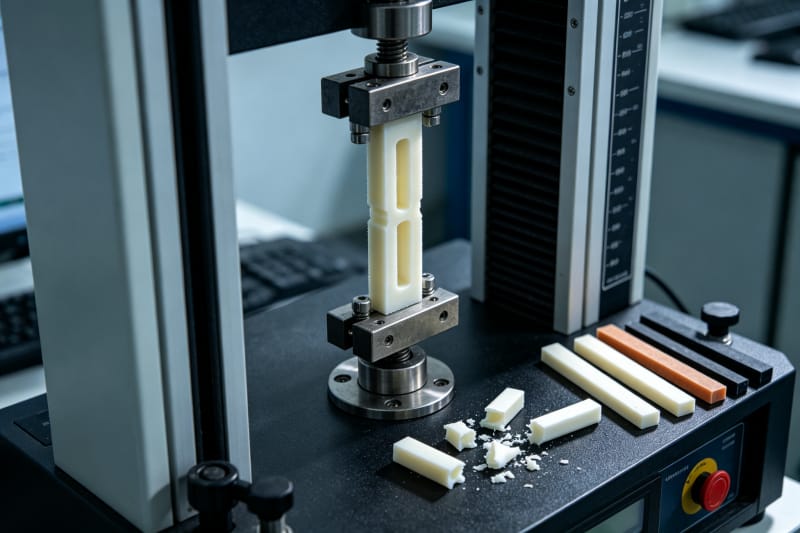
The consequences of using an inadequate prototype are more expensive than most teams realize. A prototype that fails under load does not just waste a print—it produces misleading test data that can send engineers down the wrong design path, delaying the entire development cycle by weeks. A prototype with unstable dimensions cannot validate fit and assembly, leading to costly tooling modifications later. A prototype with inconsistent surface finish cannot be used for sealing, friction, or aesthetic testing. These are the failures we engineer against. Our industrial 3d printing process begins with a clear understanding of what each prototype must prove—structural integrity, thermal performance, chemical resistance, assembly fit, or surface quality—and builds the part to meet those requirements from the first layer.

Material Selection That Determines Prototype Validation Success
The material is the single most important factor in whether a functional prototype delivers trustworthy test results. For structural prototypes under mechanical load, engineering-grade materials like ABS, ASA, PC, and nylon offer the strength, impact resistance, and thermal stability that consumer filaments cannot match. For parts operating at elevated temperatures, PEKK and PEEK can withstand continuous use above 150 degrees Celsius while maintaining mechanical properties. For flexible components like seals, gaskets, and hinges, TPU and TPE in varying durometers provide accurate elastomeric behavior. For parts requiring chemical resistance, PETG and specialty nylons hold up against solvents, fuels, and cleaning agents that would degrade standard materials. At HUANYA, our 3d printing service includes material consultation as a standard step, ensuring your prototype is printed in a material that behaves like your intended production material.
Material | Tensile Strength (MPa) | Heat Deflection Temp (°C) | Typical Applications |
|---|---|---|---|
ABS | 30-50 | 90-100 | Structural parts, housings, fixtures |
ASA | 30-50 | 90-100 | Outdoor parts, weather-resistant |
PC | 60-70 | 120-130 | High-strength structural, transparent |
PA12 Nylon | 40-55 | 110-130 | Functional parts, hinges, snap-fits |
PEEK | 90-100 | 150-260 | High-temp, medical, aerospace |
TPU | Shore A 60-95 | 60-80 | Seals, flexible parts, damping |
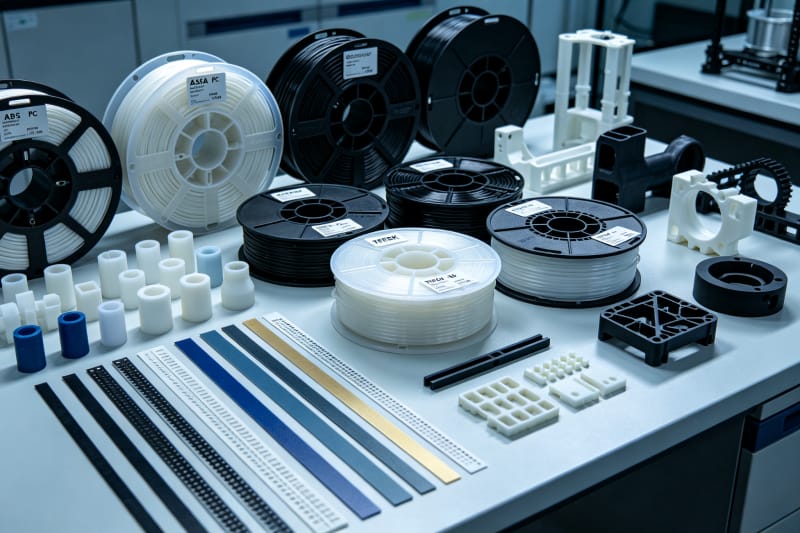
Material selection also involves understanding what the prototype does not need to prove. A prototype for form and fit validation does not require the cost of a high-performance polymer if a standard engineering material provides adequate dimensional stability. Conversely, a prototype destined for fatigue testing cannot use a brittle material that will fail prematurely and produce invalid data. We help clients distinguish between must-have and nice-to-have material properties, optimizing cost without compromising the validity of test results. For metal functional prototypes, we offer stainless steel, aluminum, titanium, and tool steel through metal additive manufacturing, delivering parts with mechanical properties comparable to wrought materials. Every material choice is documented with data sheets and test results, so your engineering team has full confidence in the prototype's performance envelope.
Process Matching for Every Prototype Requirement
No single 3D printing process is optimal for every functional prototype. FDM is ideal for large structural prototypes, assembly fixtures, and low-volume production parts where layer strength and material durability matter more than surface finish. SLS produces complex geometries with isotropic mechanical properties, no support structures, and excellent detail resolution, making it the preferred choice for functional nylon parts with intricate features. SLA and resin-based printing deliver exceptional surface finish and fine detail, suitable for prototypes requiring smooth surfaces, tight tolerances, or master patterns for molding. Metal additive manufacturing via SLM and DMLS produces fully dense metal parts for high-temperature, high-strength, or corrosion-resistant applications. At HUANYA, we match the process to the prototype's specific requirements rather than forcing every project through a single technology.
Process | Layer Height (mm) | Dimensional Accuracy | Surface Roughness Ra (μm) | Typical Materials |
|---|---|---|---|---|
FDM | 0.1-0.3 | ±0.15 mm | 6-15 | ABS, ASA, PC, TPU |
SLS | 0.08-0.12 | ±0.1 mm | 4-8 | PA12, PA11 |
SLA | 0.025-0.1 | ±0.05 mm | 0.5-2 | Photopolymer resin |
SLM Metal | 0.02-0.06 | ±0.05 mm | 3-6 | Stainless steel, Ti, Al, tool steel |
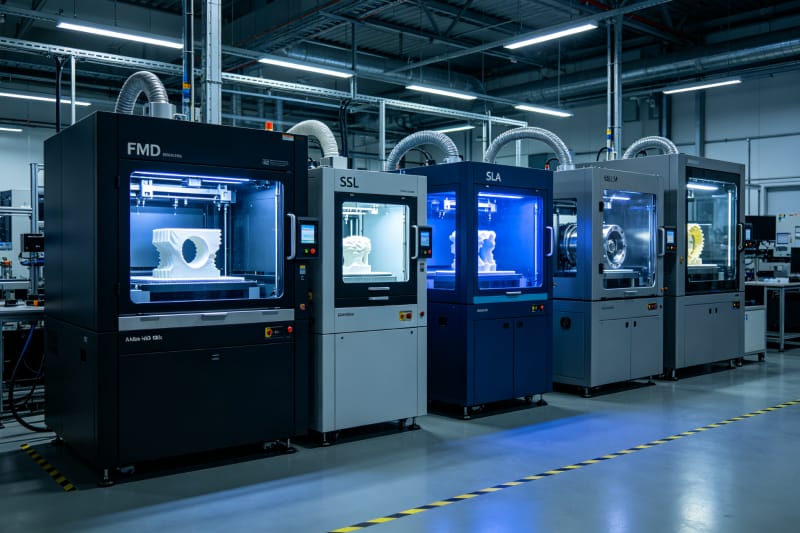
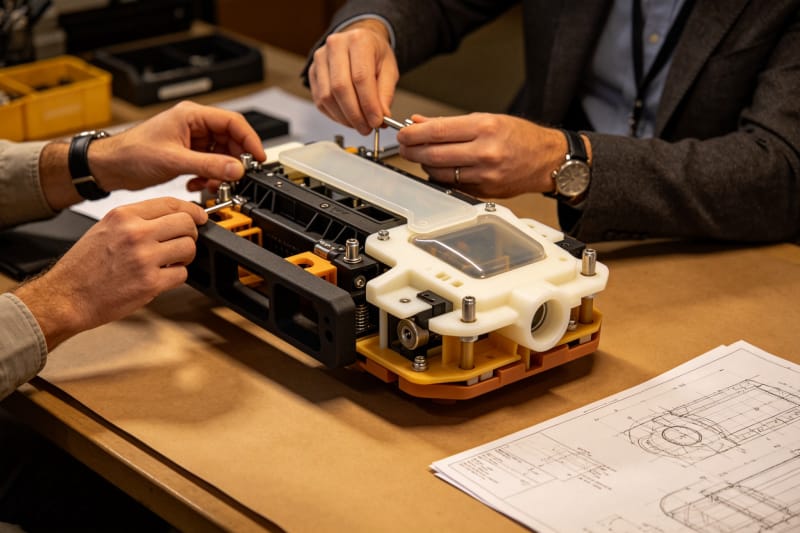
Process matching also involves hybrid approaches for complex prototypes. A single assembly may require an SLS nylon housing, FDM structural brackets, SLA smooth-surface covers, and metal fasteners—all produced in-house and assembled as a complete functional prototype. Our multi-process capability means you do not have to coordinate multiple vendors or accept compromises in material or finish. We also provide process recommendations based on lead time and budget constraints, offering trade-off analysis so you can make an informed decision. Whether you need a single prototype in 48 hours or a batch of fifty functional parts for field testing, our rapid prototyping workflow selects the most efficient process combination to meet your timeline without sacrificing functional performance.
Engineering Workflow from Design to Functional Print
A successful functional prototype starts long before the printer starts. Our engineering workflow begins with a design review that examines wall thickness, feature orientation, assembly interfaces, and stress concentrations, identifying potential print failures or performance limitations before they become costly reprints. We use specialized software to analyze part orientation for optimal strength and surface quality, generate support structures that minimize post-processing, and simulate thermal behavior to predict warping and dimensional deviation. For functional prototypes, every design decision—from fillet radius to infill pattern—is evaluated against the part's intended test conditions. This upfront engineering typically saves 30 to 50 percent of total prototyping time by eliminating failed prints and ensuring the first prototype is test-ready.
Once the design is optimized, we produce the prototype using calibrated machines with verified process parameters. Every build includes quality checkpoints: first-layer inspection, in-process monitoring for large parts, and post-print dimensional verification before the part leaves the print area. For critical prototypes, we provide dimensional inspection reports confirming key features meet specified tolerances. We also maintain complete process documentation—machine type, material lot, build orientation, layer height, and post-processing steps—so subsequent iterations can be reproduced with identical settings. This documentation becomes invaluable when transitioning from prototype to production, as it provides a proven manufacturing baseline that reduces ramp-up time and de-risks the production launch.
Post-Processing and Surface Treatment for Functional Parts
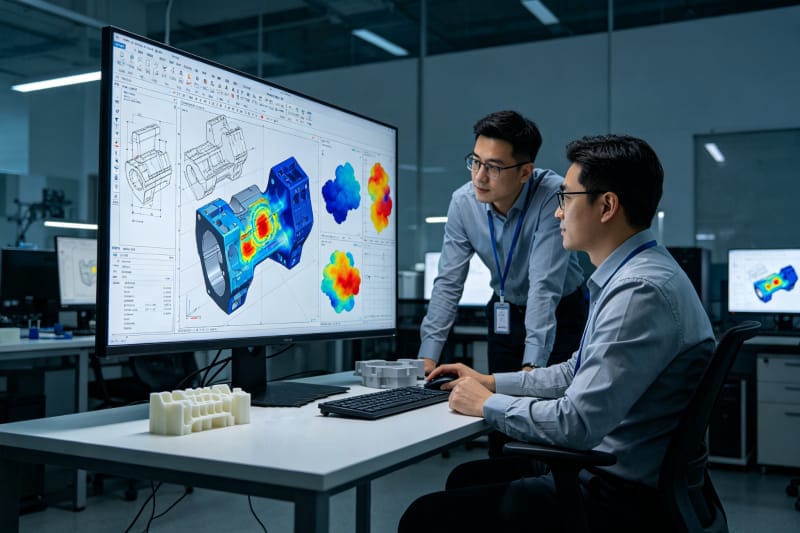
Post-processing is where a raw print becomes a functional prototype. Support removal, surface smoothing, sealing, and coating each serve specific engineering purposes beyond aesthetics. For FDM parts, vapor smoothing or epoxy coating can seal porous surfaces to make them airtight and watertight, essential for prototypes involving fluid flow or pressure testing. For SLS nylon parts, bead blasting produces a uniform matte surface while tumbling polishes external features. For resin parts, UV post-curing ensures full material properties are achieved, while hand sanding and polishing deliver production-quality surfaces. For metal parts, heat treatment relieves residual stress, CNC machining brings critical features to tolerance, and surface treatments like anodizing or plating add corrosion and wear resistance. At HUANYA, every post-processing step is specified based on the prototype's functional requirements, not applied as a generic finishing routine.
Inconsistent post-processing is one of the most common causes of prototype failure. A part that is over-sanded may lose critical wall thickness; a part that is under-cured may have reduced mechanical properties; a part with uneven coating may fail sealing tests. We address this with standardized post-processing procedures, trained technicians, and inspection checkpoints at every stage. For prototypes requiring specific surface roughness values, we use controlled processes and measurement tools to verify results. For parts requiring color matching or texture, we provide sample approval before processing the full batch. The result is a functional prototype that performs consistently in testing, with surface properties that match the intended production part as closely as possible.
Seamless Transition from Prototype to Low Volume Production
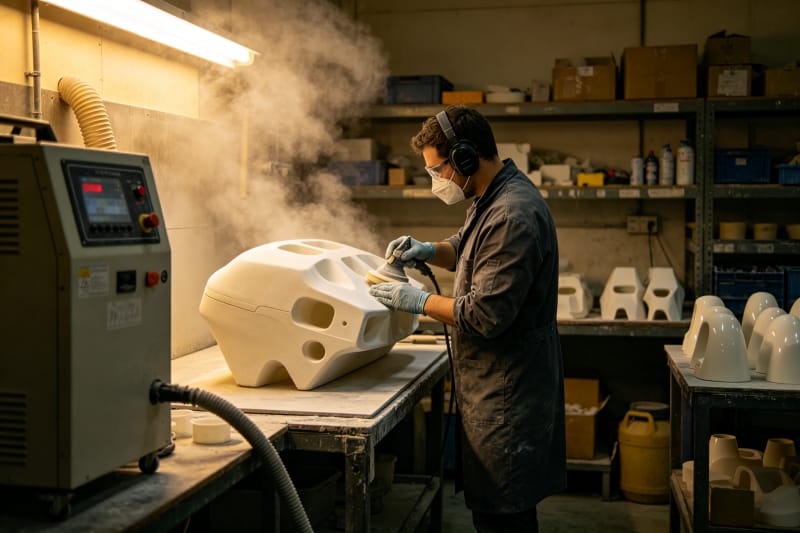
The ultimate value of a functional prototype is measured by how smoothly it transitions into production. Many prototyping services deliver a great prototype but cannot support the transition to low-volume manufacturing, forcing clients to find a new supplier, re-qualify materials, and re-develop processes—adding months and significant cost. At HUANYA, our industrial 3d printing capability spans prototyping through low-volume production, using the same materials, processes, and quality systems for both stages. When your prototype is validated, we can immediately scale to batches of 10, 50, or 500 parts without re-tooling or process changes, ensuring production parts match the proven prototype in material, dimensions, and performance.
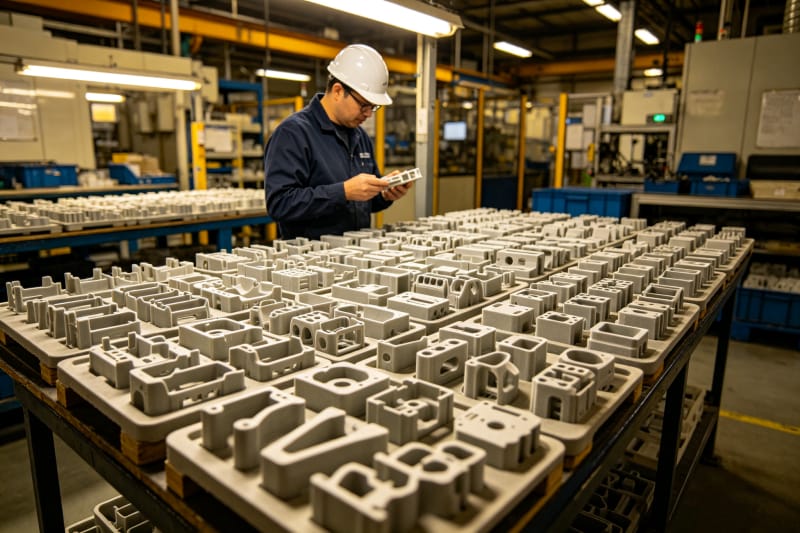
This seamless transition also means we can incorporate design changes between prototype iterations and production runs without disruption. If testing reveals a needed modification, we update the digital model, produce a revised prototype for verification, and then roll the change into production—all within the same workflow. We provide production documentation including material certificates, inspection reports, and process records for every batch, supporting your quality and regulatory requirements. For clients who eventually move to injection molding or other mass production methods, our prototypes and low-volume runs serve as a bridge that de-risks the tooling investment by validating design, function, and market demand before committing to high-volume manufacturing. Whether your path stays with additive manufacturing or transitions to conventional production, HUANYA delivers functional prototypes that are engineered to become real products. Contact us today with your design and testing requirements to start your prototyping project.


Leave a Comment