
 English
 French
 Deutsch
 العربية
 Español
 Русский
 にほんご
にほんご Português
 한국어
한국어
19 Aug
Why Post-Processing Defines Metal 3D Printed Part Quality
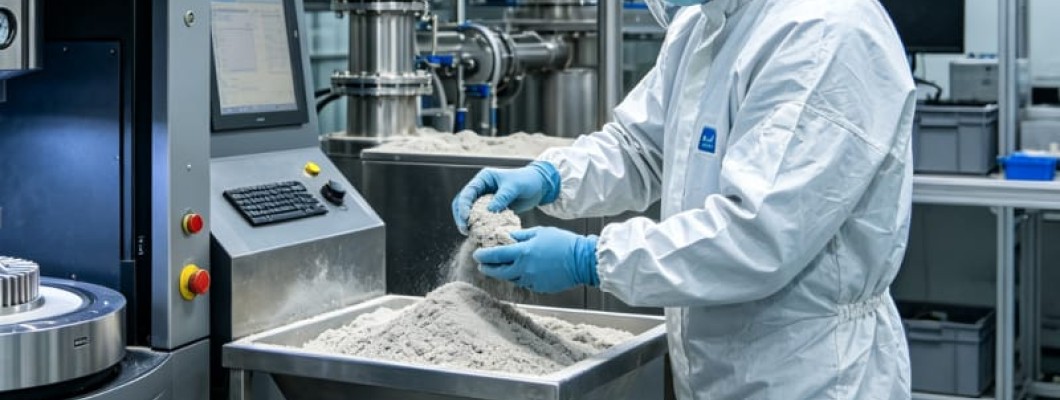
A metal 3D printing service that stops at the build chamber delivers a part that is not yet a component. As-printed metal parts come with support structures that must be removed, residual stresses locked in from rapid melting and cooling, a rough surface texture typical of powder bed fusion, and dimensional deviations that can exceed the tolerance of any fit-critical application. A turbine housing that looks correct on the build plate may leak at mating surfaces, seize on assembly, or fail prematurely because internal stresses were never relieved. At HUANYA, we treat metal additive manufacturing as a complete manufacturing process where printing is only the first step, and post-processing is what transforms a raw printed form into a functional, production-ready metal part.
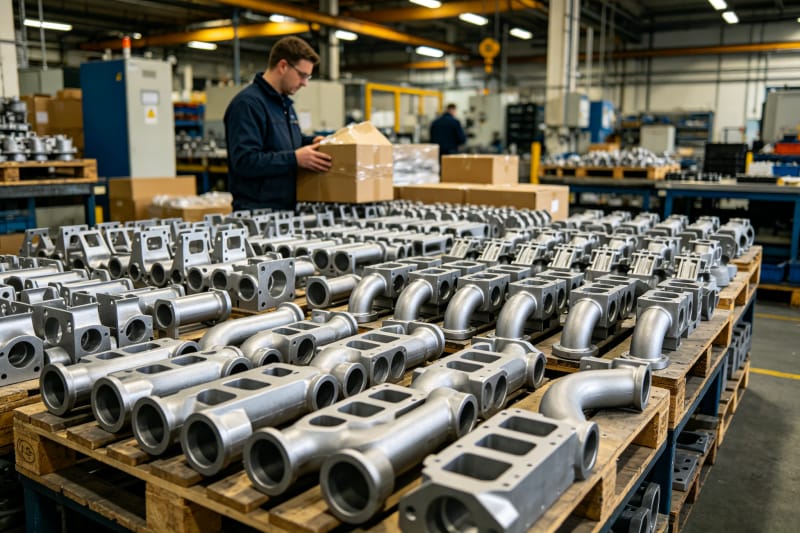
The consequences of skipping or rushing post-processing are predictable and expensive. Parts delivered without stress relief can crack during machining or in service, because locked-in residual stresses release unpredictably. Surfaces left as-printed have roughness values of 10 to 20 micrometers Ra, which is unacceptable for sealing surfaces, bearing seats, or any interface requiring a precise fit. Support removal by hand can leave witness marks or damage critical geometry if not performed by skilled operators. Dimensional accuracy as-printed is typically plus or minus 0.1 millimeters plus 0.1 percent of the dimension, which is far too loose for parts that must assemble with machined components. Every one of these issues is solved by the right post-processing sequence, which is why a qualified metal 3d printing service measures its capability not by what comes out of the printer, but by what arrives at the customer's loading dock.
Key Post-Processing Operations for Functional Metal Parts
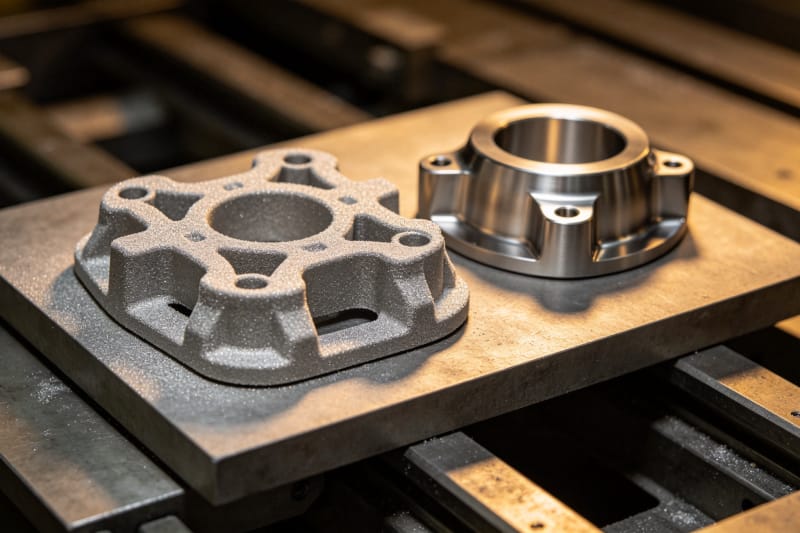
The first and most critical post-processing step is stress relief heat treatment. Every 3d printed metal parts produced by powder bed fusion undergoes rapid thermal cycles that create significant residual stresses. Stress relief at the appropriate temperature for the alloy—typically between 600 and 900 degrees Celsius for stainless steels, titanium, and aluminum—relieves these stresses before any machining or support removal, preventing distortion and cracking. Following stress relief, support structures are removed by a combination of wire EDM for base plate separation and precision machining or grinding for support contact points. At HUANYA, we maintain dedicated heat treatment furnaces with calibrated thermocouples and certified process records, so every batch receives the correct thermal cycle for its alloy.
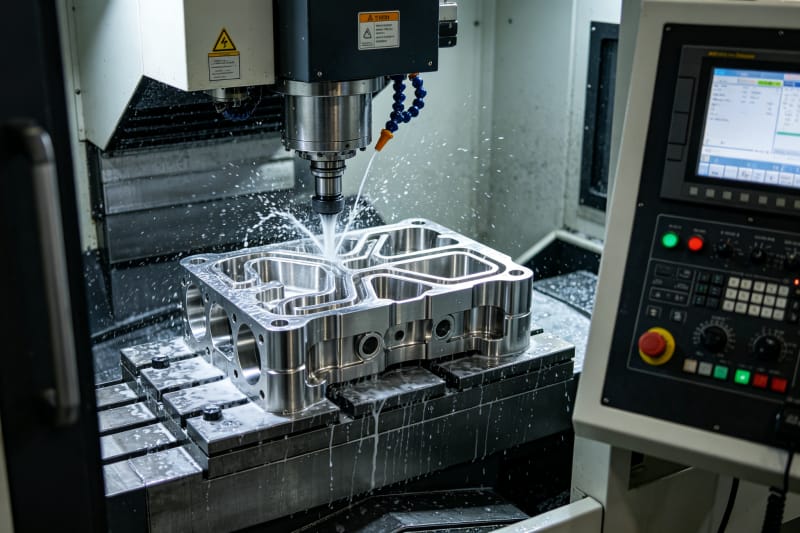
The second core operation is precision CNC machining of fit-critical features. While metal additive manufacturing can produce complex internal geometries and organic shapes that machining cannot, mating surfaces, bolt holes, bearing bores, and sealing faces almost always require secondary machining to achieve the required tolerances and surface finish. We use 3-axis and 5-axis CNC machining centers to bring critical dimensions within plus or minus 0.02 millimeters and surface roughness down to 1.6 micrometers Ra or better. For custom metal parts requiring specific surface properties, we offer bead blasting for a uniform matte finish, polishing for cosmetic or flow-critical surfaces, and anodizing or plating for corrosion resistance and wear protection. Each operation is sequenced to avoid reintroducing stresses or damaging previously machined features, and every step is documented for full traceability.
Dimensional Control and Inspection for Fit-Critical Parts
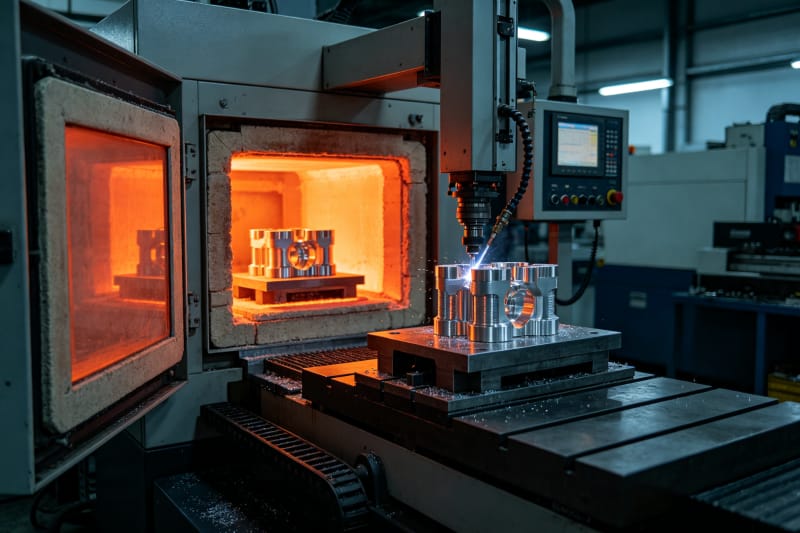
For fit-critical functional metal parts, dimensional verification is not a final checkbox—it is an ongoing process that begins before machining and continues through final inspection. We use 3D scanning of the as-printed part to identify distortion patterns and adjust machining allowances accordingly, ensuring that enough material exists on every critical surface before a cutting tool touches the part. During machining, in-process gauging verifies critical dimensions after each setup, catching tool wear or fixturing errors before they become scrap. Final inspection uses coordinate measuring machines with calibrated probes, optical comparators for fine features, and thread gauges for threaded holes, with every measurement recorded against the part's drawing requirements.
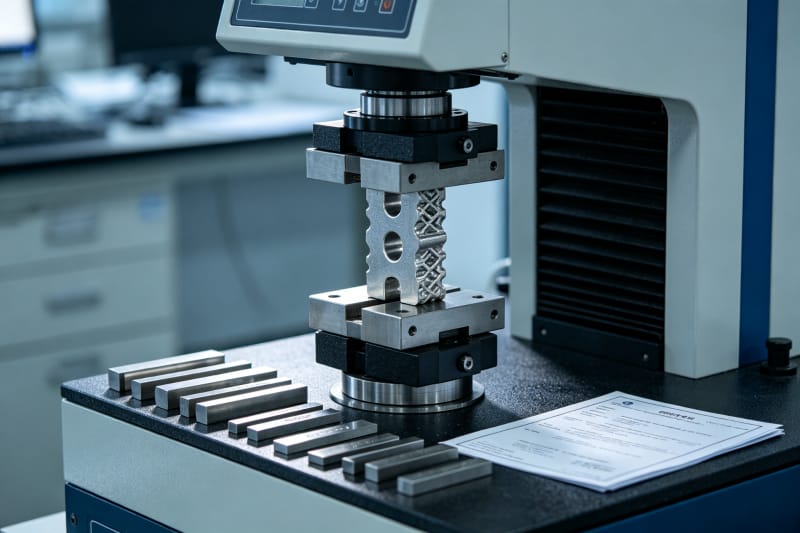
Material verification is equally important for 3d printed metal parts that will see structural loads. We perform tensile testing on witness bars printed alongside every production batch, confirming that the material meets the specified yield strength, ultimate tensile strength, and elongation. For aerospace and medical applications, we can provide full material certificates including chemical composition analysis, density testing, and microstructure evaluation. At HUANYA, every custom metal parts order leaves our facility with a dimensional inspection report and material certificate, so your engineering team has complete confidence that the part will fit and perform as designed. We also offer first-article inspection reports for new programs, documenting every characteristic on the drawing before production quantities are released.
End-to-End Quality Management for Metal Additive Manufacturing
Delivering consistent metal 3d printing service at production volumes requires more than good equipment—it requires a disciplined quality management system that controls every variable from powder to shipment. At HUANYA, we track every batch of metal powder by lot number, verify particle size distribution and chemical composition before use, and control build parameters including laser power, scan speed, layer thickness, and atmosphere to ensure repeatable material properties. Each build includes witness coupons that are tested alongside the production parts, creating a direct link between the mechanical test results and the actual components delivered to the customer. Our operators are certified for metal additive manufacturing and follow standardized work instructions for every post-processing step.
We also understand that lead time matters. A metal additive manufacturing program that delivers perfect parts six weeks late is not a success. Our production planning integrates printing, heat treatment, machining, and inspection into a single schedule, with dedicated capacity for metal 3d printing service so your parts move through each stage without waiting in queues. Typical lead times for fit-critical custom metal parts range from five to ten business days depending on complexity and quantity, and we provide real-time order tracking so you always know where your parts are in the process. Whether you need one prototype manifold or fifty production brackets, HUANYA delivers metal parts that fit, function, and arrive on schedule. Contact us today with your drawing and requirements for a quote within one business day.


Leave a Comment