
 English
 French
 Deutsch
 العربية
 Español
 Русский
 にほんご
にほんご Português
 한국어
한국어
What metal 3D printing delivers
3d printing with metal builds dense, functional metal components directly from a CAD file by melting metal powder layer by layer with a high power laser, a process known as powder bed fusion or SLM. Unlike printing in plastic, the finished part is real stainless steel, titanium, aluminum or nickel alloy, with mechanical properties close to or matching wrought material after proper heat treatment. A qualified metal 3d printing service does not just run the machine, it handles powder handling, build setup, support strategy, stress relief and inspection as one controlled route. For B2B engineering teams that means complex geometries such as conformal cooling channels, lightweight lattices and consolidated assemblies become manufacturable without tooling.
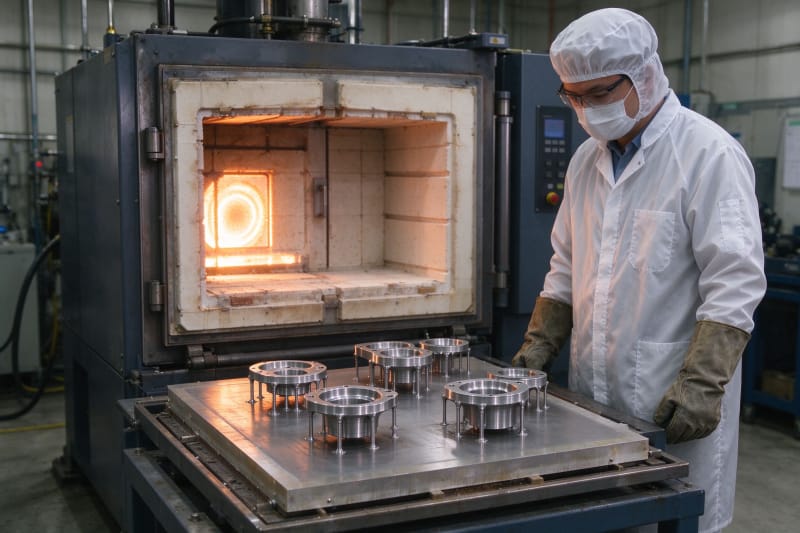
The parts coming off a metal printer are not finished when the laser stops. The build plate with parts attached must be stress relieved before removal, supports are cut or machined away, and critical surfaces usually need CNC finishing to hold tight tolerances. A serious supplier plans these steps before the first layer, because a part printed without enough support allowance or heat treatment can distort the moment it is cut free. Teams that understand this full route get production ready components, while teams that compare metal printing only on the print price discover the real cost in post processing.
When additive metal beats conventional methods
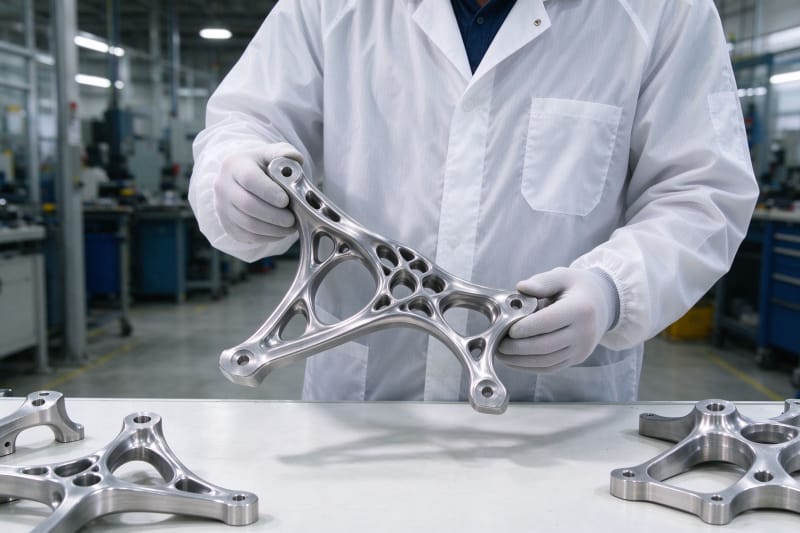
Metal additive manufacturing is not a universal replacement for CNC machining or casting, and a good supplier says so. It wins when the geometry is genuinely complex, such as internal channels impossible to machine, topology optimized brackets that remove mass without losing stiffness, or parts that consolidate several welded or assembled components into one. It also wins for low volumes and one offs where casting tooling cannot be justified, and for repair or conformal cooling applications where the geometry is the value. For simple prismatic parts, high volume production, or designs with straightforward turned or milled features, CNC remains faster and cheaper. The table below compares common metal AM alloys with their typical applications and key characteristics.
Alloy | Key characteristics | Typical B2B applications |
316L stainless steel | Good corrosion resistance, ductile, easy to post process | Manifolds, fixtures, chemical and food industry parts |
17-4PH stainless steel | Precipitation hardening, high strength, machinable | Tooling, brackets, mechanical components |
Ti6Al4V titanium | High strength to weight ratio, biocompatible | Aerospace brackets, medical implants, motorsport |
AlSi10Mg aluminum | Lightweight, good thermal conductivity | Heat exchangers, housings, cooling components |
Inconel 718 | High temperature and corrosion resistance | Turbine parts, engine components, tooling |
CoCr cobalt chrome | Wear resistant, biocompatible | Medical implants, dental, high wear parts |
Choosing the right metal alloy
The alloy should follow the service requirements, not familiarity. 316L is the default for general corrosion resistant parts and is forgiving to print and machine, while 17-4PH offers significantly higher strength when age hardened and suits structural brackets and tooling. Ti6Al4V is chosen for its exceptional strength to weight ratio in aerospace and medical work, but it is more expensive and demanding to process. AlSi10Mg serves lightweight and thermal management parts, and Inconel 718 is reserved for components that must hold strength at high temperature. Choosing the cheapest printable alloy for a load or temperature case it cannot meet is the most common and most avoidable metal printing mistake.
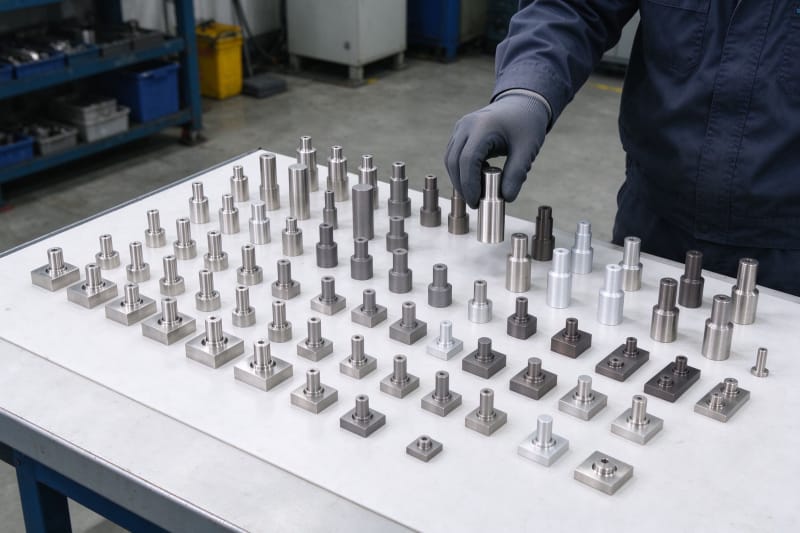
Material certification matters as much as the alloy name. For aerospace, medical and regulated industrial work, buyers need powder lot traceability, chemical composition certificates and often mechanical test coupons built alongside the part. 3d printing metal parts with certified powder and documented parameters gives properties that design engineers can sign off, whereas open stock powder and unrecorded settings produce parts that look correct but cannot be qualified. A serious supplier states which certificates are standard and which are chargeable, so the buyer is not surprised after the build when an auditor asks for records.
Design rules for metal additive parts
Metal printing has strict geometry limits driven by thermal stress, and ignoring them causes warping, cracking or build failure. The first rule is wall thickness: features below the alloy minimum may not build or will distort, while extremely thick sections trap residual stress and need careful scanning strategy. The second is supports, which in metal printing are not just for overhangs but anchor the part against the enormous thermal forces generated as each layer melts and cools. The third is orientation: critical surfaces should be positioned away from supports, and tall thin features should be angled to reduce stress. metal sintering 3d printing rewards parts designed additively rather than parts simply lifted from a CNC drawing.
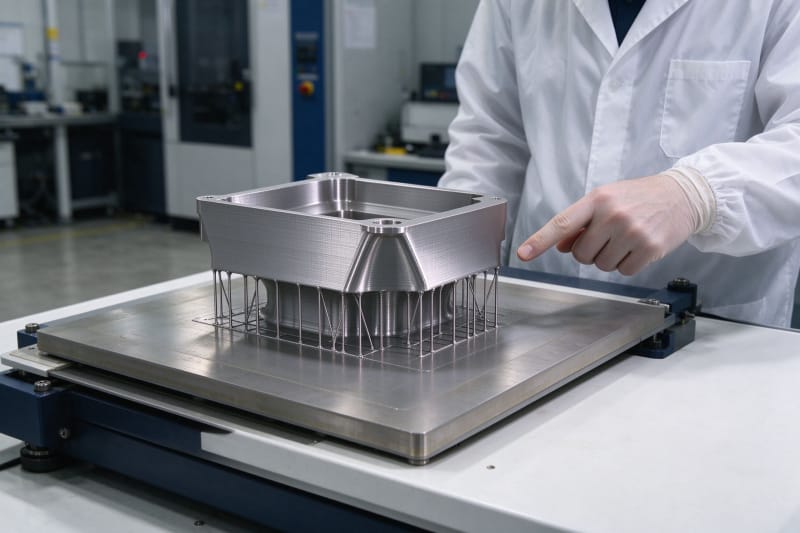
Overhangs and internal channels need specific planning. Most alloys can print down to roughly 45 degree overhangs without supports, but shallower angles require support structures that leave marks and need removal. Conformal cooling channels and internal cavities need drainage and powder removal points, because trapped powder adds weight and cannot be inspected. Holes below a certain diameter may close or print oversize, so tight tolerance holes are often printed undersize and reamed or tapped after. Designers who add these allowances up front get parts that fit, while those who do not face expensive rework or scrap.
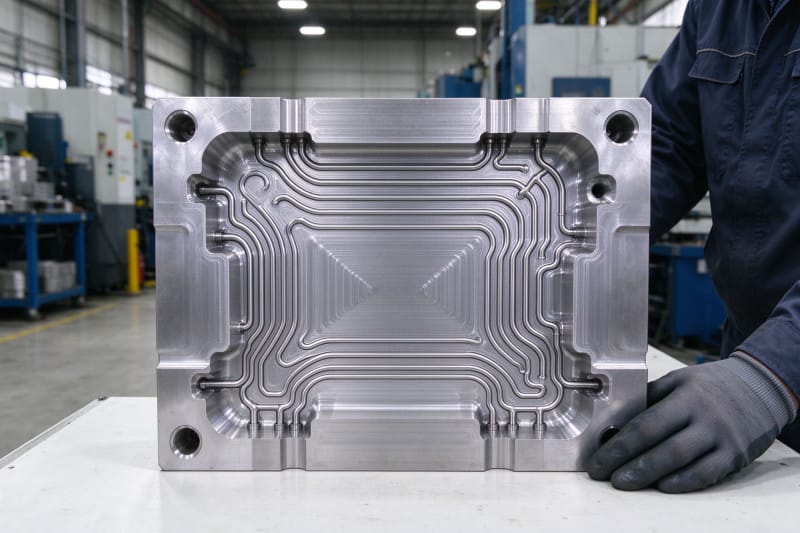
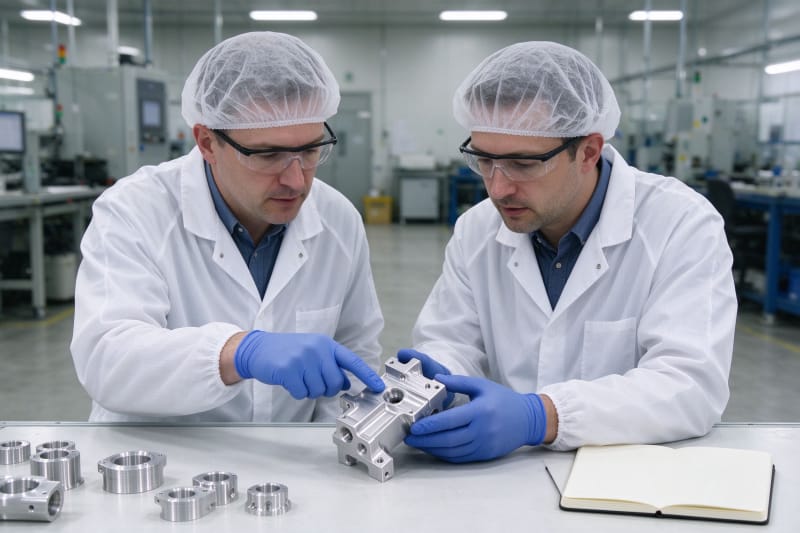
Most metal AM failures are predictable during the quote review, not on the build plate. A wall too thin, a massive unsupported section, a sealed cavity or a critical face buried in supports will fail the same way regardless of machine brand, so a competent supplier flags these issues with a DFM report before quoting a price. The buyer who receives design feedback alongside the quote is working with an engineering partner rather than a print shop. The table below summarizes the key DFM guidelines for common metal additive processes.
Design feature | Typical guideline | Recommendation |
Minimum wall thickness | Roughly 0.4 to 1.0 mm depending on alloy | Use 1.0 mm or more for structural walls |
Unsupported overhang angle | Approximately 45 degrees for most alloys | Redesign or add removable supports below |
Minimum hole diameter | Roughly 0.5 to 1.0 mm builds reliably | Print tight holes undersize and machine after |
Support requirement | Required under overhangs and on anchoring faces | Allow access for removal and finishing |
Internal channels | Need powder removal and drainage access | Add removable plugs or open ends |
Surface finish as printed | Typically rough, around 6 to 12 micrometres Ra | Machine or polish critical sealing faces |
Post processing and quality gates
The as printed surface of a metal part is rough and not suitable for sealing, bearing or cosmetic faces, so post processing is part of the process rather than an optional extra. Standard routes include stress relief while still on the build plate, support removal, heat treatment such as solution annealing or age hardening, CNC machining of datums and critical features, and bead blasting for a uniform finish. Functional parts may need hot isostatic pressing to close internal porosity, polishing, or coating. Buyers should define which surfaces matter and what finish they need, because each step adds lead time and cost but is essential for a production component.
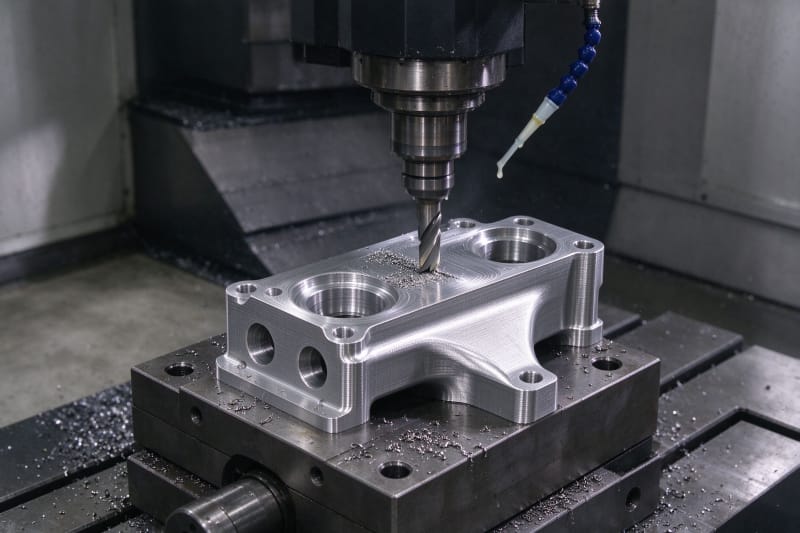
This is where HUANYA keeps the three problems B2B buyers fear out of every order. First, dimensional stability across batches and revisions: critical dimensions are held by machining after stress relief, and the same locked route is reused so the second order matches the first. Second, on time delivery: build slots, heat treatment and machining are scheduled together against real capacity, so the promised date is a plan rather than a hope. Third, consistent finishing: blasting, support removal and polishing follow one written standard, so surface quality does not drift. Cheap shops sell laser time, HUANYA delivers qualified parts.
Cost drivers and lead times
Metal 3D printing cost is driven mainly by build volume and machine time, not the weight of powder in the part. A large or tall part occupies expensive machine capacity for many hours, and dense support structures add both material and removal time. Other significant costs are powder price, especially titanium and Inconel, heat treatment and HIP cycles, CNC finishing, inspection and certification. Hollowing non structural volumes, optimizing orientation to reduce supports and consolidating assemblies can lower cost substantially, but these decisions belong in the design phase. A transparent quote lists each stage rather than presenting one unexplained number.
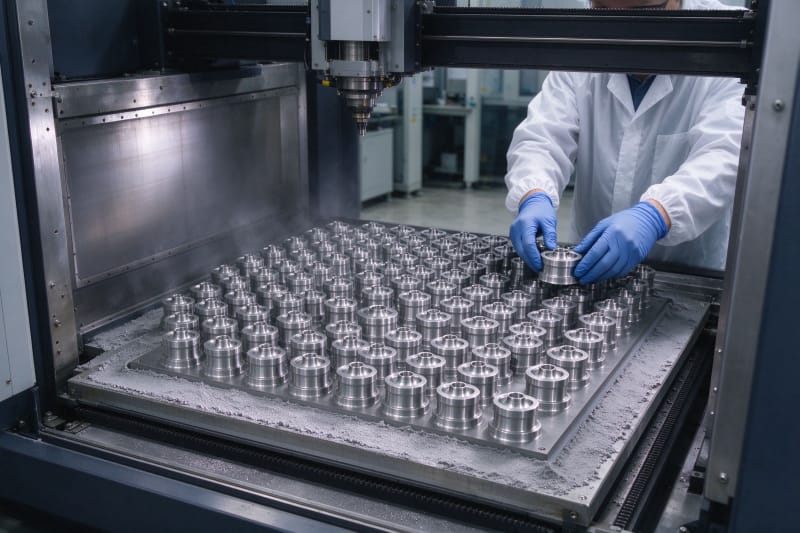
Lead times for metal parts are longer than plastic printing because the route includes several sequential stages. The build itself may take one to several days depending on height, followed by stress relief, support removal, heat treatment, CNC machining and inspection, so a typical qualified part runs well over a week and complex or certified parts longer. Buyers with hard deadlines should share the date at quote stage, because a supplier can sometimes optimize orientation or batch the build to recover time, but cannot compress heat treatment or machining once started. Planning the full route before ordering is how teams avoid the late delivery they fear.
From prototype to certified production
Metal additive manufacturing scales from a single prototype to repeatable series production when the process is controlled and documented. The first part proves the geometry, repeat orders prove the supplier, and serious production requires locked parameters, powder traceability, heat treatment records and inspection plans that stay identical across builds. HUANYA reviews each revision for better nesting or support reduction without changing approved geometry, and tells buyers when a small design change would cut cost without affecting function. Industries such as aerospace, medical and energy rely on exactly this documented consistency to qualify additively manufactured parts for service.
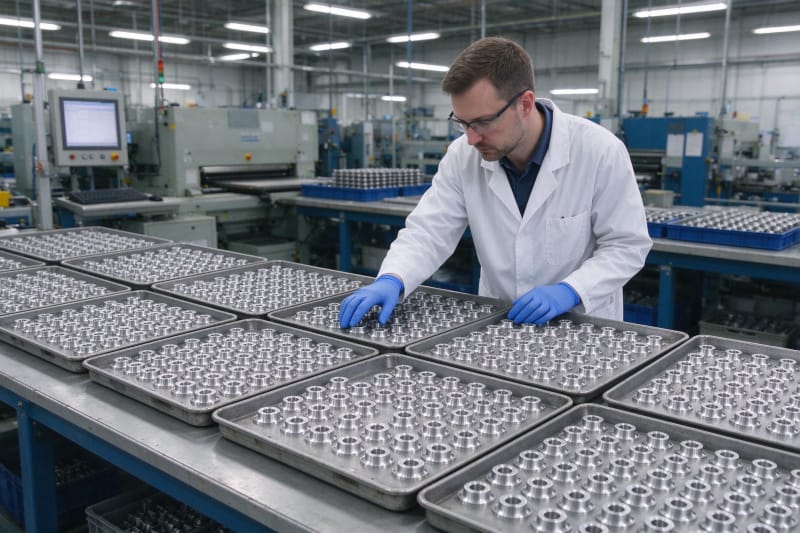
Buyers comparing suppliers should compare the complete route, not the headline print price. Two quotes for the same file can differ greatly because one includes heat treatment and CNC finishing while the other ships as printed, one provides material certificates and density reports while the other offers none, and one uses certified powder while the other uses untraced stock. The fair comparison covers alloy, process, heat treatment, machining, inspection, certification and lead time side by side. Once the routes match, the cheapest qualified supplier is the obvious choice, and the difference between a print vendor and an engineering partner becomes immediately visible.
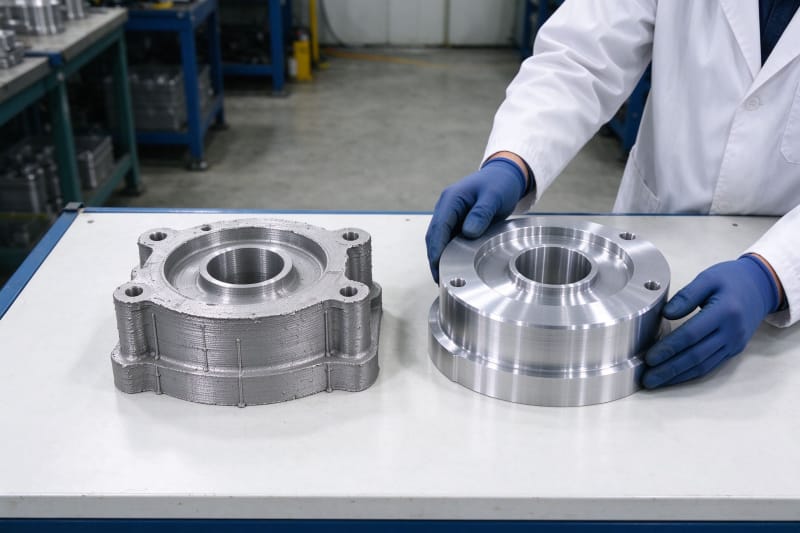
Start your metal part with HUANYA
Upload your STEP or IGES file to HUANYA, specify the alloy, service conditions, critical dimensions, required finish and any certification needs, and receive a quote listing build, heat treatment, machining and inspection rather than one bare number. Compare it on the same complete route, and the right partner for 3d printing with metal becomes clear on the first read.


Leave a Comment