
 English
 French
 Deutsch
 العربية
 Español
 Русский
 にほんご
にほんご Português
 한국어
한국어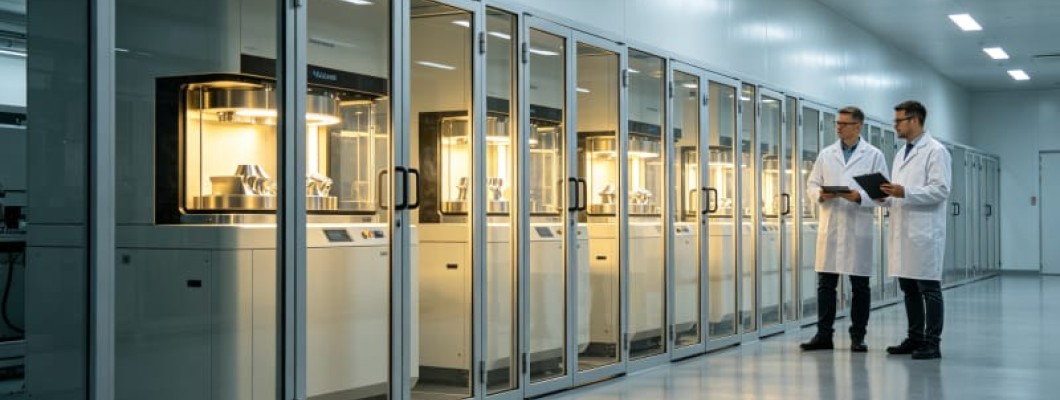
Why Titanium Demands a Specialist Additive Process
Titanium is not a material you hand to a generalist workshop and hope for the best, which is exactly why engineering teams choose a focused titanium 3d printing service for their most demanding programs. Ti-6Al-4V combines a density of about 4.43 g/cm³ with the strength of steel at roughly 56% of its weight, and it keeps its corrosion resistance in both high-altitude airframes and the saline environment of the human body. That combination is rare, but it only pays off when melting, atmosphere control and heat treatment are managed by people who work with the alloy every day.
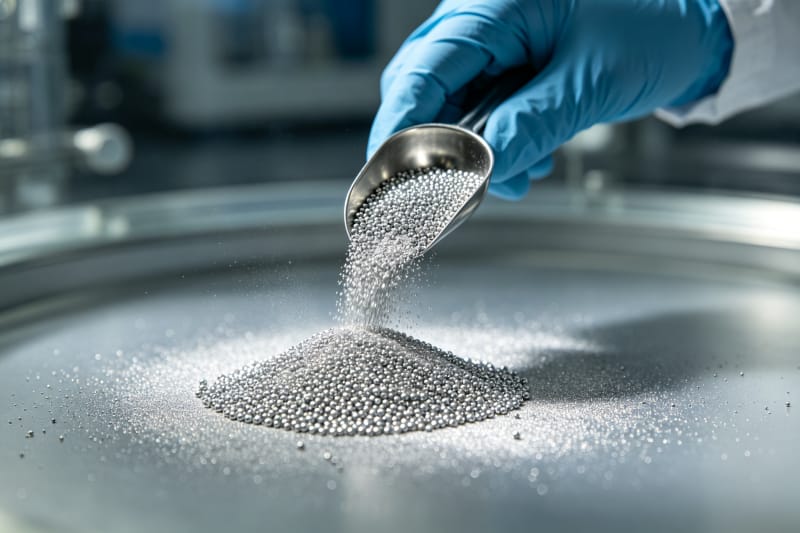
Powder-bed fusion builds titanium layer by layer inside a tightly controlled inert chamber, because molten titanium reacts aggressively with oxygen, nitrogen and hydrogen. A specialist service controls powder chemistry, chamber atmosphere and build parameters together so that a bracket or an implant does not become brittle from absorbed interstitial elements. The difference between a hobby-grade metal print and a production-grade titanium part is rarely visible on the outside; it lives in powder certificates, gas purity logs and documented parameter windows.
Titanium Alloys and Additive Processes at a Glance
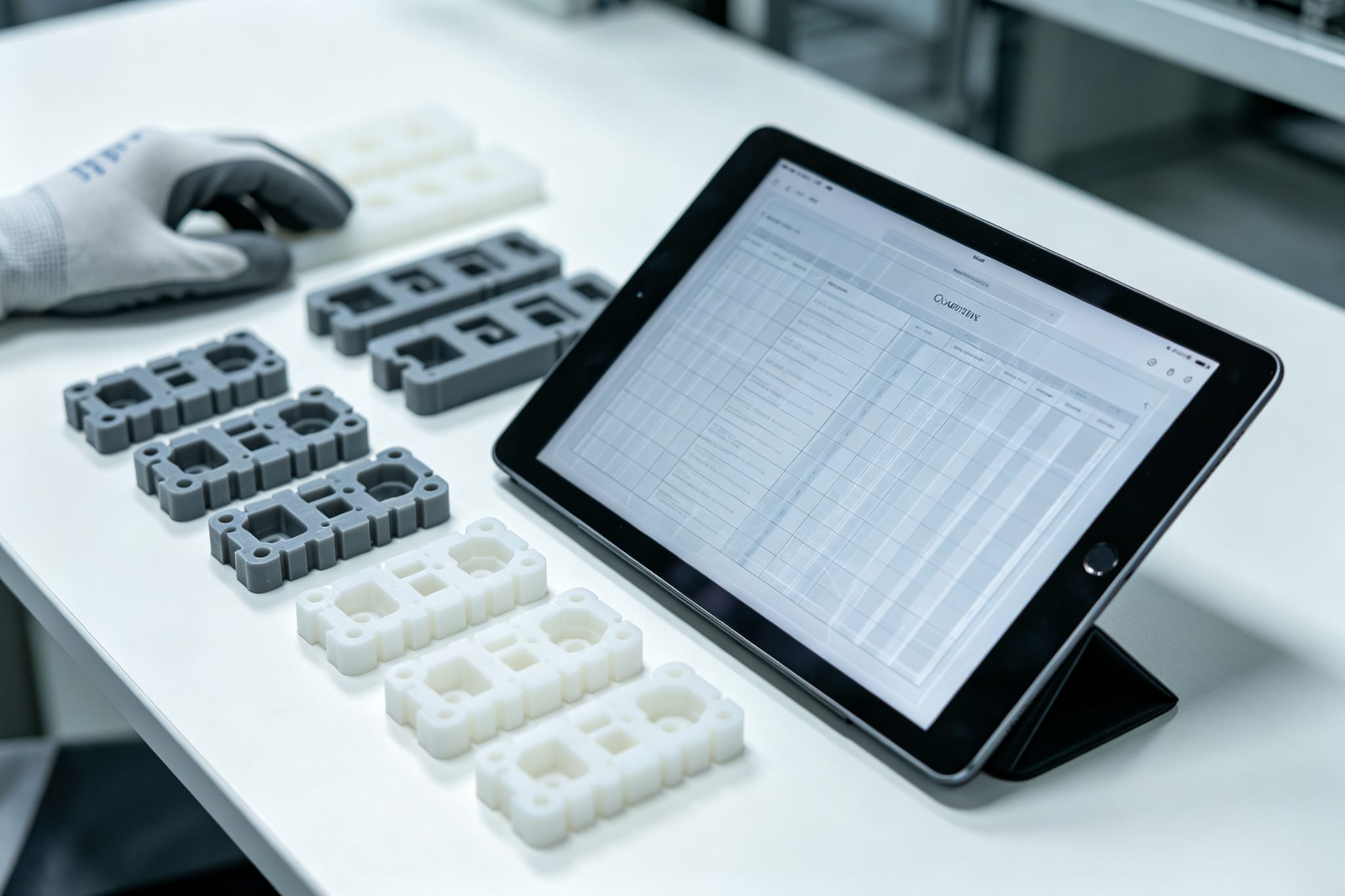
Two powder-bed routes dominate titanium work, and a competent laser metal 3d printing partner will recommend the one that matches the part rather than the machine they happen to own. Laser systems (SLM/DMLS) typically run 30–60 µm layers for fine features and thin walls, while electron beam melting (EBM) builds in a heated chamber at 50–100 µm layers with lower residual stress, which suits larger implants. The table below compares the alloys and routes HUANYA most commonly quotes for aerospace and medical buyers.
Alloy / process | Key characteristics | Typical role |
Ti-6Al-4V (Grade 5), SLM/DMLS | Density ≈4.43 g/cm³; relative density ≥99.5% after HIP; UTS in the ≈950 MPa class | Structural brackets, lightweight load-bearing aerospace parts |
Ti-6Al-4V ELI (Grade 23), SLM | Extra-low interstitial content; higher ductility and fracture toughness; ASTM F3001 aligned | Surgical implants, patient-specific medical devices |
Commercially pure Ti (Grades 1–4), SLM/EBM | Softer, excellent corrosion resistance, easy to passivate | Porous structures, dental and maxillofacial work |
Ti-6Al-4V, EBM | Heated build chamber, lower residual stress, 50–100 µm layers | Larger implants and low-residual-stress components |
What Aerospace Programs Actually Need
Aerospace buyers rarely print titanium just because it looks advanced; they do it to remove mass and consolidate assemblies. A topology-optimized SLM bracket can carry the same load as a machined or welded predecessor while cutting buy-to-fly waste dramatically, because a CNC route often removes most of an expensive titanium billet. Additive also merges several welded or fastened pieces into one monolithic part, eliminating joints that fatigue-crack first under repeated flight loading.
For that to hold up in qualification, a metal 3d printing company must deliver more than the part itself: witness coupons built in the same chamber, powder-lot traceability and heat-treatment records. Aerospace customers need to show auditors how each component was made, and a supplier that cannot tie a finished bracket to a specific powder batch and build report creates risk long before first flight. HUANYA treats this documentation as part of the product, not an optional extra.
Medical Implants Where Biocompatibility Is Non-Negotiable
Medical titanium work changes the stakes, because the part ends up inside a patient. Extra-low-interstitial Ti-6Al-4V ELI and commercially pure titanium are chosen for their biocompatibility and proven track record under standards such as ASTM F3001 for additively manufactured Ti-6Al-4V ELI surgical implants, alongside ISO 13485 quality-system expectations. Patient-specific implants, drill guides and dental frameworks rely on this controlled chemistry to avoid adverse tissue response.
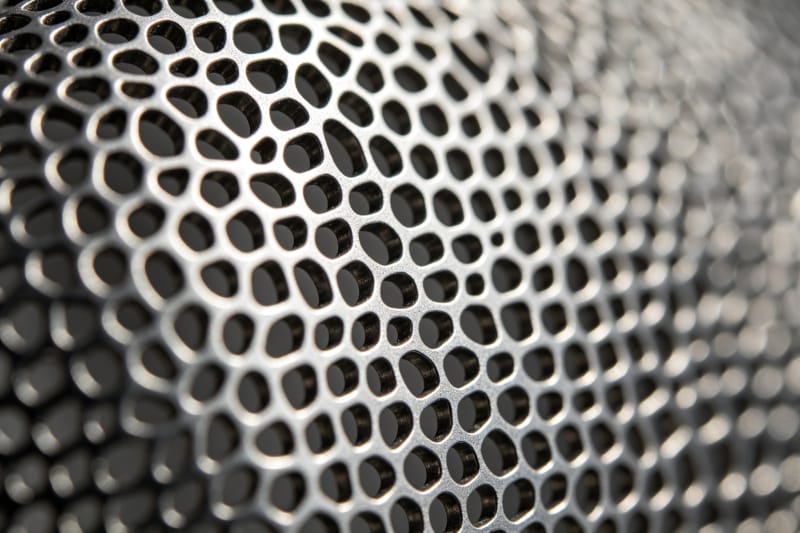
Additive's unique medical advantage is controlled porosity. A lattice with interconnected pores in the 300–700 µm range encourages bone to grow into the implant (osseointegration), something a solid machined surface cannot match. HUANYA tunes strut and pore geometry from the patient scan, then finishes contact surfaces so the device is both bone-friendly on the inside and smooth where it meets soft tissue.
Because implants and flight-critical parts cannot be qualified by appearance, buyers should request a defined evidence package before release. The table below lists the documents and measurements HUANYA supplies as standard for regulated 3d metal printed parts, so quality decisions rest on tested values rather than supplier promises.
Evidence | What it confirms | Why it matters |
Powder lot certificate & traceability | Chemistry (Al/V, O/N/H) aligned to ASTM F2924 / F3001 | Every part traces to a verified, reusable powder batch |
Density / porosity report | Relative density typically ≥99.5%, before and after HIP | Hidden porosity is the top failure risk in loaded titanium |
Mechanical witness coupons | Yield/UTS in the ≈860–950 MPa class, built with the parts | Design values rest on tested, not assumed, properties |
AS9100 / ISO 13485 controls | Routing, change control and retained records | Regulated buyers need an auditable quality system |
Surface & dimensional report | As-built Ra ≈6–10 µm; machined Ra ≈0.8–1.6 µm | Mating and implant surfaces meet drawing and hygiene needs |
Design Rules That Keep Titanium Parts Buildable
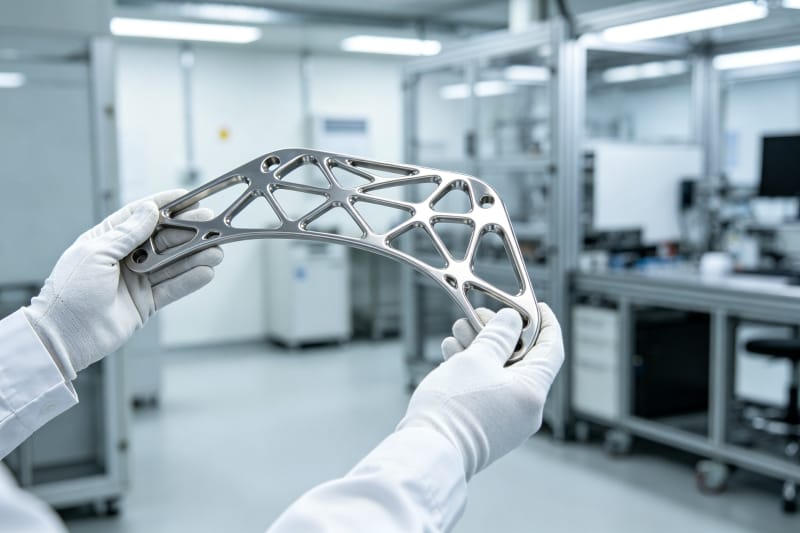
Titanium's high residual stress means design choices made before upload decide whether a part survives the build. HUANYA engineers review overhangs, add non-critical supports, and orient the part so that heat dissipates evenly; self-supporting angles near 45° reduce support scars, while cantilevers that print without support in plastic will often warp or crack in titanium. Catching these issues in a DFM review is far cheaper than scrapping a build chamber of medical-grade powder.
Wall thickness, lattice design and post-build heat treatment are planned together. As-built titanium commonly carries residual stress that is relieved, and for loaded parts hot isostatic pressing (HIP) closes internal voids to reach the ≥99.5% density target. Designing ribs instead of bulky solid sections saves expensive powder and reduces distortion, which is why HUANYA advises on geometry before quoting rather than after a failed first article.
Post-Processing and Precision on Fit-Critical Surfaces
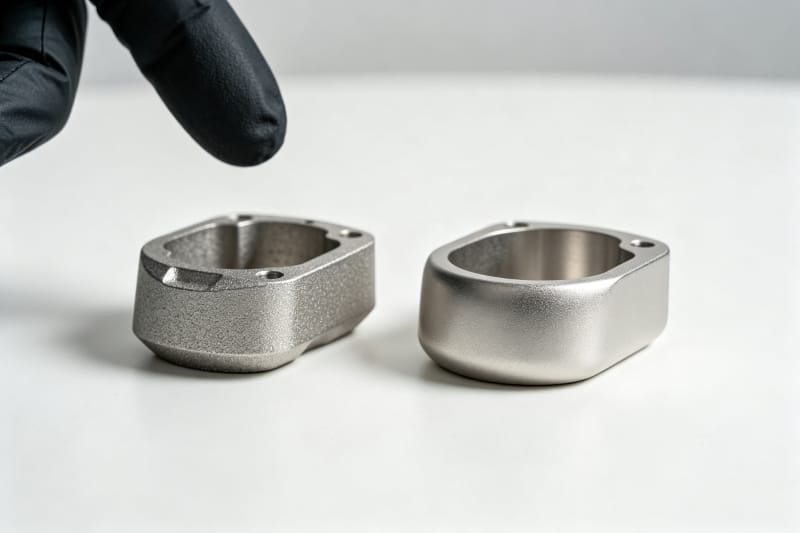
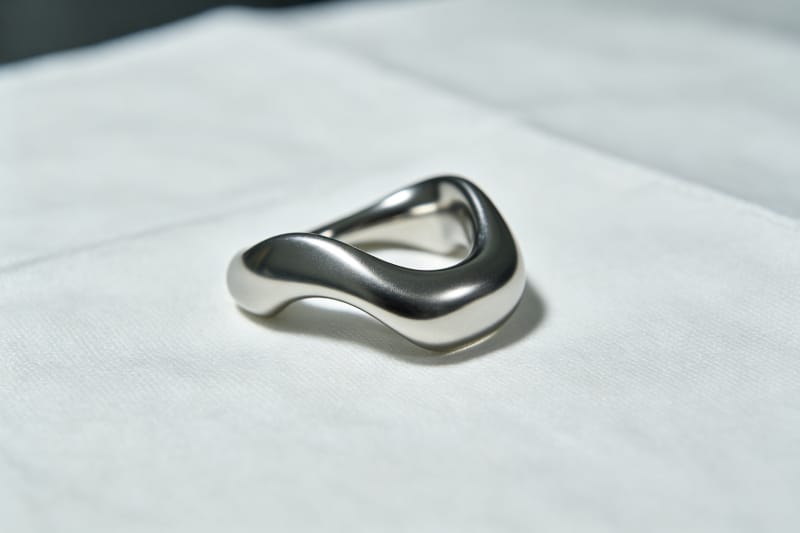
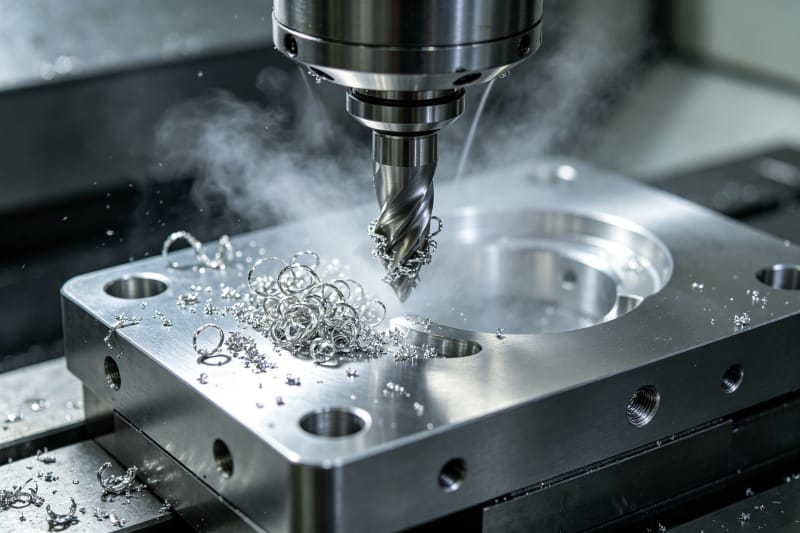
An as-printed titanium surface is rarely the final surface. As-built SLM titanium sits around Ra 6–10 µm, which is acceptable for non-contact lattice zones but not for a bearing bore or an implant taper. HUANYA machines only the fit-critical faces down to Ra 0.8–1.6 µm, blends support points by hand, and passivates or electropolishes medical parts, so buyers pay for precision exactly where the drawing demands it instead of over-finishing every surface.
This targeted finishing is also how HUANYA makes sure customers never see unstable part dimensions or inconsistent accuracy between units. Every mating dimension is measured against the drawing, first-article results are recorded, and the same routing is repeated for every follow-on batch. A titanium implant or bracket that fits on the prototype must fit identically on the fiftieth piece, and dimensional control is treated as a closed-loop process rather than a one-off check.
Lead Time, Traceability and Batch-to-Batch Consistency
Titanium programs usually run on tight qualification windows, so lead time has to be engineered, not guessed. HUANYA schedules printing, stress relief, HIP, precision machining and inspection as one linked routing and states the realistic date up front, separating standard lead time from any expedited option instead of promising an impossible deadline that slips after order.
The same discipline protects repeat orders. HUANYA locks the approved parameter set, powder spec and finishing standard, which means customers do not experience delayed deliveries or surface-finish quality that changes from one batch to the next. When an aerospace or medical buyer returns months later for another production run, the parts match the approved first article because the process record was never left to memory.
Work With a Titanium Partner That Owns the Whole Chain
Titanium for aerospace and medical is a chain: certified powder, controlled melting, stress relief and HIP, targeted CNC finishing, and a documented evidence pack. HUANYA runs that chain under one roof so that custom brackets and patient-specific implants arrive dimensionally stable, on schedule and consistent batch after batch. Send your STEP file and tell us the application and certification you need; we will return a transparent quote, a DFM review and titanium parts built to be trusted in service.


Leave a Comment