
 English
 French
 Deutsch
 العربية
 Español
 Русский
 にほんご
にほんご Português
 한국어
한국어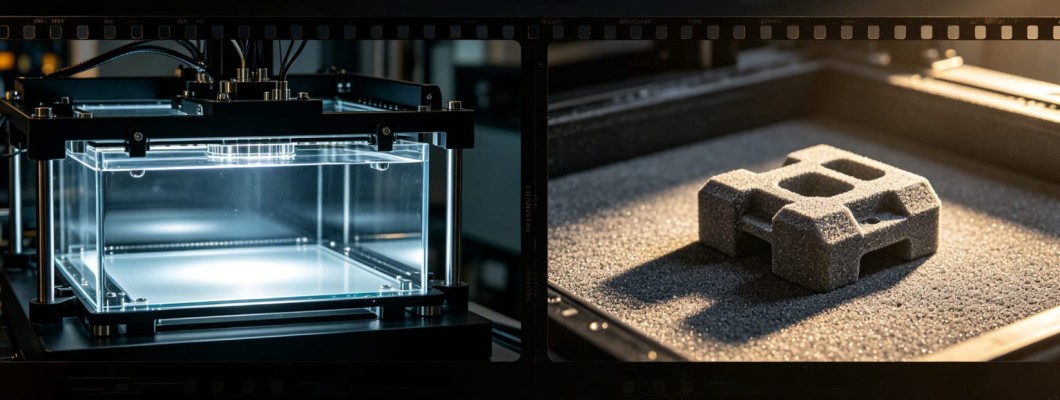
SLA is the first commercialized vat photopolymerization 3D printing technology. Its core principle uses an ultraviolet laser to scan liquid photosensitive resin layer by layer, curing the resin instantly via photochemical reaction to form solid parts. With micron-level thin-layer printing, it delivers ultra-high precision components. Featuring stable forming and precise laser positioning, SLA reproduces ultra-fine textures, hollow geometries and thin wall structures perfectly. It is widely used for detail showcase models and tiny precision fittings; finished parts feature neat contours, sharp edges and superior surface finish compared to most conventional 3D printing processes.
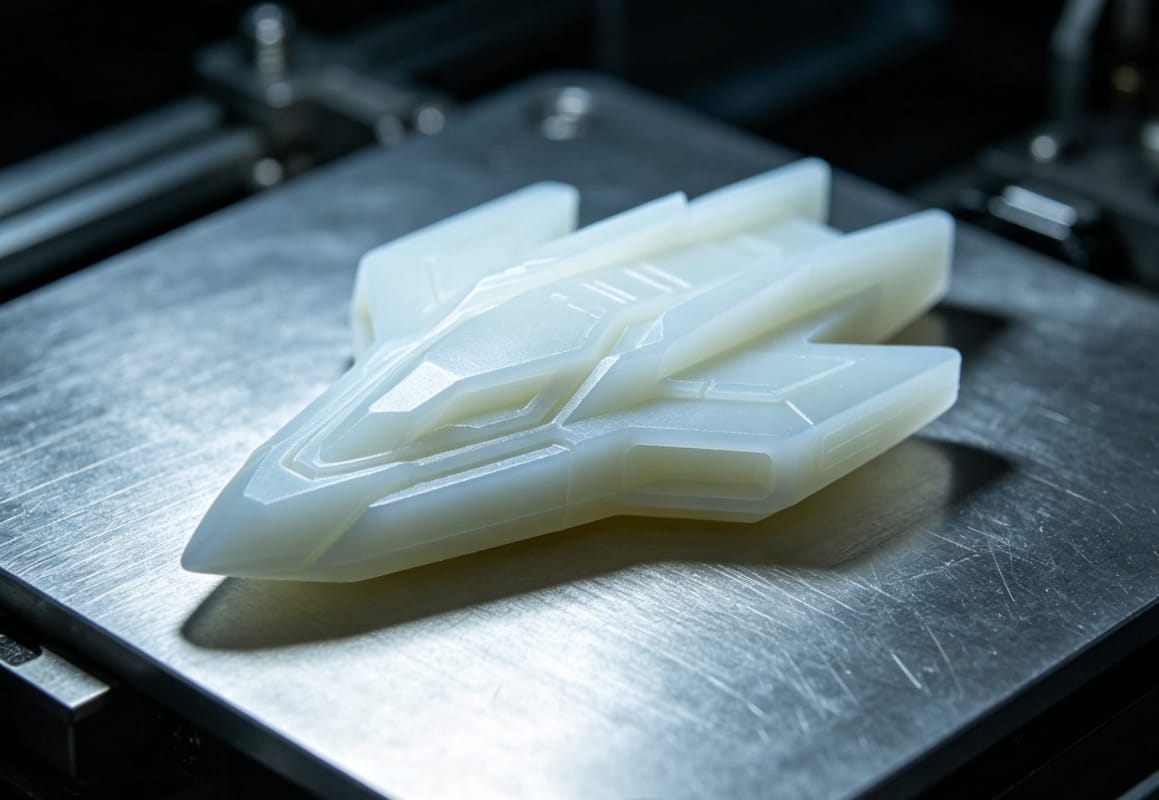
Huanya SLA 3D printing stands out for outstanding surface smoothness and ultra-fine resolution. Minimum layer thickness reaches 25 microns. Printed parts come with sleek, flat surfaces free of visible layer lines or rough blemishes without heavy polishing. Excellent dimensional tolerance control meets strict precision requirements for miniature and intricate components, fitting all products demanding premium appearance and tight dimensional accuracy. The process supports a comprehensive library of resins: transparent, rigid, flexible, high-temperature resistant and more, to suit diverse custom sample demands.
SLA parts are made from photosensitive resin with limited mechanical performance. Low toughness, poor impact resistance and weak fatigue resistance lead to deformation or cracking under sustained external loads, making it unsuitable for mass production of high-load functional components. Support structures are mandatory during printing; removing supports on complex geometries leaves visible marks and raises post-processing workload. Resins also suffer poor weather resistance: prolonged exposure to light and humidity causes yellowing and aging, drastically shortening service life.
MJF is an industrial powder bed fusion 3D printing process. It jets fusing and detailing agents across an entire powder layer, then applies infrared heat to melt nylon powder in one full layer before building up parts layer by layer. Unlike point-by-point laser scanning, MJF drastically boosts printing speed. No extra support structures are required, enabling nested, densely packed batch printing. Powder-bed fabrication delivers isotropic uniform mechanical properties without directional variance, ranking MJF as a mainstream mass-production additive technology for complex functional industrial parts.
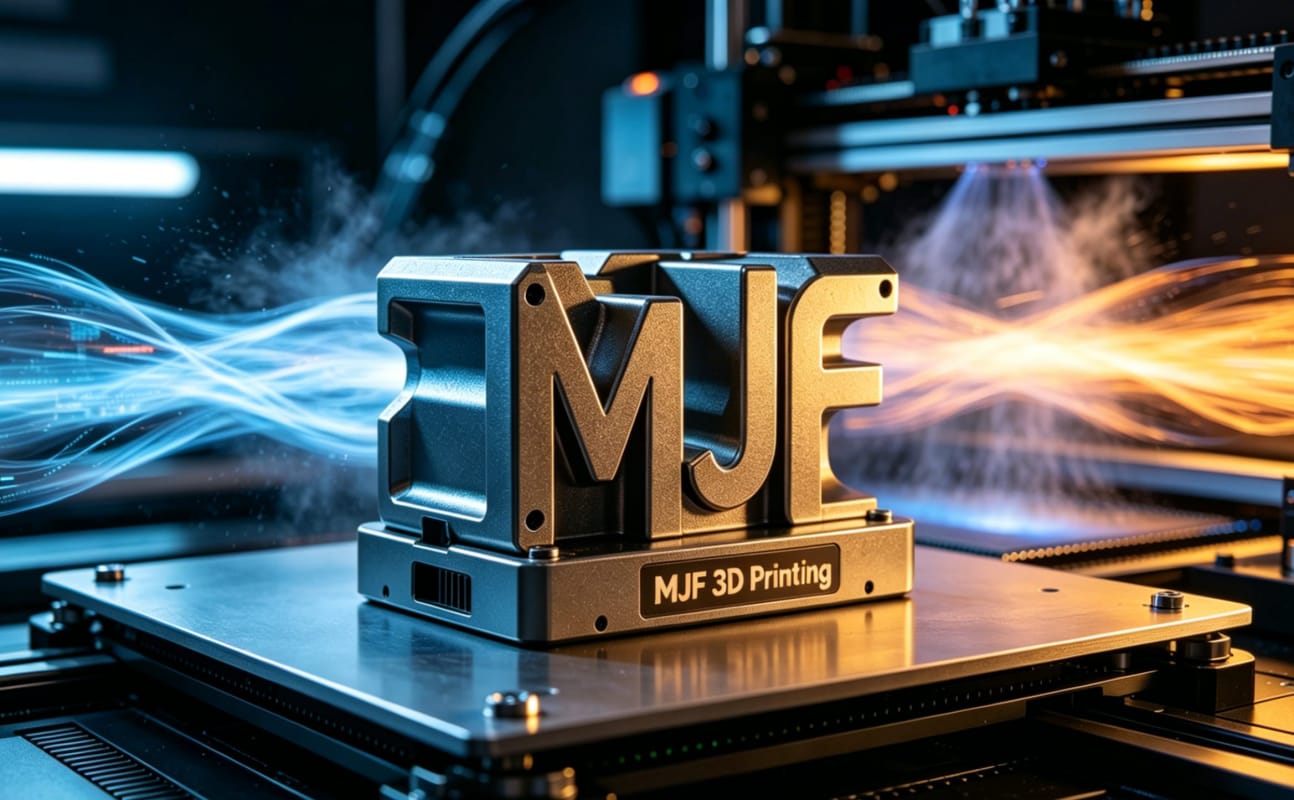
Huanya MJF 3D printing excels in mechanical performance and mass manufacturability. Nylon parts deliver high toughness, strong impact resistance and excellent fatigue resistance to withstand cyclic long-term loads and meet end-use functional standards. Full-layer melting enables far faster production than traditional laser powder technologies, cutting per-unit cost significantly for large batches with outstanding throughput advantages. Dense, pore-free parts with exceptional consistency are ideal for industrial mass production and mechanical hardware.
MJF has notable limitations on surface quality and aesthetics. Molten powder leaves a grainy matte surface lacking the ultra-smooth finish and micro-detail reproduction of SLA. Relaxed dimensional tolerances prevent fabrication of tiny ultra-precise micro-components. Material selection is limited to nylon powders with few color options (natural grey standard). Custom colored finishes require secondary post-processing such as dyeing and blasting, adding extra steps and costs.
Thanks to ultra-high precision and fine surface quality, SLA 3D printing dominates appearance prototyping, micro-precision parts and custom manufacturing, especially dental and jewelry industries. Dental applications include fast production of dental models, aligners and surgical guides with perfect dimensional fit and smooth surfaces for precise oral assembly, slashing custom dental turnaround time. Jewelry manufacturers produce intricate hollow, embossed and fine-detail wax casting molds, recreating design geometry with nearly 100% fidelity for luxury custom jewelry and small-batch sampling.
Leveraging high strength, consistent mechanical performance and mass-production capability, MJF targets industrial functional and batch components for long-term load-bearing stable operation. Automotive applications include vehicle brackets, interior functional fittings and small transmission parts; tough crack-resistant nylon withstands harsh onboard operating conditions, while nested batch printing maximizes production efficiency. General industry relies on MJF for tooling fixtures, inspection jigs and small automation equipment parts. Stable mechanical performance and minimal batch-to-batch variation support regular factory production and reduce custom tooling costs.
Overall, SLA and MJF serve entirely distinct core applications with no universal "better" option — the choice depends on your primary product requirements. Select SLA if top-tier surface details, tight dimensional accuracy and glossy smooth surfaces are priorities for sampling, micro-precision hardware and medical custom products. Choose MJF for superior mechanical strength, fast mass production and long-term durability when manufacturing industrial functional parts, load-bearing structures and bulk batch components.


Leave a Comment