
 English
 French
 Deutsch
 العربية
 Español
 Русский
 にほんご
 Português
 한국어
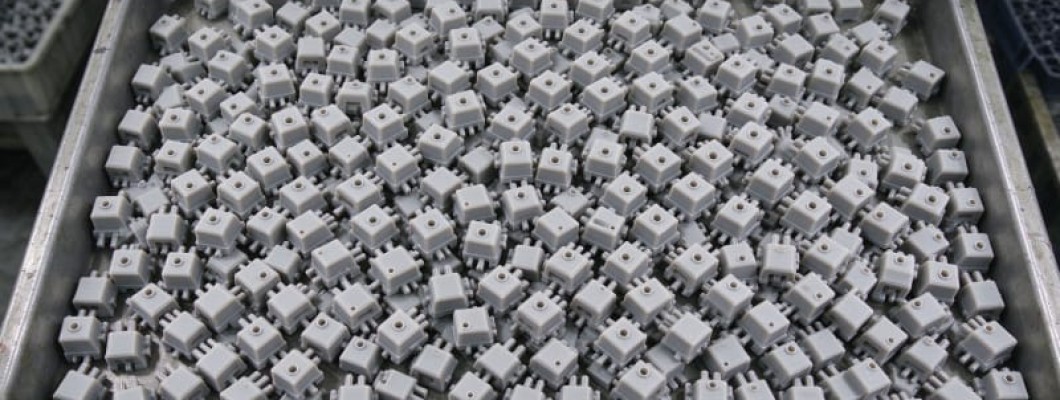
Any B2B buyer who has asked for a 3D printing quote has seen the same puzzle: one supplier prices the job by the kilogram, another by the part, and the two numbers rarely look related. Both methods are correct, but each tells a different story about your design. Per-kg pricing reflects how much material the build consumes, while per-part pricing bundles material, machine time, labor and logistics into one finished number. Understanding the gap between them is the fastest way to stop overpaying.
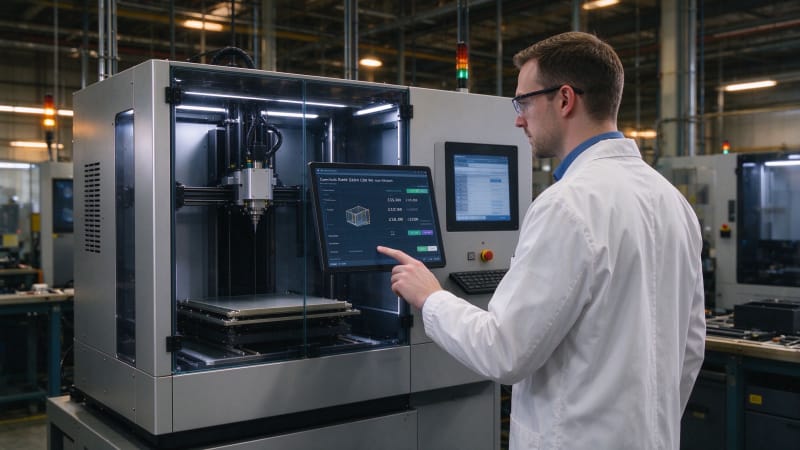
A per-part price is built from four blocks: raw material, machine time, post-processing and overhead. Material is the most visible, yet usually the smallest share for plastic parts. Machine time is the silent driver, because a part that takes twelve hours on an industrial machine carries a much higher share of depreciation and floor cost than its material weight suggests. Post-processing adds labor, and overhead covers cleaning, inspection, support removal and packaging. When HUANYA builds a quote, every block is listed, so a customer can see exactly what they pay for.
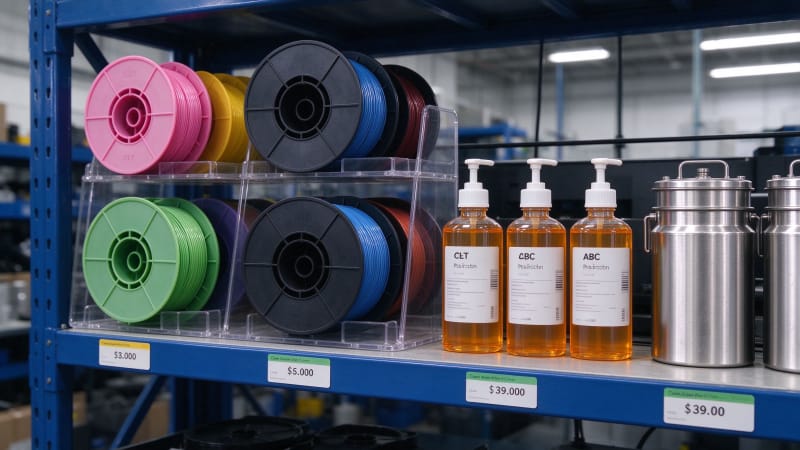
Raw material prices set the baseline for the whole calculation. Typical market ranges for one kilogram of material sit roughly as follows: PLA filament about $20 to $40, ABS filament $25 to $45, standard SLA resin $50 to $120, SLS nylon PA12 powder $60 to $100, and stainless steel 316L powder $100 to $200. These are the prices most buyers can verify in open markets, and they explain why metal 3d printing cost sits far above polymer printing before a single part is made.
Material | Typical price per kg (USD) | Process |
PLA filament | $20–40 | FDM |
ABS filament | $25–45 | FDM |
Standard SLA resin | $50–120 | SLA |
Nylon PA12 powder | $60–100 | SLS |
Stainless steel 316L powder | $100–200 | DMLS/SLM |
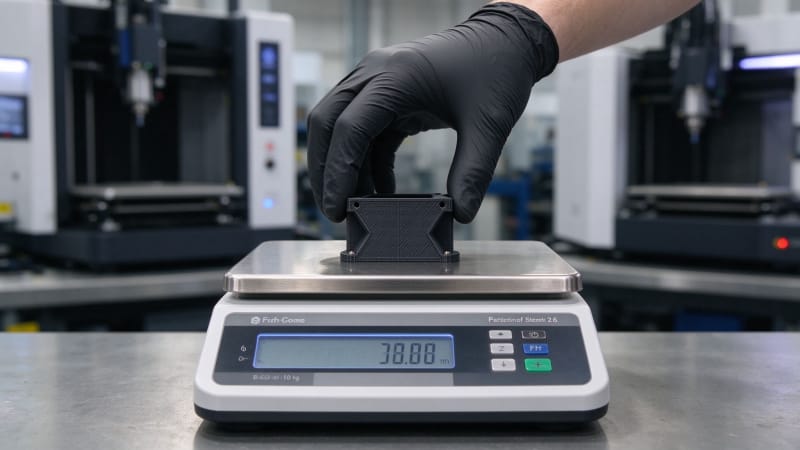
Machine time is where most quote surprises come from. A desktop FDM unit might cost $1 to $5 per operating hour, a large industrial FDM or SLA system $10 to $30, a production SLS machine $15 to $40, and a metal system $50 to $150 once depreciation, maintenance and operator cost are included. A small bracket may weigh only forty grams, but if it needs six hours of build time, machine time dominates the per-part price. That is why two parts with identical weight can still carry very different 3d printing prices.
Weight alone never tells the full cost story. Part density, wall thickness and infill percentage change how much material actually lands in the part, and the same nominal volume can be printed solid, sparse or with honeycomb. Slicing settings decide whether you pay for 20 percent or 100 percent material. A per-kg price therefore rewards lean designs, while a per-part price hides that advantage unless the quote is itemized. Always ask suppliers to separate material weight from machine time in the quotation.
Batch size bends both curves at once. Setting up a build, removing supports and inspecting parts costs almost the same whether you make one piece or ten, so those fixed costs spread across more parts as quantity rises. A part quoted at $60 for a single unit often drops below $25 per unit at fifty pieces and under $15 at two hundred, assuming it nests efficiently in the build volume. The table below shows a typical decline for a small enclosure of about 80 by 50 by 30 millimeters.
|
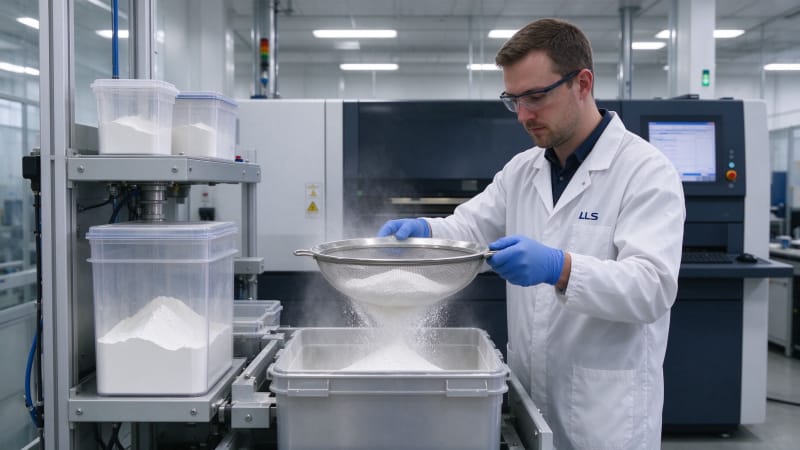
Powder processes hide a second lever: recycling. In SLS and metal printing, only part of the powder in the chamber is fused; the rest can be sieved, refreshed with new material and reused. Well-run shops reuse roughly 50 to 90 percent of the unfused powder, which pulls the effective cost per kg far below the list price. When you compare quotes for nylon or metal parts, ask how much virgin material is added per build, because that single number changes the true per-kg cost more than any discount.
Post-processing quietly adds 20 to 40 percent to the final price for many parts. Sanding, bead blasting, CNC machining of critical surfaces, coating and anodizing are all labor-driven and scale poorly. A raw SLS part may look finished, but threads and mating faces often need CNC work before assembly. HUANYA states post-processing as a separate line in every quote, so buyers can choose between cosmetic and functional finishing without paying for hidden steps.
Design-for-manufacturing cuts cost before the first layer. Reducing wall thickness to the minimum that survives service, lowering infill where loads are low, using topology to remove unloaded material and orienting the part to minimize supports all shrink both weight and build time. A 20 percent weight reduction on a metal part can cut per-part cost by a similar share, because powder, machine hours and finishing shrink together. Send the CAD to your supplier's DfM review before quoting, not after.
Per-kg and per-part pricing suit different purchases. Per-kg is intuitive for material-dominated jobs, such as large metal prints or resin prototypes where powder cost drives the total. Per-part is better for production runs, where buyers compare finished units against injection molding or CNC and want one number that includes labor. HUANYA offers both viewpoints on the same geometry, letting a customer see the per-kg material rate and the per-part landed price side by side.
Choosing a supplier matters as much as choosing a pricing model. The cheapest 3d printing quote is often the one that hides machine time, support removal or finishing until the invoice arrives. Transparent quoting, upfront DfM feedback and consistent quality beat a low headline rate. HUANYA runs calibrated FDM, SLA, SLS and metal lines under one roof, and every project receives a written cost breakdown before production starts.
Upload your STEP or STL to HUANYA and request a per-kg and per-part comparison on the same file. You will receive material cost, estimated machine time, post-processing and batch pricing in one document, plus a DfM recommendation before you commit. That is how a 3d printing quote should work: clear, itemized and built around your real geometry, whether you need one prototype or two thousand parts.


Leave a Comment