
 English
 French
 Deutsch
 العربية
 Español
 Русский
 にほんご
にほんご Português
 한국어
한국어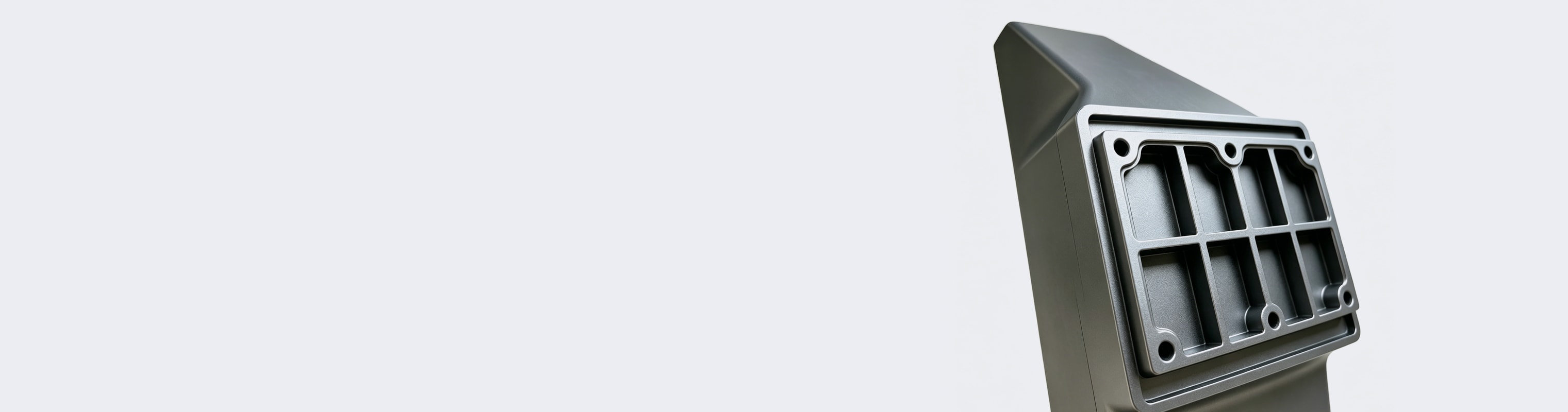
PA12-CF Plastic
PA12-CF Plastic 3D printing
Tailored for high-end lightweight industrial manufacturing, PA12-CF is an advanced carbon fiber reinforced PA12 material that integrates high strength, durability and lightweight advantages. The carbon fiber modification endows the material with extreme structural rigidity and excellent wear resistance, effectively solving the defects of insufficient strength and poor wear resistance of ordinary nylon. It features ultra-low water absorption, excellent chemical stability and superior high-temperature tolerance, adapting to complex and changeable industrial working conditions without performance attenuation. Its outstanding dimensional stability ensures high-precision molding and long-term structural stability of printed parts. Ideal for high-strength structural components, mechanical functional parts, automotive lightweight structural parts, aerospace accessories and industrial precision parts, this material perfectly meets the lightweight and high-strength iteration needs of modern industry. Our professional custom 3d printing service provides flexible 3d printing on demand and efficient rapid 3d printing, accelerating enterprise lightweight component rapid prototyping and batch upgrading.
Product Specifications & Features
Price: Our professional PA12-CF carbon fiber nylon 3D printing service starts at a competitive price of $3.00, offering cost-effective high-performance manufacturing solutions for diverse industrial projects.
Technology: All products are fabricated via mature and stable FDM (Fused Deposition Modeling) 3D printing technology, ensuring uniform material extrusion, firm layer bonding and consistent finished part quality.
Build time: The standard production lead time is set at 72 hours. Delivery time will be appropriately extended for large-quantity batch orders to ensure strict quality control and precise production standards.
Colors: This carbon fiber reinforced material is only available in classic black color with stable color tone and pure texture effect.
Tolerance: We maintain precise dimensional accuracy throughout production process. The dimensional tolerance reaches ±0.3mm for parts within 100mm, and keeps deviation within 0.4% for oversized components.
Wall thickness: The recommended optimal wall thickness for stable printing and sufficient structural strength is 1.6mm; the absolute minimum printable wall thickness is 1.2mm for lightweight structural designs.
Maximum build size: The maximum available printing dimension is 580mm × 480mm × 480mm, which meets the production demand of large-scale industrial functional components.
Minimum build size: The minimum supported printing dimension is 30mm × 30mm × 15mm, perfectly suitable for making small precision functional accessories.
Heat deflection temp: It owns an excellent heat deflection temperature up to 105 ℃, enabling long-term stable use in medium and high temperature working environments.
Strengths: This material is highly durable, equipped with outstanding high temperature resistance, excellent toughness and balanced comprehensive mechanical properties. PA12-CF refers to carbon fiber reinforced PA12 Nylon 12 printing filament. Benefiting from the low moisture absorption feature of original PA12 material, this composite filament can still maintain stable and excellent mechanical performance and thermal stability even after being affected by ambient humidity.
Weaknesses: Finished parts present natural layered textured surface brought by FDM printing process. Nevertheless, its surface touch feeling is visibly smoother compared with common printing materials such as ABS, ASA and PLA.
Applications: Widely applicable for high-strength functional prototypes, mass-produced practical parts, automotive structural components, household appliance accessories and various consumer electronic structural parts.
Material Properties
Price: Our professional PA12-CF carbon fiber nylon 3D printing service starts at a competitive price of $3.00, offering cost-effective high-performance manufacturing solutions for diverse industrial projects.
Technology: All products are fabricated via mature and stable FDM (Fused Deposition Modeling) 3D printing technology, ensuring uniform material extrusion, firm layer bonding and consistent finished part quality.
Build time: The standard production lead time is set at 72 hours. Delivery time will be appropriately extended for large-quantity batch orders to ensure strict quality control and precise production standards.
Colors: This carbon fiber reinforced material is only available in classic black color with stable color tone and pure texture effect.
Tolerance: We maintain precise dimensional accuracy throughout production process. The dimensional tolerance reaches ±0.3mm for parts within 100mm, and keeps deviation within 0.4% for oversized components.
Wall thickness: The recommended optimal wall thickness for stable printing and sufficient structural strength is 1.6mm; the absolute minimum printable wall thickness is 1.2mm for lightweight structural designs.
Maximum build size: The maximum available printing dimension is 580mm × 480mm × 480mm, which meets the production demand of large-scale industrial functional components.
Minimum build size: The minimum supported printing dimension is 30mm × 30mm × 15mm, perfectly suitable for making small precision functional accessories.
Heat deflection temp: It owns an excellent heat deflection temperature up to 105 ℃, enabling long-term stable use in medium and high temperature working environments.
Strengths: This material is highly durable, equipped with outstanding high temperature resistance, excellent toughness and balanced comprehensive mechanical properties. PA12-CF refers to carbon fiber reinforced PA12 Nylon 12 printing filament. Benefiting from the low moisture absorption feature of original PA12 material, this composite filament can still maintain stable and excellent mechanical performance and thermal stability even after being affected by ambient humidity.
Weaknesses: Finished parts present natural layered textured surface brought by FDM printing process. Nevertheless, its surface touch feeling is visibly smoother compared with common printing materials such as ABS, ASA and PLA.
Applications: Widely applicable for high-strength functional prototypes, mass-produced practical parts, automotive structural components, household appliance accessories and various consumer electronic structural parts.
Measurement |
Test Method |
Value |
| Heat deflection temperature | ISO75 1.8MPa | 105°C |
| Glass transition temperature | DSC, 10°C /min | 108°C |
| Melting temperature | DSC, 10°C /min | 165°C |
| Flexural strength | ISO 178 | 114.1MPa |
| Flexural modulus | ISO 178 | 3,532MPa |
| Impact strength notched Izod | ISO 179 | 12.1KJ/m² |
| Young's modulus | ISO 527 | 3748MPa |
| Tensile strength | ISO 527 | 69.3MPa |
| Elongation at break | ISO 527 | 2.9% |


