
 English
 French
 Deutsch
 العربية
 Español
 Русский
 にほんご
にほんご Português
 한국어
한국어PMMA
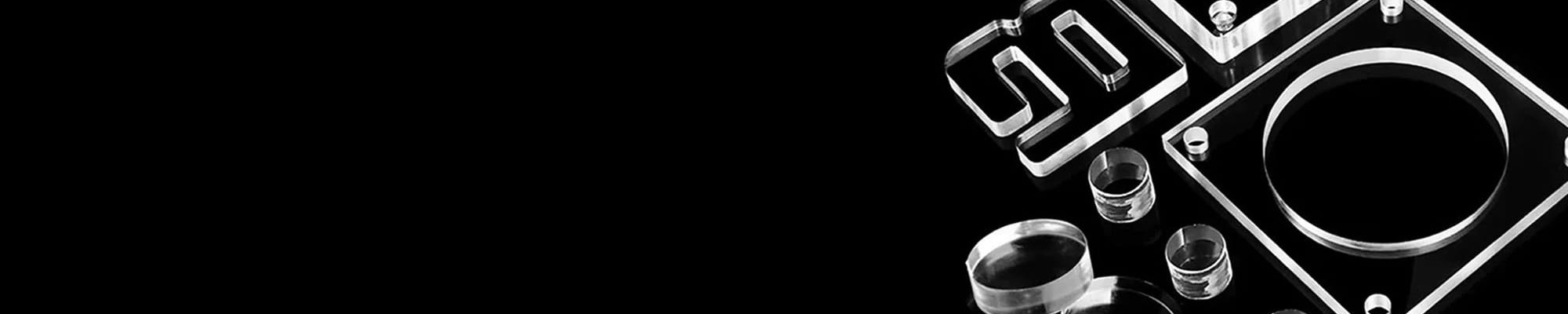
Acrylic, also known as PMMA or Plexiglas, is from the English acrylic (acrylic plastic), and is the chemical name of polymethyl methacrylate.
Get instant quote

PMMA
PMMA (Acrylic) CNC Machining
Acrylic material, also commonly labeled PMMA or Plexiglas in factory production and material procurement, derives its trade name from the English term "acrylic plastic". Its complete chemical designation is polymethyl methacrylate, which is uniformly adopted for material inspection, raw material incoming testing and technical document sorting in our workshop.
As one of the earliest mature polymer plastic materials put into industrial mass production, PMMA acrylic boasts comprehensive and balanced core performance suitable for diversified manufacturing. It features outstanding light transmittance and high transparency, stable chemical inertness against conventional chemical reagents, as well as superior outdoor weather resistance, so finished parts will not easily turn yellow, crack or lose gloss under long-term natural exposure. In terms of processing operability, acrylic accepts uniform and stable color tinting, supports cutting, hot bending, polishing, injection molding and other forming processes, and can be processed into finished workpieces with smooth, exquisite surface textures for high decorative standards. Thanks to these integrated advantages, this material has become a mainstream raw material and is extensively applied across all segments of the construction industry, together with advertising, optical, hardware and electronic accessory manufacturing workshops.
As one of the earliest mature polymer plastic materials put into industrial mass production, PMMA acrylic boasts comprehensive and balanced core performance suitable for diversified manufacturing. It features outstanding light transmittance and high transparency, stable chemical inertness against conventional chemical reagents, as well as superior outdoor weather resistance, so finished parts will not easily turn yellow, crack or lose gloss under long-term natural exposure. In terms of processing operability, acrylic accepts uniform and stable color tinting, supports cutting, hot bending, polishing, injection molding and other forming processes, and can be processed into finished workpieces with smooth, exquisite surface textures for high decorative standards. Thanks to these integrated advantages, this material has become a mainstream raw material and is extensively applied across all segments of the construction industry, together with advertising, optical, hardware and electronic accessory manufacturing workshops.
PMMA (Acrylic) Mechanical Properties
PMMA (Polymethyl Methacrylate) delivers excellent comprehensive mechanical properties, ranking among the top-tier performance levels of general-purpose plastics. Its tensile strength, flexural strength and compressive strength are superior to polyolefin, polystyrene, and polyvinyl chloride materials. Although PMMA exhibits relatively low impact toughness, its toughness performance is still marginally better than that of polystyrene.
Cast polymerized PMMA sheets (such as aviation-grade plexiglass) feature further enhanced tensile, flexural and compressive mechanical properties, reaching the performance standard of high-grade engineering plastics including polyamide and polycarbonate.
In terms of specific mechanical indicators, PMMA features a tensile strength ranging from 50 MPa to 77 MPa and a flexural strength of 90 MPa to 130 MPa. The upper limit of these mechanical parameters meets or even exceeds the performance of certain engineering plastics. However, its breaking elongation is only 2%–3%, classifying PMMA as a rigid and brittle plastic material. It presents obvious notch sensitivity and is prone to cracking under stress loading. Nevertheless, its fracture surface is smoother and less jagged compared with polystyrene and conventional inorganic glass.
PMMA has a secondary transition temperature of 40°C, corresponding to the activation temperature of side methyl group movement. When the ambient temperature exceeds 40°C, the material’s overall toughness and ductility will be effectively improved. In addition, PMMA has a relatively low surface hardness and is susceptible to surface scratching and abrasion in daily use.
The mechanical strength of PMMA is closely related to stress duration, and its bearing strength gradually declines as the stress action time increases. After tensile orientation treatment, oriented plexiglass achieves a significant improvement in overall mechanical performance, with optimized notch sensitivity as well.
PMMA possesses moderate heat resistance. Despite its glass transition temperature of 104°C, its maximum continuous service temperature varies from 65°C to 95°C depending on specific working conditions. Its heat deflection temperature is approximately 96°C under 1.18 MPa loading, and the Vicat softening point is around 113°C. The heat resistance of PMMA can be further optimized through monomer copolymerization with methacrylate or glycol bis-ester acrylate materials.
This material also shows unsatisfactory cold resistance, with a brittle transition temperature of 9.2°C. PMMA has medium thermal stability: it outperforms polyvinyl chloride and polyformaldehyde in thermal stability, but is inferior to polyolefin and polystyrene. Its thermal decomposition temperature is slightly above 270°C, and the melt flow temperature is approximately 160°C, providing a wide and safe temperature window for melt processing and injection molding production.
PMMA features medium-level thermal conductivity and specific heat capacity among plastic materials. Its thermal conductivity is 0.19 W/(M·K), and its specific heat capacity is 1464 J/(Kg·K).


