
 English
 French
 Deutsch
 العربية
 Español
 Русский
 にほんご
にほんご Português
 한국어
한국어Brass - H59

H59 brass is the most cost-effective brass alloy on the market. It delivers high strength and hardness while retaining favorable plasticity.
Get instant quote
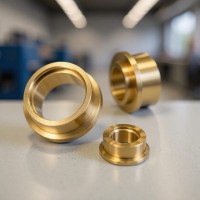
Brass - H59
Brass - H59 CNC Machining
H59 brass is the most cost-effective brass alloy on the market. It delivers high strength and hardness while retaining favorable plasticity. Under hot conditions, H59 brass supports efficient plastic working, compatible with multiple manufacturing processes to satisfy diverse production requirements. Its moderate corrosion resistance suits a wide range of industrial applications, making it a popular material across all engineering and manufacturing sectors.
At our factory, we implement rigorous control over the full production workflow of H59 brass, ranging from raw material selection to finished product inspection, guaranteeing every alloy batch meets high-standard quality specifications. Thanks to its outstanding mechanical properties and machinability, H59 brass is widely utilized in electronic components, mechanical spare parts, transportation equipment and other fields, delivering reliable and high-efficiency product solutions for customers. We are committed to supplying cost-competitive brass materials to meet the ever-changing demands of the market.
At our factory, we implement rigorous control over the full production workflow of H59 brass, ranging from raw material selection to finished product inspection, guaranteeing every alloy batch meets high-standard quality specifications. Thanks to its outstanding mechanical properties and machinability, H59 brass is widely utilized in electronic components, mechanical spare parts, transportation equipment and other fields, delivering reliable and high-efficiency product solutions for customers. We are committed to supplying cost-competitive brass materials to meet the ever-changing demands of the market.
Brass - H59 Mechanical Properties
Tensile Strength σb (MPa): ≥294
Elongation δ10 (%): ≥25
Remark: These tensile property parameters apply to brass plates
Specimen thickness range: 0.5 ~ 15 mm
1. Room-Temperature Microstructure of Conventional Brass
Ordinary brass is a binary alloy composed of copper and zinc. Its zinc content covers a broad range, leading to distinct microstructures at ambient temperature. Based on the copper-zinc binary phase diagram, brass can be categorized into three types according to its room-temperature microstructure:
α brass: Zinc content lower than 35%, featuring a single-phase α solid solution microstructure under room temperature;
(α+β) duplex-phase brass: Zinc content between 36% and 46%, consisting of both α and β phases at room temperature;
β brass: Zinc content ranging from 46% to 50%, with pure β phase as its room-temperature microstructure.
2. Plastic Working Performance
Single-phase α brass (grades H96 to H65) delivers excellent ductility and supports both hot and cold forming processes. However, this material suffers from medium-temperature brittleness during hot working operations like forging. The critical brittle temperature interval varies with zinc proportion, generally falling between 200°C and 700°C. For this reason, hot forming operations must be carried out above 700°C.
The medium-temperature brittleness of single-phase α brass stems from two main factors:
First, ordered compounds Cu₃Zn and Cu₉Zn form inside the α phase of Cu-Zn alloys. Ordered phase transformation takes place at medium and low temperatures, rendering the alloy brittle.
Second, trace lead and bismuth impurities in the alloy form low-melting eutectic films along grain boundaries, which trigger intergranular fracture under hot forming stress.
Practical production verifies that adding a tiny amount of cerium can thoroughly eliminate this medium-temperature brittleness.
Duplex-phase brass (grades H63 to H59) contains ductile α phase alongside β solid solution built on the intermetallic compound CuZn. The β phase retains outstanding ductility under high temperatures, while its low-temperature ordered variant β′ phase is rigid and brittle. As a result, all (α+β) brass components require hot forging. β brass with zinc content of 46%–50% is inherently hard and brittle, and cannot undergo any plastic forming processing.
3. Mechanical Property Variation Rules
Zinc content directly alters brass mechanical performance:
For α brass: Tensile strength σb and elongation δ both rise as zinc proportion increases;
For (α+β) duplex brass: Room-temperature tensile strength keeps rising until zinc content reaches approximately 45%. Further zinc addition introduces brittle γ phase (solid solution based on Cu₅Zn₈ compound), causing a steep drop in overall strength. Meanwhile, the room-temperature ductility of duplex brass continuously declines with higher zinc content. Cu-Zn alloys with zinc content exceeding 45% possess no practical engineering application value.
Application Scope
Standard brass materials cover extensive industrial uses, including radiator strips, water supply and drainage pipelines, commemorative medals, bellows, coil tubes, condenser tubes, housings, intricately shaped stamped workpieces and miniature hardware fittings.
Grades H63 to H59 with elevated zinc content exhibit superior hot forming capacity, widely manufactured into mechanical and electrical accessory parts, stampings, and musical instrument components.
Heat Treatment Parameters
Hot forming temperature: 730~820℃
Stress relief annealing temperature: 600~670℃


