
 English
 French
 Deutsch
 العربية
 Español
 Русский
 にほんご
にほんご Português
 한국어
한국어ABS

PC+ABS is a high-performance engineering plastic alloy widely adopted in precision injection molding workshops, commonly referred to as plastic alloy within the chemical manufacturing industry.
Get instant quote
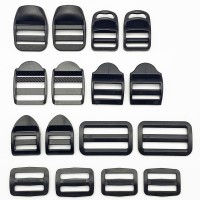
ABS
ABS CNC Machining
PC+ABS is a high-performance engineering plastic alloy widely adopted in precision injection molding workshops, commonly referred to as plastic alloy within the chemical manufacturing industry. Its compound name PC+ABS comes from the complementary performance of its two base raw materials, combining the respective strengths of PC polycarbonate and ABS resin into one integrated material.
From material performance perspectives, PC components endow this alloy with prominent advantages including outstanding heat resistance, reliable anti-aging weather resistance, stable dimensional accuracy after molding, and extraordinary high and low temperature impact resistance. Meanwhile, the ABS phase inside the alloy greatly improves melt fluidity during production, making the material far easier to form thin-walled, complex and intricate structural parts compared to pure PC material alone.
This composite plastic also carries obvious inherent drawbacks that our production department must take note of during processing. First of all, its density is relatively high, leading to heavier finished product weight than many single-component engineering plastics. Secondly, the thermal conductivity of PC+ABS alloy stays at a low level, which may bring challenges to rapid heat dissipation for functional parts that require continuous heat exchange in service.
The injection molding temperature window of PC+ABS needs to be controlled within the balanced range of its two base materials, with the standard processing temperature set at 240℃ to 265℃. Strict temperature control is critical in mass production: if the barrel temperature exceeds the upper limit of this range, the ABS fraction will undergo thermal decomposition, generating gas lines, bubbles, black burn marks and other defective products. On the contrary, if the processing temperature drops below 240℃, the PC component cannot gain sufficient melt fluidity, resulting in incomplete filling, weld line weakness, high internal stress and hard-to-eliminate molding defects on workpieces. Operators must strictly follow this temperature parameter standard to guarantee stable batch product quality.
From material performance perspectives, PC components endow this alloy with prominent advantages including outstanding heat resistance, reliable anti-aging weather resistance, stable dimensional accuracy after molding, and extraordinary high and low temperature impact resistance. Meanwhile, the ABS phase inside the alloy greatly improves melt fluidity during production, making the material far easier to form thin-walled, complex and intricate structural parts compared to pure PC material alone.
This composite plastic also carries obvious inherent drawbacks that our production department must take note of during processing. First of all, its density is relatively high, leading to heavier finished product weight than many single-component engineering plastics. Secondly, the thermal conductivity of PC+ABS alloy stays at a low level, which may bring challenges to rapid heat dissipation for functional parts that require continuous heat exchange in service.
The injection molding temperature window of PC+ABS needs to be controlled within the balanced range of its two base materials, with the standard processing temperature set at 240℃ to 265℃. Strict temperature control is critical in mass production: if the barrel temperature exceeds the upper limit of this range, the ABS fraction will undergo thermal decomposition, generating gas lines, bubbles, black burn marks and other defective products. On the contrary, if the processing temperature drops below 240℃, the PC component cannot gain sufficient melt fluidity, resulting in incomplete filling, weld line weakness, high internal stress and hard-to-eliminate molding defects on workpieces. Operators must strictly follow this temperature parameter standard to guarantee stable batch product quality.
ABS Mechanical Properties
ABS material boasts outstanding overall mechanical performance with notably superior impact strength, and it maintains usable performance even under extremely low-temperature service environments.
This engineering plastic also features reliable abrasion resistance, stable dimensional precision after molding, and favorable oil resistance. Thanks to these characteristics, ABS is suitable for manufacturing bearing components operating under medium loads and moderate rotational speeds.
It should be noted that temperature changes exert a prominent influence on the mechanical property indicators of ABS.
This engineering plastic also features reliable abrasion resistance, stable dimensional precision after molding, and favorable oil resistance. Thanks to these characteristics, ABS is suitable for manufacturing bearing components operating under medium loads and moderate rotational speeds.
It should be noted that temperature changes exert a prominent influence on the mechanical property indicators of ABS.


