
 English
 French
 Deutsch
 العربية
 Español
 Русский
 にほんご
にほんご Português
 한국어
한국어POM

Also known as polyoxymethylene. The structure is, abbreviated as POM-C, usually the polymer of formaldehyde polymerization, the polymerization degree is not high, and easy to thermal depolymerization.
Get instant quote
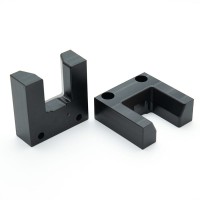
POM
POM CNC Machining
Polyoxymethylene, commonly abbreviated as POM-C, is an important engineering plastic. Its chemical structure derives from the polymerization of formaldehyde with a relatively low degree of polymerization, so the material is prone to thermal decomposition at high temperatures. It was developed by DuPont in 1955, and its homopolymer was produced via formaldehyde polymerization. POM features high crystallinity above 70%. The melting point of its homopolymer is approximately 180°C, granting it favorable thermal stability during processing and service.
At our factory, POM is widely used to produce precision mechanical parts, gears, bearings and other products requiring high wear resistance and low friction coefficient. Thanks to its excellent physical and mechanical properties as well as chemical corrosion resistance, POM has broad applications in automotive, electronics, medical devices and other industries. We continuously optimize production processes to guarantee stable quality and performance of POM materials and meet customer requirements.
At our factory, POM is widely used to produce precision mechanical parts, gears, bearings and other products requiring high wear resistance and low friction coefficient. Thanks to its excellent physical and mechanical properties as well as chemical corrosion resistance, POM has broad applications in automotive, electronics, medical devices and other industries. We continuously optimize production processes to guarantee stable quality and performance of POM materials and meet customer requirements.
POM Mechanical Properties
Density: 1.45 g/cm³
Water absorption: 0.8%
Continuous operating temperature range: -50℃ ~ 90℃
Yield tensile strength: 62 MPa
Yield tensile elongation: 10%
Ultimate tensile elongation: 40%
Unnotched impact toughness: 0 kJ/m²
Notched impact toughness: 7 kJ/m²
Rockwell ball hardness: 135 MPa
Shore D hardness: 85
Elastic modulus: 2600 MPa
Vicat softening point: 150℃
Coefficient of linear thermal expansion: 1.1×10⁻⁴ K⁻¹
Thermal conductivity at 20℃: 0.31 W/(m·K)
Ultimate tensile strength & flexural strength: Not specified
Electrical Insulation Properties
Volume resistivity (per VDE0303 standard): ≥10¹⁵ Ω·cm
Surface resistivity (per VDE0303 standard): ≥10¹³ Ω
Dielectric constant (1MHz, DIN53483): 3.8
Dissipation factor (1MHz, DIN53483): 0.005
Dielectric strength (VDE0303): 85 kV/mm
Tracking resistance (DIN5340 KC600): Provided
Chemical & Environmental Resistance, Other Characteristics
Chemical resistance performance: Reference below
Adhesion property: Available
Compliance standard for non-toxic harmless: EEC90/128
Friction coefficient (DIN53375): 0.35
Flammability rating (UL94): HB
UV resistance grade: Level 0
Acid resistance: Good (+)
Alkali resistance: Moderate (||)
Carbonic acid resistance: Available
Carbonic acid & water combined resistance (CKW): Level 0
Resistance to aromatic solvents, ketones and thermal water: Not specified
Molding Heat Treatment & Processing Parameters
Drying Requirement
No drying procedure is necessary if the raw material is preserved in a dry storage environment.
Melting Temperature
Homopolymer POM: 190 ~ 230℃
Copolymer POM: 190 ~ 210℃
Mold Temperature
80 ~ 105℃. Elevated mold temperatures can be adopted to reduce post-molding shrinkage of finished parts.
Injection Pressure
700 ~ 1200 bar
Injection Speed
Medium injection speed is the preferred setting. Excessively low speed tends to create surface ripple defects; overly fast speed causes flow lines and excessive shear heat buildup.
Runner & Gate Design
All gate types are compatible. Short tunnel gates are recommended if tunnel gates are selected.
For homopolymer POM: Hot nozzle and hot runner systems are suggested.
For copolymer POM: Both internal and external hot runner structures can be utilized.
Back Pressure
Minimize back pressure as much as possible; the maximum allowable value shall not exceed 200 bar.
Melt Residence Time Limit
If the injection machine is not equipped with a melt holding stop function:
POM-H (homopolymer) can stay at 215℃ for up to 35 minutes without severe thermal decomposition;
POM-K (copolymer) can remain at 205℃ for a maximum of 20 minutes.
POM-K will only withstand a barrel temperature of 240℃ for 7 minutes.
For temporary machine shutdown, lower the barrel temperature to 150℃. For long-term shutdown, thoroughly clean the barrel and turn off all heating equipment.
Complete Shutdown Operation Standard
Purge the barrel with PE or PP resin;
Cut off heating power and retract the screw to the front position.
The barrel and screw must be kept fully clean at all times. Contaminants and foreign debris will compromise the thermal stability of POM, especially homopolymer POM-H.
If halogen-containing polymers or other acidic materials were processed previously, the barrel must be purged with PE before producing POM products; failure to do so may trigger explosive decomposition.
Improper pigment additives, lubricants, or glass fiber reinforced nylon residues mixed into the barrel will induce degradation of POM melt.
Post Annealing Treatment
Heat annealing treatment is required for components that operate under extreme temperature conditions or have strict surface and dimensional quality standards.
Residual Stress Inspection Method
To verify the annealing effect, immerse molded workpieces in 30% concentration hydrochloric acid solution for 30 minutes, then visually check for residual stress cracks on the surface.


