
 English
 French
 Deutsch
 العربية
 Español
 Русский
 にほんご
にほんご Português
 한국어
한국어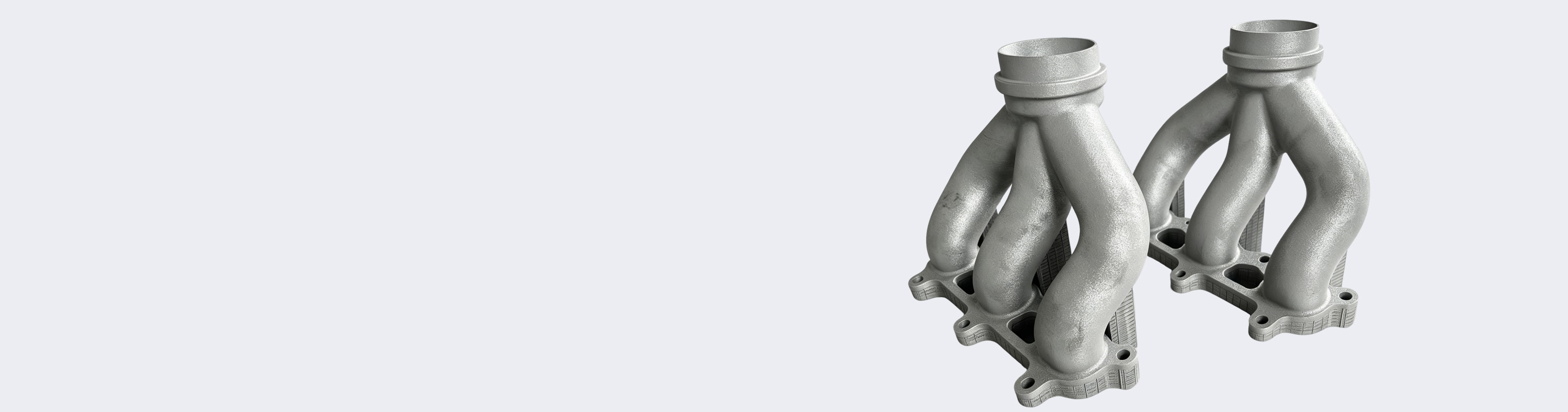
Titanium TC4 Metal
Titanium TC4 Metal 3D printing
TC4 titanium alloy is a premium high-strength, lightweight 3d printable metal designed for rigorous industrial and biomedical additive manufacturing scenarios. Delivering exceptional comprehensive mechanical properties, the material features ultra-high tensile strength, superior structural toughness and outstanding long-term corrosion resistance, outperforming most conventional structural metals. With low material density, reliable high-temperature stability and excellent biocompatibility, TC4 is uniquely qualified for aerospace and medical-grade applications where safety and durability are critical. Processed via professional laser metal 3d printing and standardized post-treatment procedures, finished components achieve ultra-smooth surface texture, precise dimensional accuracy and consistent structural stability. Our professional titanium 3d printing service supports industrial-grade high quality 3d printing and high-precision rapid manufacturing 3d printing, widely applied in aerospace structural parts, medical implant devices, high-end automotive components, precision mechanical accessories and sophisticated industrial custom parts.
Product Specifications & Features
Price: Our premium TC4 titanium alloy 3D printing service starts at just $8.00, offering cost-effective high-performance metal part customization solutions for various industrial and high-end application projects.
Technology: All titanium alloy products are manufactured via mature and professional SLM Selective Laser Melting 3D printing technology. This advanced metal forming method ensures full metal powder melting, dense internal structure and reliable overall mechanical performance of finished workpieces.
Color: The original finished color of printed TC4 titanium alloy parts is classic silver gray, presenting pure metallic texture and natural metal luster.
Build Time: The standard regular production lead time is 96 hours. Production and delivery period will be reasonably extended for oversized workpieces, large batch orders and high-volume customized projects to ensure complete process and strict quality control.
Tolerance: We maintain precise dimensional accuracy throughout production. The standard dimensional tolerance reaches ±0.3mm for components within 100mm in size, while the dimension deviation is controlled within ±0.4% for parts exceeding 100mm.
Recommended Wall Thickness: To guarantee stable printing molding, complete internal structure and outstanding overall mechanical strength, the practical recommended wall thickness is more than 1.5mm.
Max Build Size: The maximum available printing dimension is 390mm × 390mm × 290mm, fully meeting the production demands of large-scale titanium alloy structural components.
Min Build Size: It supports ultra-precision tiny part fabrication, with minimum printable size options of 5mm × 5mm × 5mm and slim structure size of 10mm × 2mm × 2mm.
Advantages: TC4 titanium alloy material boasts outstanding comprehensive performance. It features superb corrosion resistance, stable high temperature resistance, obvious lightweight effect and low material density. Meanwhile, it owns high specific strength, excellent structural toughness and fine welding performance, suitable for harsh working environments.
Disadvantages: Raw printed parts come with naturally slightly rough surface and tiny surface pitting traces formed during laser melting process. This material also has relatively low thermal conductivity and belongs to hard-to-cut metal material, making subsequent mechanical processing relatively difficult.
Applications: Widely applicable to produce complex functional structural components, engine core parts, pressure-resistant protective shells and various industrial system assembly parts. It is deeply used in aerospace industry, petrochemical engineering, shipbuilding industry, automobile manufacturing, high-end sports equipment and other professional fields.
Material Properties
Price: Our premium TC4 titanium alloy 3D printing service starts at just $8.00, offering cost-effective high-performance metal part customization solutions for various industrial and high-end application projects.
Technology: All titanium alloy products are manufactured via mature and professional SLM Selective Laser Melting 3D printing technology. This advanced metal forming method ensures full metal powder melting, dense internal structure and reliable overall mechanical performance of finished workpieces.
Color: The original finished color of printed TC4 titanium alloy parts is classic silver gray, presenting pure metallic texture and natural metal luster.
Build Time: The standard regular production lead time is 96 hours. Production and delivery period will be reasonably extended for oversized workpieces, large batch orders and high-volume customized projects to ensure complete process and strict quality control.
Tolerance: We maintain precise dimensional accuracy throughout production. The standard dimensional tolerance reaches ±0.3mm for components within 100mm in size, while the dimension deviation is controlled within ±0.4% for parts exceeding 100mm.
Recommended Wall Thickness: To guarantee stable printing molding, complete internal structure and outstanding overall mechanical strength, the practical recommended wall thickness is more than 1.5mm.
Max Build Size: The maximum available printing dimension is 390mm × 390mm × 290mm, fully meeting the production demands of large-scale titanium alloy structural components.
Min Build Size: It supports ultra-precision tiny part fabrication, with minimum printable size options of 5mm × 5mm × 5mm and slim structure size of 10mm × 2mm × 2mm.
Advantages: TC4 titanium alloy material boasts outstanding comprehensive performance. It features superb corrosion resistance, stable high temperature resistance, obvious lightweight effect and low material density. Meanwhile, it owns high specific strength, excellent structural toughness and fine welding performance, suitable for harsh working environments.
Disadvantages: Raw printed parts come with naturally slightly rough surface and tiny surface pitting traces formed during laser melting process. This material also has relatively low thermal conductivity and belongs to hard-to-cut metal material, making subsequent mechanical processing relatively difficult.
Applications: Widely applicable to produce complex functional structural components, engine core parts, pressure-resistant protective shells and various industrial system assembly parts. It is deeply used in aerospace industry, petrochemical engineering, shipbuilding industry, automobile manufacturing, high-end sports equipment and other professional fields.
Measurement |
Value |
| Tensile strength (Mpa) | 1160 |
| Yield strength (Mpa) | 1000 |
| Elongation rate (%) | 8 |
| Hardness (HRC) | 36 |


