
 English
 French
 Deutsch
 العربية
 Español
 Русский
 にほんご
にほんご Português
 한국어
한국어Stainless Steel 304

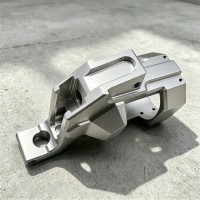
Grade 304 stainless steel is one of the most common stainless steel grades and plays a vital role in various fields, including industrial equipment, furniture decoration, food processing and medical industries.
Get instant quote
Stainless Steel 304
Stainless Steel 304 Machining
Grade 304 stainless steel is one of the most widely used stainless steel materials with a density of 7.93 g/cm³. It is also known as 18/8 stainless steel in the industry, which means it contains at least 18% chromium (Cr) and at least 8% nickel (Ni). Thanks to its high nickel content, it delivers superior corrosion resistance and heat resistance compared with other chromium-based steels. It also boasts outstanding physical properties: high-temperature resistance up to 800°C, excellent processability for machining and forming, and great toughness.
In our factory, 304 stainless steel is extensively adopted to manufacture all types of equipment and mechanical components, especially products requiring balanced comprehensive performance including corrosion resistance and formability. We are equipped with advanced production equipment and mature processes to guarantee every 304 stainless steel product complies with strict quality standards. Our team focuses on delivering customized solutions to satisfy demands from various industries.
304 stainless steel plays an irreplaceable role in numerous sectors such as industrial equipment, furniture decoration, food processing and medical industries. We commit ourselves to supplying customers with high-performance, cost-competitive products via continuous technological innovation and production process optimization. Meanwhile, we maintain efficient production cycles and flexible lead times to support all kinds of client project requirements.
In our factory, 304 stainless steel is extensively adopted to manufacture all types of equipment and mechanical components, especially products requiring balanced comprehensive performance including corrosion resistance and formability. We are equipped with advanced production equipment and mature processes to guarantee every 304 stainless steel product complies with strict quality standards. Our team focuses on delivering customized solutions to satisfy demands from various industries.
304 stainless steel plays an irreplaceable role in numerous sectors such as industrial equipment, furniture decoration, food processing and medical industries. We commit ourselves to supplying customers with high-performance, cost-competitive products via continuous technological innovation and production process optimization. Meanwhile, we maintain efficient production cycles and flexible lead times to support all kinds of client project requirements.
Stainless Steel 304 Mechanical Properties
| Tensile strength (σb) | 515~1035 MPa |
| 0.2% Yield strength (σ0.2) | ≥205 MPa |
| Elongation (δ5) | ≥40 % |
| Hardness | ≤ 201HBW;≤ 92HRB;≤ 210HV |
| Density(20℃,g/cm³) | 7.93 g/cm³ (280 lb/in³) |
| Melting Point Range(℃) | 1398 ~ 1454 |
| Specific Heat Capacity(0~100℃,kJ·kg⁻¹·K⁻¹) | 0.50 |
| Thermal conductivity(W·m⁻¹·K⁻¹) | 16.3 (100℃),21.5 (500℃) |
| Linear expansion coefficient(10⁻⁶·K⁻¹) | 17.2 (0~100℃),18.4 (0~500℃) |
| Electrical resistivity(20℃,10⁻⁶Ω·m) | 0.73 |
| Longitudinal Modulus of Elasticity(20℃,kN/mm²) | 193 |
Surface Treatment
- Brushing
- Powder Coating
- Silk Screen Printing
- Laser Marking
Applications
304 stainless steel is the most commonly used chromium-nickel wrought stainless steel grade in industrial manufacturing. As a highly versatile alloy, it delivers outstanding comprehensive performance, including excellent atmospheric corrosion resistance, reliable heat resistance, and superior forming properties, fully adapting to various hot forming, stamping and bending processes. It cannot be hardened by conventional heat treatment. Its stable service temperature range is -196℃ to 800℃, with balanced machinability and weldability suitable for mass production.
304 stainless steel is widely adopted for food processing equipment, chemical storage tanks, liquid and gas pipelines, various deep drawn liquid containers and bellows. Typical finished products include aircraft fuel pipelines, vehicle & ship sheet metal parts, instrument brackets, street lamp supports, hardware rivets, electrical enclosures, Grade 1 & Grade 2 kitchen tableware, kitchen cabinets, water heaters, boilers, bathtubs and architectural decorative components. Strictly controlled chemical composition enables food-grade compliance.
Causes of Rust on 304 Stainless Steel
Even though 304 stainless steel features excellent anti-corrosion capacity, rust may still occur under special working environments, mainly caused by the following factors:
1. Chloride Ion Corrosion
Chloride ions exist widely in daily and industrial environments, such as salt, human sweat, seawater, sea breeze and soil. Stainless steel undergoes rapid electrochemical corrosion in chloride-rich media, whose corrosion rate can even exceed ordinary low carbon steel. Therefore 304 stainless steel has strict environmental limits. Regular cleaning and dedusting are required to keep the surface clean and dry for long-term rust prevention.
2. Unqualified Solution Heat Treatment
If alloy elements fail to fully dissolve into the metal matrix during solution treatment, the matrix will have insufficient effective alloy content, leading to overall reduced corrosion resistance and local rust spots.
3. Intergranular Corrosion
304 stainless steel without titanium and niobium additives is susceptible to intergranular corrosion during processing and service. Proper addition of Ti/Nb plus dedicated stabilizing heat treatment can effectively suppress intergranular corrosion and improve material stability.
Stainless steel is high-alloy corrosion-resistant steel that resists oxidation and corrosion in atmospheric and chemical corrosive surroundings. It has smooth, beautiful surface with natural anti-rust property without extra electroplating protection. Main categories include 13Cr stainless steel and 18-8 Cr-Ni stainless steel series.
Metallurgically, chromium forms a dense thin chromium oxide passive film on the surface to block oxygen penetration and realize corrosion protection. To guarantee stable corrosion resistance, chromium content must stay above 12%. For welded parts, low-carbon design restricts carbide precipitation in the heat-affected zone and avoids weld intergranular corrosion.
Common Surface Defects, Causes & Solutions
1. Surface Indentation Marks
Defect: Linear or dot indentations on workpieces after deep drawing and grinding.
Root Causes: Foreign debris stuck on workpiece or mold surface; scratches on blank holder pads.
Solutions: Fully remove surface impurities and mold scratches before processing; deep grinding eliminates residual orange peel and indent marks.
2. Orange Peel Texture
Defect: Uneven orange-peel rough surface generated during grinding and forming.
Causes: Improper grinding parameters (worse with large deformation); coarse raw material grain; material softening from wrong heat treatment.
Solutions: Complete sufficient deep grinding for deep-drawn workpieces; standardize heat treatment parameters; strictly control raw material grain size to stabilize surface quality.


