
 English
 French
 Deutsch
 العربية
 Español
 Русский
 にほんご
にほんご Português
 한국어
한국어Nylon - PA6
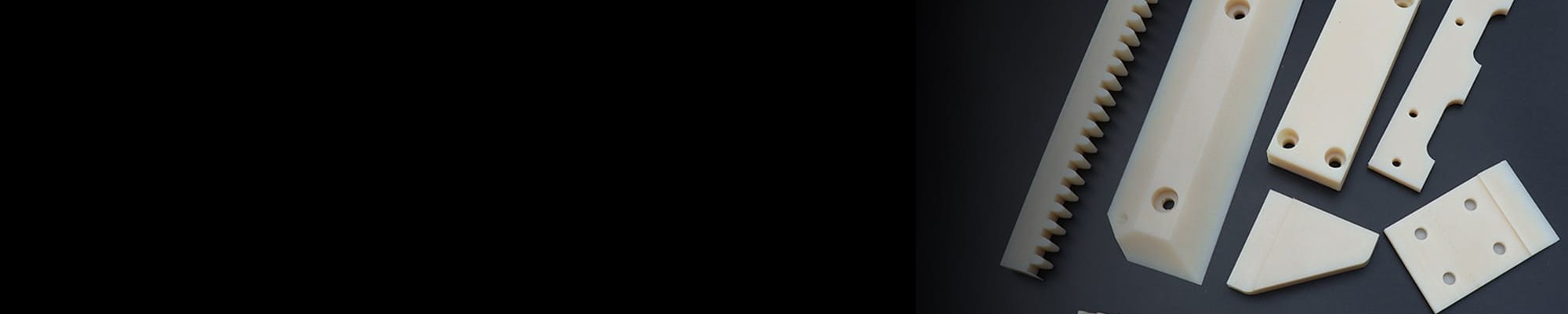
Nylon 6, also referred to as Polyamide 6 or PA6, is a widely applied polymeric compound.
Get instant quote
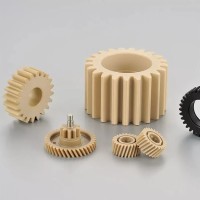
Nylon - PA6
Nylon - PA6 CNC Machining
Nylon 6, also referred to as Polyamide 6 or PA6, is a widely applied polymeric compound. At our factory, Nylon 6 is utilized to manufacture a variety of high-performance materials, and it is well recognized for its excellent mechanical strength and wear resistance.
We are committed to producing high-quality Nylon 6 products to meet the demands of diverse industries. Our products are extensively adopted in automotive, electronics, machinery and consumer goods sectors, delivering outstanding performance and reliability.
It should be noted that on October 27, 2017, the International Agency for Research on Cancer (IARC) under the World Health Organization released a preliminary list of carcinogens, and Nylon 6 was categorized as Group 3 carcinogen. Nevertheless, our production procedures comply with stringent quality control standards, guaranteeing safe and efficient solutions for customers using Nylon 6 products.
Our factory is equipped with advanced production equipment and staffed by a professional technical team dedicated to the R&D and manufacturing of premium Nylon 6 materials. We continuously optimize production processes to deliver products that meet the highest industrial standards. Meanwhile, we maintain active communication with customers to identify their requirements, so as to provide customized solutions and drive sustained innovation and development across the industry.
We are committed to producing high-quality Nylon 6 products to meet the demands of diverse industries. Our products are extensively adopted in automotive, electronics, machinery and consumer goods sectors, delivering outstanding performance and reliability.
It should be noted that on October 27, 2017, the International Agency for Research on Cancer (IARC) under the World Health Organization released a preliminary list of carcinogens, and Nylon 6 was categorized as Group 3 carcinogen. Nevertheless, our production procedures comply with stringent quality control standards, guaranteeing safe and efficient solutions for customers using Nylon 6 products.
Our factory is equipped with advanced production equipment and staffed by a professional technical team dedicated to the R&D and manufacturing of premium Nylon 6 materials. We continuously optimize production processes to deliver products that meet the highest industrial standards. Meanwhile, we maintain active communication with customers to identify their requirements, so as to provide customized solutions and drive sustained innovation and development across the industry.
Bakelite Mechanical Properties
Phenolic plastic is classified as a rigid, brittle thermosetting material. Commonly known as Bakelite, it features non-water-absorbent, non-conductive, high-temperature resistant and high-strength properties, making it widely applied in electrical appliance manufacturing. The material is named “Bakelite” due to its excellent insulation performance and wood-like formability. Bakelite is produced by blending powdered phenolic resin with fillers such as wood powder, asbestos or clay, followed by high-temperature compression molding to form finished parts.
Typical characteristics of phenolic Bakelite include a hard surface, brittle texture, and a wood-board knocking sound when struck. It is mostly opaque with dark brown or black appearances and will not soften when immersed in hot water. As a reliable insulating material, its core chemical composition is phenolic resin.
Molding Process Performance
1. Phenolic plastic possesses favorable moldability. However, its molding shrinkage and directional shrinkage are generally higher than those of amino plastics. The material contains volatile moisture components, so preheating treatment is required before formal molding. Venting operations must be performed during the molding cycle. If preheating is omitted, appropriately increased mold temperature and molding pressure are necessary to ensure molding quality.
2. Mold temperature exerts a significant influence on the melt fluidity of phenolic plastic. Fluidity drops sharply when the mold temperature exceeds 160°C.
3. Compared with amino plastics, phenolic plastic has a relatively slower curing rate and releases large amounts of heat during the curing reaction. For large and thick-walled molded parts, excessive internal temperature is likely to occur, easily causing uneven curing and local overheating defects.
Resin Synthesis and Curing Mechanism
When the molar ratio of formaldehyde to phenol is less than 1, thermoplastic linear phenolic resin can be produced. This resin contains no further condensable active groups and cannot cure independently. It requires the addition of a curing agent and heating to complete cross-linking and curing. Taking hexamethylenetetramine as the curing agent with a curing temperature of 150°C, the resin mixed with fillers forms molding powder, which is commonly known as Bakelite powder.
When the molar ratio of formaldehyde to phenol is greater than 1, alkali-catalyzed reaction generates Stage A thermosetting phenolic resin. This resin is soluble in organic solvents and contains hydroxymethyl groups capable of further condensation cross-linking, enabling self-curing without additional curing agents. Upon heating, Stage A resin reacts to form Stage B resin (semi-soluble phenolic resin), which is insoluble and infusible but capable of swelling and softening. Further heating and reaction finally generate Stage C resin with a fully cross-linked bulk structure, featuring complete insolubility and infusibility. In addition, Stage A resin can undergo self-curing naturally during long-term storage.
Curing Types of Thermosetting Phenolic Resin
Thermosetting phenolic resin has two mainstream curing methods: room-temperature curing and thermal curing. For room-temperature curing, non-toxic NL room-temperature curing agent can be adopted. Benzene sulfonyl chloride or petroleum sulfonic acid are also optional curing agents, though these two materials have higher toxicity and obvious irritation.


