
 English
 French
 Deutsch
 العربية
 Español
 Русский
 にほんご
にほんご Português
 한국어
한국어Aluminum 5052
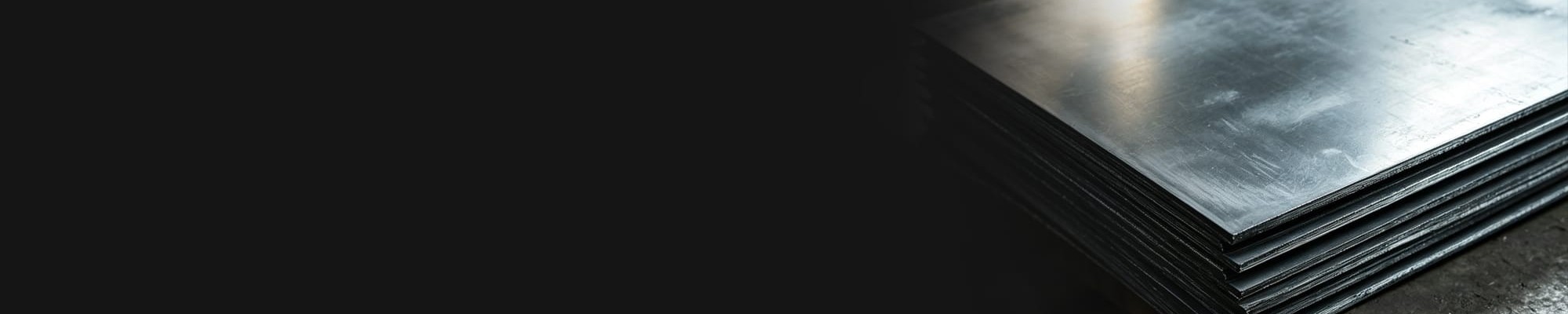
5052 aluminum alloy is a representative grade of the Al-Mg wrought aluminum alloy series and is widely used in industrial manufacturing fields.
Get instant quote
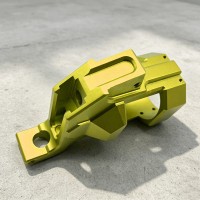
Aluminum 5052
Aluminum 5052 Machining
5052 aluminum alloy is a representative grade of the Al-Mg wrought aluminum alloy series and is widely used in industrial manufacturing fields. It occupies an irreplaceable position in the construction industry and is recognized as one of the most versatile and development-potential alloy materials in modern processing and production.
Magnesium serves as the primary alloying element of 5052 aluminum, endowing the material with stable medium mechanical strength and comprehensive balanced performance. This alloy features outstanding atmospheric corrosion resistance, reliable welding performance, and excellent forming ability, fully adapting to various cold forming and bending processes in factory production.
It is important to note that 5052 aluminum alloy cannot be strengthened and hardened through conventional heat treatment processes. In the semi-cold-work hardened state, the material retains excellent ductility and forming plasticity, which facilitates secondary processing. However, full cold work hardening will gradually reduce its plasticity and toughness.
In terms of processing characteristics, 5052 aluminum delivers superior corrosion resistance and stable weldability for long-term service. Its mechanical machinability is relatively poor compared with high-strength aluminum alloys, while the material surface supports polishing treatment to achieve smooth and high-quality surface finishes. Thanks to its stable overall performance, reliable environmental adaptability and excellent processability, 5052 aluminum alloy is widely applied in architectural decoration, structural parts, sheet metal fabrication, welded components and other industrial scenarios.
Magnesium serves as the primary alloying element of 5052 aluminum, endowing the material with stable medium mechanical strength and comprehensive balanced performance. This alloy features outstanding atmospheric corrosion resistance, reliable welding performance, and excellent forming ability, fully adapting to various cold forming and bending processes in factory production.
It is important to note that 5052 aluminum alloy cannot be strengthened and hardened through conventional heat treatment processes. In the semi-cold-work hardened state, the material retains excellent ductility and forming plasticity, which facilitates secondary processing. However, full cold work hardening will gradually reduce its plasticity and toughness.
In terms of processing characteristics, 5052 aluminum delivers superior corrosion resistance and stable weldability for long-term service. Its mechanical machinability is relatively poor compared with high-strength aluminum alloys, while the material surface supports polishing treatment to achieve smooth and high-quality surface finishes. Thanks to its stable overall performance, reliable environmental adaptability and excellent processability, 5052 aluminum alloy is widely applied in architectural decoration, structural parts, sheet metal fabrication, welded components and other industrial scenarios.
Aluminum 5052 Mechanical Properties
| Tensile strength (σb | 170~305MPa |
| Conditional yield strength (σ) | 0.2 (MPa)≥90 |
| Elastic modulus (E | 69.3~70.7Gpa |
| annealing temperature | 345℃ |
| Formability | Aluminum 5052 has good plasticity in the hot state process. Forging and die forging: The temperature range is 420 to 475°C, during which hot deformation with a deformation rate of 80% is carried out. Its cold stamping performance is related to the alloy state. The cold stamping performance is good in the annealed (O) state, followed by the H32 and H34 states, while it is not good in the H36/H38 state. |
| Weldability | Aluminum 5052 has good performance in gas welding, arc welding, resistance welding, spot welding and seam welding, but it tends to develop crystallization cracks when subjected to argon arc welding. The hard brazing performance is still good, while the soft brazing performance is relatively poor. The strength and plasticity of the weld seam are high, with the weld seam strength reaching 90% to 95% of the base metal strength. However, the air tightness of the weld seam is not high. It is recommended to use 5A03 alloy as the solder, which can improve its air tightness and eliminate the tendency of cracking. |
| Machinability | The machinability of aluminum 5052 in the annealed state is not good, while it is improved in the cold working hardened state. |
Surface treatment
Anodizing
Powder Coating
Silk Screen Printing
Laser Marking
Applications
Aluminum Alloy 5052 is mainly used for low-load components requiring high ductility and excellent weldability. It is suitable for environments with liquid or gaseous media, such as fuel tanks, gasoline and lubricating oil pipelines, various liquid containers manufactured by deep drawing, and other small low-load parts including steel wires for rivet production.
It is widely adopted for manufacturing aircraft fuel tanks and fuel pipelines, sheet metal parts for vehicles and ships, instrument brackets, street lamp supports, rivets, hardware products, electrical enclosures and other


