
 English
 French
 Deutsch
 العربية
 Español
 Русский
 にほんご
 Português
 한국어
What drives the final price
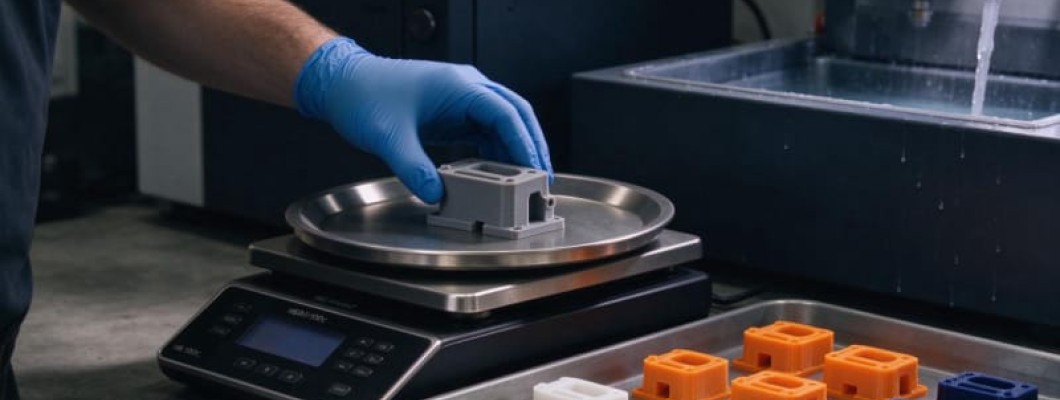
Every 3d printing quote starts with the same five questions: material, part size, fill density, finishing and quantity. Answer them correctly and the number stops being a guess, which matters more than ever now that buyers compare quotes across several suppliers at once.
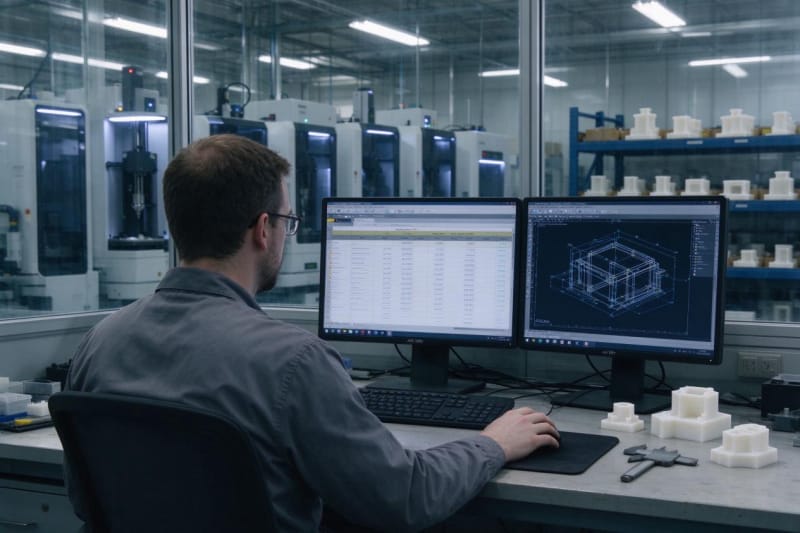
Service bureaus charge by weight and volume, and the spread is wide. FDM services bill about 0.10 to 0.50 dollars per gram all in, SLS PA12 nylon starts near 0.60 dollars per cubic centimeter, and SLA resins run from 79 to 250 dollars per liter for standard and engineering grades.
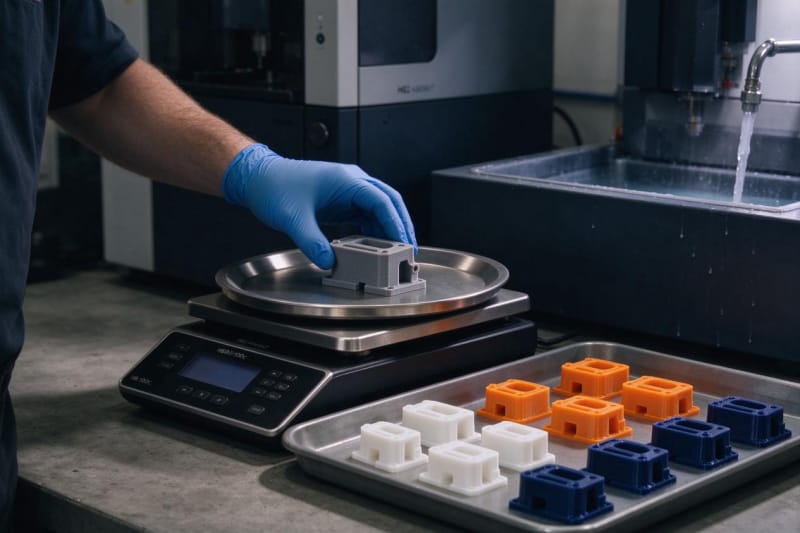
Price reference for 3D printing services
Service | Price reference | Source |
FDM service bureaus | USD 0.10 to 0.50 per gram all in | 3DPrintMap |
SLS PA12 nylon | from about USD 0.60 per cubic centimeter | Additive Plus |
SLA standard and engineering resins | USD 79 to 250 per liter | Formlabs |
Metal powders | aluminum USD 50-200/kg, stainless USD 80-300/kg, titanium USD 300-600/kg | JLC3DP |
Sources: 3dprintmap.com; additiveplus.com; formlabs.com; jlc3dp.com
Metal moves the needle further. Aluminum powder sells for 50 to 200 dollars per kilogram, stainless steel for 80 to 300, and titanium for 300 to 600, so a DMLS part typically lands between 300 and 900 dollars, with complex geometries climbing well above that range.
Where printing beats tooling costs
Injection molding brings a mold that costs 2,000 to 50,000 dollars or more before the first part exists, while 3d printing prices stay free of tooling entirely. On a one to ten piece run, printed parts cost 15 to 50 dollars each against a 5,000 dollar plus mold cost spread across the batch.
The break even quantity decides the winner. For simple parts it sits around 500 to 2,000 units, and for complex parts with slides and lifters it jumps past 5,000, so a 15,000 dollar mold with a 0.80 dollar unit price beats a 4.50 dollar print only after roughly 4,054 pieces.
3D printing vs injection molding cost evidence
Cost item | Evidence | Source |
Mold tooling cost | injection molding USD 2,000-50,000+ vs zero tooling for 3D printing | JBRplas |
1-10 part runs | 3D printing USD 15-50 per part vs USD 5,000+ mold cost amortized | ZetarMold |
Break-even quantity | simple parts about 500-2,000 units, complex parts 5,000+ units | Find3DPrinting |
500-part batch | 3D printing USD 1,950 total vs injection molding USD 4,410 total | GaoFeng |
Sources: jbrplas.com; zetarmold.com; find3dprinting.com; gf-proto.com
A 500 part batch shows the math plainly: 3d printing on demand totals about 1,950 dollars while injection molding with mold and unit cost reaches 4,410 dollars, which is why small series buyers stay with printing until real volume arrives.
How to get an honest quote
Send the STEP file to a 3d printing factory that reads geometry before quoting. Wall thickness, hollowed areas, support placement and surface finish are all visible in the model, and a factory that flags them up front delivers a price that holds to the invoice.
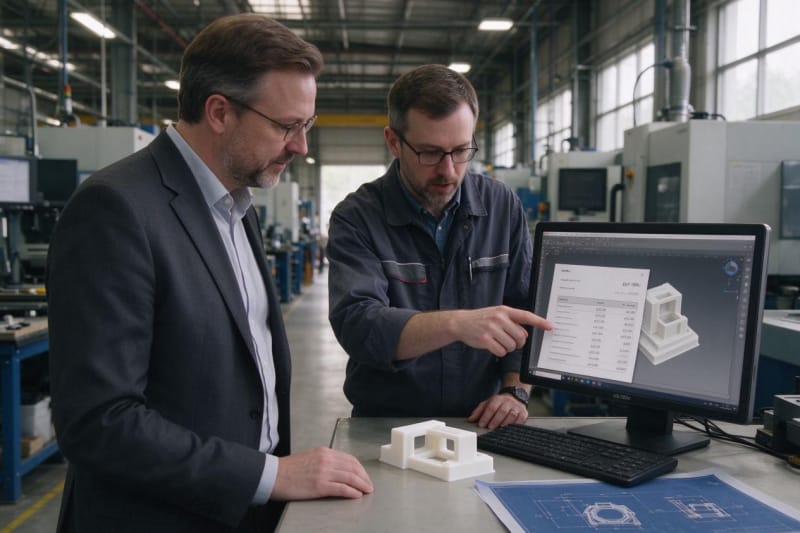
Cost drops fastest through design: thicker walls cost more, so hollow shells, ribbed backs and trimmed supports cut weight without losing stiffness, and batch discounts appear as soon as several parts share one build plate.
The global 3D printing market stood at 25.5 billion dollars in 2025 and reaches 70.71 billion by 2034, yet a clear quote still beats market growth for planning. Upload the file to HUANYA and get material, finish and quantity based pricing that matches the part, not a guess.


Leave a Comment