
 English
 French
 Deutsch
 العربية
 Español
 Русский
 にほんご
 Português
 한국어
Rapid 3D Printing for Parts Delivered in Days
What Rapid 3D Printing Delivers
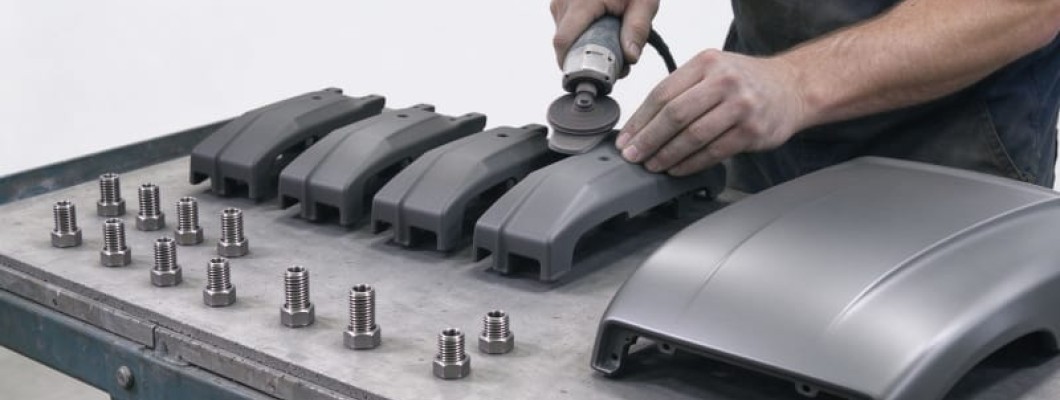
The term rapid 3d printing means turning a digital file into a finished physical part in days rather than weeks, and it is the defining advantage of additive manufacturing when time matters. A part is built directly from the model, layer by layer, with no tooling to design, cut or wait for, so the clock starts on the geometry itself rather than on a mold. The result is a part that can be held, tested, fitted or used on a schedule that traditional tooling cannot match.
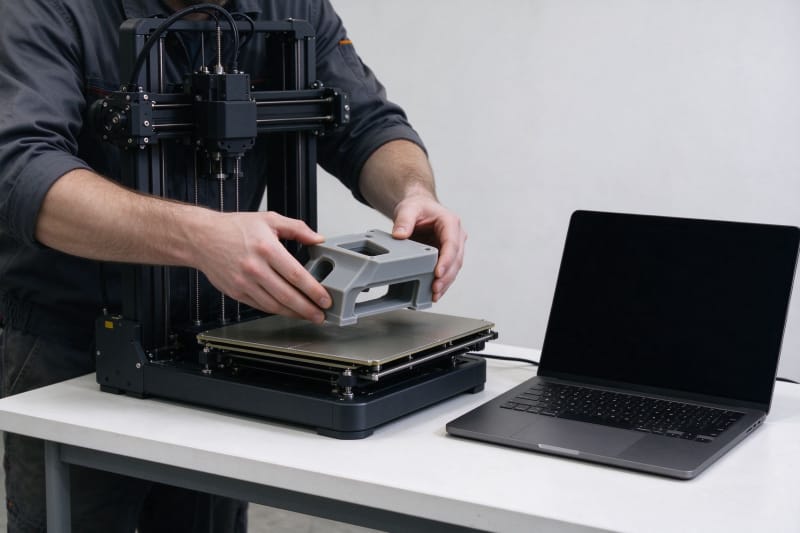
Speed matters because most product decisions now run on short windows. A delayed prototype can push back a design review, a missing bracket can stop a production line, and a spare part that arrives late leaves a machine idle. By collapsing the wait between the file and the part, rapid printing keeps these schedules moving and lets engineers test more iterations without burning the timeline.
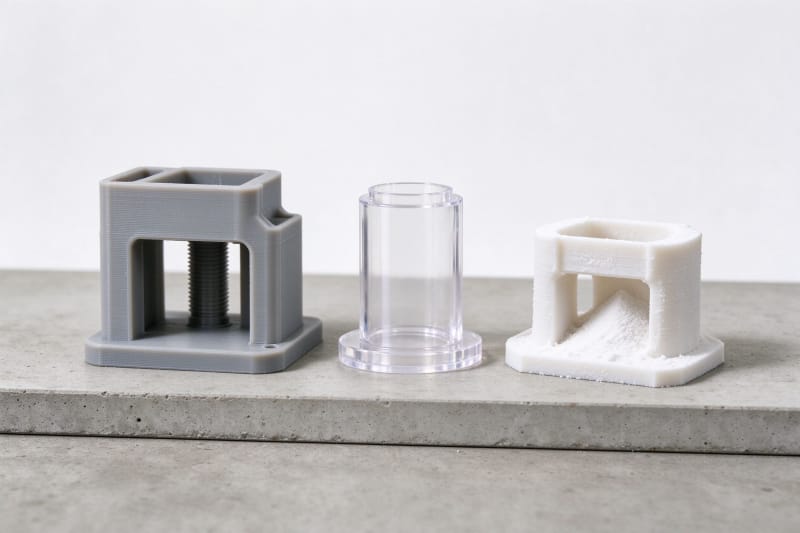
Several additive processes support rapid work, and they share the same core advantage, the part is built directly from data. FDM extrudes a heated thermoplastic filament, SLA cures a liquid resin with light for smooth and detailed surfaces, and SLS and MJF fuse polymer powder to make nylon parts in batches. The speed is not only in the machine, it comes from removing tooling, sharing files instantly and running a fleet of machines in parallel. The reference lead times below vary with geometry and finishing.
|
From File Upload to a Fast Quotation
Starting is straightforward. Through an online 3d printing service you upload an STL or 3MF model, and a STEP file is useful when dimensions or threads matter, choose the material, colour and quantity, and note any surface or assembly requirements. The engineering team reviews the geometry for printability before returning a price and lead time, so the quotation reflects the actual part rather than a generic estimate.
Build time is driven mainly by build height, orientation, quantity and the level of finishing. A tall part takes longer because every layer adds a fixed number of seconds, while a flat orientation and a batch of parts nested on the same plate make efficient use of the machine. Thicker layers reduce build time when fine detail is not needed, and understanding these levers lets a team choose the fastest option that still meets the requirement.
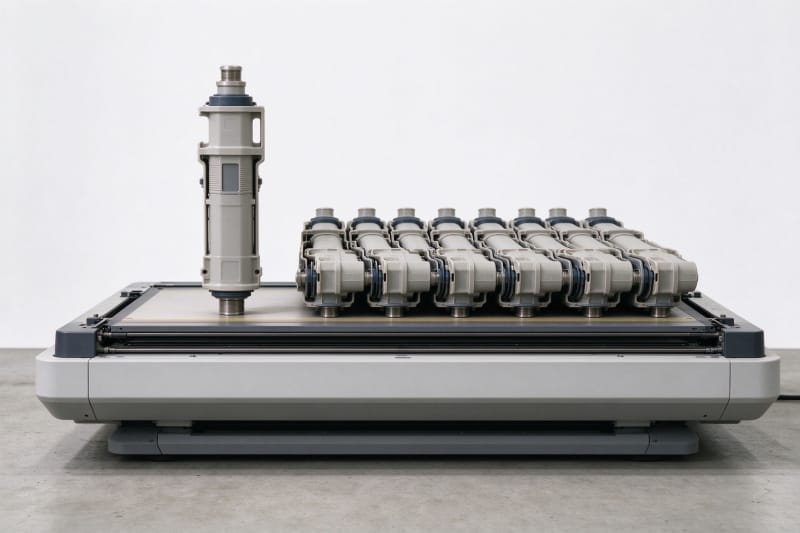
A clear quotation separates machine time from post-processing so the delivery date is predictable. Support removal, sanding, priming, painting and the fitting of inserts all take place after the print, and they should be listed rather than hidden in a single lead time. When build and finishing are scheduled separately, a rush order can be prioritised without disrupting the rest of the workshop.
Processes Built for Speed
The choice of process shapes both speed and outcome. FDM is the fast and economical choice for functional housings, brackets and jigs in real engineering plastics. SLA suits small, detailed parts with smooth surfaces, while SLS and MJF produce tough nylon parts from powder and require no supports, which lets many parts be stacked in one build. Matching the process to the part avoids the slower route of forcing every geometry through one technology.
Designing for speed works with the process rather than against it. Reducing unnecessary infill, avoiding tall features where they are not needed, limiting overhangs that require supports and grouping related parts for one build all shorten the time on the machine. The fastest part is usually the one that needs little support and little finishing, and a short design review captures these savings early. The reference values below are typical engineering ranges.
Parameter | Typical reference value |
FDM layer height | 0.1 to 0.3 mm, about 0.08 mm for fine detail |
SLA layer height | 0.05 to 0.1 mm |
FDM minimum wall thickness | 0.8 to 1.0 mm |
SLA minimum wall thickness | about 0.6 to 1.0 mm |
Unsupported overhang | up to about 45 degrees |
Typical FDM infill | 15 to 50 percent, up to 100 percent under load |
Designing for Speed Without Losing Quality
Speed should not remove strength. Walls must be thick enough for one or two perimeters, holes that need precision are often printed slightly undersized and reamed, and parts are oriented so the layer lines run across the expected load rather than along it. Overhangs beyond roughly 45 degrees are given supports, and the same engineering rules hold whether the part is a quick prototype or a small production run.
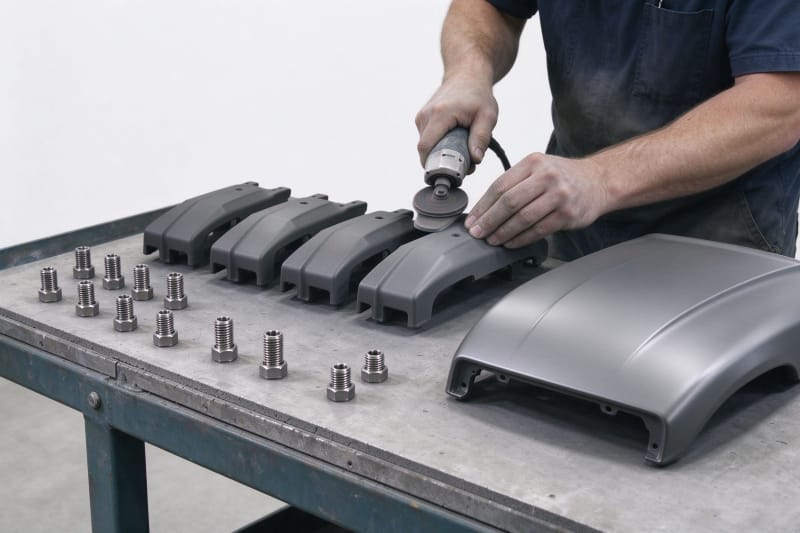
Finishing keeps up with the fast schedule through fixed steps rather than ad hoc work. Supports are removed, layer lines are reduced by sanding, and parts can be vapour smoothed, primed and painted or fitted with threaded inserts and captive hardware. A documented finishing sequence is what allows a batch to leave the workshop quickly with the same surface on every part.
Rapid Printing Applications
Rapid printing covers a wide range of applications. It produces functional prototypes for design review, housings and enclosures for new products, brackets and mounts, and jigs and check gauges for the production line, and it supplies low-volume end-use parts and long-tail spares. Where a custom guide or replacement part once waited weeks, it can now be designed, printed and put to work in days.
For demanding uses, the speed is backed by industrial 3d printing capability. Production machines offer controlled chambers, certified material batches and repeatable parameters, and they process the higher-temperature and reinforced materials that office equipment cannot. This combination keeps the geometry and properties identical across repeat orders and gives engineers the traceability that turns a printed object into a specified part.
Quality Control on a Fast Schedule
Quality control is what protects the schedule rather than slowing it. Stable dimensions and accuracy across batches come from controlled machines and recorded parameters, on-time delivery comes from realistic capacity planning, and consistent surfaces come from a fixed finishing sequence. When any of these vary, the cause is a process gap that inspection catches before shipment, so speed is never achieved by shipping an uncertain part.
Choosing a Rapid Printing Partner
Choosing a rapid partner is a practical decision. A well equipped 3d printing factory offers a fleet covering the materials and part sizes you need, engineering support that reviews files before printing, a documented inspection and finishing process, and reliable international shipping with the correct paperwork. A supplier that can carry a part from a first prototype to a repeatable low-volume run is more valuable than one limited to a single step.
Start Your Rapid Project With HUANYA
If you already have a model, the fastest way to begin is to send it. Upload your CAD file, specify the material, quantity and finish, and HUANYA returns a quotation and lead time based on the actual geometry, with parts delivered worldwide. From a first functional prototype to a repeatable low-volume part, the compressed timeline begins with a single file.


Leave a Comment