
 English
 French
 Deutsch
 العربية
 Español
 Русский
 にほんご
 Português
 한국어
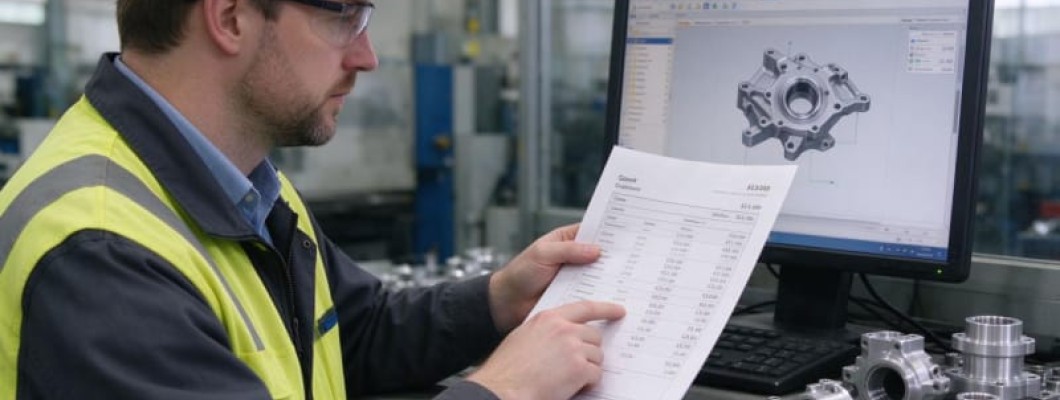
A business does not buy a 3D printer to make models. It buys one to remove a bottleneck. The moment a design change waits six weeks for a tool, or a spare part sits on a ship for a month, the printer stops being a toy and starts being part of the operating plan. That is the shift behind most serious 3d printing business decisions this year.
A question worth asking before any purchase. If one hour of stopped production costs more than a printed replacement part, why is the spare still sitting in a warehouse three provinces away? Most managers can answer the first half instantly and have never calculated the second.
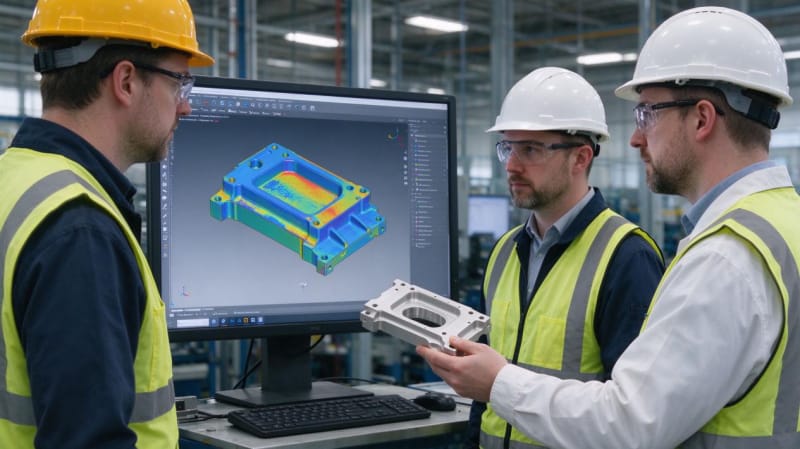
From Sample Tool to Production Tool
Three jobs keep coming back across the companies we work with. The first is design verification, where a part must exist in a hand before a tool is cut. The second is production support, where jigs, fixtures, jigs for inspection and end-of-line gauges are printed because buying them conventionally takes weeks. The third is low volume end parts, where the annual quantity is too small for a mold to make sense.
Business need | Typical process | Typical quantity | Typical lead time |
Design verification part | FDM | 1–20 pieces | 24–72 hours |
Appearance and trade show sample | SLA resin | 1–50 pieces | 2–5 days |
Fixture, jig, inspection gauge | FDM or SLS | 5–200 pieces | 3–7 days |
Low volume end use part | SLS or MJF | 50–1000 pieces | 5–10 days |
The commercial logic of small batches is simple and often misunderstood. A mold spreads its cost across every part it will ever make, so at low volume each unit carries a heavy share of the tool. Printing has almost no tool, so its unit price starts higher per part than molded plastic at volume and stays flat as quantity drops. Somewhere between a few dozen and a few hundred pieces the two curves cross. Knowing where that crossing sits for your part is worth more than any discount negotiation.
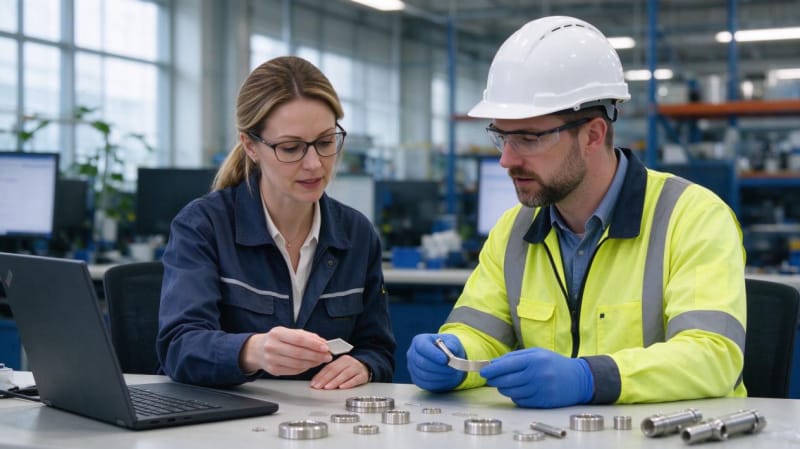
How the Money Actually Works
A printed part is not priced by weight. The bill is built from four blocks, and buyers who only compare material price are negotiating over the smallest one. Material is usually 20 to 30 percent. Machine time is the largest block at 40 to 50 percent, because a printer occupied for eleven hours cannot print anything else. Post processing runs 15 to 25 percent, and packing plus handling takes the remaining 5 to 10.
Cost block | Share of a typical quote |
Material | 20–30 percent |
Machine time | 40–50 percent |
Post processing | 15–25 percent |
Packing and handling | 5–10 percent |
This is why a 3d printing quote can move sharply between suppliers for the same file. A shop that nests parts tightly, prints through the night and finishes efficiently can price 30 to 60 percent below a shop that runs one part per build and hand-finishes everything. The number on the page is not a material problem, it is a scheduling problem. Against a mold the comparison is not close in either direction. A steel tool for a mid-size part often costs several thousand dollars and takes four to eight weeks, plus the trial runs. Printing that same part costs a fraction and ships in days, but its per unit price never falls to the molded level. The honest answer is that both are correct, for different quantities.
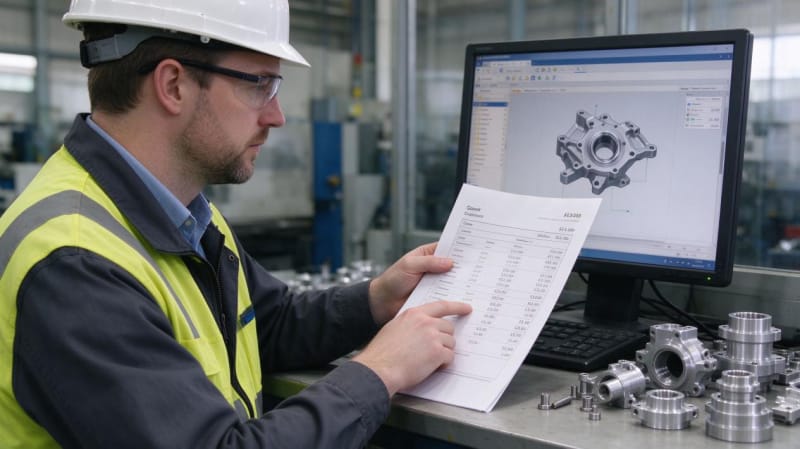
How to Judge a Supplier
Most buyers evaluate a 3d printing company on price per part and delivery time. Both matter, and neither is the thing that decides whether the project succeeds. What decides is whether the supplier tells you the truth about a geometry before you approve it.
Ask about the machine park and whether it covers FDM, resin and powder processes, because a supplier that only runs one process will recommend that process for every job. Ask what materials are kept in stock rather than ordered per job, since a two week material lead time quietly becomes your lead time. Ask for the tolerance they will actually hold and in writing, not the brochure figure.
A serious 3d printing factory will also show you its inspection routine. Batch parts checked with a caliper, critical features measured on a CMM, and a record kept per build. If a supplier cannot describe how a part is checked, price is irrelevant, because you will be the one checking it after it arrives.
What to check | Why it matters |
Process coverage | One process shop recommends one process for every job |
Stocked materials | Material lead time becomes your lead time |
Written tolerance | Brochure numbers are not acceptance criteria |
Inspection record | Without it, you become the inspector |
File handling policy | Your design is your property |
The last item deserves its own paragraph. A printed part begins as a file, and a file can be copied in a second. Any supplier handling your drawings should work under a signed NDA, restrict access to the project folder, and state plainly that designs are never reused, resold or shown to another customer. Ask for that in writing before the first upload, not after the first disagreement.
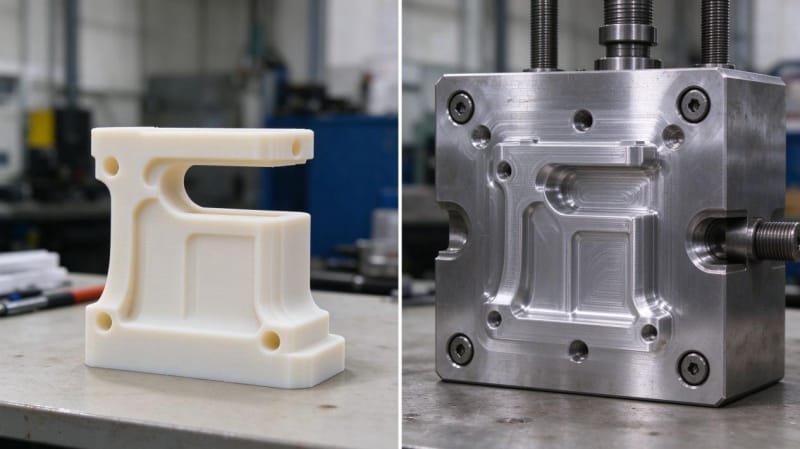
What One Stopped Line Taught Us
A packaging customer called on a Wednesday evening. A locating fixture on their filling line had cracked after two years of service, the line was down, and the replacement from the original supplier was quoted at five weeks. Their maintenance team had the broken fixture, no drawing, and a production plan that could not absorb five weeks.
The geometry was measured and rebuilt in CAD overnight, printed in ABS the next morning, and tested on the line by Thursday afternoon. The printed fixture ran until the original arrived, and the customer later asked us to keep the file as a permanent backup. Nobody calculated the saving in units of fixtures. They calculated it in hours of production.
That episode changed how the customer buys spares. Instead of holding physical stock for hundreds of part numbers, they keep approved files for the parts that stop the line, and print them on demand. Physical stock ties up cash, occupies shelves and still ages. A digital spare only occupies a hard drive until the day it is needed, and the cost of that print is usually a fraction of the downtime it prevents.
Wiring Printing Into the Business
The companies that get value from printing are not the ones with the biggest machines. They are the ones where design, purchasing and maintenance talk to each other. Design knows which parts are still moving. Purchasing knows which parts are slow to source. Maintenance knows which parts stop the line. Printing sits exactly where those three lists overlap.
Practical rules that keep it working. Keep one shared folder of approved files with revision numbers, so nobody prints an old version. Set a threshold above which a part goes to conventional production, and write it down. Record every print, so a fixture that fails can be traced to its build. HUANYA works as an extension of that system rather than a catalogue. Files are reviewed for printability and tolerance before quoting, the quote shows which process is proposed and why, and the batch is inspected before it ships. For a first project, sending one part that has been giving you trouble is usually more useful than sending the whole assembly.
If your business is still deciding whether printing belongs in the plan, start with the part that hurts. The one that arrives late, the one that stops the line, the one you keep ordering in quantities you do not need. Print it, use it, and let the numbers argue for themselves. That is how a 3d printing business case stops being a slide and starts being a line item.


Leave a Comment