
 English
 French
 Deutsch
 العربية
 Español
 Русский
 にほんご
 Português
 한국어
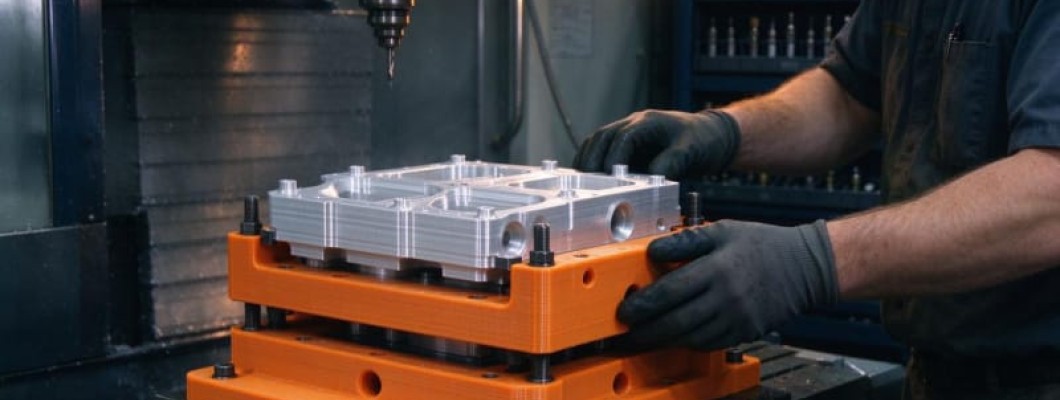
A machine line stops because a worn jig is gone and the spare part sits on another continent. That is the moment a 3d printing service earns its place on the shop floor: the CAD file that already exists is uploaded, printed and shipped before the original delivery date would have passed.
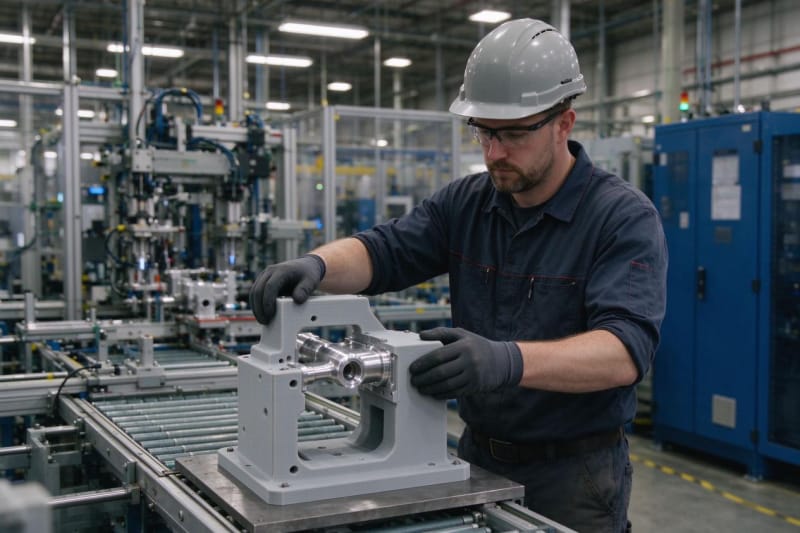
From prototypes to production parts
Industrial 3d printing has left the prototype bench. An ASME survey of engineers who design plastic parts found that 88% already use 3D printing in some way, and 40% now use additive manufacturing to produce finished products, so the discussion has moved from whether to print to what to print first.
Bridge production is where the technology earns trust. Short runs of fixtures, housings and spare parts replace waiting for machined quotes, and the same file that validated the design becomes the file that fills the first hundred units.
Tooling and spare parts that pay back
Tooling is the quiet winner. Global Growth Insights reports that 44% of manufacturers use 3D printing for tooling, and Volkswagen Autoeuropa replaced CNC and injection moulded tools with printed ones, cutting a wheel protection jig from 800 euros to 21 and saving up to 95% on tooling costs.
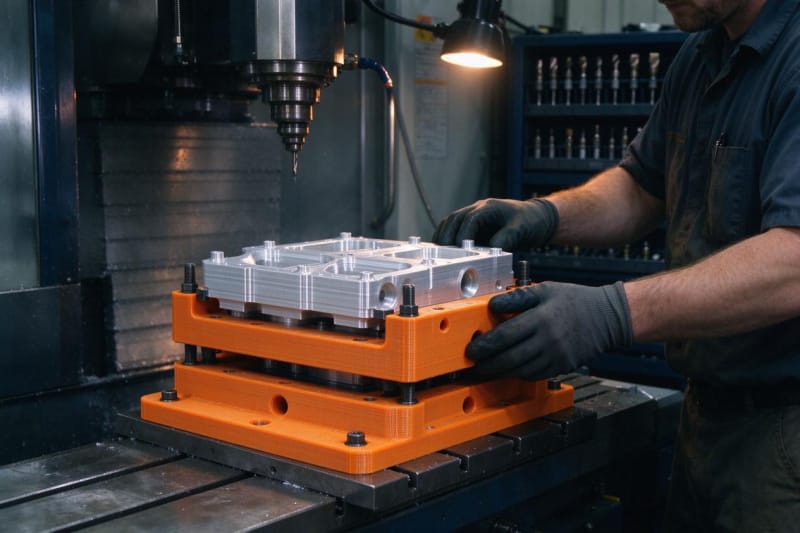
Spare parts are the second lever. The same research puts downtime reduction at about 35% when spares are produced additively, and about 31% of maintenance operations now use 3D printed parts, which matters most on ageing machines where moulds no longer exist.
One factory customer had a press go down on a Thursday night with a broken carrier arm. The nylon replacement was printed that night, finished on Friday morning and back on the machine by noon, and the line never missed a shift, which is why metal 3d printing and polymer lines now sit side by side in the same plant.
Application | Finding | Source |
Manufacturers using 3D printing for tooling | 44% | Global Growth Insights |
Production downtime reduction with AM spare parts | about 35% | Global Growth Insights |
Maintenance operations using 3D printed spare parts | about 31% | Global Growth Insights |
Engineers using 3D printing in some way (ASME survey) | 88% | Carbon, ASME |
Engineers producing end products with additive manufacturing | 40% | Carbon, ASME |
Volkswagen Autoeuropa tooling cost saving | up to 95% | Ultimaker, 3D On Demand |
Sources: Global Growth Insights, 3D Printing Market Report 2025; Carbon, ASME survey; Ultimaker, 3D On Demand (2026)
The table below pulls together the adoption numbers that manufacturing teams see in their own cost reviews.
Choosing polymer or metal
When you source 3d printing on demand, material choice decides the whole process. Polymers like PA12 and ABS handle housings, ducts and low stress parts, while metal 3d printing brings aluminium, stainless steel and titanium to brackets, impellers and structural components, so the right answer depends on load, temperature and budget.
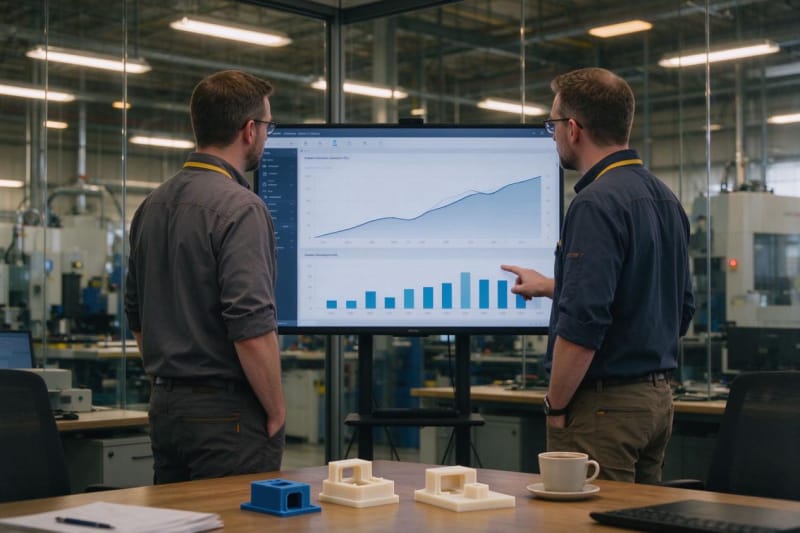
The metal side is growing faster than the market average. Research and Markets values metal 3D printing at 11.71 billion US dollars in 2025 with a 26% growth rate, and MarketsandMarkets projects 3D printing metals materials to reach 3.62 billion by 2030, as the table below shows.
Market segment | Base value | Forecast | CAGR | Source |
Additive manufacturing | 23.3 bn (2025) | 59.27 bn (2030) | 20.3% | The Business Research Company |
3D printing | 16.16 bn (2025) | 35.79 bn (2030) | 17.2% | MarketsandMarkets |
Metal 3D printing | 11.71 bn (2025) | 14.76 bn (2026) | 26.0% | Research and Markets |
3D printing metals (materials) | 1.19 bn (2025) | 3.62 bn (2030) | 25.0% | MarketsandMarkets |
3D printed metals | 3.32 bn (2025) | 14.54 bn (2032) | 23.5% | PW Consulting |
Sources: The Business Research Company; MarketsandMarkets; Research and Markets; PW Consulting (2026)
What a manufacturing partner must control
Behind the machines stands a factory. HUANYA runs more than 150 SLA printers, nylon and metal lines across a 10,000 square metre plant, so a manufacturing request never waits for an outside broker to find capacity.
A manufacturing partner must control tolerance, surface and repeatability. That means in-house metrology, post processing like sanding, blasting and anodising, and DFM feedback before the first layer, because a part that passes inspection once has to pass it a hundred times.
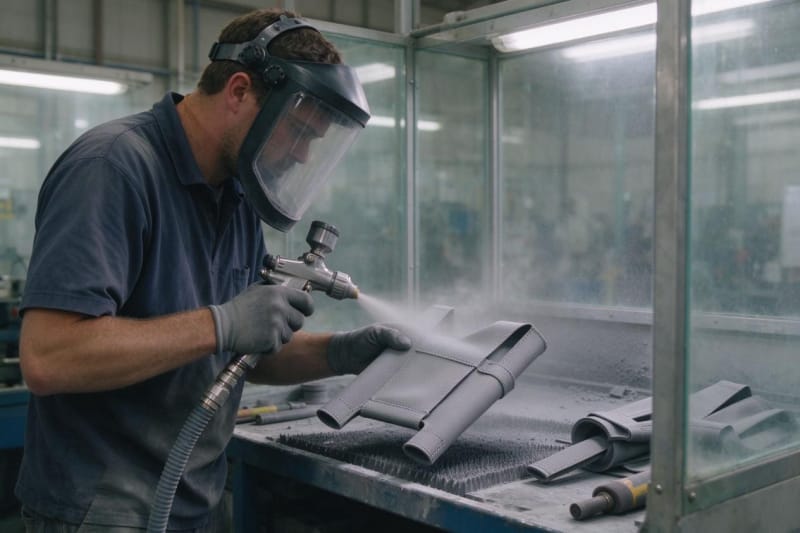
HUANYA's 3d printing for manufacturing covers tooling, spares and short production runs in polymer and metal. Send the CAD file, get DFM feedback and a delivery date, and let the factory do the rest.


Leave a Comment