
 English
 French
 Deutsch
 العربية
 Español
 Русский
 にほんご
 Português
 한국어
What an Aluminum 3D Printing Service Delivers
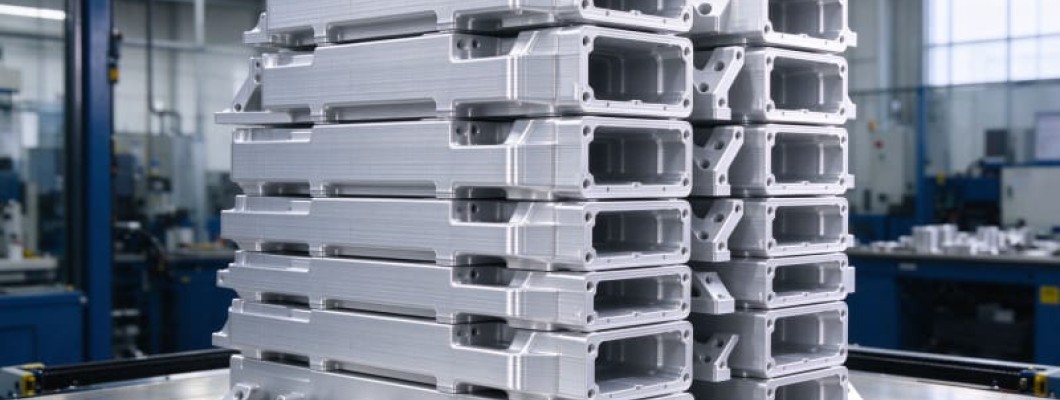
An aluminum 3d printing service turns a CAD model into a real lightweight metal part without molds or minimum quantities. Laser powder bed fusion melts fine alloy powder layer by layer, so one build can carry a single prototype or a batch of identical brackets. Because there is no tooling to write off, the same geometry moves cleanly from first article to production.
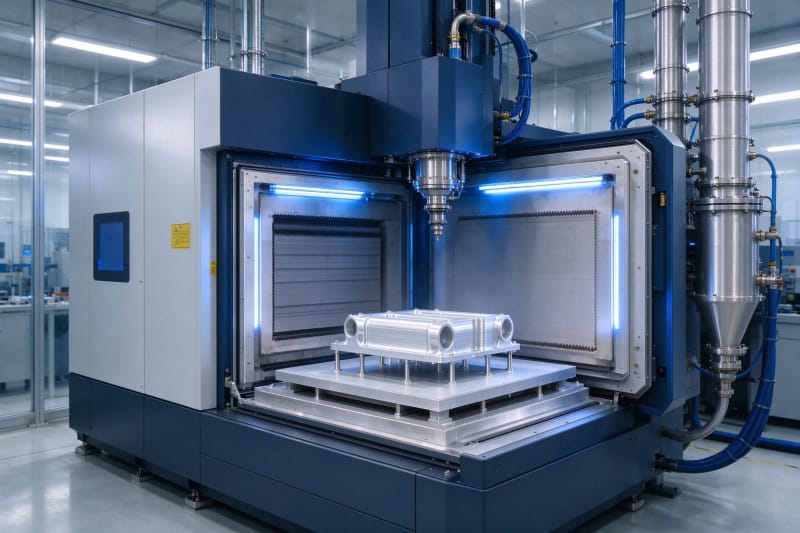
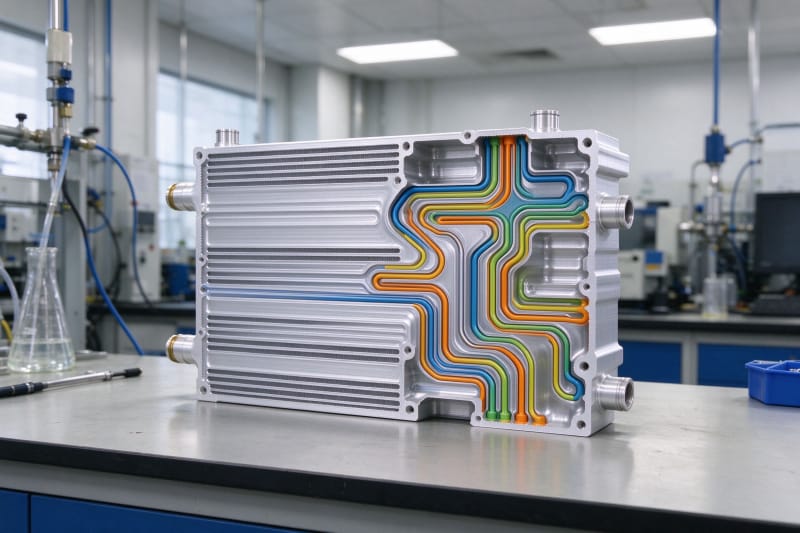
The value shows up in weight-critical industries: aerospace brackets, electric-vehicle housings, heat sinks and conformal cooling inserts. Aluminum offers a high strength-to-weight ratio, and 3d printing with metal lets you hollow out structures and add internal channels that machining cannot reach. This is how a service stops being a prototype shop and becomes a production partner.
Engineers routinely compare printed aluminum against forged or cast stock. Printability is not equal across alloys, and the choice of powder changes strength, surface and price. A competent supplier documents these trade-offs and helps you pick the alloy that meets both the load case and the budget.
Choosing the Right Aluminum Alloy
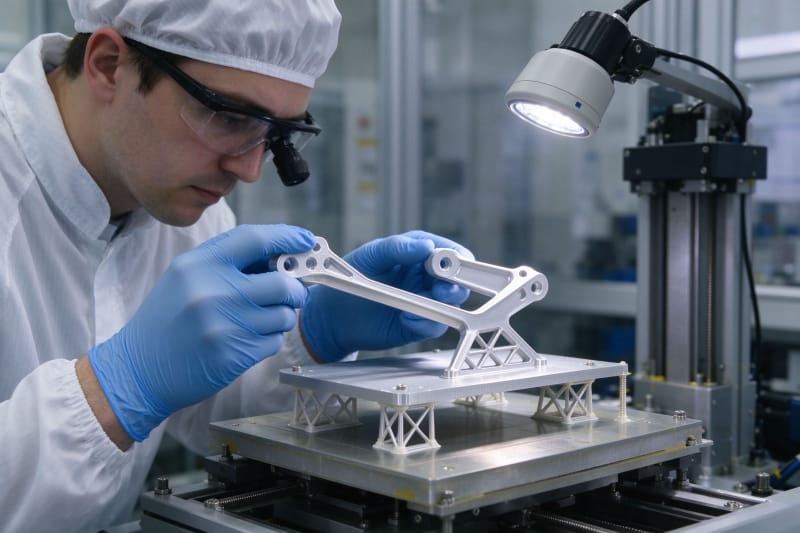
The most common production alloy is AlSi10Mg, a near-eutectic casting chemistry that resists hot cracking during printing. Al6061-RAM2 matches or beats conventional 6061-T6 after heat treatment, while 2024 and 7075 need special powder formulations. The alloy table below lists representative mechanical properties for the main printed grades.
Metal 3d printing cost is driven by part weight, build height, support volume and post-processing, not just geometry. Small simple brackets often land around $50 to $150, while large, heavily finished parts can exceed $2,000. The best way to control price is a design that packs tightly in the build and needs few supports.
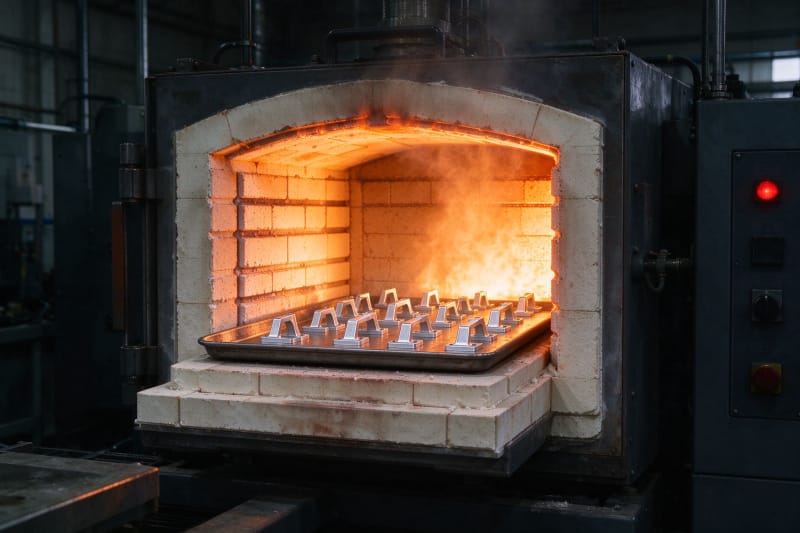
Every build starts from a watertight model prepared for the powder bed. The recoater spreads a thin layer, a laser melts the cross-section in an inert atmosphere, and thousands of layers repeat until the part is dense. Typical layer thickness is 0.02 to 0.06 mm, giving tolerances around plus or minus 0.1 to 0.2 mm before machining.
Process | Setup | Cost 1-10 pcs | Cost 100+ pcs | Lead Time |
LPBF Aluminum AM | Low | $150-400 | $40-100 | 3-7 days |
CNC Machining | Medium | $80-250 | $15-40 | 1-3 weeks |
Die Casting | High | $500-2000+ | $3-12 | 6-14 weeks |
Investment Casting | Medium-High | $200-600 | $12-35 | 4-8 weeks |
Source: Huaxiao Alloy, Aluminum Additive Manufacturing Guide (2026)
How SLM Aluminum Printing Works
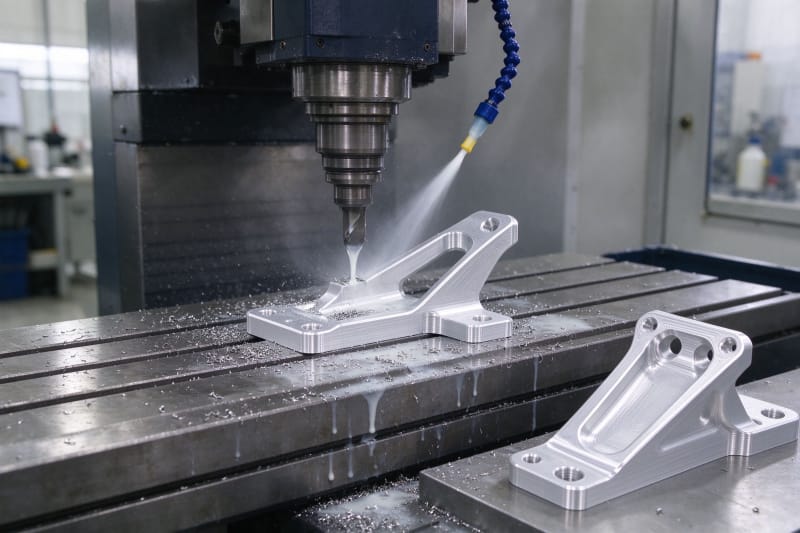
A metal 3d printing service must balance setup against per-part cost, and the table below compares a medium-complexity aluminum bracket across four manufacturing routes. Laser powder bed fusion has low setup and a short lead time, making it competitive for low and medium volumes, while casting wins only at very high quantity.
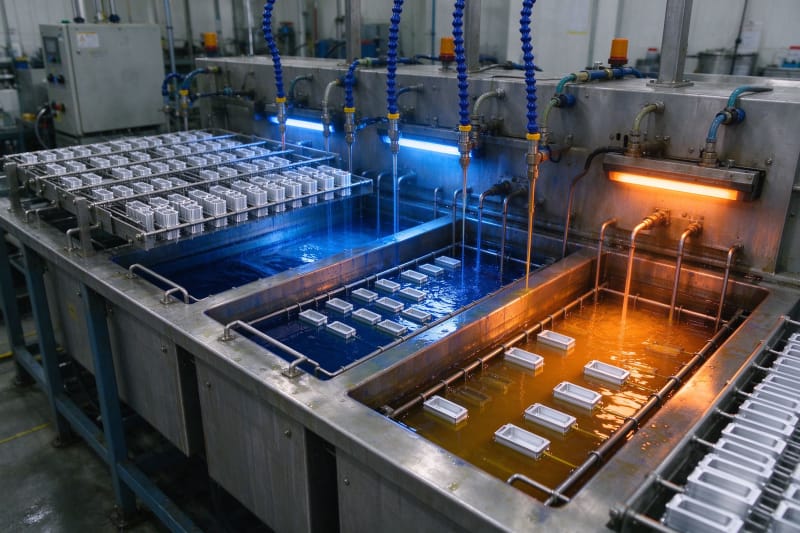
Surface finish matters as much as geometry. As-built aluminum shows stair-stepping and partially fused powder, so most functional parts get stress relief, CNC machining on critical faces, and anodizing or shot blasting. A documented post-processing flow is what keeps cosmetic and mating surfaces consistent from order to order.
Alloy | UTS (MPa) | Yield (MPa) | Elongation (%) | Best For |
AlSi10Mg | 340-420 | 210-260 | 3-8 | Heat exchangers, brackets |
Al6061-RAM2 | 350-390 | 310-350 | 8-12 | Aerospace brackets |
AlSi7Mg | 320-400 | 200-250 | 4-10 | Powertrain, fluid systems |
Al357 (A357) | 300-360 | 220-280 | 3-6 | High-strength cast-like |
Al2024-RAM2 | 420-470 | 280-340 | 6-10 | Aerospace fittings |
Source: Huaxiao Alloy & Unionfab aluminum alloy data (2026)
Aluminum Printing Cost Benchmarks
Design rules for aluminum are stricter than for plastic. Keep walls at least 0.4 to 0.6 mm, hold overhangs above 45 degrees, and leave at least 0.5 mm between separate parts to prevent sintering. Reorient long features, and give pins at least 1.5 mm diameter to survive recoating without overheating.
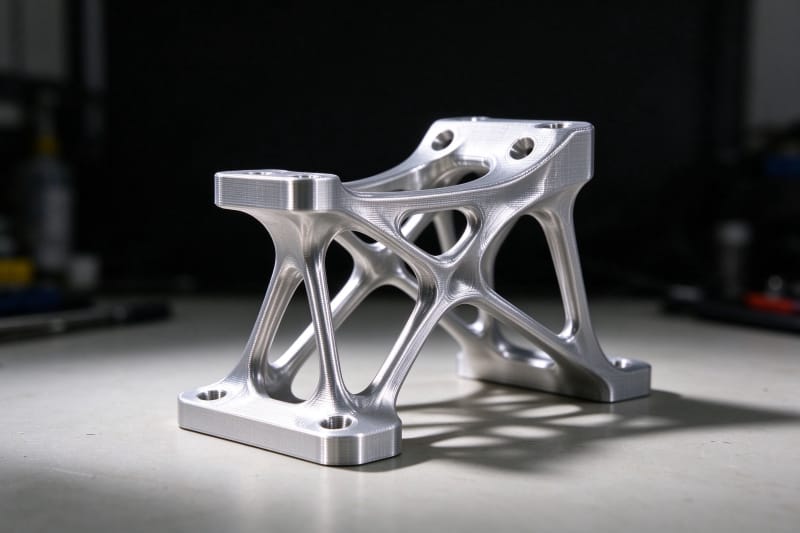
Lightweighting is where printed aluminum pays off. Topology-optimized brackets and internal lattices remove material that carries no load, often cutting part weight by 40 percent or more. Part consolidation also removes fasteners and joints, so one printed component replaces an assembly that used to take several machined pieces.
Design for Aluminum Additive Manufacturing
HUANYA pairs its aluminum 3d printing service with heat treatment and finishing in the same facility. Stress relief at 250 to 300 degrees Celsius stabilizes dimensions, T6 aging raises strength and ductility, and anodizing adds corrosion resistance and color. Keeping these steps in-house shortens the chain and protects the part until it ships.
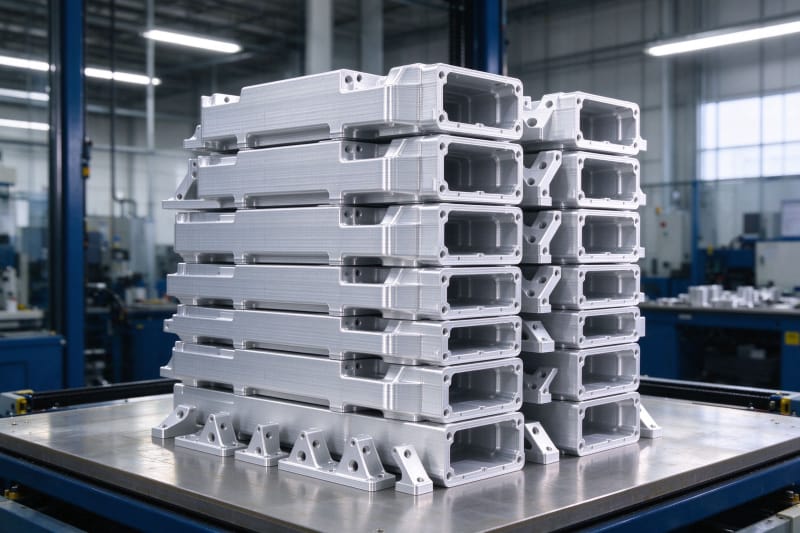
Quality is verified with calibrated instruments. Critical dimensions are measured against the drawing, and mechanical test coupons from the same build lot confirm strength where it matters. For safety-critical work, CT or X-ray inspection catches internal porosity that a surface check would miss.
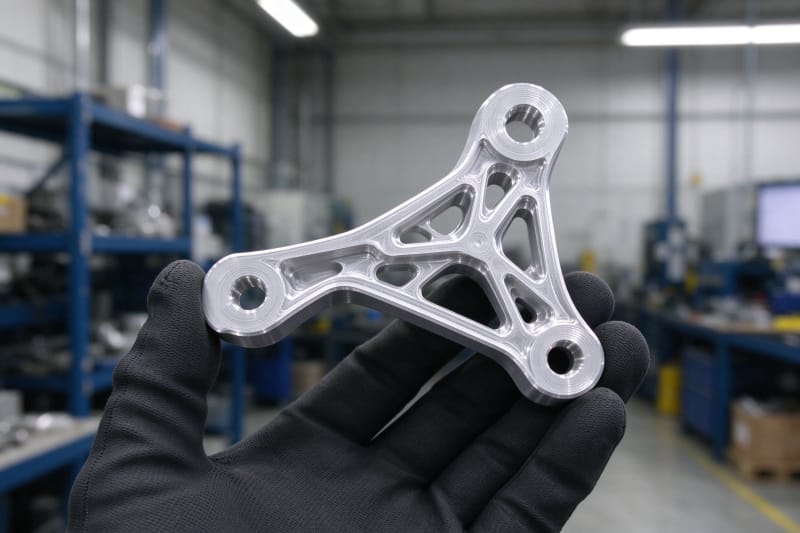
Post-Processing and Quality Control
A common question is aluminum AM versus CNC machining. Machining offers tight tolerances and low per-part cost at quantity, but it wastes 40 to 80 percent of the billet and needs tooling. Printing adds material only where the design needs it and eliminates fixtures, which is why hybrid workflows often print near-net and machine the final surfaces.
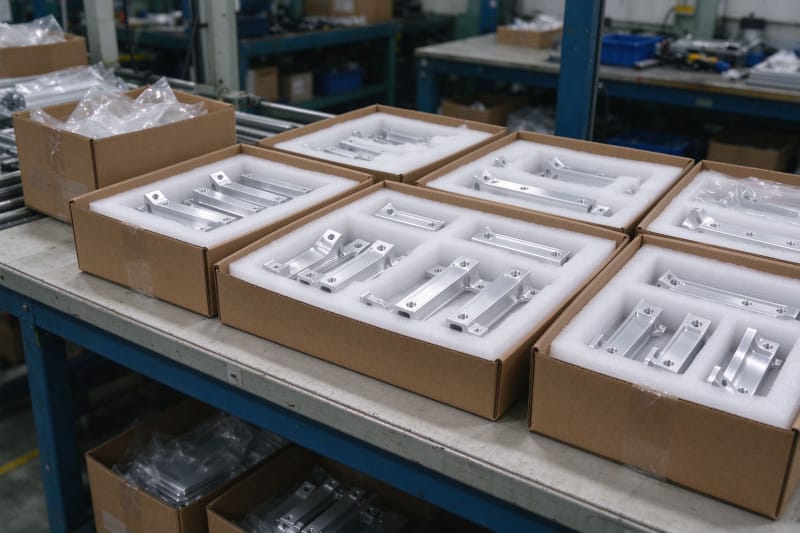
Aluminum AM Versus CNC Machining
Volume changes the calculus. For 100 or more identical parts, die casting can beat printing on unit cost, but only after expensive tooling and long lead times. For one to a few hundred pieces, or for complex geometries, printed aluminum is usually the cheaper and faster route. The right answer depends on your part, not on a rule of thumb.
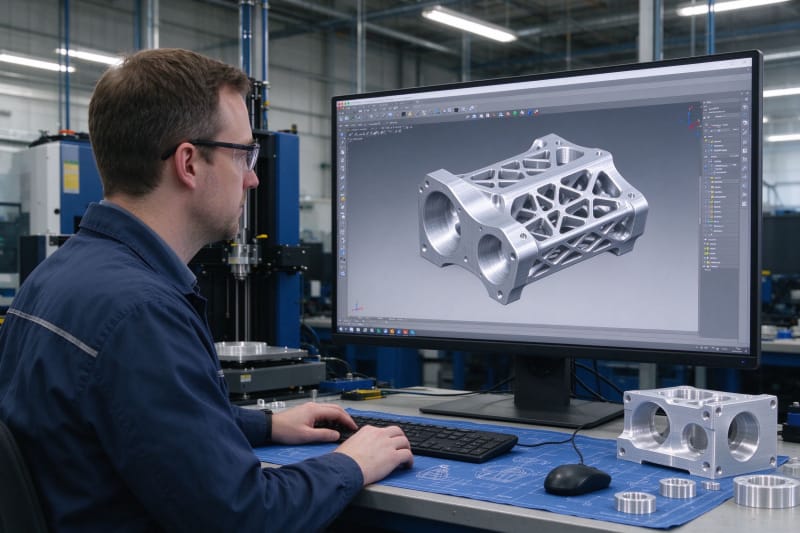
Start Your Aluminum Order With HUANYA
Starting with HUANYA is direct. Send a STEP or STL model, get an instant transparent quote, choose the alloy and finish, and the engineering team reviews printability, confirms critical dimensions and ships globally with reliable international logistics. Begin with a prototype or a small batch and scale the same geometry to production without retooling.


Leave a Comment