
 English
 French
 Deutsch
 العربية
 Español
 Русский
 にほんご
 Português
 한국어
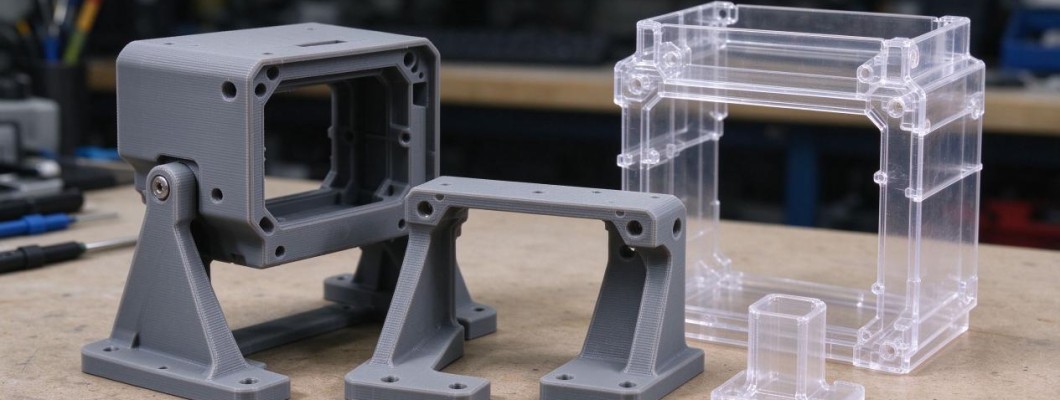
A buyer comparing FDM vs SLA usually starts with the wrong question. It is not which process is newer or faster, but which one delivers the part your test actually needs. FDM builds durable functional parts from engineering thermoplastics, while SLA produces smooth, highly detailed geometry from photopolymer resin. Both have their zone, and the zone is defined by accuracy, strength, surface and budget.
FDM, or fused deposition modeling, works by feeding a thermoplastic filament through a heated nozzle. The nozzle deposits molten plastic in thin lines, layer by layer, on a heated build bed. Because the material is a real engineering plastic, parts survive impacts, heat and repeated assembly. That is why most fdm 3d printing orders from industrial customers are functional brackets, jigs and housings rather than display pieces.
SLA takes a different route. A UV laser or light projector cures liquid photopolymer resin in precise cross-sections, and the part grows out of the vat with smooth, crisp surfaces. SLA cannot match the toughness of ABS or nylon, but it wins on detail: fine threads, sharp corners and miniature features that FDM would round off. For visual validation and fit checking, SLA is the classic choice.
Accuracy separates the two clearly. A typical FDM service holds tolerances around plus or minus 0.3 to 0.5 millimeters, and layer height usually runs 100 to 300 micrometers. SLA runs layers of 25 to 100 micrometers and holds tolerances near plus or minus 0.1 to 0.2 millimeters. If a part must seat into a mating component, SLA gives the tighter answer.
Process | Typical layer height | Typical tolerance | Surface roughness |
FDM | 100–300 μm | ±0.3–0.5 mm | Ra 20–60 μm (layer lines) |
SLA | 25–100 μm | ±0.1–0.2 mm | Ra 0.2–0.5 μm (polishable) |
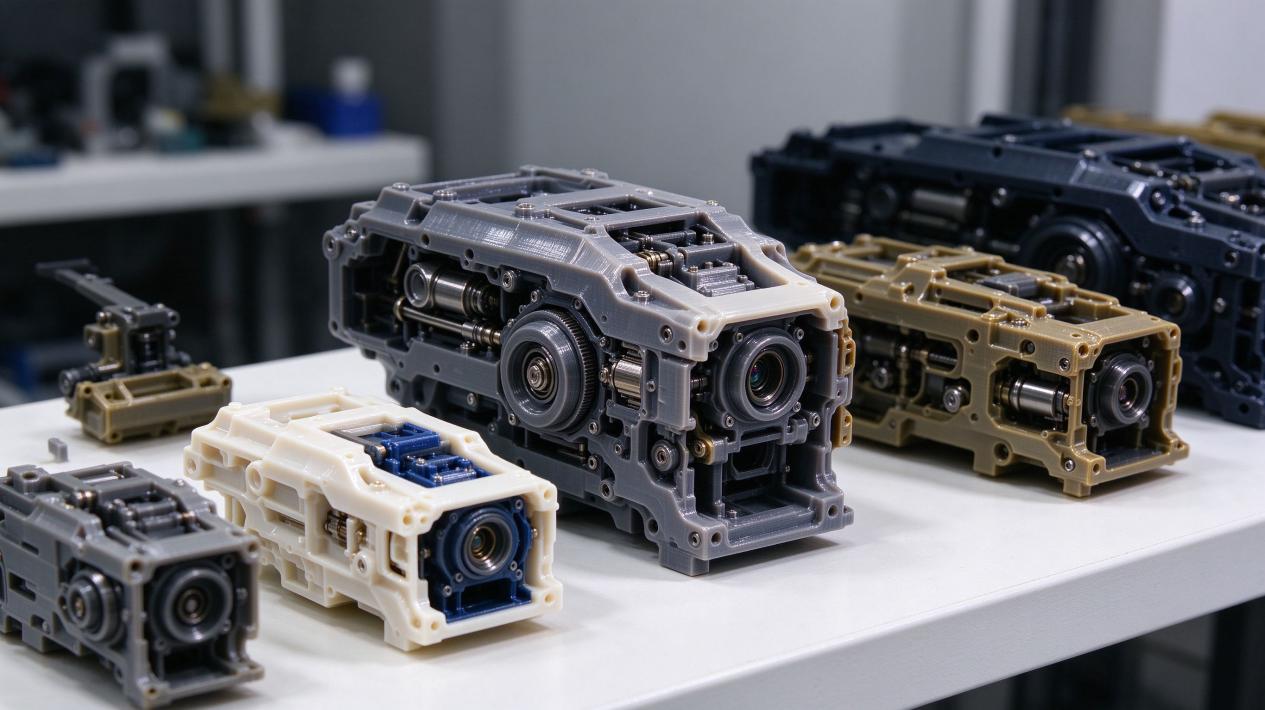
Fine detailed SLA resin parts glossy surface
Surface finish is where the two processes look most different side by side. FDM parts show visible layer lines and need sanding, filler or vapor smoothing before they look production-ready. SLA parts come off the machine with a smooth, slightly glossy surface that can be polished to near injection-mold quality. When the customer will judge the part visually, that difference matters more than any spec sheet.
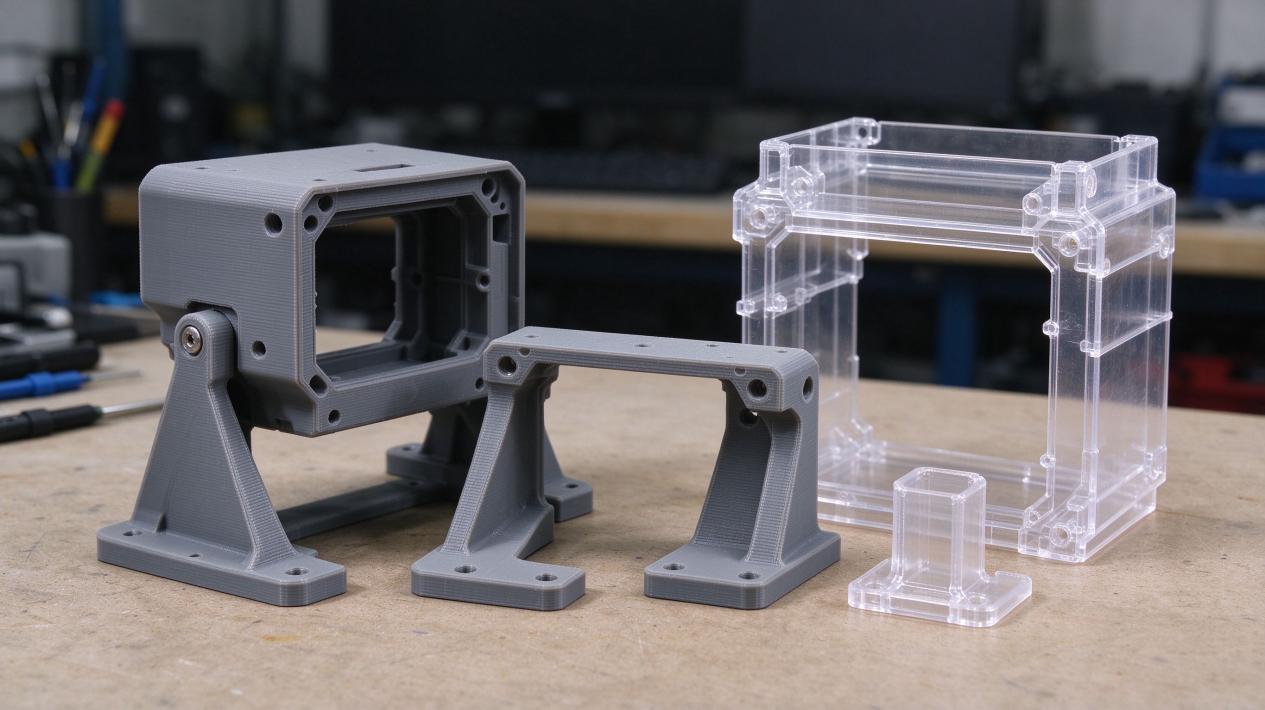
Functional FDM parts with layer lines
Materials tell the mechanical story. FDM works with ABS, PLA, PETG, PC and TPU, real thermoplastics with known mechanical data. PLA reaches roughly 40 to 60 MPa tensile strength, ABS around 35 to 45 MPa, and both are ductile enough for functional testing. Standard SLA resins deliver 30 to 60 MPa but stay brittle under impact, so they suit form verification better than load-bearing work.
Material | Tensile strength | Impact behavior | Typical use |
FDM PLA | ~40–60 MPa | Ductile, stiff | Jigs, housings |
FDM ABS | ~35–45 MPa | Ductile, impact-resistant | Functional brackets |
SLA standard resin | ~30–60 MPa | Brittle, low elongation | Visual models, fits |
Cost per part also follows different curves. For a single quick iteration, FDM is usually the cheapest route because filament, machine time and setup are all inexpensive. SLA adds resin cost, washing and post-curing, which lifts the unit price but buys finer detail. The reference ranges below are typical HUANYA figures for a small housing of roughly 80 by 50 by 30 millimeters.
|
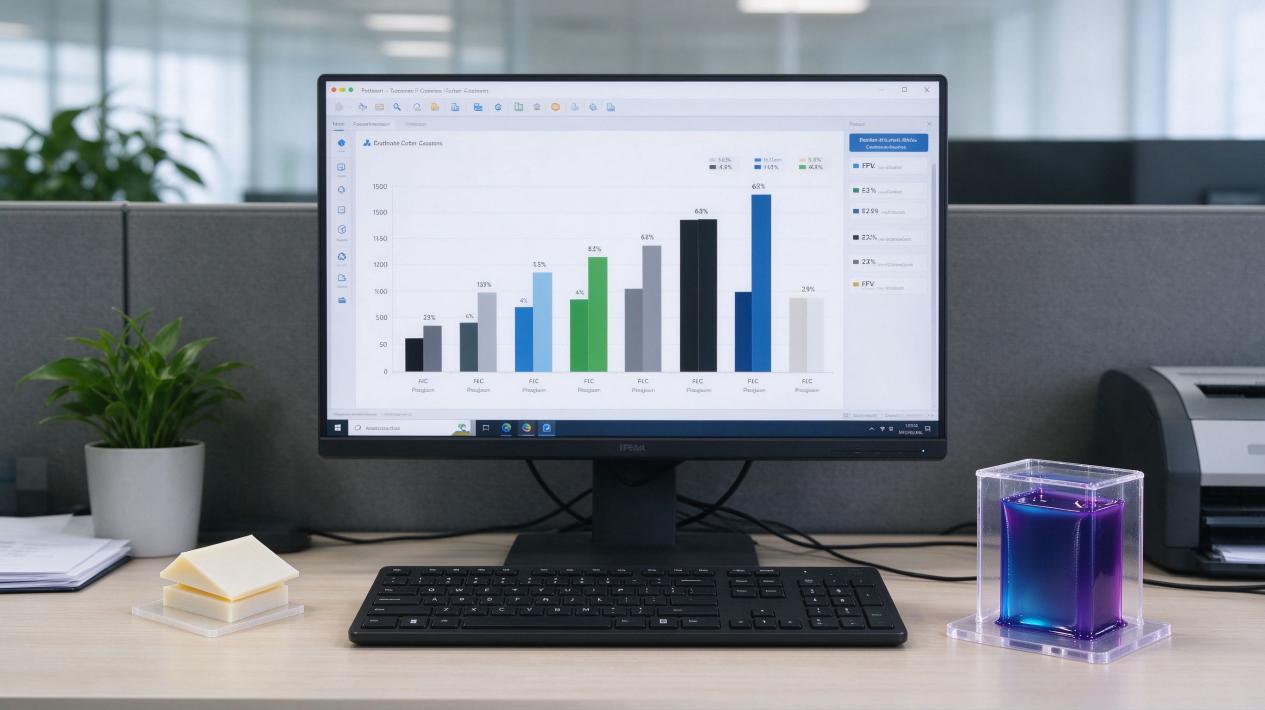
Material comparison chart on office desk
Strength changes the decision again. FDM parts built with high infill behave like molded thermoplastics and can carry real loads, which is why engineers use them in test rigs and end-use fixtures. SLA parts are dimensionally excellent but weak in thin sections and under point loads. A simple rule at HUANYA: if the part will be loaded, pick FDM; if it will be looked at, pick SLA.
Support and post-processing differ in workflow. FDM prints overhangs with removable supports and needs only a quick surface cleanup for most functional jobs. SLA requires supports for nearly every overhang, plus alcohol washing and UV curing, so the finishing line is longer. Buyers comparing FDM vs SLA often find that the total turnaround, not the build speed, decides the process.
The right pick depends on your validation stage. Early concept models and fit checks benefit from SLA's detail, especially when you will show them to a client. Functional testing, assembly trials and short production runs benefit from FDM's toughness and lower cost per piece. Many HUANYA customers combine both: SLA for the approved master, FDM for the parts that get used.
HUANYA runs calibrated FDM and SLA lines in one controlled factory, so both options are quoted from the same engineering team. Before printing, our DfM review checks wall thickness, orientation and support strategy, which prevents failed builds and hidden finishing charges. The quoting engine shows FDM and SLA side by side whenever your file can be produced either way.
Upload your STEP or STL to HUANYA and request a dual quote, one for FDM and one for SLA on the same part. You will see accuracy, strength, lead time and price together, plus a recommendation from engineers who run both machines daily. That comparison on your real geometry is the fastest way to decide FDM vs SLA for your next order.
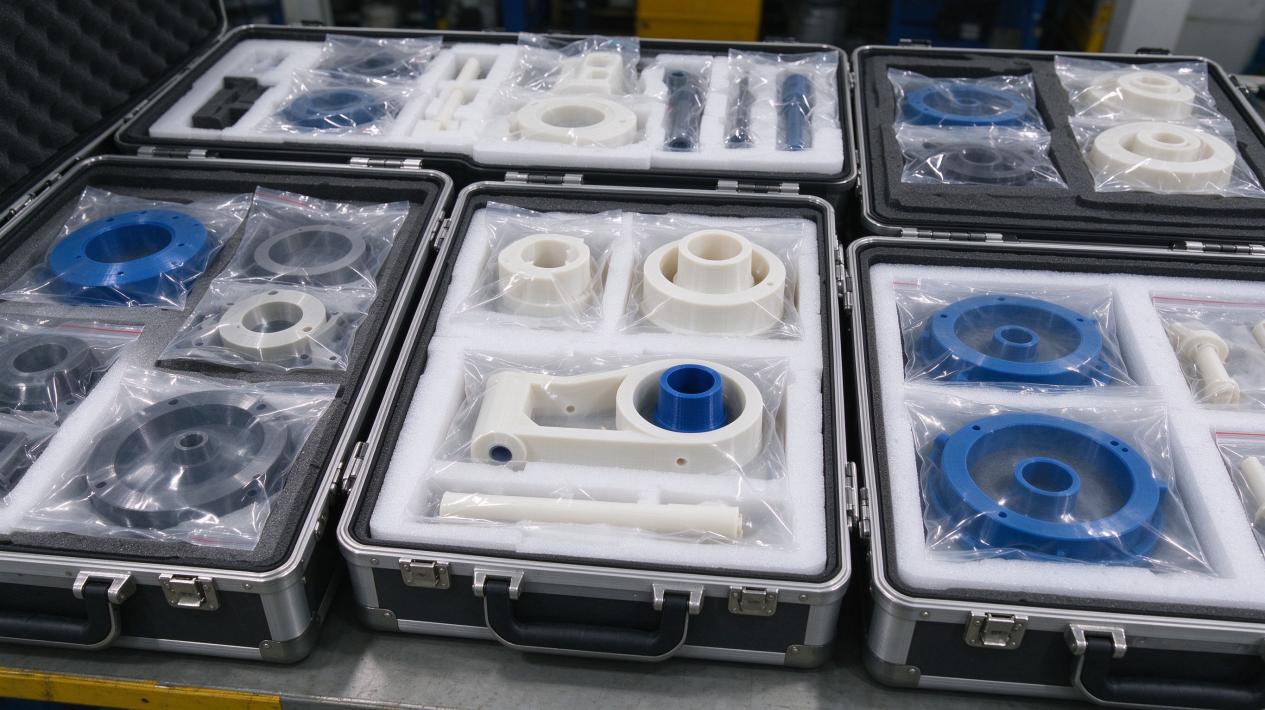
Finished parts packed for delivery


Leave a Comment