
 English
 French
 Deutsch
 العربية
 Español
 Русский
 にほんご
 Português
 한국어
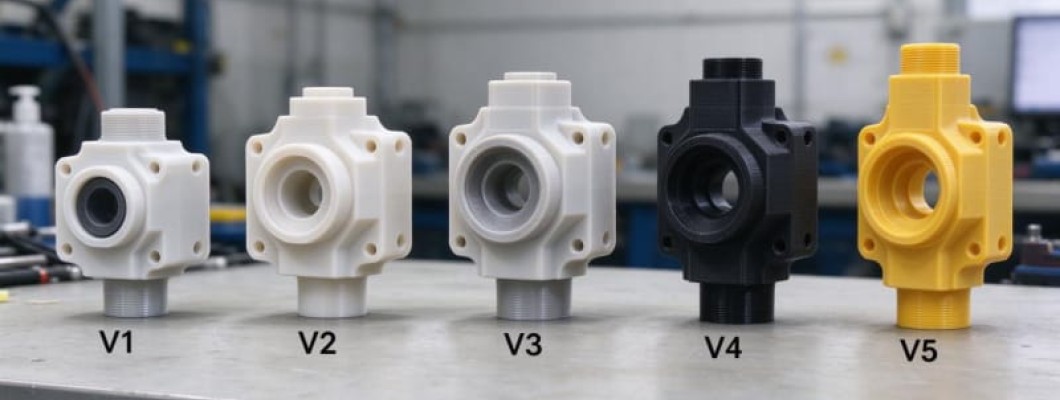
A design that looks perfect on screen can fail in your hand. The hole is 0.4 millimeters off, the bracket binds against the housing, the wall flexes more than the simulation said. None of these problems show up in a render, and all of them show up the moment you hold a real part. That is why 3d printing prototype services exist: to put your idea in physical form before you commit money to molds or machines.
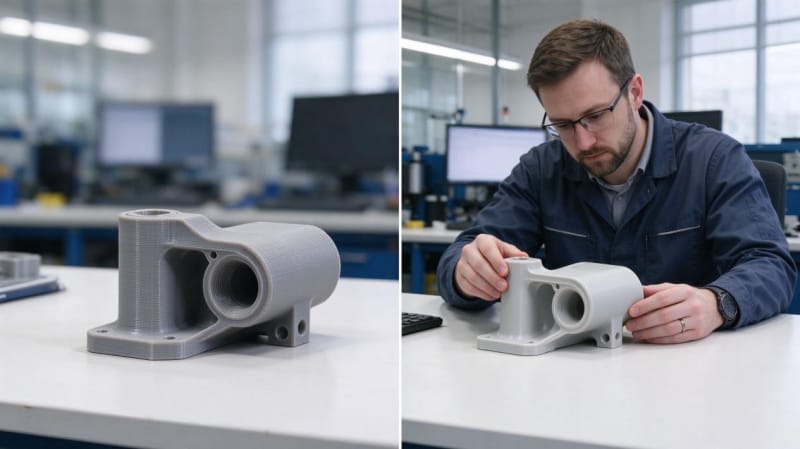
Every product engineer knows the cost of finding a mistake late. A change at the drawing stage costs hours; the same change after tooling costs weeks and a new mold. Prototypes flip that equation. Instead of paying for one expensive trial, you run several cheap ones, and each run teaches you something the CAD file cannot. The old rule still holds: measure twice, cut once. A printed part is the cheapest measure you will ever buy.
So where does the budget actually go? Many teams still route every check through CNC machining and wait days for a single block to come back. Rapid prototyping with 3D printing compresses that loop into hours, and it does not ask for a minimum quantity. One piece, five iterations, one overnight batch: all of it is normal. If a supplier cannot print a single part quickly, the whole product timeline pays for it.
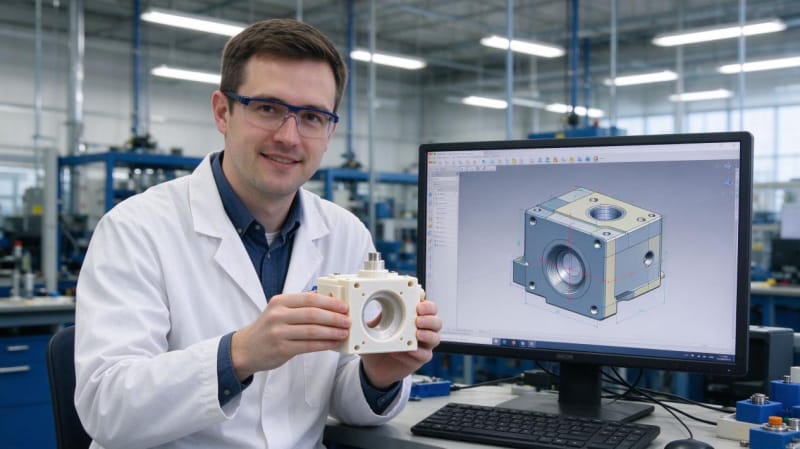
Why Speed Changes Everything
Time is the hidden dimension of every prototype. Traditional machining of a small test part typically takes three to five working days, and injection molding tooling takes four to eight weeks before a single sample exists. A 3D printed prototype usually ships in 24 to 72 hours. For a product launch tied to a trade show or a sales meeting, that difference is not convenience, it is the difference between showing something real and showing a slide.
Method | Typical first sample lead time | Setup cost for one part |
CNC machining | 3–5 working days | Medium, setup-heavy |
Injection molding | 4–8 weeks (tooling) | Very high |
3D printing prototype | 24–72 hours | Minimal |
The short lead time changes how teams behave. Designers stop hoarding changes for one big iteration and start testing every idea, because the cost per round is low and the calendar barely moves. A typical development program can run five to ten refinement rounds before freeze, catching interference, wall-thickness and assembly issues that would otherwise surface in production. Would you rather discover a bad fit at revision three, or after the first thousand units?
Accuracy is the reason teams trust the parts. A well-tuned FDM machine holds roughly plus or minus 0.3 to 0.5 millimeters, which is fine for housings and brackets. SLA resin parts reach plus or minus 0.1 to 0.2 millimeters with fine threads and crisp edges, ideal for small, detailed geometry. SLS nylon sits in between at around plus or minus 0.2 to 0.3 millimeters and prints without supports, making it the workhorse for functional assemblies.
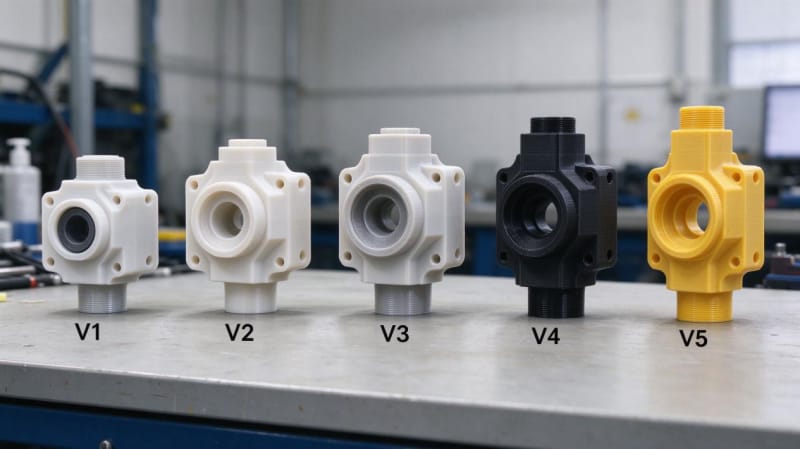
Prototype process | Typical accuracy | Typical surface | Best for |
FDM | ±0.3–0.5 mm | Visible layer lines | Functional brackets, jigs |
SLA | ±0.1–0.2 mm | Smooth, polishable | Detailed, small parts |
SLS | ±0.2–0.3 mm | Matte, no supports | Assemblies, living hinges |
A prototype only earns its keep if the material matches what you are testing. Fit and clearance checks need dimensional stability, so SLA or SLS resin and nylon parts are the safe pick. Mechanical tests need real toughness, so FDM in ABS or PETG behaves closer to production plastics. Visual reviews need surface quality, so resin again leads. Asking one machine to do all three jobs usually ends in a compromise that teaches you nothing.
Prototype material | Typical tensile strength | Typical use |
FDM PLA | ~40–60 MPa | Form study, fixtures |
FDM ABS | ~35–45 MPa | Functional test, impact |
Standard SLA resin | ~30–60 MPa | Fit check, presentation |
SLS nylon PA12 | ~40–50 MPa | Assemblies, small series |
The Material and the Finish That Sell the Test
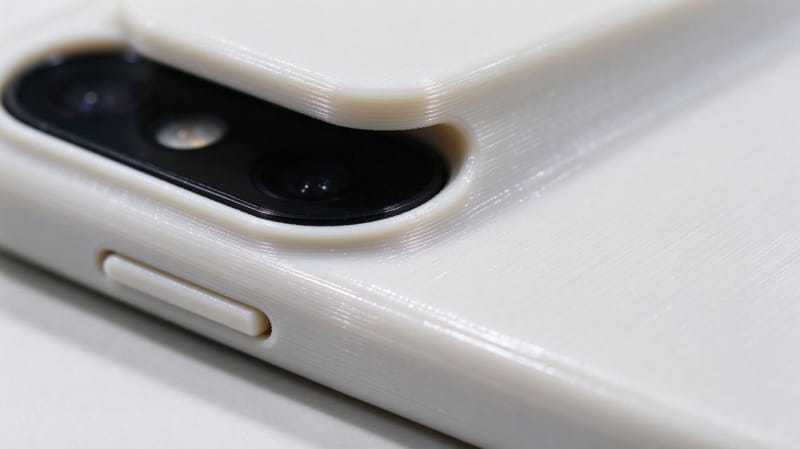
Post-processing decides how close the prototype looks to the final product. FDM parts can be sanded, filled and painted; SLA parts polish to a near-injection finish; SLS parts can be dyed and bead-blasted to a uniform matte tone. None of this is decorative. When a prototype travels to a customer or an exhibition, its finish carries the same weight as its dimensions. A rough part invites doubt about the whole project.
Surface quality is measurable, and it matters more than most buyers assume. As-printed FDM surfaces typically measure Ra 10 to 30 micrometers; SLA resin sits around Ra 3 to 10; SLS nylon lands near Ra 8 to 15. After light bead blasting or polishing, those values drop further. If your prototype will be handled by customers or photographed for approval, ask for the Ra value in the quotation, not just a photo.
The Moment It Pays Off
Here is a scenario that happens more often than manufacturers like to admit. A client was preparing for an international machinery show and received the first welded test frame, only to find the cable channel and the controller bracket collided by a few millimeters. The show was four days away and the welded supplier quoted two weeks. HUANYA printed revised brackets and a corrected channel in SLA overnight, the team re-assembled the frame the next day, and the working machine stood in the booth on schedule. The fix cost a fraction of a tooling change and saved the entire launch.
The economics favor prototyping early and often. A single 3D printed prototype typically costs between $10 and $200 depending on process and size, while a production mold runs into thousands and weeks of waiting. Compare that with a field failure or a recalled batch, and the math stops being arguable. Every hour spent with a physical part is insurance against the mistake you cannot see in the model.
Prototype With HUANYA
HUANYA treats a prototype as an engineering handoff, not a commodity order. Before printing, the DfM review checks wall thickness, clearances, support strategy and orientation, and flags issues that would waste a build. The same team that prints the prototype can quote the next step, so your transition from a 3d printing prototype to short-run production does not start from zero.
Send a STEP or STL file, specify the test you plan to run, and HUANYA will recommend the process and material that answers it. You will receive a fast turnaround, a written cost breakdown and a part that is ready to assemble, not just to admire. That is what a custom 3d printing service should feel like: fast enough to iterate, accurate enough to trust, and priced so you can afford to be wrong once or twice. That, in short, is rapid 3d printing done right.


Leave a Comment