
 English
 French
 Deutsch
 العربية
 Español
 Русский
 にほんご
 Português
 한국어
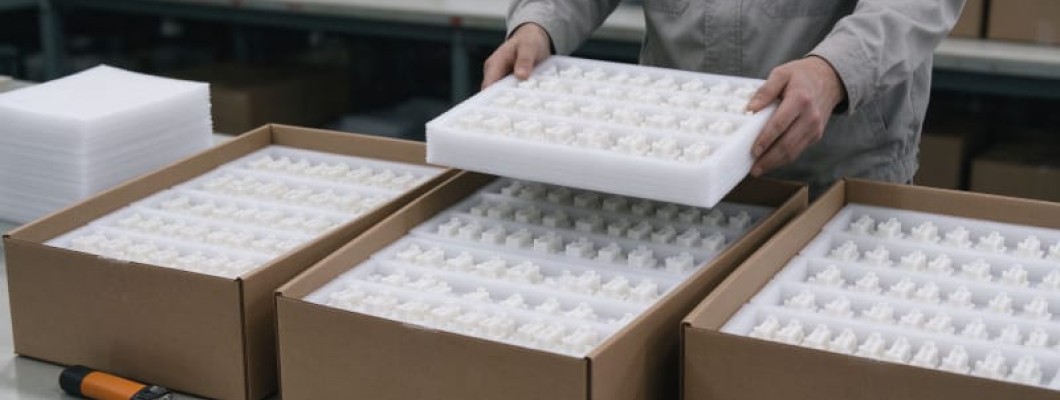
Two quotes land on the same purchasing desk for the same bracket. Twenty pieces come back at 38 US dollars each, three hundred come back at 11. Nothing in the file changed, so what did? A batch quote prices the work around the part, the plate it shares, the hands that finish it and the setups that happen once. Once that is clear, the discount stops looking like generosity and starts looking like arithmetic.
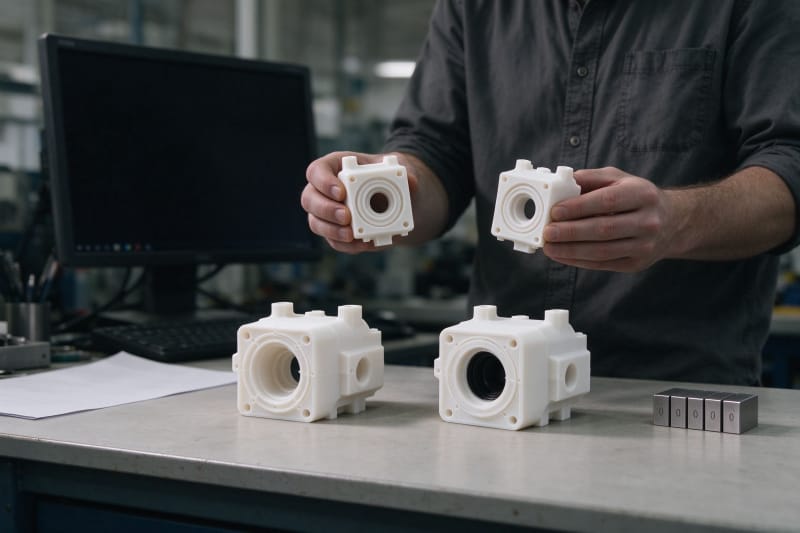
Why a Batch Quote Looks Nothing Like a Prototype Quote
Every batch quote splits into five lines: material, machine time, labour, finishing and the risk margin a shop carries for an unproven geometry. Published cost studies put material at 30 to 60 percent of an additive part, machine time at 15 to 30 percent, post-processing and labour at 20 to 40 percent. Read that twice and the surprise fades, because two thirds of the price was never plastic in the first place.
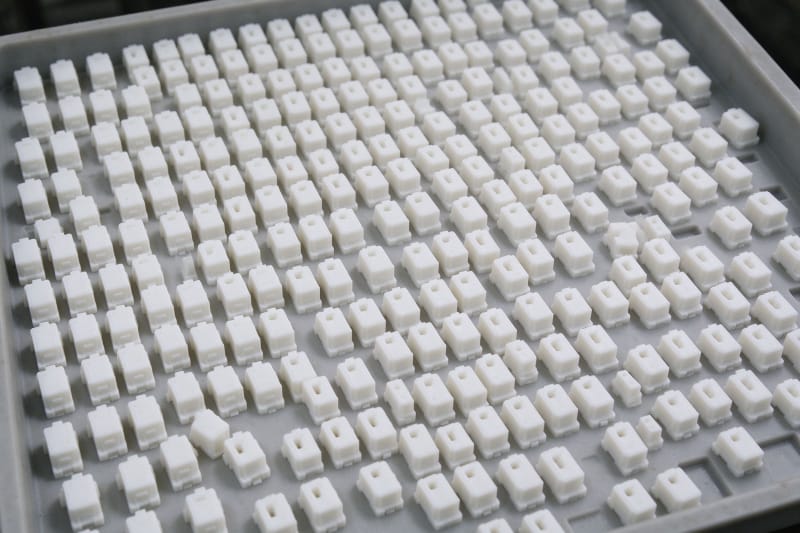
Setup is the first line that amortises. A published breakdown for a medium-complexity part runs 33 US dollars per unit at one piece and 19.60 at one hundred, while material and machine time barely move and setup falls from ten dollars per part to ten cents. Does that make the hundredth part cheaper to produce? Not at all. It means the same fixed work is now divided a hundred ways.
How HUANYA Prices a Lot Before the First Layer Runs
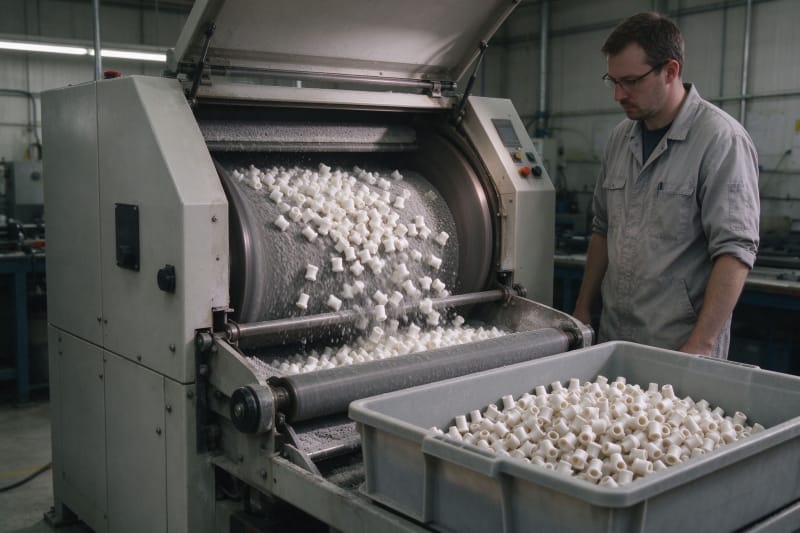
HUANYA operates more than a thousand industrial printers across SLA, MJF, SLS, FDM and metal on a ten thousand square metre floor, and the estimating team sits beside the machines rather than in a separate office. That proximity changes numbers: when an estimator knows which build is already half full, a two hundred piece order can ride an existing plate, so the price reflects the real plate instead of a theoretical one. That is what separates a 3d printing factory from a reseller with a website.
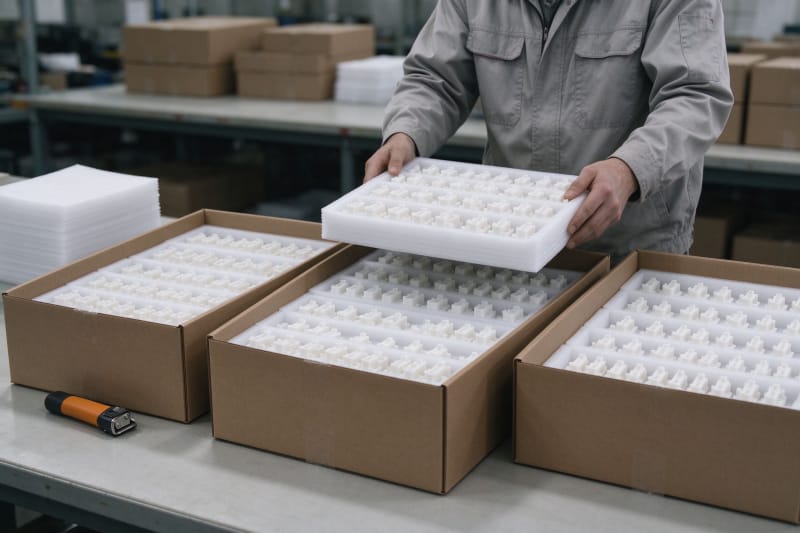
Then the plate gets packed. Identical parts nest into a full build, and near-identical variants are quoted as one job family so they share setup and finishing. This is where 3d printing batch quoting earns its name: the saving is fewer changeovers, fewer cleanouts and one operator intervention instead of forty. Buyers who ask for one quantity get one point on the curve, which is why serious purchasing teams ask for three.
The Numbers Behind Volume Pricing and Break Even
The ladder itself follows the build logic rather than a sales calendar. At twenty pieces the setup dominates, at three hundred it is spread thin, and at a thousand the finishing line and the packing bench take over. Ask for three quantities in one request and the answer is a curve; ask for one and the answer is a point, and a point hides where the money went.
Batch price ladder for a palm sized plastic part
Pieces per order | Indicative unit price | What dominates the price |
1 to 10 pieces | USD 30 to 80 per part | Setup and single build occupancy |
25 to 100 pieces | USD 15 to 35 per part | Setup spreading, partial nesting |
200 to 1,000 pieces | USD 8 to 20 per part | Full builds and batch finishing |
Above 1,000 pieces | Price plateaus, compare tooling | Finishing labour and packing density |
Ranges published by Find3DPrinting (2026) and Additive Inn (2026); the final price depends on geometry, material and finishing.
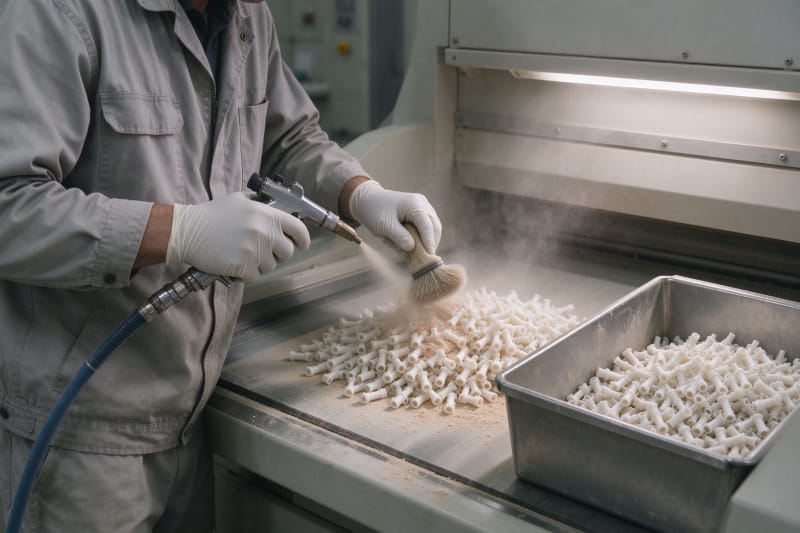
Finishing is the line that decides most contests. Dyeing, tumbling, sanding, priming and inspection each carry a per-batch cost that spreads across quantity, which is why a raw part and a presentation part sit in different price worlds. A buyer who specifies a cosmetic finish on an internal bracket pays for something nobody will ever see. Wouldn't that budget serve better as a second build? Cheap online 3d printing almost always means a standard queue and a raw finish, and that is a legitimate choice, not a compromise.
Cost structure, market size and lead times behind a batch quote
Cost line or benchmark | Published figure | Source |
Material share of part cost | 30 to 60 percent | SpecForge cost breakdown, 2026 |
Machine time share | 15 to 30 percent | SpecForge cost breakdown, 2026 |
Post-processing and labour | 20 to 40 percent | SpecForge cost breakdown, 2026 |
3D printing as a service market | USD 15.28B in 2025 to USD 31.06B in 2030, CAGR 15.24 percent | Research and Markets, 2025 |
Standard lead times | FDM and SLA 4 to 7 days, SLS 8 to 12, MJF 12 to 15, metal 10 to 12 | Additive Inn, 2026 |
Break even against injection moulding | Simple parts 500 to 1,000 units, complex parts 1,000 to 2,000 | Ymolding volume pricing study, 2026 |
Figures are published 2025 to 2026 values; treat them as planning ranges, not as a quotation.
Where does additive stop being the cheap answer? For simple plastic parts the crossover against injection moulding usually lands between 500 and 1,000 pieces; for complex geometry with internal channels it moves to 1,000 or 2,000, because the tool that would be needed costs more. Aluminium tooling starts near 3,000 dollars and steel tools run past 15,000, so break even is a property of the part, not of the printer. A reported 2024 case flipped a 4,800 set nylon programme on exactly this arithmetic: the calculated break even came back at 130 sets, and the plan changed overnight.
Send Files That Make a Batch Quote Come Back Useful
Lead time is a price line even when it is not printed on the quote. Standard queues move in four to seven working days for FDM and SLA, eight to twelve for SLS, twelve to fifteen for MJF and ten to twelve for metal. A two week flexible window lets a shop schedule a lot into a fuller build instead of buying priority, while a rush order pays for someone else's reorganisation. Is that premium always worth it?
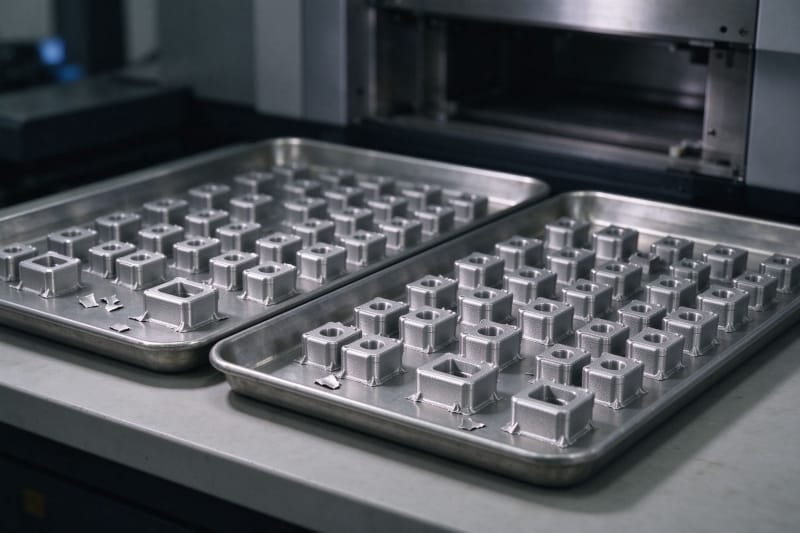
A quote request is a brief, not a file drop. One file, one quantity and one finish tells an estimator almost nothing, so the reply defaults to a cautious single-plate price. Send STEP, two acceptable materials, the finishing tiers you can live with, and quantities at 50, 200 and 500. Three numbers from one shop beat one number from three shops, because only the curve shows where the cost actually sits. A complete 3d printing quote request comes back in hours rather than days. HUANYA answers with a buildability note, a material recommendation and a tiered price tied to the model, assumptions included. Batch quoting is not a negotiation trick; it is the point where design, scheduling and purchasing speak the same language. The buyer who understands that stops paying for empty space and starts buying capacity, and that habit pays back on every repeat order.


Leave a Comment