
 English
 French
 Deutsch
 العربية
 Español
 Русский
 にほんご
 Português
 한국어
Why Copper 3D Printing Matters
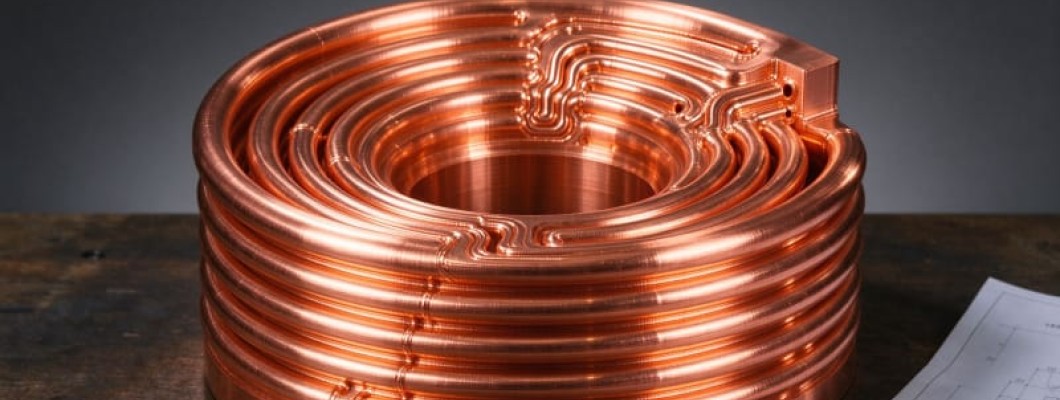
A 3d printing copper service turns a CAD model into a dense copper part without molds, dies or minimum quantity. Powder bed fusion builds pure copper, CuCrZr or GRCop-42 layer by layer, so one run carries a single prototype or a batch of identical heat-sink fins. Because there is no tooling to write off, the same geometry moves cleanly from first article to series production.
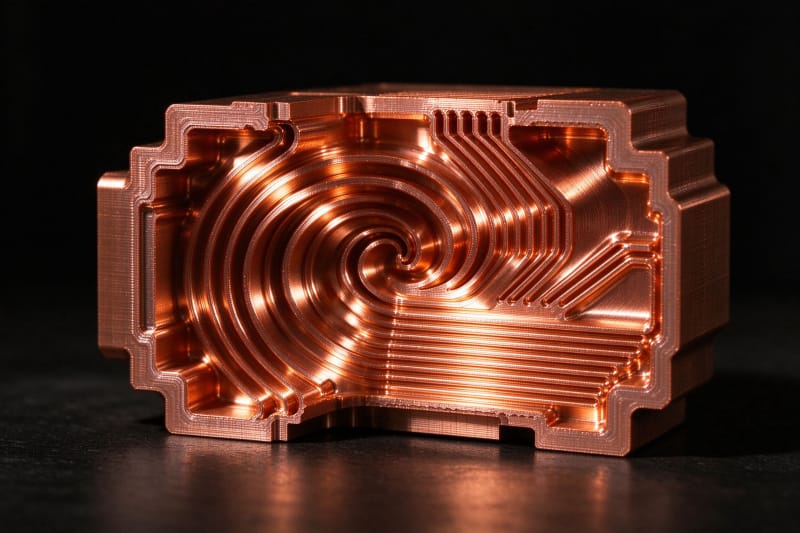
The value is obvious wherever heat and electricity travel. Water-cooled induction coils, power-electronics heat sinks, motor winding terminals and conformal cooling inserts all rely on copper's conductivity. Printing lets you create internal cooling channels and hollow structures that brazing or machining simply cannot reach, so a part does more work in less space.
Copper is a demanding metal because it reflects infrared laser light. A 1064 nm fiber laser struggles to couple energy into pure copper, so production lines use green or blue lasers, or electron beams, that the powder absorbs far more readily. Controlling this absorption is what makes dense, leak-free copper parts possible.
Choosing a Printable Copper Alloy
Alloy choice sets the balance of strength, conductivity and cost. CuCrZr, a precipitation-hardened copper, keeps conductivity near 80 percent IACS while surviving elevated temperatures, and it is a first choice for coils and heat sinks. GRCop-42, developed by NASA for combustion chambers, adds chromium and niobium for creep resistance, while pure copper gives maximum electrical performance.
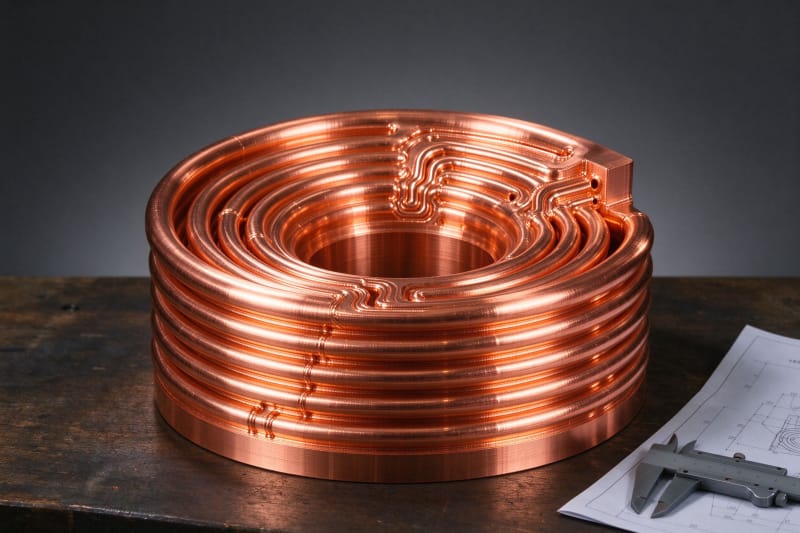
Applications span induction heating, power electronics, electric motors and aerospace. A printed copper coil with internal water paths stays cool under high current, and a conformal heat exchanger can double the surface area inside a compact envelope. These are the parts where a powder 3d printing route replaces brazed assemblies with a single robust component.
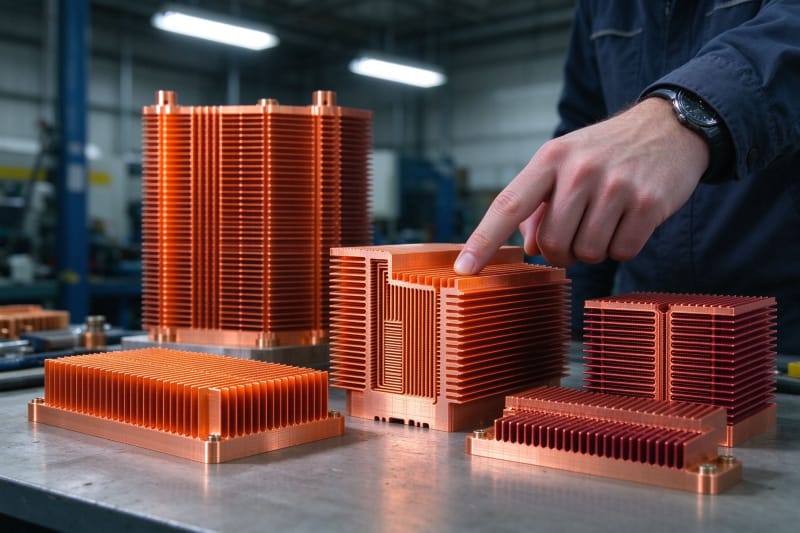
Metal 3d printing price for copper is driven by part weight, build height, support volume and post-processing, not just geometry. Small coils often land around $200 to $600, while large, fully finished parts can exceed $2,000. The best way to control cost is a design that packs tightly in the build and needs few supports.

Copper Alloy | Conductivity %IACS | Thermal W/mK | Best For |
Pure Copper (printed) | 85-100 | 380-400 | Conductors, coils |
CuCrZr (C18150) | 75-85 | 320-360 | High-strength heat sinks |
GRCop-42 (Cu-4Cr-2Nb) | ~90 | ~370 | Combustion chambers |
CuSn10 (bronze) | 10-13 | 50-60 | Wear parts, bearings |
Source: NASA GRCop-42 datasheets, copper alloy standards (IACS) and public powder data (2026)
How Copper Powder Bed Fusion Works
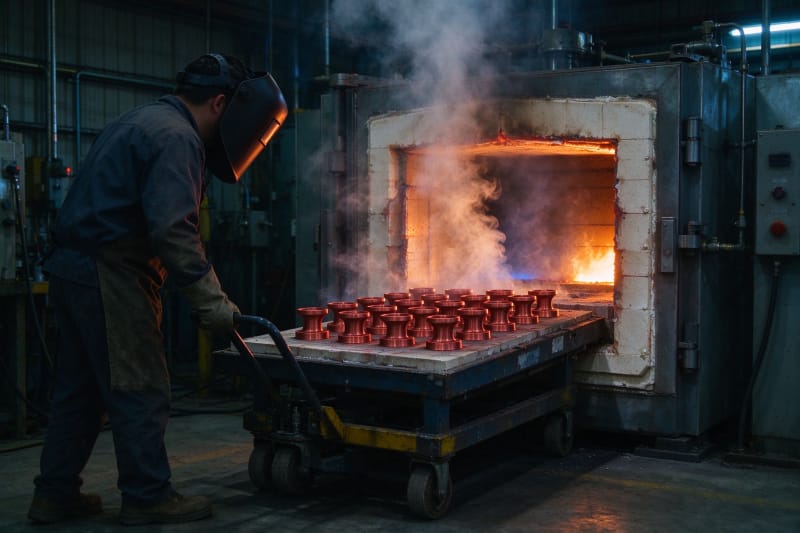
Every build starts with a watertight model prepared for the powder bed. The recoater spreads a thin layer, a high-power green laser or electron beam melts the cross-section in an inert atmosphere, and thousands of layers repeat until the part is dense. Copper usually prints in thin 0.02 to 0.05 mm layers, giving tolerances near plus or minus 0.1 mm before finishing.
The table below shows how printed copper grades compare on electrical conductivity, thermal conductivity and typical use. High quality 3d printing keeps density above 99 percent, which is what preserves conductivity; porosity would scatter electrons and raise resistance. The second table compares production routes on density, setup and cost.
Route | Density | Setup | Cost 1-10 pcs | Cost 100+ pcs | Lead Time |
LPBF green laser | >99.5% | Low | $200-600 | $60-180 | 5-10 days |
EBM | >99.8% | Low | $250-700 | $70-200 | 1-2 weeks |
Binder jet + sinter | ~97-99% | Medium | $150-450 | $45-120 | 2-3 weeks |
CNC machining | solid | Medium | $100-300 | $20-80 | 1-3 weeks |
Source: representative public copper 3D printing service quotes (2026)
Conductivity and Density Benchmarks
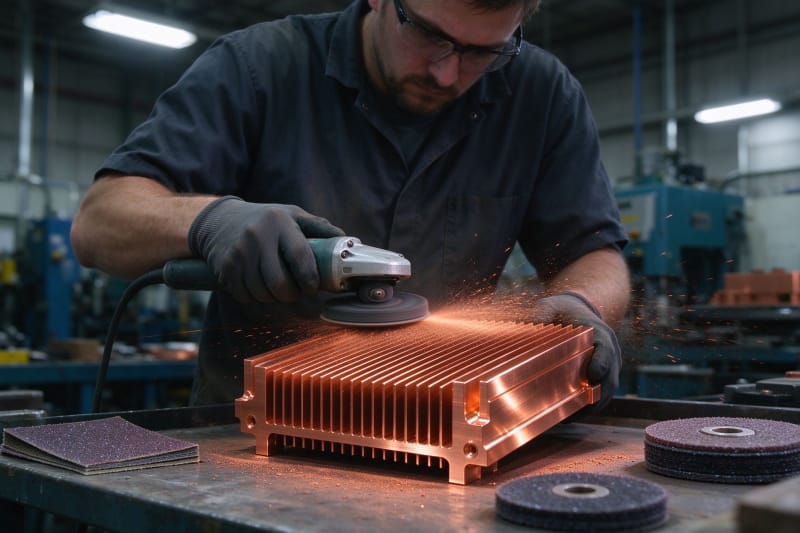
Surface finish matters as much as geometry. As-built copper shows stair-stepping and partially fused powder, so functional parts receive stress relief, careful machining on mating faces, and polishing where sealing surfaces are needed. A documented finishing chain keeps cosmetic and contact surfaces consistent from order to order.
Design rules for copper are stricter than for plastic. Keep walls at least 0.5 mm, hold overhangs above 40 degrees, and leave at least 0.5 mm between separate parts to prevent sintering. For internal cooling channels, keep diameters above 1 mm and avoid sharp turns so powder can be removed cleanly after the build.
Design Rules for Copper Parts
Printed copper competes with CNC machining and brazed tube assemblies. Machining wastes a large share of expensive copper bar and cannot produce internal cooling channels; brazing joins weak points that leak. Printing adds material only where the design needs it and eliminates joints, which is why hybrid workflows often print near-net and finish the critical surfaces.
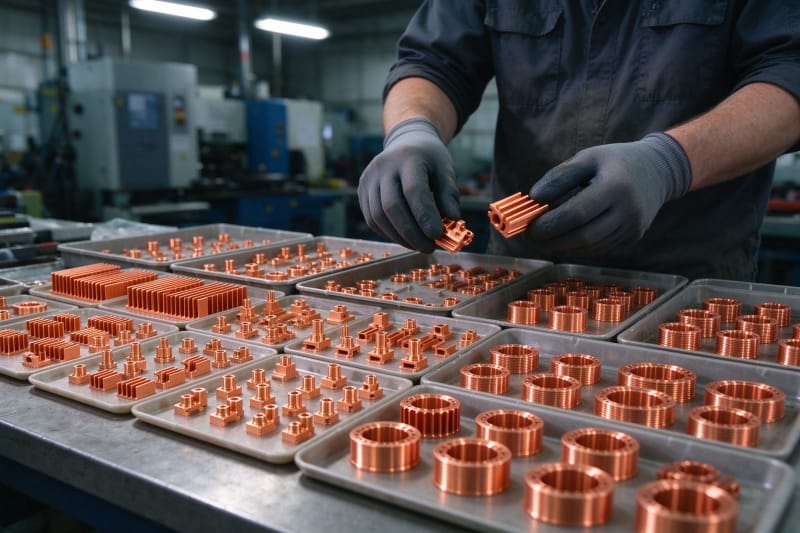
Quality is verified with calibrated instruments. Density is confirmed by Archimedes measurement or cross-sections, and electrical conductivity is checked with eddy-current or four-point probes. For safety-critical parts, CT inspection finds internal porosity that a surface check would miss.
Post-Processing and Quality Control
Volume changes the calculus. For a few identical parts or complex geometries, printed copper is usually the fastest and most flexible route. For very large quantities of simple shapes, conventional forming or machining may win on unit cost, but only after tooling and longer lead times. The right answer depends on the part, not on a rule of thumb.
Copper 3D Printing Versus Machining
A copper part earns its keep in harsh duty. A printed induction coil survives thermal cycling without brazed joints, a conformal heat sink pulls heat from a small package, and a rocket combustion chamber liner endures extreme temperature. Partners who control powder handling and atmosphere deliver repeatable density and conductivity.
Start a Copper Order With HUANYA
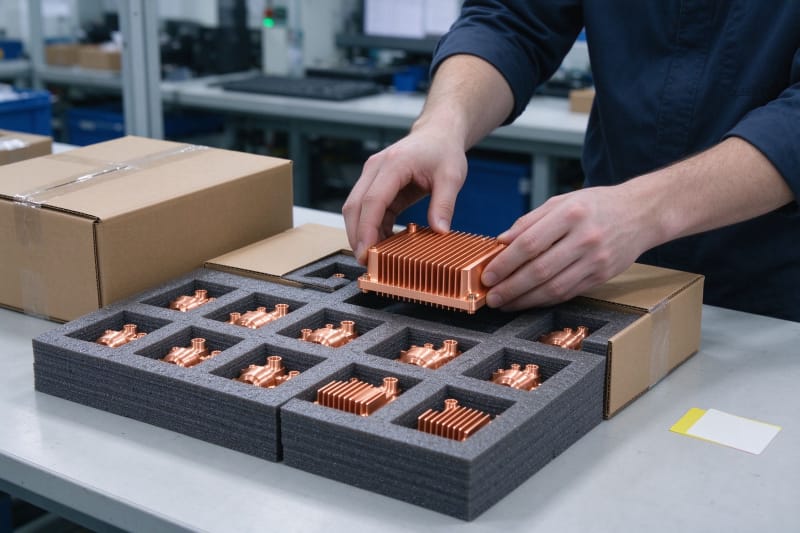
Starting with HUANYA is direct. Send a STEP or STL model, get an instant transparent quote, choose the copper alloy and finish, and the engineering team reviews printability, confirms critical dimensions and ships globally with reliable international logistics. Begin with a prototype or a small batch and scale the same geometry without retooling.


Leave a Comment