
 English
 French
 Deutsch
 العربية
 Español
 Русский
 にほんご
 Português
 한국어
FDM Printing Service for Strong Functional Parts
What an FDM Printing Service Produces
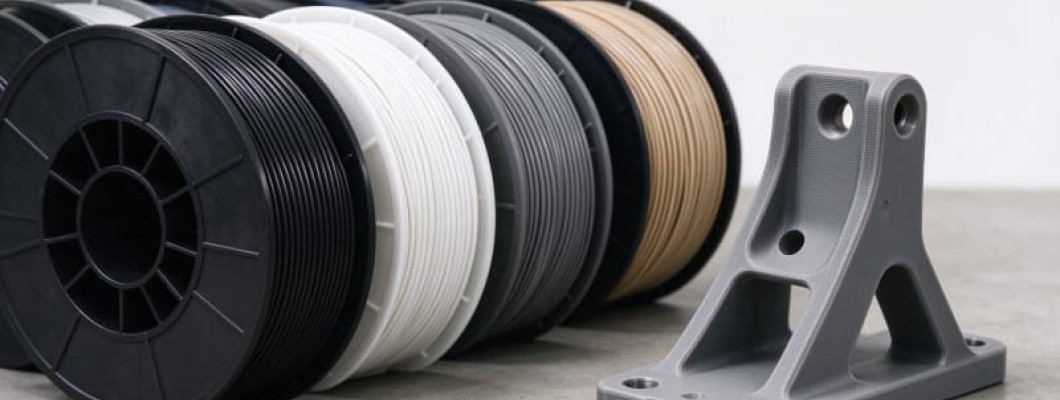
An fdm printing service builds physical parts by heating a thermoplastic filament and depositing it through a moving nozzle one layer at a time, until the part shown on the screen becomes a solid object you can hold, test and use. Because the process works with real engineering plastics rather than a model material, the parts it produces are often used for more than display, which is why FDM remains one of the most requested processes in the workshop.
FDM is valued for a simple reason. It pairs a low material cost with a wide range of familiar engineering thermoplastics, so teams can make strong, lightweight parts with usable mechanical properties without paying for a mold. A molded part is cheaper only at high volume, while at prototype and low-volume quantities FDM avoids tooling entirely and lets the design change without scrapping anything.
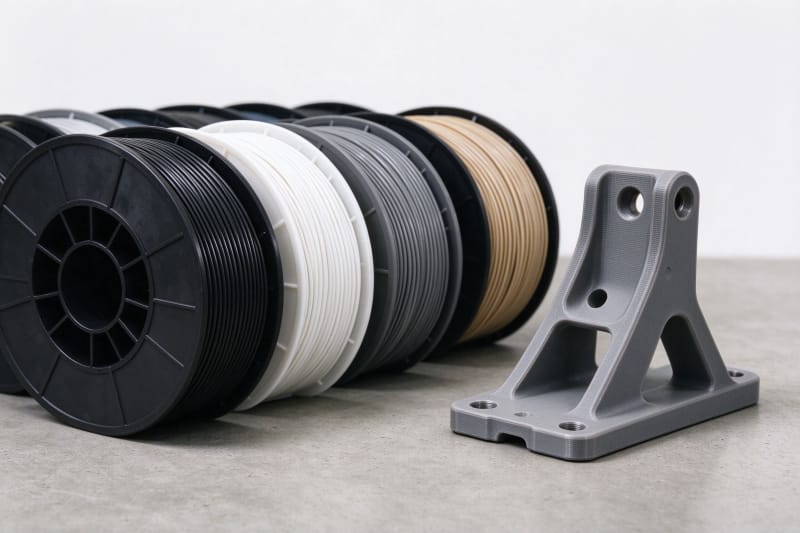
The process known as fused deposition modeling starts with a spool of filament that is pulled into a heated nozzle, melted and laid onto the build plate. Each layer bonds to the one below as it cools, and the machine works upward, adding infill for strength and support structures where overhangs cannot hold themselves. The difference between a small desktop machine and a managed industrial fleet is not the principle, but repeatability, material choice, chamber control and inspection.
|
From File Upload to Fast Quotation
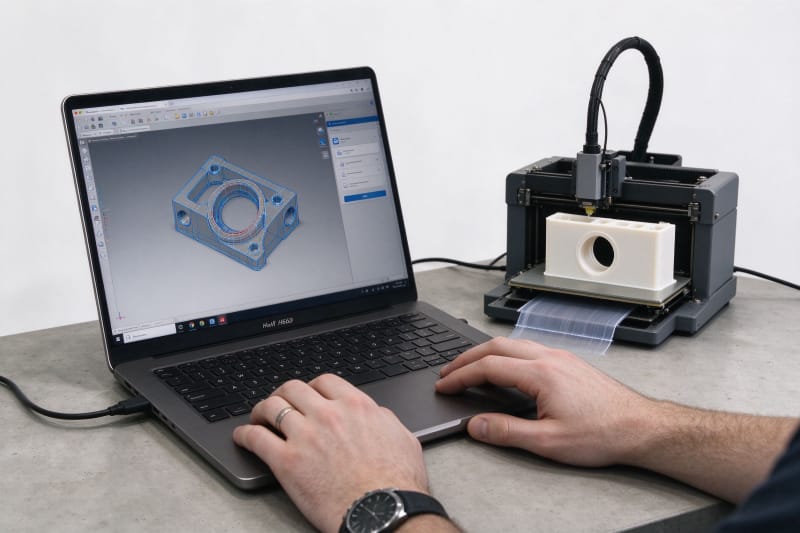
Ordering begins with a digital file. Most services accept an STL or 3MF, and a STEP file helps when dimensions or threads matter. You upload the model, choose a material, colour and quantity, and note any surface or assembly requirements, and the engineering team reviews the geometry for printability before returning a price and lead time. A model that prints exactly as drawn is the exception, so a short review at this stage prevents failed builds later.
Lead time is driven less by the part size and more by build height, orientation, quantity and post-processing. A single small part often prints in a day or two, while a batch is nested across machines and a tall part takes longer because every layer adds a fixed number of seconds. Post-processing such as support removal, smoothing and painting adds time, and a clear quotation should separate build time from finishing so the delivery date is predictable.
Good design for fdm 3d printing works with the layer process rather than against it. Walls should be thick enough for at least one or two perimeters, overhangs beyond roughly 45 degrees need supports, and holes are often built slightly undersized and reamed to tolerance because a printed round feature can shrink and flatten. The part is also stronger in the plane of a layer than across it, so orienting the part toward the expected load is a decision made before the first layer, not after.
FDM Applications and Use Cases
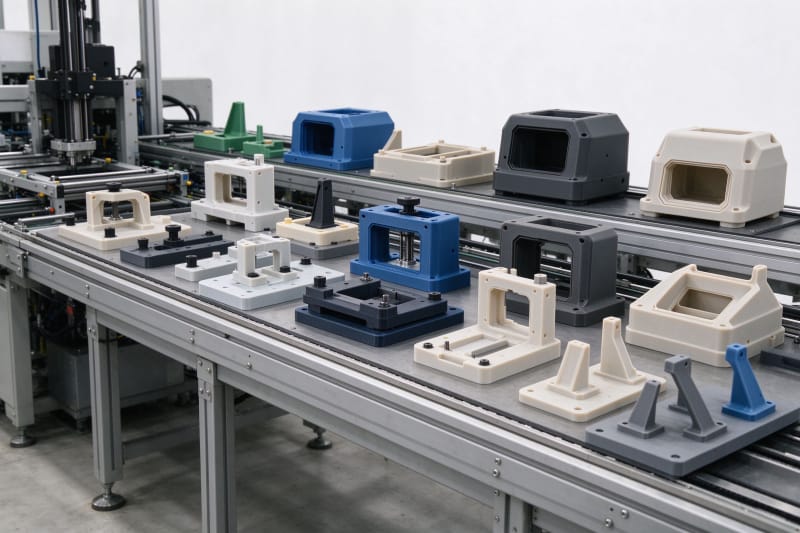
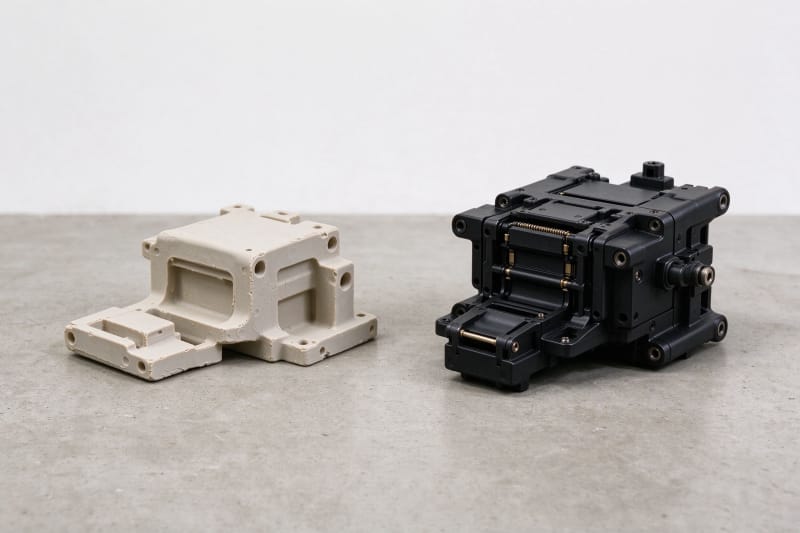
FDM covers a broad range of work. It is used for functional prototypes, housings and enclosures, brackets and mounts, and especially for jigs and fixtures on the production line, where a custom guide or check gauge can be made and replaced in days. As engineering materials and reinforced filaments have improved, more FDM parts now reach end use, particularly in low-volume products and in industries where saving a little weight or assembly time matters.
FDM is not always the right final answer, and over-building a prototype is a common waste. For a visual model the cheapest material and a standard finish are enough, while a part that must carry a load or meet an outdoor surface needs a matched material and a defined process. A personalised print service should help you match the level of the part to the question it must answer, rather than selling the highest specification by default.
|
Post Processing and Quality Control
Fresh FDM parts are not finished parts. Supports are removed, layer lines are reduced by sanding, and parts can be primed and painted, vapour smoothed for a more uniform surface, or fitted with threaded inserts, captive hardware and assembled shells. The goal is not to hide the process but to reach the stated surface and function, and consistent finishing across a batch is a process discipline rather than a matter of individual skill.
Quality control is where the three concerns of B2B buyers are decided. Dimensional and accuracy stability across batches comes from controlled machines and recorded parameters, not from hoping each operator matches the last. On-time delivery comes from realistic scheduling that keeps machine capacity in step with the orders, and consistent post-processing surfaces come from a fixed finishing sequence. When any of these vary, the cause is a process gap that inspection can catch before shipment.
Cost Economics and Industrial FDM
FDM cost is driven by the material used, machine time, build height, support volume and finishing. Unlike a molded part, there is no tooling to pay for, so the first part costs about the same as the tenth, and the cost per part falls mainly through machine nesting and shared setup rather than amortisation. This is why FDM is so economical for tens or hundreds of units, and why complex geometries that would be expensive to cut often add little when printed.
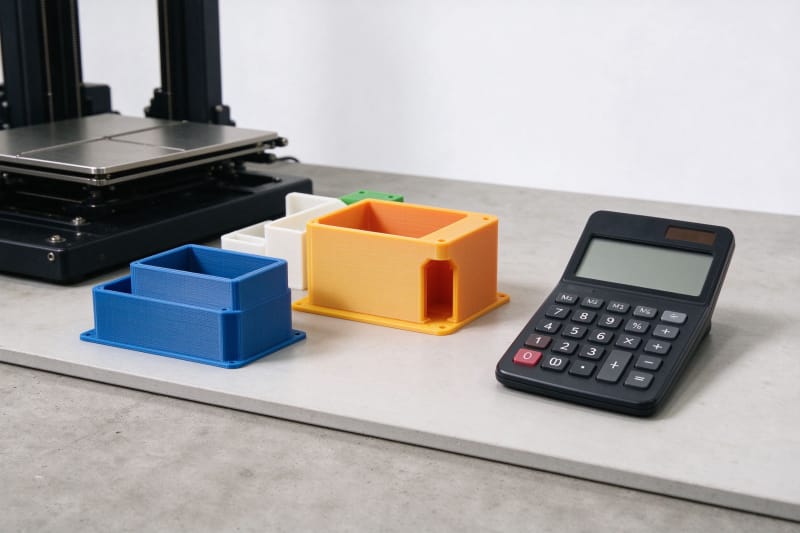
An industrial FDM service is not the same as running a desktop printer at a desk. Production machines offer heated chambers, a controlled environment, certified material batches and a repeatable parameter set, which together keep a part identical from one order to the next. They also print the higher-temperature and reinforced materials that desktop machines cannot, and they support traceability, which is what turns a printed object into a part a company can specify again.
Low Volume and Bridge Production
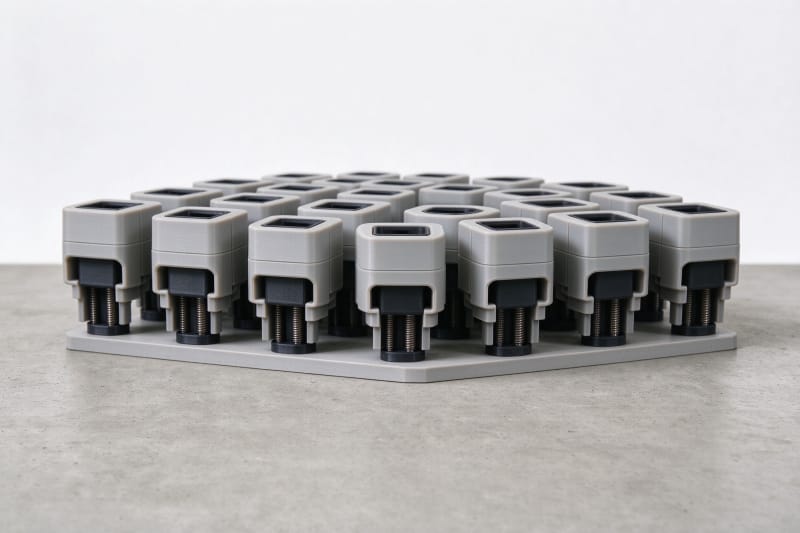
Many FDM parts now move directly into low-volume production. For a product launch, a bridge run or a long-tail spare part, printing avoids the risk and waiting time of tooling while the final design is still being proven. The same digital file and material settings can be reused for repeat orders, which keeps the geometry and properties consistent without holding stock.
Choosing an FDM Service Partner
Choosing a partner is a practical decision. Look for a machine fleet that covers the materials and part sizes you need, engineering support that reviews files before printing, a documented inspection and finishing process, and reliable international shipping with the paperwork required for the destination. A supplier that can move a part from a prototype through a small production run is more valuable than one limited to a single step.
Start Your FDM Project With HUANYA
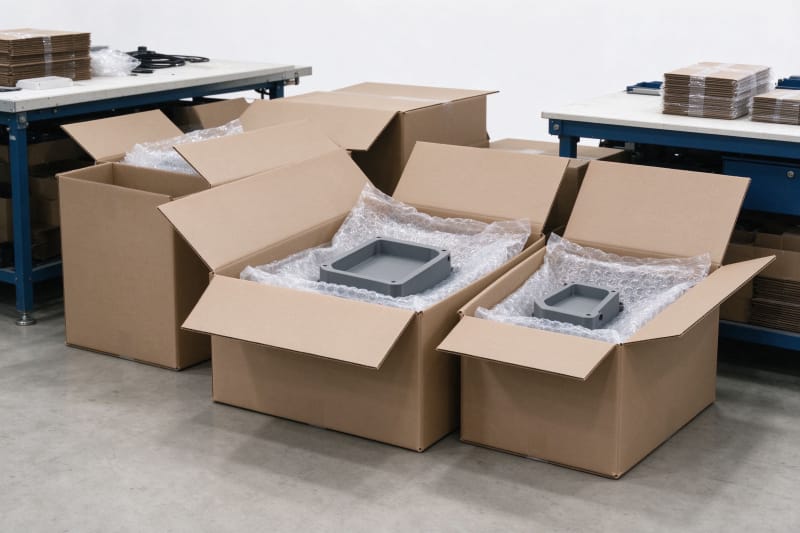
If you already have a model, the fastest way to start is to send it. Upload your CAD file to the 3d printing service, specify the material, quantity and finish you need, and HUANYA will return a quotation and lead time based on the actual geometry, with printed parts delivered worldwide. From a first functional prototype to a repeatable low-volume part, the process begins with a single file.


Leave a Comment