
 English
 French
 Deutsch
 العربية
 Español
 Русский
 にほんご
 Português
 한국어
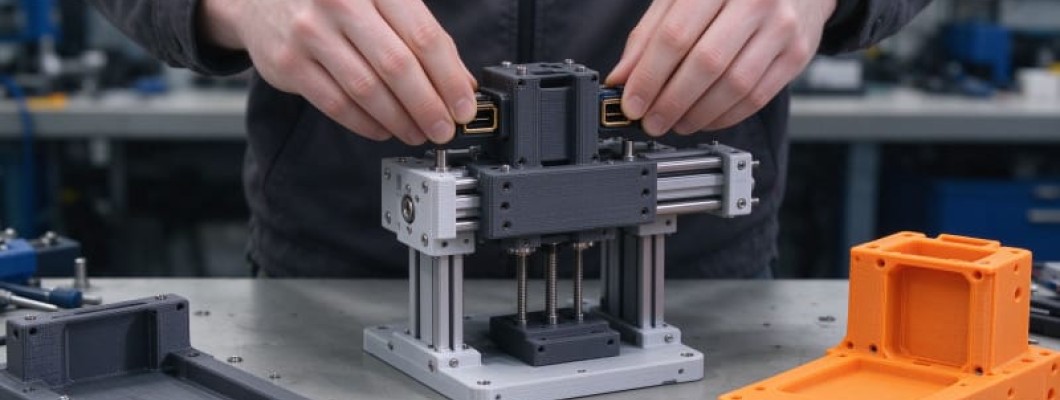
What Fused Deposition Modeling Delivers
Fused deposition modeling builds parts by melting a thermoplastic filament and laying it down layer by layer. For a buyer who needs functional prototypes or short-run production, this process is often the most direct route from a CAD file to a usable part. It keeps setup simple, opens a wide material range and, on an industrial line, holds tolerances that suit most engineering jobs.
The machine feeds a spool of filament into a heated nozzle that melts the material and extrudes it onto the build platform. Each pass deposits a thin ribbon, the platform lowers by one layer height and the next line fuses to the one below. The result is a solid body whose strength depends on layer adhesion and on the direction in which the walls were printed.
FDM accuracy is well documented. With a standard 0.4 mm nozzle, most suppliers hold about plus or minus 0.5 percent of the part size, with a practical lower limit near 0.5 mm, and finer nozzles improve detail on small features. Layer heights commonly run from 0.1 mm up to 0.3 mm, so a buyer can trade speed against resolution for each job.
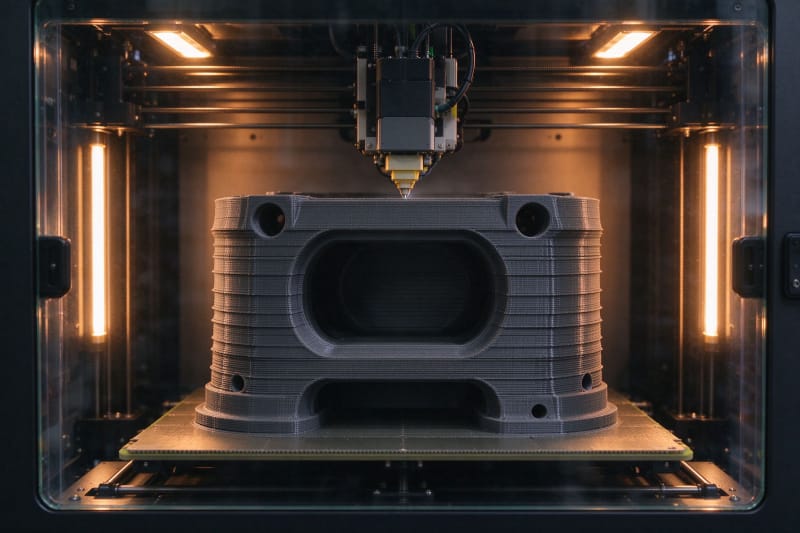
Accuracy and Tolerances You Can Rely On
The real strength of FDM is the filament library. PLA offers 50 to 65 MPa tensile strength for quick prototypes, PETG sits around 45 to 55 MPa with better impact, ABS reaches about 40 MPa with a heat deflection temperature near 85 degrees C, and nylon (PA6) climbs to about 70 MPa for moving parts. The table below sets out these grades side by side.
Fused deposition modeling earns its place in engineering prototypes, jigs, fixtures and housings. Because it needs no tooling and no chemical handling, a design can be verified in days and revised overnight. The same fdm 3d printing line then repeats the part for a pilot run or a small production series.
Material choice shapes how far a part can go. The comparison below lists tensile strength, flexural strength and heat resistance for the common FDM grades, so a buyer can pick the right filament before ordering. Where a part will face heat, wear or light loads, the table points to the safest option without guesswork.
Materials That Carry Real Loads
Unlike resin or powder systems that are often limited by vat or chamber size, FDM scales to very large parts. Industrial machines build housings, ducts and structural brackets close to a metre long, which matters for automotive, robotics and machinery buyers who cannot get such geometry elsewhere.
Every process has trade-offs, and the table below compares FDM with SLA and SLS on tolerance, layer height, surface and support. FDM gives the lowest cost per part and the widest build volume; SLA adds fine detail; SLS removes the need for supports. The right choice depends on the part, not on a favourite technology.
Large Format Parts, Not Just Desk Models
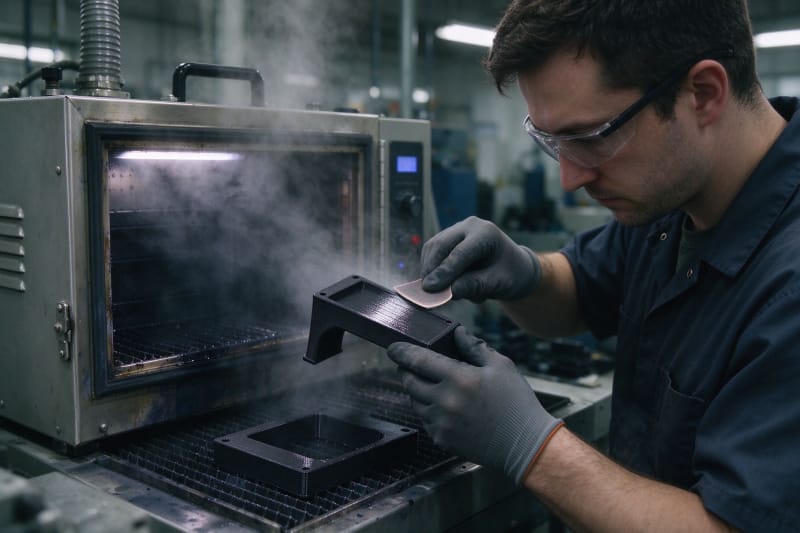
Finish is where a good FDM part gets its final look. Layer lines are sanded away, ABS can be smoothed with acetone vapour, and some parts are annealed to improve strength. Post-processing turns a visible-layer prototype into a presentable part ready for painting or a customer review.
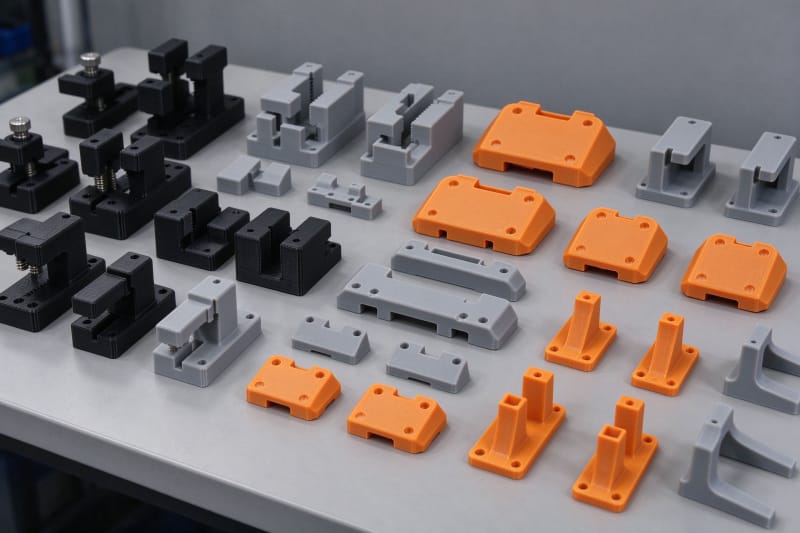
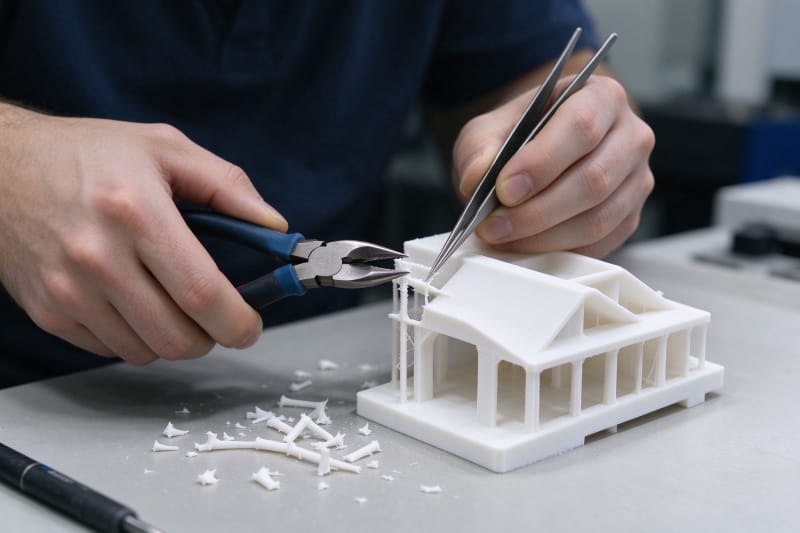
Support design decides how clean a part comes off. Overhangs and bridges need support material that is removed afterwards, so the engineer plans orientation to keep supports minimal and easy to reach. This reduces cleaning time and keeps inner channels and mating surfaces clean.
Post Processing That Makes Parts Presentable
For short runs, FDM economics are simple: no mold, no setup charge, and one part costs little more than ten. Nesting many pieces in one build makes the unit price drop further, which is why factories price small production batches competitively and buyers can test the market before committing to tooling.
Quality is checked at each station, not once at the end. Calibrated calipers measure critical dimensions, microscopes inspect layer adhesion and edges, and records tie every part to its filament lot and print job. This discipline catches issues while the job is still running.
Batch Economics for Short Runs
Layer adhesion means FDM parts are strongest in the plane of the layers and somewhat weaker through the thickness. A smart orientation puts the hardest load along the layer direction, and reinforced filaments add strength where it matters. Engineers plan this before slicing, so the part behaves as expected in service.
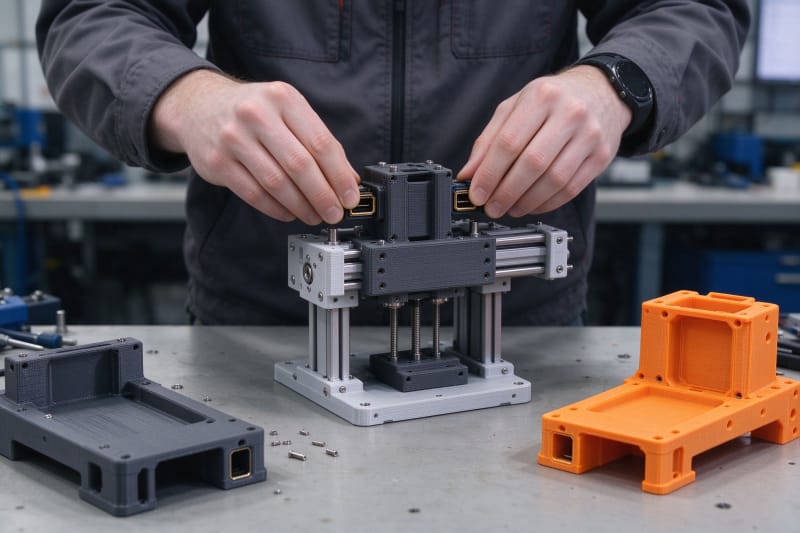
Quality Checks Along the Whole Line
FDM keeps lead times short. A standard prototype can ship within a day or two, and a small series follows a fixed schedule. With proper packaging and documented handling, parts travel worldwide without warping or damage, so buyers order with confidence.
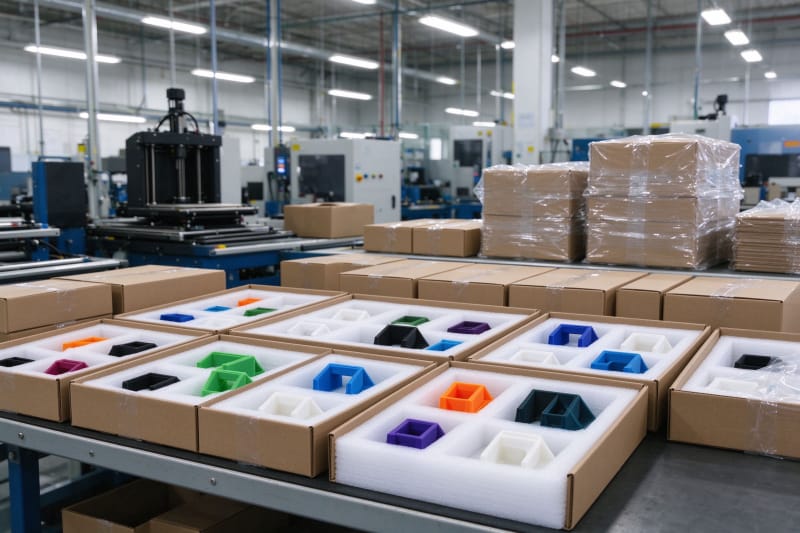
Start an FDM Project With HUANYA
Start a project with HUANYA and the path is clear: send a STEP or STL file, get a transparent quote with filament, layer height and delivery date, and the engineering team reviews printability and orients the part for strength. One prototype or a first series both work, and the same pla 3d printing setup scales with your volume; for 3d printing on demand and production alike, fused deposition modeling delivers a usable part fast.


Leave a Comment