
 English
 French
 Deutsch
 العربية
 Español
 Русский
 にほんご
 Português
 한국어
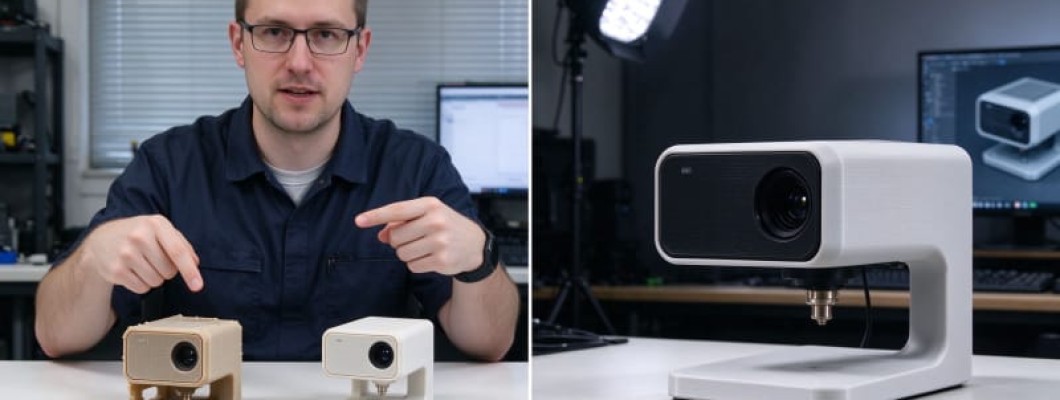
The cheapest quote is not always the cheapest part. A price that is 40 percent lower looks great on paper, until the parts arrive out of tolerance, the surface is full of stringing, and your assembly crew spends a day reworking every bracket. Low cost 3d printing only makes sense when the price is low and the part still works. The trick is knowing where the savings really come from.
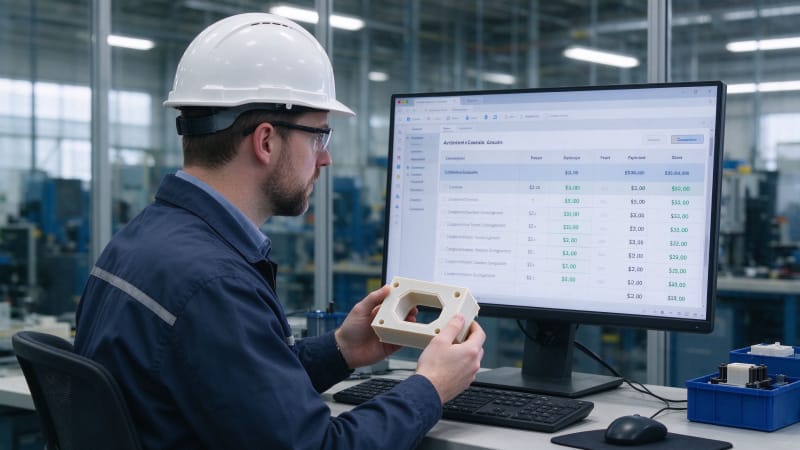
Engineer reviewing cost breakdown with printed part
Every buyer has been burned by this at least once. A supplier promises rock-bottom rates, ships late, cuts every corner in slicing and support removal, and blames the geometry when something fails. The real cost of that bargain is measured in reprints, delayed launches and angry customers. Would you rather save a few dollars per part now, or pay for the same mistake twice?
So why do two factories quote the same part so differently? Price is built from material, machine time, labor, quality control and margin, and each line moves with batch size, geometry and process choice. A factory that nests parts properly and runs its machines at high utilization can charge less and still earn a fair margin. That efficiency, not a race to the bottom, is what makes cheap online 3d printing honest.
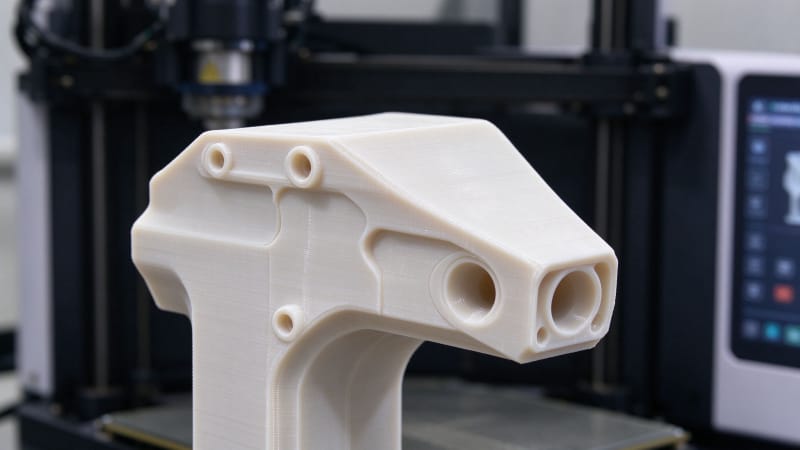
Fine detail SLA printed part close-up
What Drives the Price
Material is the visible part of the bill, usually 20 to 30 percent of the total for plastic parts. Machine time is the bigger silent item, often 40 to 50 percent, because every hour a printer runs costs the factory money whether it builds one part or ten. Post-processing and inspection add another 15 to 25 percent, and the rest is packaging, handling and a responsible margin. When a quote looks impossibly low, ask which of these lines disappeared.
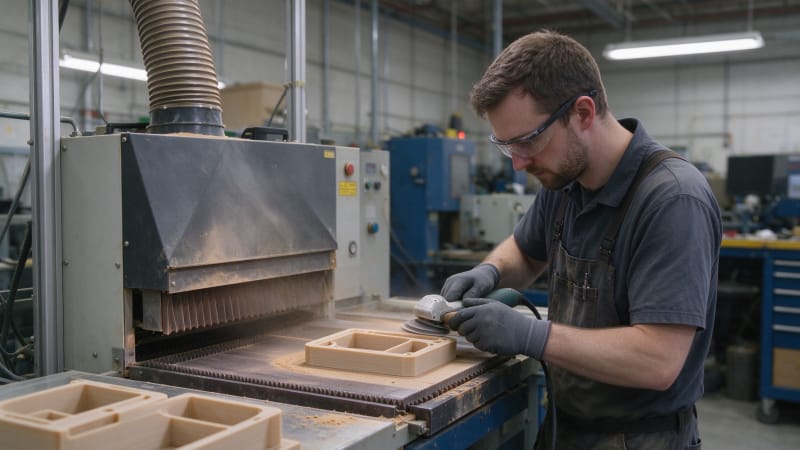
Worker finishing parts at post-processing station
Cost component | Typical share | How to reduce it |
Raw material | 20–30% | Choose standard PLA, ABS or resin |
Machine time | 40–50% | Nest parts, fill the build volume |
Post-processing | 15–25% | Simplify supports and finishes |
Packaging and handling | 5–10% | Consolidate orders and shipments |
Batch size is the fastest lever in the whole system. A single part always pays for setup, slicing and packaging alone; fifty identical parts spread those fixed costs across the run. Many factories drop unit price by 30 to 60 percent between a one-piece order and a fifty-piece order on the same geometry. If you are planning repeated tests or small series, grouping them into one production run is the simplest way to access 3D Printing Services at a sensible price.
Accuracy is not a luxury you give up to save money. A well-tuned FDM machine holds plus or minus 0.3 to 0.5 millimeters, SLA resin reaches plus or minus 0.1 to 0.2 millimeters, and SLS nylon sits around plus or minus 0.2 to 0.3 millimeters. Cheap does not mean sloppy: the process must be chosen for the job, and the machine must be maintained. A discount that comes from a neglected printer is not a saving, it is a gamble.
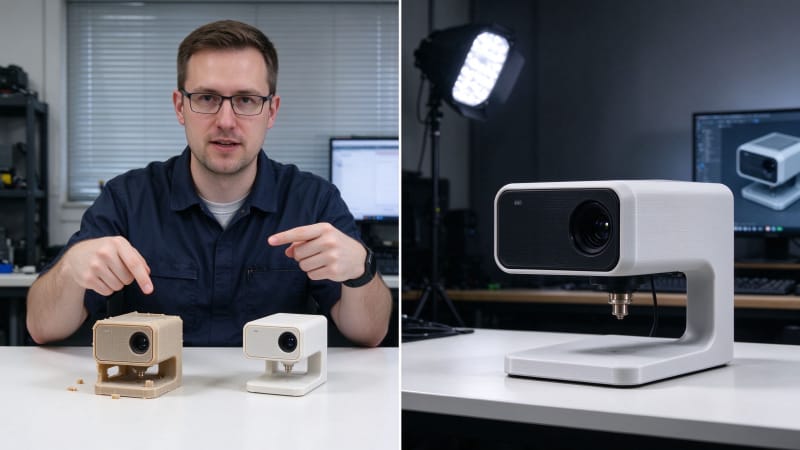
Prototype beside production part comparison
|
Material choice is where most buyers overpay without noticing. Standard PLA filament typically costs $20 to $40 per kilogram, ABS $25 to $45, SLA resin $50 to $120, and nylon PA12 $60 to $100. If the application only needs dimensional stability and light load, paying for engineering materials is wasted money. Match the material to the test, and the price follows naturally.
|
Post-processing is the hidden line that separates a cheap print from a cheap-looking print. FDM parts can be sanded, filled and painted; SLA polishes to a near-injection finish; SLS can be dyed and bead-blasted to a uniform matte tone. The cheapest path is to design for the process: avoid unnecessary supports, keep wall thickness uniform, and specify only the finish your application actually needs. Every removed step is money that stays in your budget.
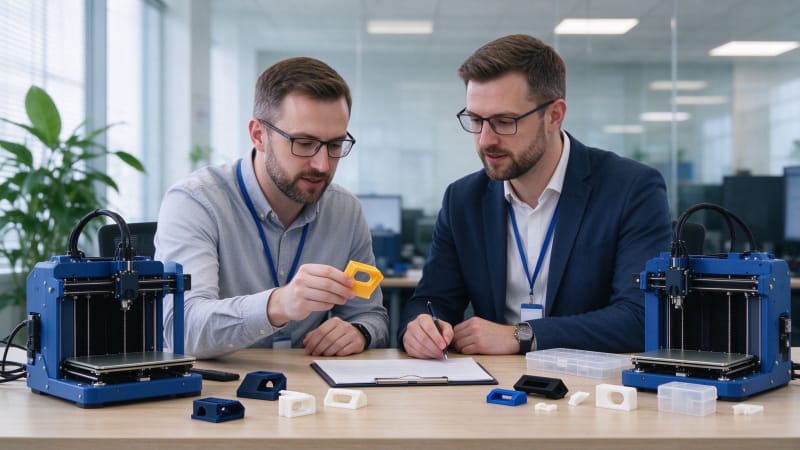
Sales engineer discussing batch order with client
Surface quality is measurable, so it should be specified, not assumed. As-printed FDM surfaces typically measure Ra 10 to 30 micrometers; SLA resin sits around Ra 3 to 10; SLS nylon lands near Ra 8 to 15. If your part will be handled by customers or photographed for approval, ask for the Ra value in the quotation. A supplier that can state the number is a supplier that controls the process, and that is worth paying for.
When Low Cost Pays Off
Here is a scene that plays out more often than factories like to admit. A client chose the cheapest bid for a batch of display fixtures, and the parts arrived two days before the trade show with warped mounting holes and rough edges that snagged every cable. The show could not wait, and the budget was already spent. HUANYA re-printed the critical fixtures overnight in SLA at a fair price, the booth was assembled on time, and the client learned that the lowest number on paper is not the lowest number in the project.
The economics only work when you count the whole project, not the unit price. A reliable supplier who quotes slightly higher but delivers on time, within tolerance, with repeatable finish, saves you reprints, rush shipping and lost sales. Measured that way, high quality 3d printing is often the cheapest option available. The unit price is just the first line; the total cost of ownership is the number that matters.
Get Low Cost 3D Printing From HUANYA
HUANYA keeps prices low through efficiency, not shortcuts. The production team nests every build for maximum density, schedules machines to keep utilization high, and standardizes materials so you are never paying for a premium grade you do not need. Every quote lists material, machine time, post-processing and inspection separately, so you can see exactly where the money goes and where it can be saved.
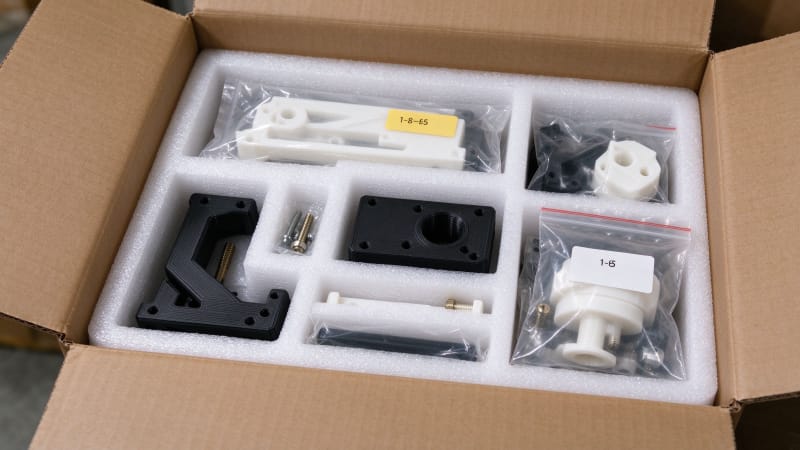
Packed parts ready for dispatch
Upload a STEP or STL file, tell us the quantity and the test you plan, and HUANYA will recommend the cheapest process that still passes. You will get a written breakdown, a realistic lead time and parts that meet the drawing, delivered by a cheap 3d printing service you can actually rely on. That is the real meaning of low cost: less money, same result, no surprises.


Leave a Comment