
 English
 French
 Deutsch
 العربية
 Español
 Русский
 にほんご
 Português
 한국어
What Powder 3D Printing Delivers
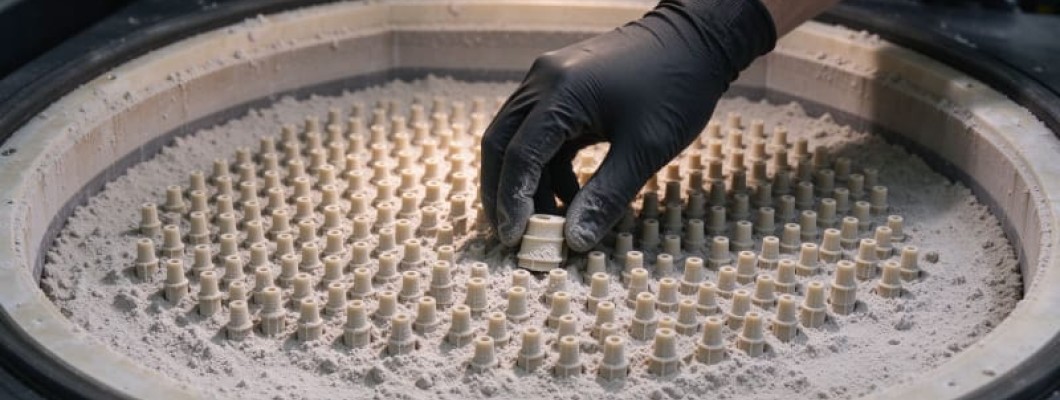
Powder 3d printing builds parts by spreading a thin layer of fine powder and fusing it where a laser or binder points. For a buyer who needs functional plastic or strong metal geometry, this family of processes is the most direct route from a CAD file to a load-bearing part. It keeps nested batches efficient, opens engineering-grade materials and, on a calibrated line, holds tolerances that suit most production jobs.
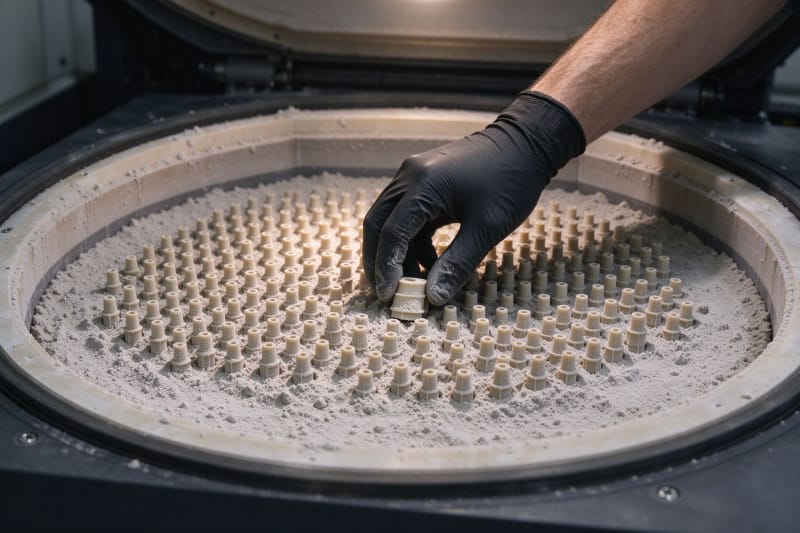
The machine recoats a uniform bed of powder, then a beam of energy traces the cross section of the part. The build platform lowers by one layer, a fresh coat of powder is swept over the surface, and the next layer fuses to the one below. Unfused powder acts as a built-in support, which is why overhangs and internal channels come off without separate support material.
Plastic powder, usually polyamide nylon PA12, is sintered by a CO2 or fiber laser in the selective laser sintering (SLS) process. Parts come out with a matte, slightly grainy surface and near-isotropic strength, because every layer is fused in a heated bed that keeps the whole part warm. This sls 3d printing service is the standard choice for snaps, brackets, housings and small functional batches.
Accuracy and Materials You Can Rely On
Metal powder is fully melted rather than sintered in selective laser melting. A fiber laser fuses stainless steel 316L, aluminum AlSi10Mg, titanium Ti6Al4V and tool steel in an inert argon chamber. This metal sintering 3d printing route reaches the tensile and fatigue values of wrought alloys, which is why industrial 3d printing turns to it for load-bearing aerospace, automotive and tooling parts. The table below sets out the four main powder processes side by side.
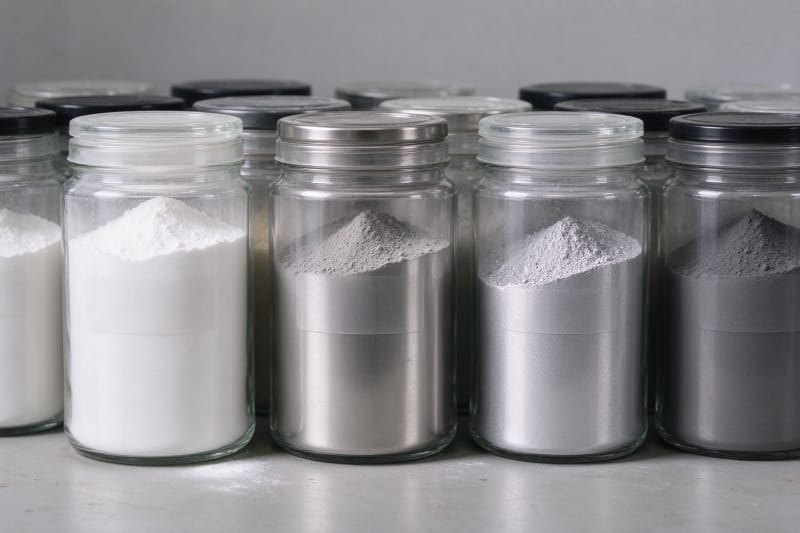
The powder library decides what a part can carry. Nylon PA12 gives a light, tough and chemical-resistant plastic; 316L brings corrosion-resistant stainless strength; AlSi10Mg delivers lightweight aluminum thermal properties; Ti6Al4V adds titanium strength at low weight. Each powder is screened to a tight particle size, dried and blended with virgin powder before every build.
Choosing a powder process starts with material, tolerance and support needs. The comparison below lists process, representative material, dimensional tolerance and whether supports are required, so a buyer picks SLS, SLM, MJF or binder jetting before requesting a quote rather than after a failed build.
Complex Geometry Without Supports
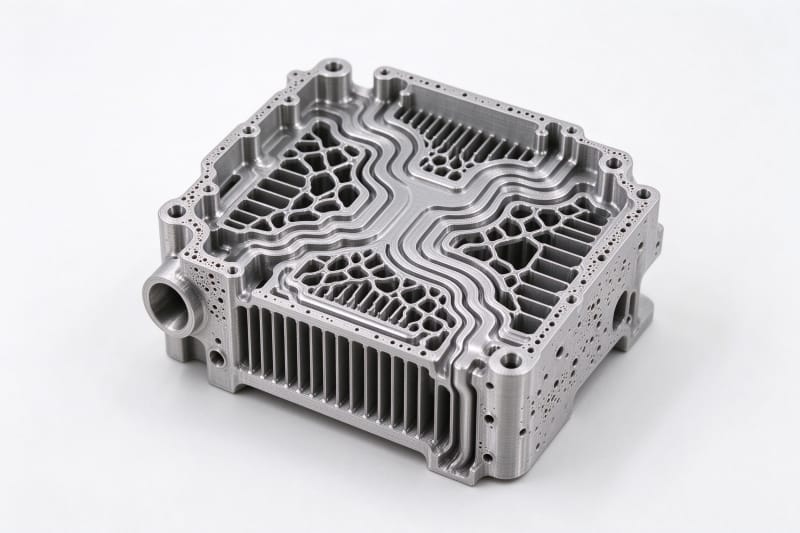
Because loose powder supports every overhang during the build, powder processes unlock internal cooling channels, lattice structures, hollow walls and angled brackets that extrusion or resin systems would struggle to print. A single nest can hold hundreds of loose parts standing in the powder, and they are dug out only after the whole box cools. This geometric freedom is the reason buyers move complex housings and fluid manifolds off traditional machining.
Mechanical values separate a production-grade part from a prototype. The table below lists tensile strength and modulus for the common powder grades, drawn from published material datasheets. Nylon PA12 sits around 45 to 50 MPa, while 316L reaches 550 to 690 MPa and Ti6Al4V approaches 900 MPa, so the design can be sized with real numbers instead of guesswork.
Post Processing That Makes Parts Ready
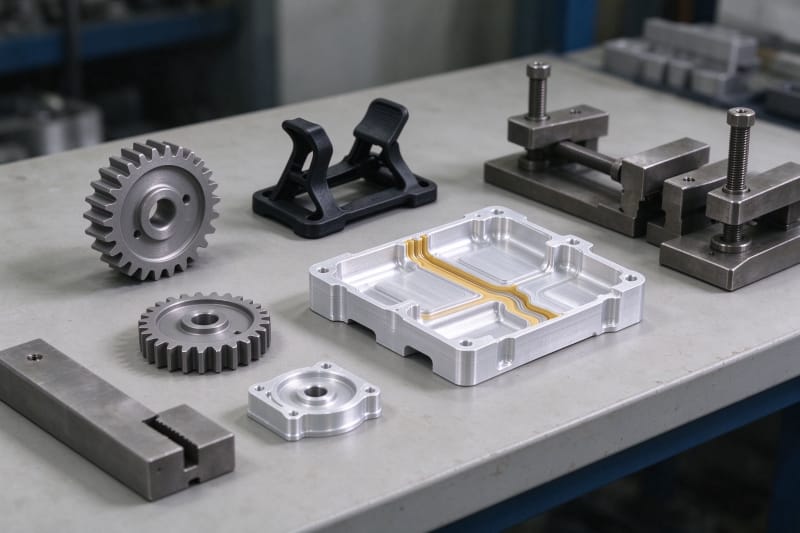
After the build, parts go through a defined finishing line. They are blasted with air or glass bead to remove unfused powder, vapor honed for surface finish, and metal parts are stress relieved or hot isostatically pressed in a furnace to release residual stress. This sequence turns a rough sintered block into a clean, dimensionally stable part ready for assembly or plating.
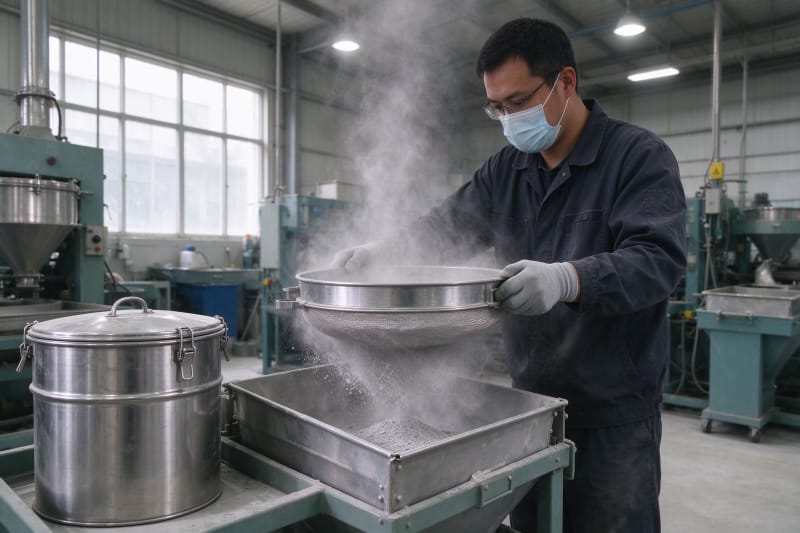
Powder that was not fused during the build is not wasted. It is sieved, dried and blended back with virgin powder in a controlled ratio, because reused powder that is too fine or too oxidized changes surface finish and strength. Every batch is recorded, so the powder lot, machine and build file stay tied to the parts that come out of it.
Batch Nested Production
A powder machine nests parts three dimensionally in the whole volume, not just on a flat plate. Hundreds of plastic or metal pieces stand packed in one build box, and the unit price falls as the nest fills. This is why short powder runs are competitive for production volumes of tens to thousands of pieces, without the tooling lead time of injection molding.
Quality is checked at several stations rather than once at the end. Calibrated calipers and CMM arms measure critical dimensions, microscopes inspect surface density and layer fusion, and visual inspection catches any surface powder residue. Metal parts also undergo density checks and, where required, the heat treatment curve is logged for traceability.
Economics of Short Powder Runs
For short runs, powder economics are predictable: no mold, no long setup, and nesting fills the chamber efficiently. A handful of parts costs a little more per piece, but a few hundred pieces drop close to the cost of injection molded geometry, which makes small batches and market testing realistic before a tool is cut.
Delivery Worldwide on Schedule
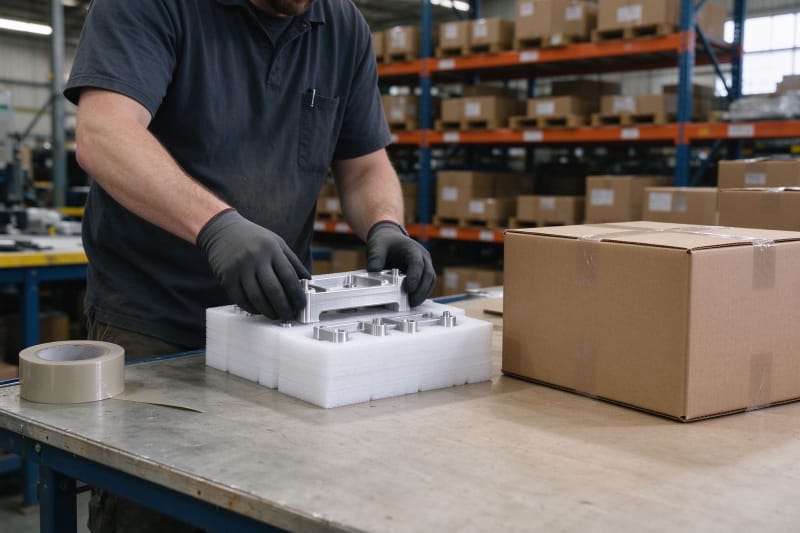
Lead times stay controlled. A plastic SLS prototype often ships within three to five days, a metal SLM part follows a fixed schedule including heat treatment, and every box is packed with foam inserts and shock-absorbent material for worldwide freight. Dimensional reports and powder lot certificates travel with the parts so the receiving team can verify them on arrival.
Start a Powder Project With HUANYA
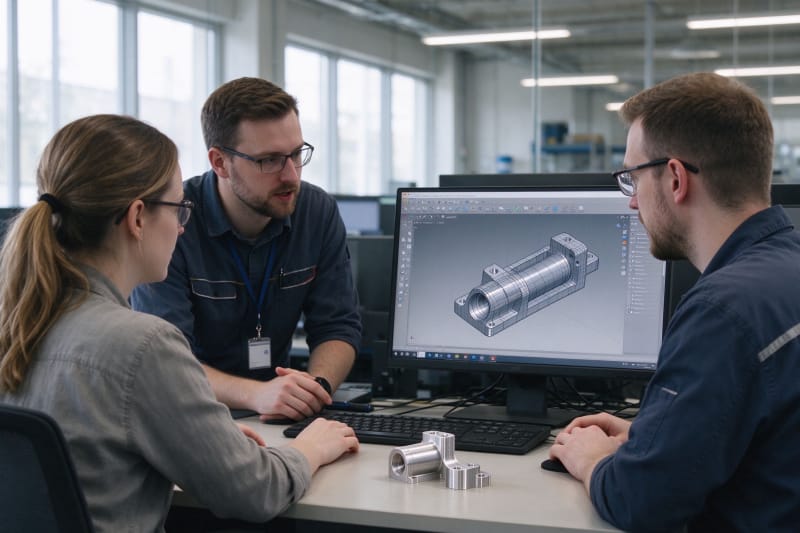
Start a project with HUANYA by sending a STEP or STL file. The engineering team reviews printability, recommends the right powder and process, orients the part for strength and returns a transparent quote with tolerance, heat treatment and delivery date. One prototype, a metal bracket or a small production batch all fit, and the same powder line scales with your volume for both prototyping and on-demand production.


Leave a Comment