
 English
 French
 Deutsch
 العربية
 Español
 Русский
 にほんご
 Português
 한국어
What rapid manufacturing means
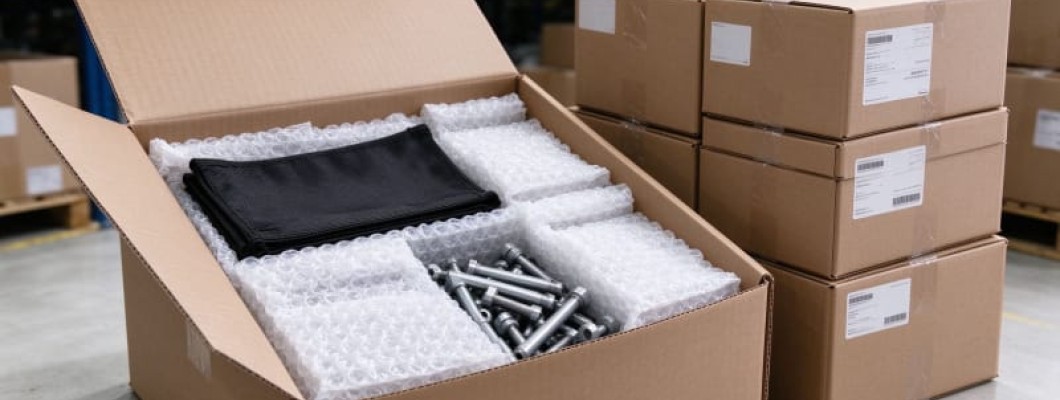
Rapid manufacturing 3d printing is the direct production of finished, end use parts from a digital file, without waiting for tooling, molds or production lines to be built. Where early 3D printing was used mainly to make prototypes that were never sold, the same machines now make parts that ship inside real products to real customers. Parts are built layer by layer in engineering polymers or metals, and the geometry is limited only by what the process can form rather than what a cutting tool can reach. For industrial buyers, it turns a design file into sellable inventory in days, and it keeps the same digital recipe available so future batches are identical.
The difference between rapid prototyping and rapid manufacturing is not the machine, it is the standard the part must meet. A prototype exists to test a concept and is forgiven if its material, surface or lifespan differs from the final product. A manufactured part must meet the same drawing, material specification, mechanical performance and finish every time it is reordered, because it carries the brand of the company that sells it. That means production is controlled with fixed machine parameters, qualified materials, defined post processing and documented inspection. Moving from prototyping to manufacturing is therefore a change in process discipline, not just a change in order quantity.
Companies choose this route because it removes the cost and delay that traditional tooling imposes. Injection molds and die cast tooling take weeks and thousands of dollars to produce, and they make sense only when a design is frozen and volumes are high. Additive production needs no tooling, so a part can launch before demand is proven, designs can be revised without scrapping steel, and small or regional markets can be served economically. Buyers use it to bridge the gap between product launch and mass production, to make spare parts that would otherwise be obsolete, and to build complex components that conventional processes cannot make at all.
Process | Typical materials | How parts are formed | Best production fit |
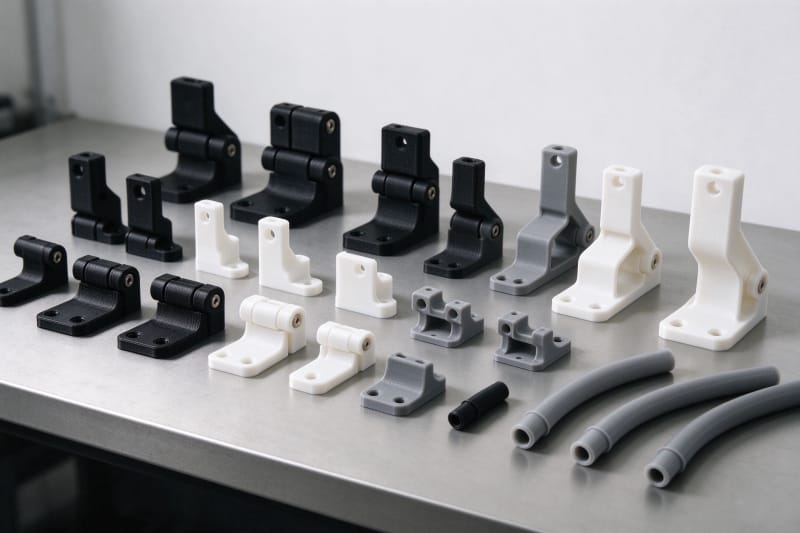
SLS | PA12, PA11, TPU, filled nylons | A laser sinters polymer powder layer by layer, no printed supports | Functional nylon parts, hinges, brackets and ducting |
MJF | PA12, PA11, TPU | Fusing agent and infrared energy across the powder bed | Repeatable polymer batches with fine detail and fast throughput |
SLM / DMLS | Ti6Al4V, 316L, AlSi10Mg, Inconel | A laser fully melts metal powder layer by layer | End use metal parts for aerospace, medical and tooling |
SLA / DLP | Photopolymer resins | UV light cures liquid resin into detailed parts | High detail enclosures and master patterns |
Binder jetting | Metals and sand | Binder joins powder, then parts are sintered in a furnace | Higher volume metal or sand parts with post processing |
Production grade additive processes
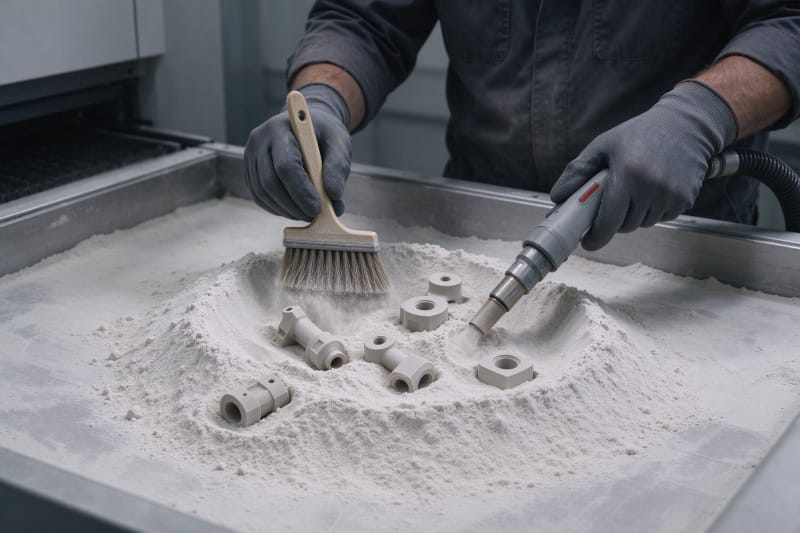
For polymer end use parts, powder bed fusion is the workhorse of 3d print manufacturing, with selective laser sintering and multi jet fusion leading the field. SLS uses a laser to sinter nylon powder layer by layer, while MJF deposits a fusing agent and applies infrared energy, and both processes build parts nested in loose powder without printed supports. The result is tough nylon components with consistent, near isotropic behavior that are suitable for hinges, brackets, ducts and housings. Because unused powder surrounds the parts, many components can be packed into each build, which keeps the cost per part competitive at production quantities.
When the end use part has to be metal, laser powder bed fusion melts titanium, stainless steel, aluminum or nickel alloy powder into fully dense components. A fiber laser traces each cross section and welds the new layer to the previous one, so the finished part has mechanical properties that match or exceed wrought material in the build direction. Metal parts come off the machine attached to a build plate and pass through stress relief, support removal and usually CNC machining of critical surfaces before they are finished. This is the route behind aerospace brackets, medical implants, conformal cooling tools and lightweight motorsport components.
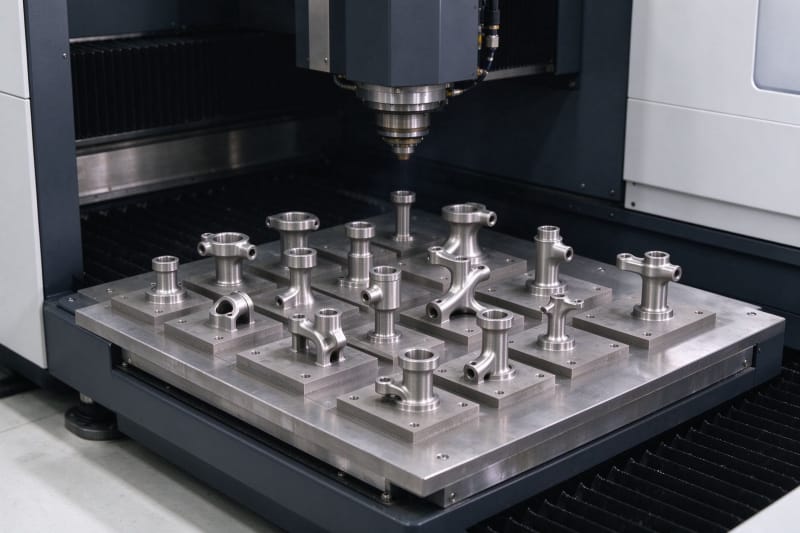
Stereolithography and digital light processing remain valuable for high detail enclosures, master patterns and parts where surface quality matters more than long term heat or load. Binder jetting takes a different approach, jetting a binding agent onto metal or sand powder and then sintering or infiltrating the parts in a furnace, which suits higher volumes where the extra step is acceptable. Choosing the process is a matter of matching the material, geometry, expected load and surface requirement to the part, rather than defaulting to a single technology. A capable supplier runs several processes and recommends the one that actually fits.
Materials for end use parts
Engineering nylons dominate polymer production because they are tough, fatigue resistant and tolerant of repeated flexing. PA12 is the default for functional brackets, snap fits and ducting, PA11 offers more flexibility and impact resistance, and carbon or glass filled grades add stiffness for jigs and structural parts. Thermoplastic polyurethane is used where elasticity and grip are needed, such as seals, rollers and protective bumpers. Each material is qualified with a property data sheet, and the same powder specification is held in stock so repeat orders behave the same as the first.
Metal production draws on the same alloys used in aerospace, medical and automotive supply chains. Ti6Al4V offers an exceptional strength to weight ratio and corrosion resistance, 316L stainless is used for corrosion resistant fluid and medical parts, AlSi10Mg is light and thermally conductive, and Inconel 718 retains strength at high temperature. Cobalt chrome and maraging steel serve medical and tooling applications. These materials are delivered with mill or powder certificates and full traceability, so a buyer can prove exactly what a safety critical part is made from.
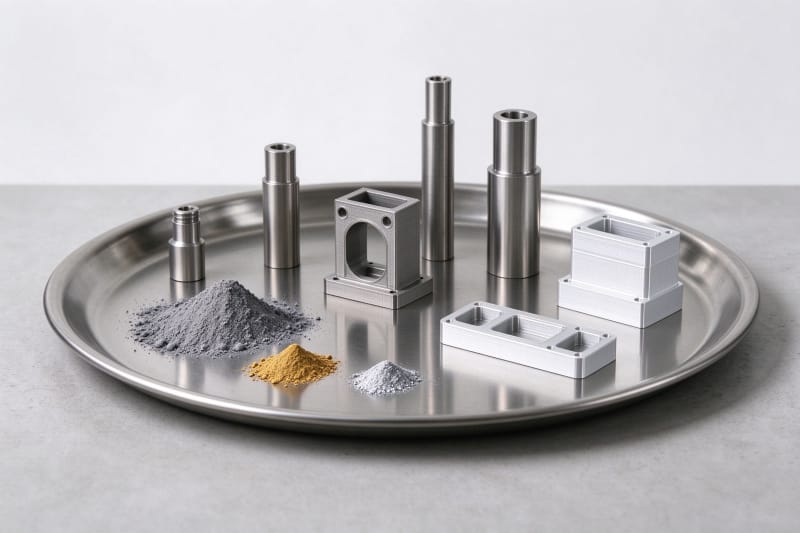
Material | Type | Key properties | Typical end use parts |
PA12 | Polymer, SLS / MJF | Tough, chemical resistant, good fatigue life | Hinges, brackets, ducting, housings |
PA11 | Polymer, SLS | Flexible, high impact resistance, bio based | Protective and sport or wearable parts |
PA12 CF / glass filled | Reinforced polymer | High stiffness and low weight | Jigs, tooling and structural brackets |
Ti6Al4V | Metal, SLM | High strength to weight, corrosion resistant | Aerospace brackets and medical implants |
316L stainless | Metal, SLM | Corrosion resistant and weldable | Fluid parts, fittings and food or medical parts |
AlSi10Mg | Aluminum, SLM | Lightweight with good thermal conductivity | Heat exchangers and motorsport parts |
Designing for additive at scale
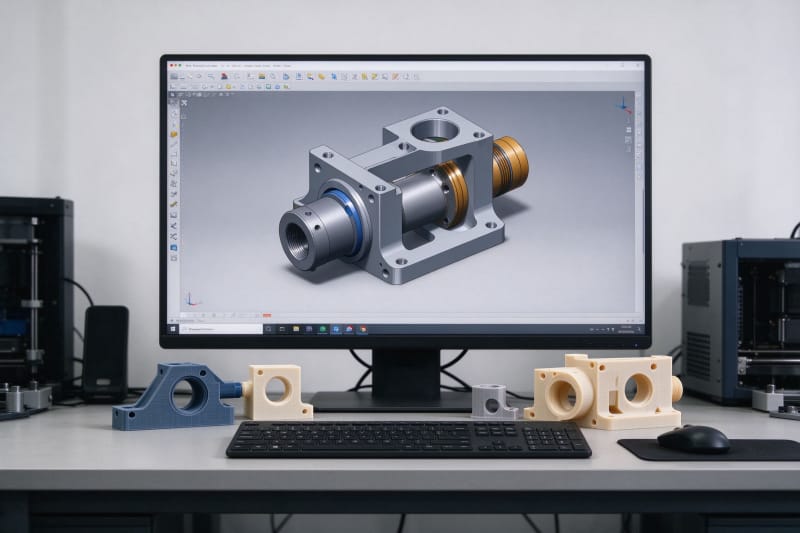
Designing for additive at production scale is where the method earns its cost, because parts can be shaped in ways that molding or machining cannot match. Assemblies made of many fastened components can be consolidated into one printed part, removing joints, seals, fasteners and assembly labor. Lattice structures and controlled wall thicknesses cut weight while keeping strength, and internal channels can carry fluid, air or coolant through a single block. These features are designed once and reproduced in every batch at no added cost, but they only work when the geometry is developed with the process and its limits in mind.
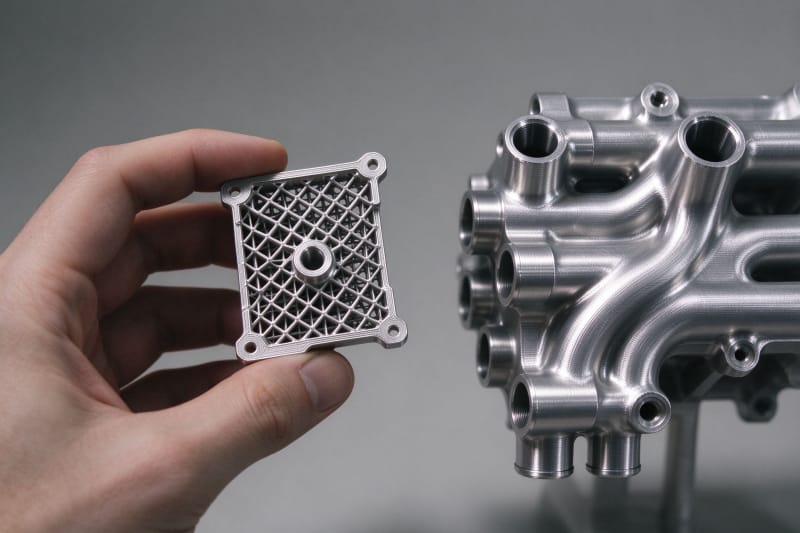
Repeatable production still follows design rules, and ignoring them produces parts that warp, fail or cannot be inspected. Minimum wall thickness, escape holes for unfused powder, self supporting overhang angles and clearances for moving joints must all be respected. Build orientation affects surface finish, strength and support marks, so the orientation is locked for production rather than decided per batch. Nesting many parts in a build lowers cost, but dense packing must leave room for consistent heat and powder flow. Fixing these rules during the design phase avoids the dimensional surprises that cheap suppliers deliver.
Quality control and certification
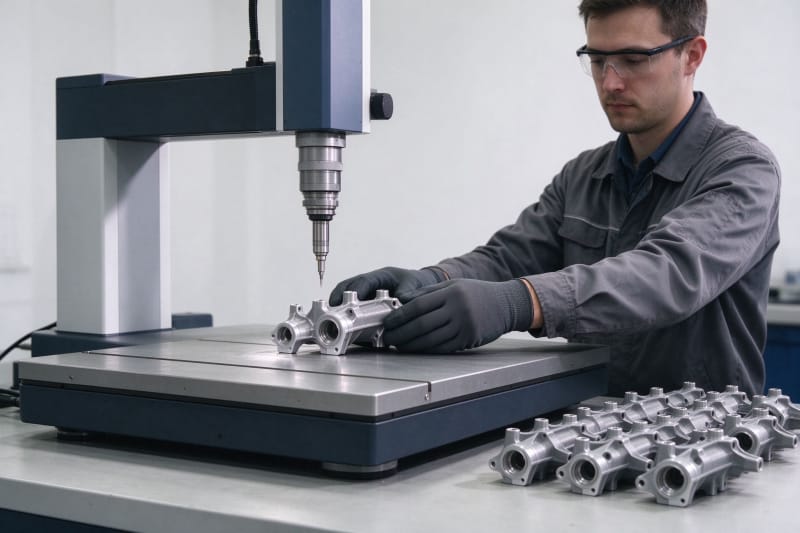
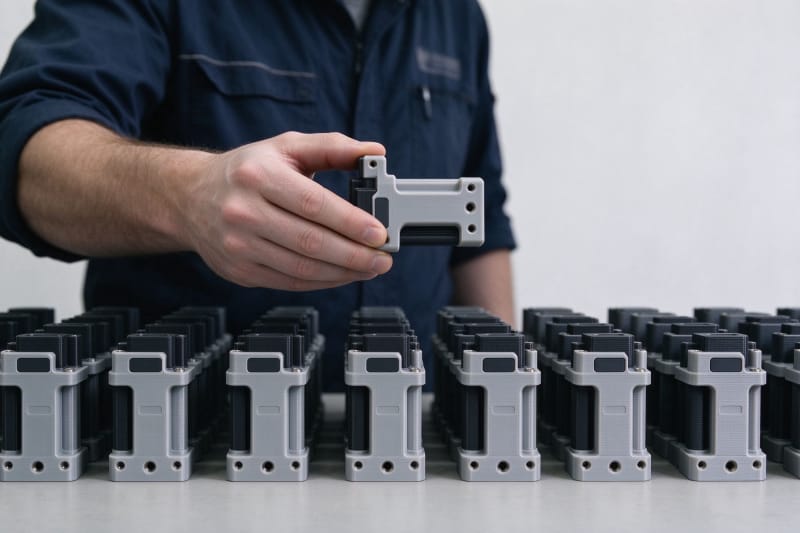
Reliable industrial 3d printing depends on process controls that make each build the same as the last. Machines are qualified with fixed parameters, ambient conditions are monitored, and statistical process control tracks key dimensions over time so drift is caught before it reaches a customer. Every build is recorded with the machine, material batch, parameters and operator, and incoming powder is tested and, for metal, often traced with a unique lot. This documentation is what allows a part made months later to match the first article, and it is the difference between a prototype shop and a manufacturing partner.
This is where HUANYA keeps the three problems B2B buyers fear out of every production order. First, dimensional stability across batches and revisions: critical dimensions are held by the same locked process and finishing route, so a reorder matches the first article. Second, on time delivery: build slots, post processing and inspection are scheduled against real capacity, so the promised date is a plan rather than a hope. Third, consistent finishing: blasting, dyeing, polishing and support removal follow one written standard, so surface quality does not drift between orders. Parts that change size, arrive late or finish differently are the failures this system is built to prevent.
Cost and lead time economics
Additive production has no tooling cost and little setup, so the first part is far cheaper than the first molded or cast part, while the cost per unit stays relatively flat. Injection molding becomes cheaper per part only at higher volumes once the mold is paid for, and the crossover depends on part size, geometry and material. Additive cost is driven mainly by build height, machine time, material and finishing, so hollowing non structural volumes, reducing height and optimizing orientation can lower the quote substantially. A transparent supplier lists each stage and tells a buyer where the breakeven against traditional tooling actually sits.
Digital inventory and repeat production
One of the strongest reasons to adopt the technology is the digital inventory it creates. Instead of producing thousands of parts and holding them in a warehouse for years, a company stores the qualified file and orders small batches as demand appears. Spare parts for products long out of production can be made on request without keeping tooling on the shelf, and regional warehouses can print locally instead of shipping stock around the world. The same file, build orientation and inspection plan make the tenth order identical to the first. This turns slow moving inventory into an on demand service and frees capital that was tied up in stored parts.
Partner with HUANYA
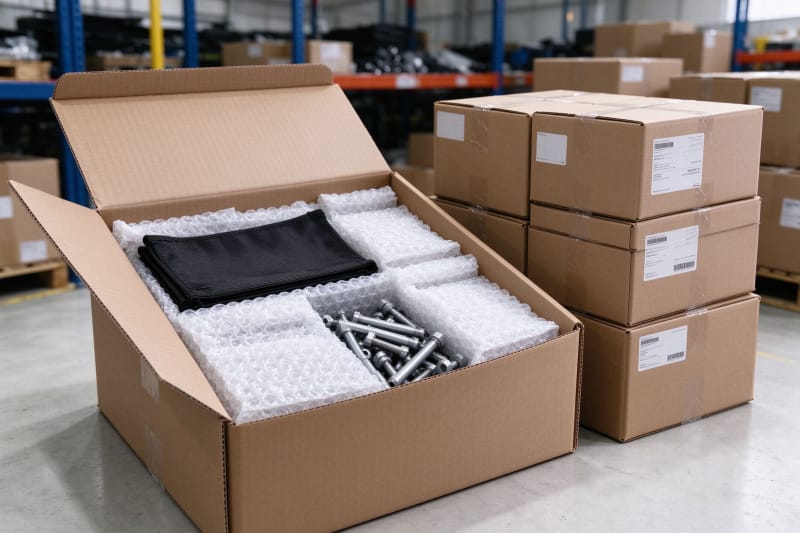
Rapid manufacturing turns a digital design into qualified end use inventory without tooling, delay or guesswork, and it scales from a single batch to a repeatable supply line. The right supplier is a 3d printing factory that owns the process, materials and finishing in house, documents every build, and treats repeatability and on time delivery as non negotiable. HUANYA works with industrial buyers across automotive, aerospace, medical, electronics and consumer products, from the first production part to recurring certified batches. Send the CAD file and the required quantity, and receive a clear quote, a realistic lead time and parts that match the drawing every time.


Leave a Comment