
 English
 French
 Deutsch
 العربية
 Español
 Русский
 にほんご
 Português
 한국어
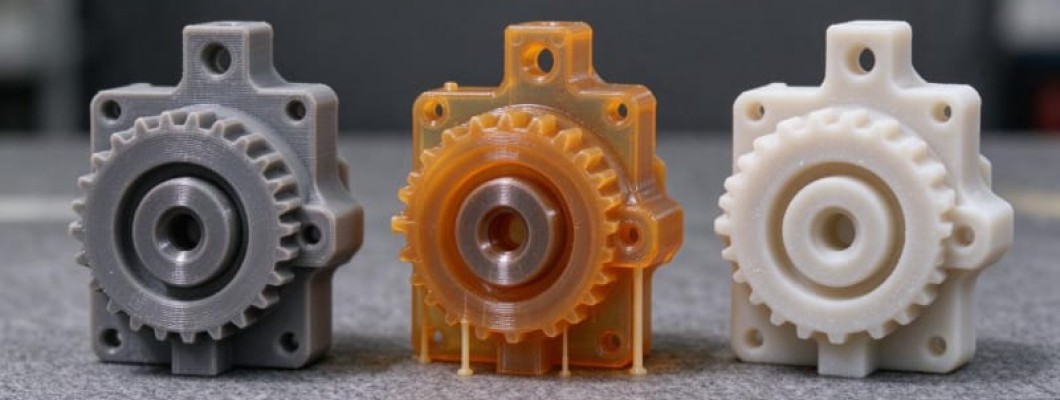
A design engineer opens a revised CAD file on Monday morning. The review board meets on Friday. Between those two points sits a question most suppliers answer badly: which version of this part is worth building, and what does the company actually get for four days and a few hundred dollars?
If a review approves a component that nobody on the panel has held in their hand, what exactly is being approved? A drawing can look finished and still be wrong at the snap fit, at the 1.2 mm wall that will not survive a screw, at the corner where the housing meets the gasket.
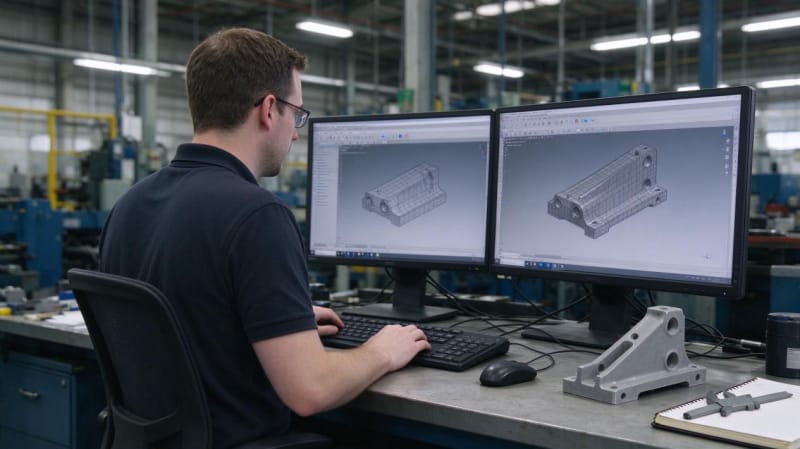
What Rapid Prototyping Actually Buys
Rapid prototyping is sold as speed, and speed is the least interesting part of it. A printer that produces a part overnight is convenient. A loop that moves the discovery of a mistake from week six to day two is what changes a project's economics. The mistake does not disappear. It changes address. In CAD a fix costs an afternoon of an engineer's time. At the tooling stage the same fix costs a re-cut, a delay, and sometimes a difficult conversation with the customer who already saw a photo of the old design.
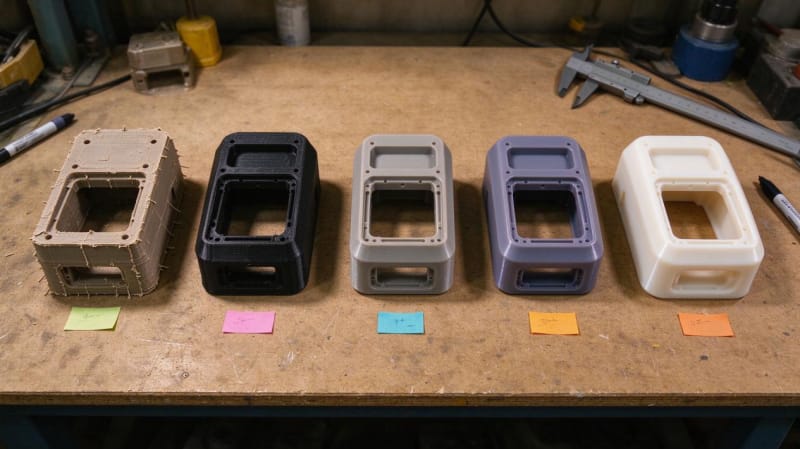
Put numbers on that. One internal build loop, an FDM bracket plus a resin cover for appearance, usually lands between roughly forty and two hundred dollars at a Chinese service shop, depending on size and finish. The comparison worth making is not the price of the part but the cost of the delay the part prevents. A tool that arrives four to eight weeks late drags a launch, a trade fair, or a container with it.
Process | Typical lead time | Typical single price | Best used for |
FDM | 24–72 hours | 10–60 USD | early geometry, fits, shop fixtures |
SLA resin | 24–48 hours | 30–120 USD | appearance, fine detail, small covers |
SLS nylon | 2–4 days | 40–200 USD | functional test, living hinges |
MJF | 2–5 days | 50–220 USD | small batch functional parts |
CNC | 3–5 days | 80–400 USD | tolerance critical, metal |
Injection mold | 4–8 weeks | several thousand for the tool | volume above the crossover |
The Four Day Clock
The clock starts before the machine does. In rapid prototyping 3d printing the first hour belongs to the file, not the printer. A wall below 0.8 mm on an FDM part, a feature narrower than the nozzle, a thread that no layer orientation will hold, a 0.1 mm gap between two parts that were meant to slide. Finding those in CAD costs minutes. Finding them on day three costs the entire loop.
Once the file is clean the schedule gets boring, and that is the point. A resin cover prints in one night, an FDM bracket in a day, a nylon functional part in two to four days including the powder cool down. Post processing is where most promised lead times actually break, because supports come off by hand and a queue builds in front of the blasting cabinet.
Day | What happens | What you hold at the end |
Day 1 morning | file review, orientation, supports, nesting | a job that will print clean |
Day 1 evening | print starts | parts on the bed |
Day 2 | print completes, supports removed | green parts |
Day 3 | finishing, fit check, measurement | samples that can be assembled |
Day 4 | assembly test, photos, review pack | a decision, not an opinion |
What slows a loop down is rarely the printer. It is a model that cannot be oriented without supports landing on a sealing face, a material ordered per job instead of stocked, a finishing step nobody scheduled, or a reprint caused by a dimension that was assumed rather than measured. Each of those costs a day, and each of them is visible in advance to a supplier who reads the model instead of quoting it.
Where the Sample Comes From
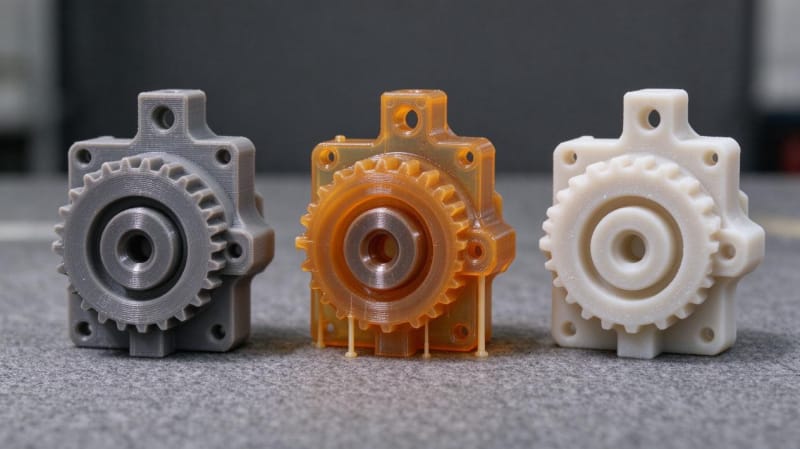
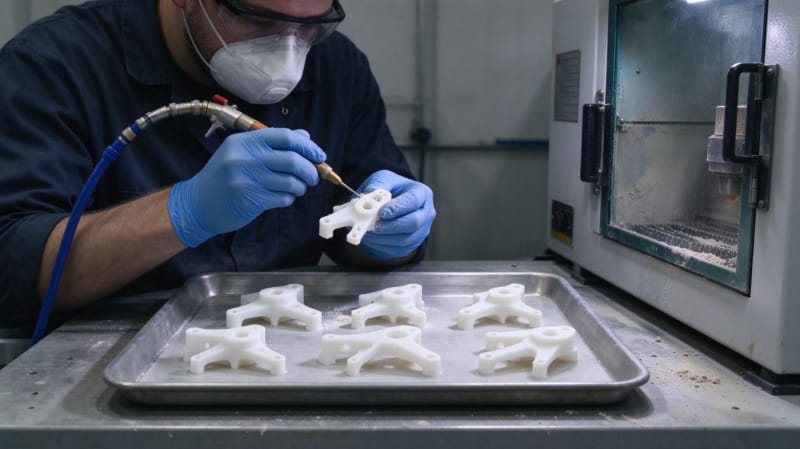
The process should follow the decision the sample has to support, not the other way round. An appearance review needs a smooth surface and fine detail, which points at resin. A functional test needs toughness and a living hinge that survives a hundred cycles, which points at nylon powder. Assembly checks and shop floor fixtures need size and stiffness, where FDM earns its place. A design review that only needs to agree on shape needs none of this; renders are enough, and paying for a print is a waste of a week.
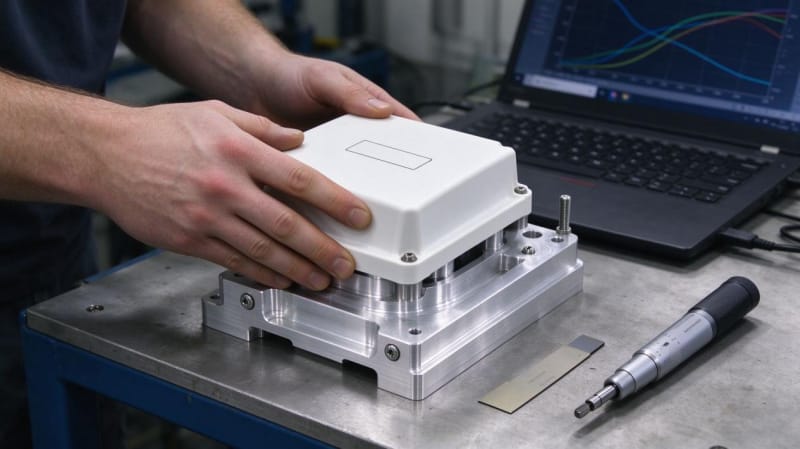
Tolerances are a process window, not a promise. FDM holds roughly plus or minus 0.3 to 0.5 mm, resin plus or minus 0.1 to 0.2, SLS plus or minus 0.2 to 0.3. Surface finish sits between 3 and 30 microns depending on process and finishing. Tensile strength for common prototype materials runs from about 35 to 60 MPa. The drawing should say which dimension actually matters, because a supplier who is asked to hold everything holds nothing well.
Material | Process | Wall tolerance | Tensile strength | Surface Ra |
PLA | FDM | ±0.3–0.5 mm | 35–50 MPa | 10–30 µm |
ABS | FDM | ±0.3–0.5 mm | 35–45 MPa | 10–30 µm |
Standard resin | SLA | ±0.1–0.2 mm | 40–60 MPa | 3–10 µm |
PA12 | SLS | ±0.2–0.3 mm | 45–55 MPa | 8–20 µm |
Reading a quote for custom 3d printing service work means separating what is fixed from what scales. A quote built from machine hours is honest, because it shows what occupies the printer. One built from part weight is a shortcut that hides the real driver. Ask how many parts shared the build, whether finishing is manual, and what happens to the price at fifty pieces and at five hundred. A supplier who cannot answer those three questions is selling a number, not a process.
What a Prototype Cannot Tell You
A prototype answers the questions you asked it. It stays silent on the ones you did not. A resin cover that looks perfect at 23 degrees can soften near 60 and yellow under window light within weeks. A printed bracket that passes a static load may creep under a constant one over months. A mold shrinks in a direction the printer never does, so a wall that assembles in nylon may bind in production plastic. None of this makes prototypes useless. It makes them a measurement with a stated range.
We watched a customer learn that the expensive way. A resin appearance cover was approved and then mounted as a temporary guard on a machine that runs warm. Two weeks later the corner nearest the heat had warped and gone chalky, and the maintenance team blamed the design. The design was fine. The material was doing exactly what a photopolymer does when it is asked to live somewhere it was never meant to live.
Building a Prototyping Habit
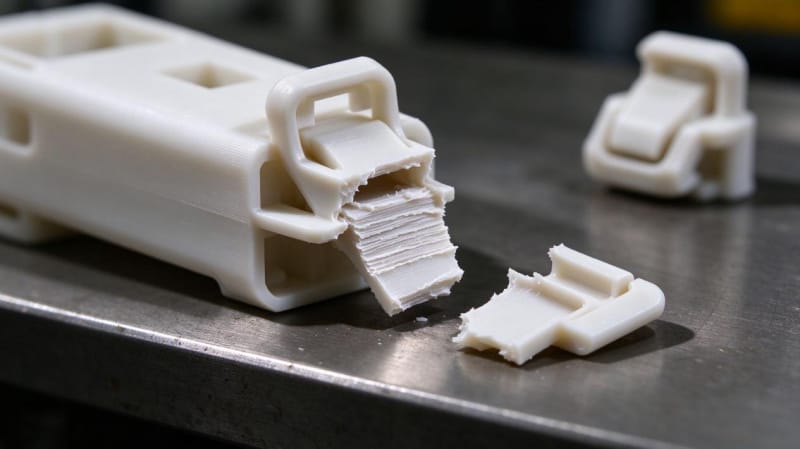
The Thursday before a customer review, a fit test broke a snap fit on the third click. The fracture ran flat along the layer lines, which said the tab had been printed standing up and was being peeled apart by the very motion it was designed to survive. Nobody argued about the geometry. The model was rotated ninety degrees, the root was thickened by 0.4 mm, and the part was reprinted overnight. It passed on Friday morning with the same drawing.
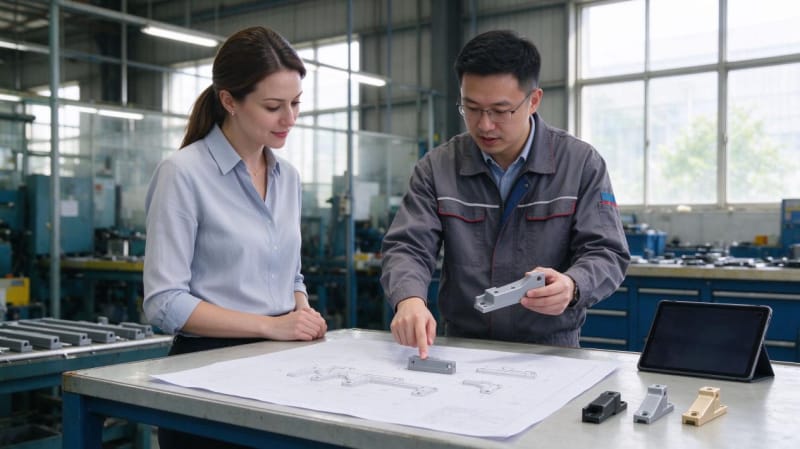
That is the habit worth building. Put the revision in the file name so nobody prints version four when version five exists. Change one variable per build, or the test tells you nothing. Keep the physical samples, not only the files, because a part in a drawer answers questions that a PDF cannot. And write the print orientation on the bag, since the next engineer will otherwise repeat the same break. When a sample survives its test, the sensible next step is not another prototype but a small run in the same material, and sls 3d printing service work is the usual route for nylon parts between fifty and a thousand pieces. Same powder, same process, same behaviour, and the design team learns the real price curve before anyone commits to a tool.
HUANYA works as the front end of that loop rather than a catalogue. Files are checked for printability and tolerance before quoting, the quote names the proposed process and says why, and the batch is inspected before it ships. For a first project, sending the one part that causes trouble is usually more useful than sending the whole assembly, because it is the part that will decide whether the review says yes.
If your team still argues about whether prototyping belongs in the budget, stop arguing and print the part that hurts. The one that arrives late, the one that stops a line, the one nobody can measure. Use it for a week, then look at the numbers. That is how On-Demand 3D Printing stops being a slide in a deck and becomes a line in the plan.


Leave a Comment