
 English
 French
 Deutsch
 العربية
 Español
 Русский
 にほんご
 Português
 한국어
Why SLA Printing Matters
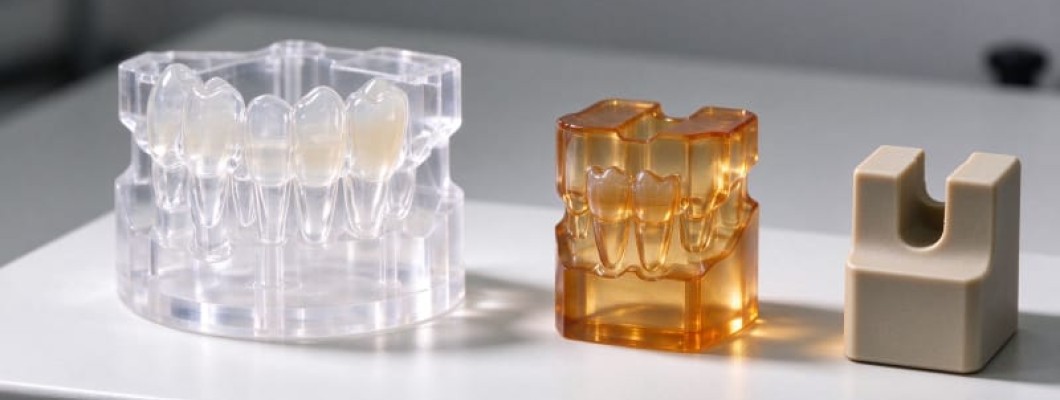
A sla printing service turns a CAD model into a smooth, high-resolution part without molds, dies or minimum quantity. Instead of extruding melted filament, SLA cures liquid photopolymer layer by layer with a laser or an LCD mask, so one run carries a single prototype or a batch of identical dental models. Because there is no tooling to write off, the same geometry moves cleanly from first article to series production.
The advantage shows in the surface. Where filament printing leaves visible layer lines, stereolithography 3d printing holds layer heights of 25 to 100 microns and produces a near-smooth finish that looks and feels closer to injection molding. Fine detail, sharp edges and small text survive without sanding, which is why designers and engineers send the most demanding models here first.
Applications spread across dental, jewelry, consumer goods and tooling. A surgical guide, a jewelry master for casting, a transparent flow-visualization housing and a conformal fixture all rely on SLA's accuracy. When a design needs to be both precise and presentable, these parts are where a photopolymer route replaces hand finishing with a single consistent build.
Choosing an SLA Resin Grade
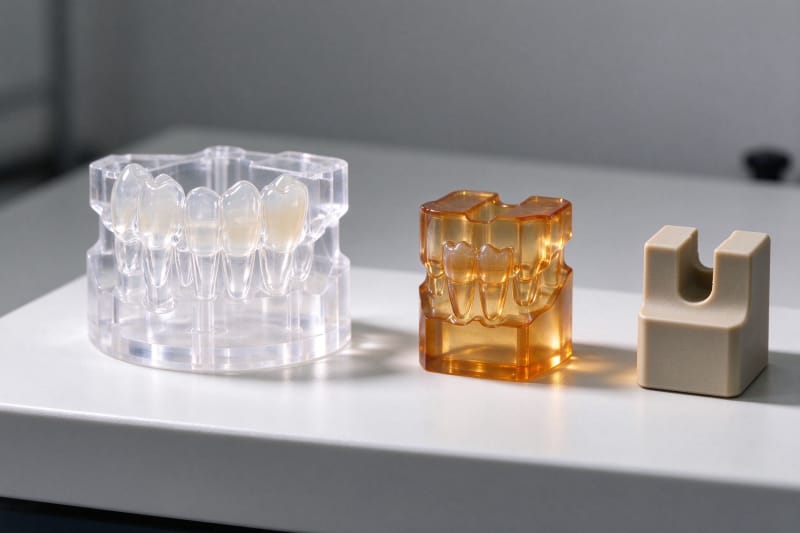
Not all resins behave the same, so a resin 3d printing service organizes grades by application. Standard resins print fast and look good for concept models; engineering grades add toughness and heat resistance for functional parts; dental resins carry biocompatibility approvals; clear resins polish to optical transparency. Choosing the right grade decides strength, temperature limits and final appearance.
For everyday visualization, a grey standard resin gives crisp edges at low cost. For parts that must survive repeated handling, an engineering resin such as a tough 1500 class offers substantially higher fracture toughness than the first-generation materials. When a part touches skin or needs sterilization, only a certified dental or medical grade should be used, and that decision shapes the whole workflow.
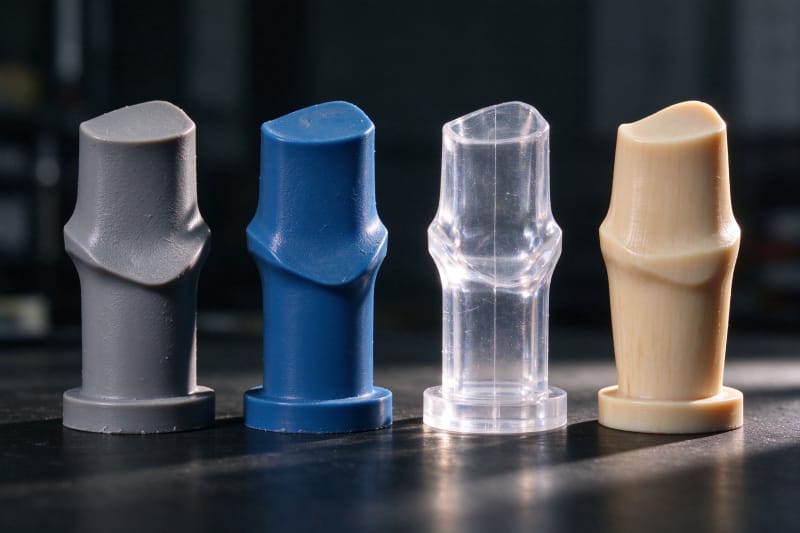
Material cost and print speed set the unit price. Photopolymer resins typically run from about $30 to $150 per liter, and finer layers take longer, so a 25-micron build costs more than a 100-micron one. The table below compares common resin grades on layer height, key property and best use, and the second table compares printing processes on tolerance and surface finish.
Resin Grade | Layer Height | Key Property | Best For |
Standard Resin | 25–100 µm | Balanced strength, fast print | Concept models, visual prototypes |
Engineering Resin | 25–100 µm | High toughness, heat resistance | Functional parts, jigs, fixtures |
Dental LT Clear | 50–100 µm | Biocompatible, ISO 13485 | Surgical guides, splints |
BioMed / Clear Resin | 25–100 µm | USP Class VI, sterilizable | Medical, transparent optics |
Source: Formlabs material library and Proto3000 SLA resin datasheets (2026)
How SLA and MSLA Work
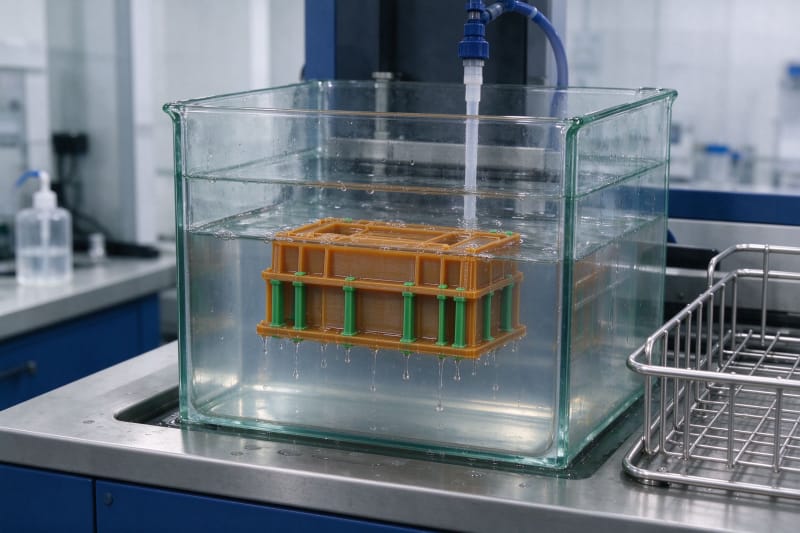
SLA works in a vat of liquid resin. A recoater levels a thin layer, then a laser traces the cross-section or an LCD screen projects it through a mask, and the resin cures where light strikes. After thousands of layers the build platform rises, the part is washed in solvent to remove uncured resin and finally cured under UV light until it reaches full mechanical strength.
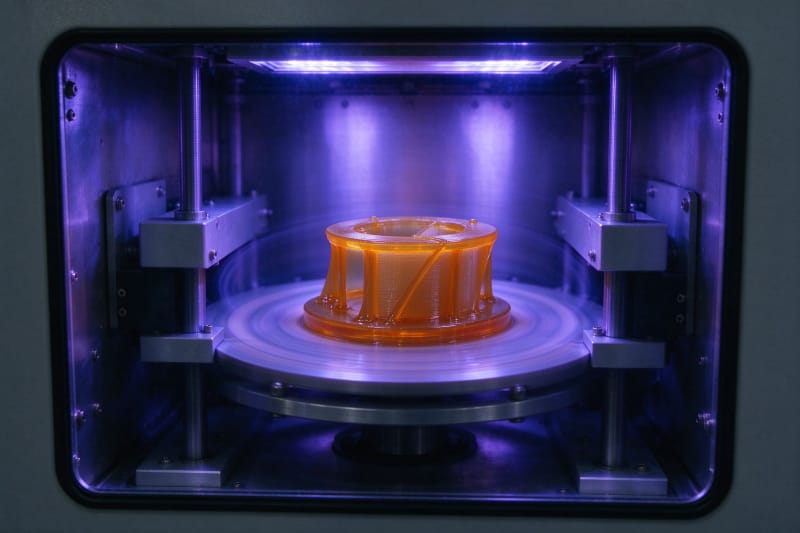
The table below compares SLA with other desktop processes on tolerance, layer height and surface finish. Stereo-lithography delivers the finest details, while DLP, MSLA and FDM trade accuracy for speed or price. The right choice depends on whether the priority is a smooth surface, low cost or fast iteration of a working prototype.
Process | Tolerance | Layer Height | Surface Ra | Cost Tier | Best For |
SLA (laser) | ±0.05–0.1 mm | 25–100 µm | 1–3 µm | $$ | High detail and accuracy |
DLP (projector) | ±0.10 mm | 50 µm | 0.5–2.0 µm | $$ | Batch small parts fast |
MSLA / LCD | ±0.05–0.1 mm | 25–100 µm | ~2–5 µm | $ | Low cost, screen ~2000 h |
FDM | ±0.1–0.3 mm | 100–300 µm | Layer lines | $ | Low cost, low detail |
Source: MakerStage 2026 comparison, Xometry and SOVOL technology guides (2026)
Resolution and Dimensional Benchmarks
Precision is where SLA earns its name. Well-calibrated machines hold dimensional tolerances near plus or minus 0.1 mm, and feature accuracy runs about 0.05 to 0.1 mm on good systems, with layer heights down to 25 microns. Independent dental-model studies report that most of the printed surface falls within about 100 microns of the digital model.
Dimensional stability depends on orientation and resin shrinkage. Long, thin features should be aligned so critical dimensions lie in the XY plane, where accuracy is best. Resins shrink slightly during curing, so a mature service compensates for that offset in software and confirms the result with calibrated measurement before release.
Design Rules for SLA Parts
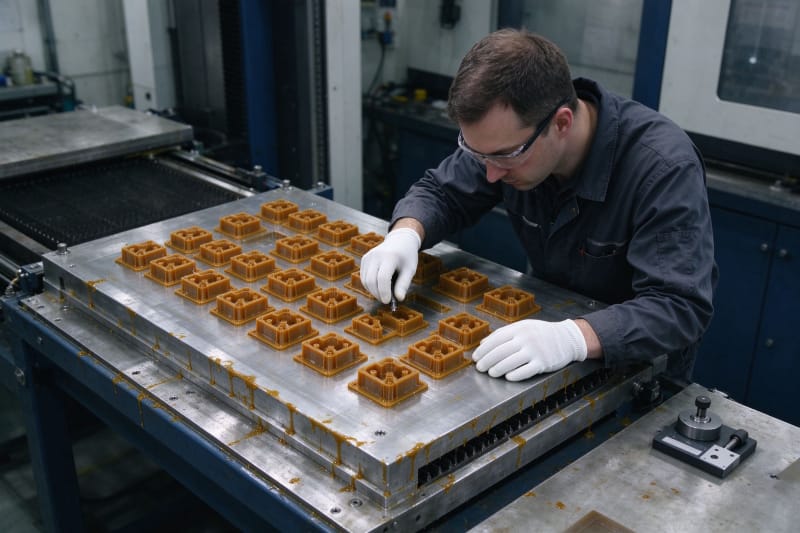
Design rules for SLA are generous but not unlimited. Keep minimum walls around 0.5 to 0.8 mm, add support where overhangs exceed about 45 degrees, and drain trapped volumes so uncured resin escapes. Leave a small gap between separate parts to prevent them fusing during the build, and orient bores that must hold tolerance vertically.
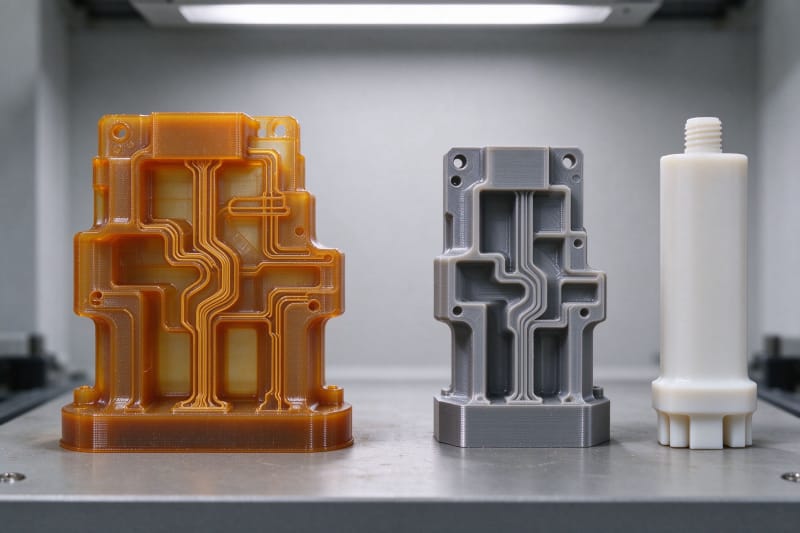
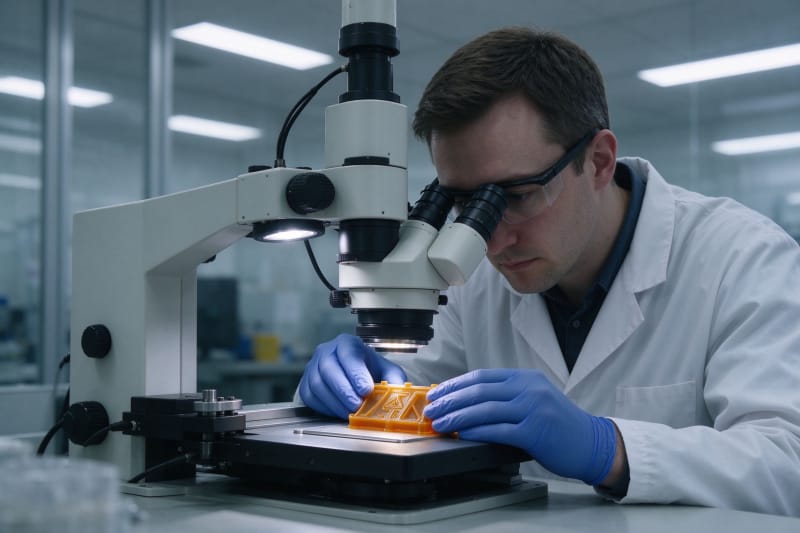
Quality is verified with calibrated instruments. Calipers and micrometers check critical dimensions, a microscope inspects surface finish and edge quality, and for dental or medical parts the batch record tracks resin lot and curing time. A documented inspection chain keeps parts consistent from order to order and gives buyers confidence in the file.
Post-Processing and Finishing
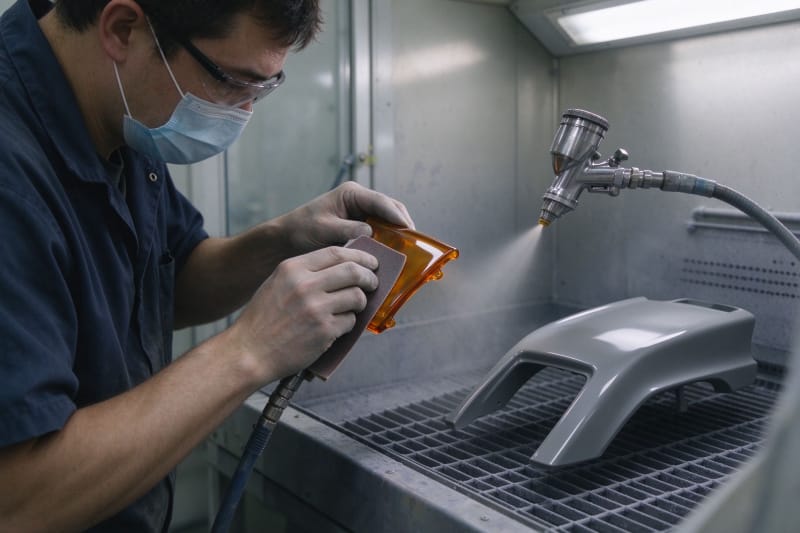
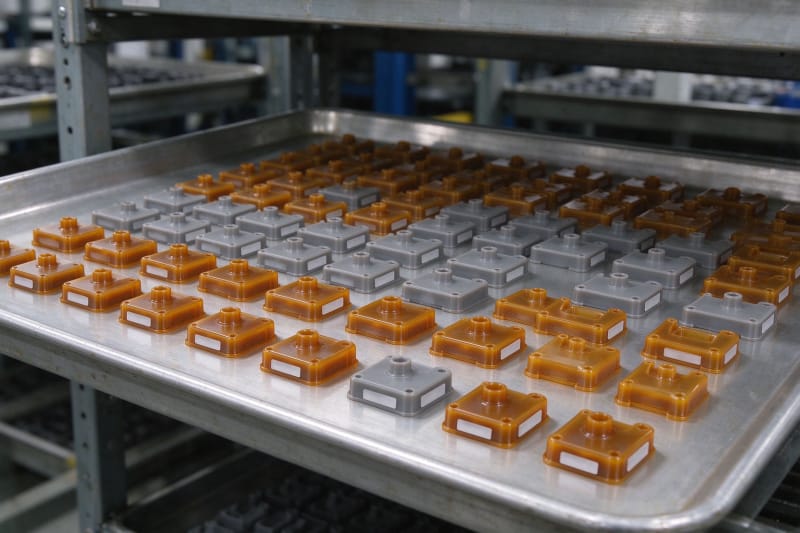
The finishing chain turns a raw green part into a deliverable product. After washing, supports are removed with cutters, then the part is UV cured, polished where sealing or cosmetic surfaces matter, and optionally painted, plated or dyed. For casting, a burn-out resin burns away cleanly, leaving a cavity for metal.
SLA Versus Other Technologies
Volume changes the calculus, and SLA stays competitive for small and medium batches. For a few identical parts or complex geometries, printing is usually the fastest route, while very large quantities of simple shapes may favor injection molding after tooling. Partners who control resin handling and curing deliver repeatable detail and dimensional accuracy.
Start an SLA Order With HUANYA
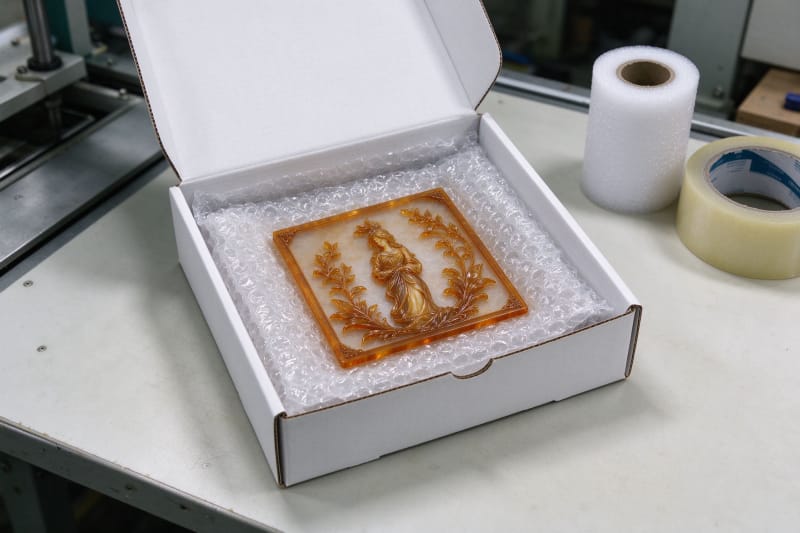
Starting with HUANYA is direct. Send a STEP or STL file, get an instant transparent quote, choose the resin grade and layer height, and the engineering team reviews printability, confirms critical dimensions and ships globally with reliable logistics. Begin with a rapid prototyping sample or a small batch and scale the same geometry without retooling.


Leave a Comment